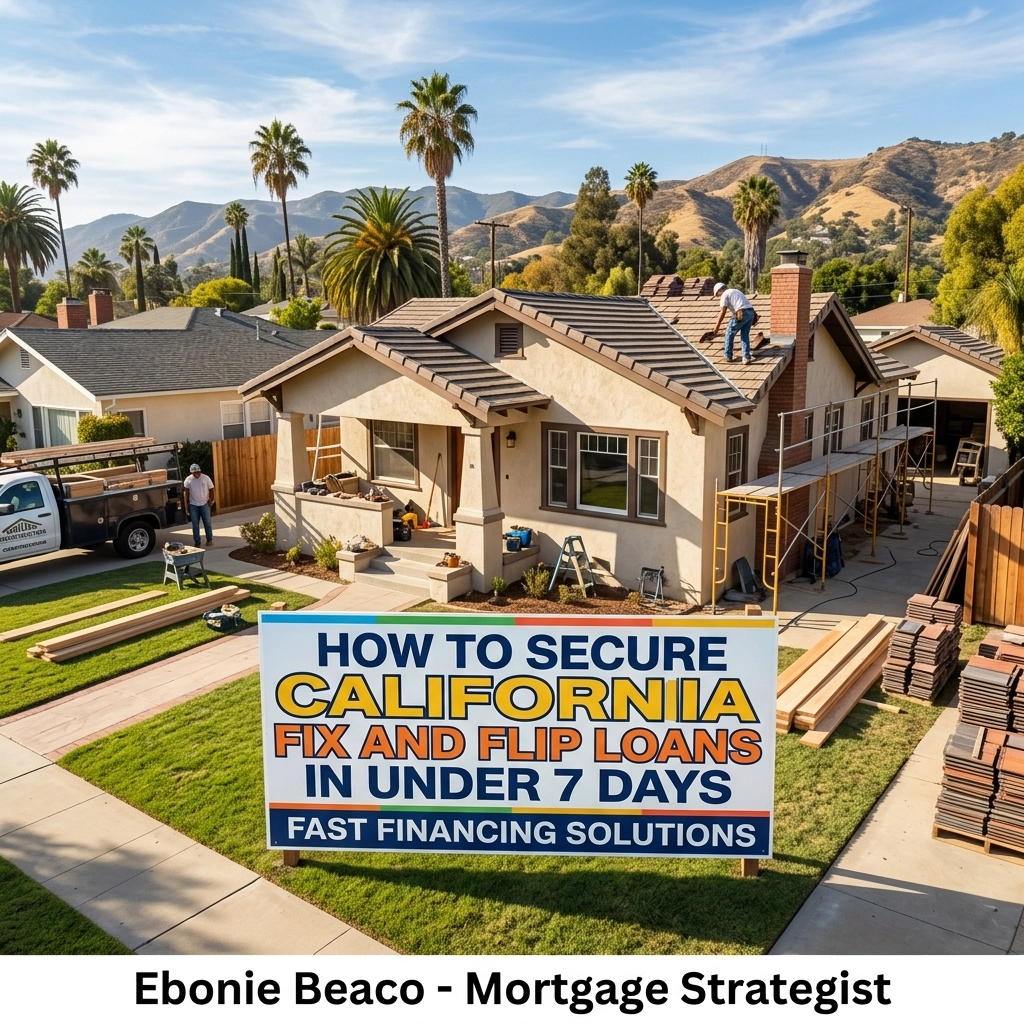

Real estate wholesaling lives and dies by your lead flow.
If you want consistent assignment fees in competitive markets like California, Florida, and Atlanta, Georgia, you need repeatable ways to find motivated sellers before a deal hits the MLS.
Below are five steps you can run weekly, track in a simple CRM, and scale with help as you grow.
Quick definitions (so you stay sharp on the basics)
Off-market property
Definition: A property not actively listed on the MLS.
Use: You avoid bidding wars and negotiate directly with the owner.
Motivated seller
Definition: A seller with time pressure, property distress, or financial stress.
Use: Motivation drives discounts, flexible terms, and faster signatures.
Pocket listing
Definition: A listing an agent shares privately instead of marketing publicly.
Use: You can get early access if you build strong agent relationships.
Skip tracing
Definition: The process of finding a property owner’s current phone/email.
Use: You turn a “no contact info” lead into a real conversation.
DSCR (Debt Service Coverage Ratio)
Definition: A rental loan metric comparing rent income to the monthly housing payment.
Use: Your end buyer may qualify based on cash flow instead of W-2 income, which can expand your buyer pool.
Step 1: Build relationship pipelines (agents, landlords, attorneys, contractors)
Relationships are the lowest-cost lead source over time.
They also unlock “quiet inventory” that never goes online.
1.1 Agents in CA, FL, and Atlanta
Agent relationships: Ask for pocket listings, canceled listings, and price reductions.
Your move: Be clear on your buy box (zip codes, bed/bath, max ARV, rehab range).
Script you can use (short and direct):
“I’m a local investor and wholesaler. I’m looking for distressed properties, inherited homes, and rentals that need updates. If you have anything off-market or a seller open to a fast cash or creative close, I’ll move quickly and keep it clean.”
1.2 Property managers and landlords
Property manager relationships: They see non-paying tenants, deferred maintenance, and burned-out owners first.
Your move: Offer to help solve a problem fast (tenant issues, inspection items, handyman backlog).
1.3 Probate and eviction touchpoints (without being weird)
Attorney relationships: Probate, divorce, and eviction attorneys run into real distress.
Your move: Ask what’s appropriate to share and stay respectful.
1.4 Make your credibility easy to verify
A simple web presence, clear messaging, and a clean process reduces seller and referral hesitation.
If you want a quick overview of what a real financing timeline can look like when a buyer needs a loan (instead of cash), reference the general steps here: https://www.homeloansnetwork.com/loan-process
CTA for this step: Ask one new local professional per week to add you to their “investor short list.”
Step 2: Drive for Dollars (systematically, not randomly)
Driving for Dollars works because physical distress often equals financial or bandwidth distress.
To scale it, you need consistency.
2.1 What to look for (repeatable distress signals)
Exterior neglect: Overgrown grass, peeling paint, broken windows.
Mail pile-up: Flyers, notices, stuffed mailbox.
Vacancy clues: No curtains, no trash bins, code enforcement stickers.
Construction pause: Half-finished rehab, tarp roofs, dumped materials.
2.2 Build a weekly route like a gym routine
Route discipline: Run the same 20 to 30 streets weekly in target pockets.
Your move: Track addresses immediately so you do not “lose” leads.
2.3 Virtual Driving for Dollars (great for CA and big FL metros)
California and Florida can be wide and time-heavy.
Virtual scouting: Use map tools and Street View to identify distress.
Your move: Pull ownership data next (see Step 3), then mail/call.
CTA for this step: Commit to two 30-minute scouting sessions per week and add every lead to your CRM the same day.
Step 3: Use public records + data tools to build targeted lists
The fastest wholesalers do not chase “everyone.”
They target the owners most likely to say yes.
3.1 Core list types wholesalers pull (high response potential)
Absentee owners: Owner mailing address differs from property address.
Use: Often landlords, tired owners, or inherited rentals.
Pre-foreclosure / default signals: Public notices and filings vary by county.
Use: You can offer a solution before the problem escalates.
Probate / inherited property: Estate-related ownership transfers.
Use: Heirs may want speed and simplicity.
Code violations / liens: City or county compliance issues.
Use: Owners often want out rather than fix multiple items.
High equity / free and clear: Lower debt, more flexibility.
Use: Owners may accept discounted offers for convenience.
3.2 Pull ownership the clean way
Assessor and recorder sites: Start with county property appraiser/assessor databases.
Your move: Export owner name, mailing address, and parcel basics.
3.3 Skip trace only after you filter
Skip tracing: Find updated contact info for the owners who match your criteria.
Your move: Filter first so you are not paying for low-quality lookups.
3.4 Market notes (CA, FL, Atlanta)
California
Angle: Older housing stock, inherited homes, long-term owners with equity.
Focus: Absentee owners, probate, and “tired rental” situations.
Florida real estate investing (major metros + coastal pockets)
Angle: Landlords managing from out of state, storm-related deferred maintenance, code compliance pressure.
Focus: Absentee lists, liens, and rentals with repeated turnover.
Atlanta (and surrounding counties)
Angle: Strong investor activity, lots of BRRRR interest, fast-moving buyers.
Focus: Distress plus clear ARV comps, especially in zip codes with steady rental demand.
CTA for this step: Build one “tight” list of 300 to 1,000 owners instead of a sloppy list of 10,000.
Step 4: Run direct outreach like a campaign (mail, cold call, text, follow-up)
Most new wholesalers fail here because they touch a lead once and quit.
Motivated sellers often respond on the 3rd to 8th touch, not the 1st.
4.1 Pick one channel to start, then stack
Direct mail: Yellow letters and postcards still work because they feel personal.
Cold calling: Fast feedback, fast objections, fast learning.
Texting: Efficient follow-up, but stay compliant and professional.
4.2 Use a predictable cadence
Cadence example:
- Touch 1: Postcard or letter
- Touch 2 (3 to 5 days later): Call
- Touch 3: Text (if appropriate)
- Touch 4 (2 weeks later): Second mail piece
- Touch 5: Call again
- Touch 6: Monthly follow-up for “not now” leads
4.3 Keep your seller conversation structured
Condition: “What repairs do you feel the home needs?”
Timeline: “When would you like to be done with this?”
Motivation: “What’s pushing the sale right now?”
Price: “If we could close on your timeline, where would you need to be?”
4.4 Make your offer logic simple (so you can explain it)
MAO (Maximum Allowable Offer): A quick investor formula to stay safe.
Use: You protect your buyer’s margin and your assignment room.
Simple version many wholesalers use:
MAO = (ARV × 0.70) − Repairs − Assignment Fee
CTA for this step: Set a weekly outreach goal you can hit even on busy weeks (example: 100 calls or 200 mail pieces).
Step 5: Track KPIs, finance your growth, and scale what works
Scaling wholesaling is not just “more leads.”
It is tighter tracking, better follow-up, and smarter use of capital.
5.1 KPIs wholesalers should track weekly
Leads added: New distressed addresses and inbound calls.
Contacts made: Real conversations, not dials.
Appointments set: Phone or in-person.
Contracts signed: Your real scoreboard.
Cost per contract: Your marketing efficiency number.
Assignment spread: Average fee so you know what you can reinvest.
5.2 A simple scaling ladder
Stage 1 (solo): You scout, you call, you follow up.
Stage 2 (leverage): Add a VA for list pulling and skip tracing.
Stage 3 (production): Add a cold caller or acquisitions support.
Stage 4 (systems): Document scripts, objection handling, and KPI targets.
5.3 Financing basics that help you close more deals (even as a wholesaler)
You might not personally borrow money on each wholesale deal, but financing still affects you.
Your end buyer’s financing can decide whether your assignment closes on time.
Hard money loan
Definition: Asset-based, short-term financing for purchases and rehabs.
Use: Helps fix-and-flip buyers close quickly, which makes your deal more reliable.
Bridge loan
Definition: Short-term funding that “bridges” a timing gap (purchase to refi or sale).
Use: Helps buyers move fast on off-market inventory.
DSCR investor loan
Definition: A rental loan based primarily on property cash flow, not borrower income.
Use: Helps your landlord buyers qualify faster, especially for BRRRR exits.
Cash-out refinance
Definition: A refinance that replaces the current loan with a larger one and returns cash to the owner.
Use: Helps investors recycle equity and keep buying.
If your buyer is comparing options, you can point them to a neutral overview of common programs here: https://www.homeloansnetwork.com/loan-programs
5.4 Example: DSCR buyer math (so you vet your buyer faster)
Here is a simple way to sanity-check whether a rental buyer might qualify on a DSCR-style approach.
Scenario (Atlanta rental exit):
- Purchase price: $260,000
- Rehab: $40,000
- Total cost basis: $300,000
- New rent after rehab: $2,400/month
- Estimated PITIA (principal, interest, taxes, insurance, association): $2,000/month
DSCR calculation:
DSCR = Rent ÷ PITIA = $2,400 ÷ $2,000 = 1.20
A 1.20 DSCR is often viewed as a healthier cushion than 1.00 because rent covers the payment with room for vacancy and expenses.

CTA for this step: Track your conversion rates weekly and ask your end buyers how they plan to fund the deal before you lock up the contract.
Market-specific lead ideas you can run this month (CA, FL, Atlanta)
California: focus on equity + aging inventory
Long-term owner lists: Target owners in place 10+ years.
Use: Higher equity often equals more flexibility in negotiations.
Inherited property outreach: Use probate indicators and keep your message respectful.
Use: Many heirs want a clean, simple sale.
CTA for this section: Pick 2 counties, choose 3 zip codes each, and stay consistent for 90 days.
Florida: focus on absentee + compliance pressure
Absentee owners in rental-heavy pockets: Especially where turnover is high.
Use: Tired landlords respond well to convenience.
Lien and code violation lists: Pull from municipal records where available.
Use: Code pressure creates urgency.
CTA for this section: Build a Florida real estate investing list that targets one problem (like code violations) instead of “all distress.”
Atlanta: focus on repeatable buy boxes for investor buyers
Investor-friendly neighborhoods: Where rents support DSCR-style underwriting.
Use: Faster buyer exits mean fewer canceled assignments.
Drive for Dollars around active rehabs: Follow the pattern of investor activity.
Use: Investor clusters often overlap with distress inventory.
CTA for this section: Ask your top 5 buyers for their exact buy box and build lists around it.
Compliance and ethics (keep your business clean)
Assignment disclosure
Definition: Written clarity that you may assign the contract.
Use: Reduces disputes and keeps the transaction transparent.
Do-not-call and texting rules
Definition: Legal restrictions on unsolicited calls/texts.
Use: Protects your operation from avoidable complaints and fines.
Fair housing awareness
Definition: Rules that prohibit discriminatory marketing or steering.
Use: Keeps your outreach professional and compliant.
CTA for this section: If you are unsure whether a script or outreach tactic is allowed in your area, pause and verify before scaling it.
If you need help aligning your deals with real investor financing timelines
When your end buyer uses hard money, DSCR, bridge financing, or a cash-out refinance as their next step, tighter coordination can protect your closing date and your assignment.
Schedule a 1 on 1 at https://calendly.com/homeloansnetwork
Ebonie Beaco
Mortgage Strategist | Senior Loan Officer
Home Loans Network powered by Loan Factory Inc.
NMLS #2389954
HomeLoansNetwork.com
312-392-0664