
Watching your credit card balance climb while the interest rate hovers near 30% feels like trying to bail out a leaking boat with a spoon. You make the minimum payment, but the principal barely budges. If you own a home in Alabama, Missouri, or any of the other states we serve, you likely have a much larger "bucket" available to fix that leak.
That bucket is your home equity.
Using a Home Equity Line of Credit (HELOC) for debt consolidation is one of the most effective strategies for reclaiming your cash flow. However, timing is everything. If you wait until your next statement cycles and your credit utilization climbs higher, your options might shrink.
Here is exactly how to execute a HELOC debt consolidation strategy before your next bill arrives.
The 28% APR Trap: How to Stop the Bleeding Before Your Next Bill Cycles
Credit card interest is a wealth killer. Most premium cards now carry APRs between 22% and 29%. When you carry a balance, you aren't just paying for what you bought; you are paying a massive premium for the privilege of waiting to pay it off.
Compare that to a HELOC. Even in a fluctuating market, HELOC rates are typically a fraction of credit card rates. By moving high-interest debt into a lower-interest line of credit, you stop the interest bleed and ensure more of your monthly payment actually goes toward the principal.
HELOC: A Home Equity Line of Credit. This is a revolving credit line secured by your home’s equity that allows you to borrow, repay, and borrow again during a set draw period. Practical application: Use this to wipe out $50,000 in credit card debt at 27% and replace it with a single payment at a significantly lower rate.
APR (Annual Percentage Rate): The yearly interest rate charged on borrowed funds, including fees or additional costs. Practical application: Comparing the APR of your current credit cards against a potential HELOC rate shows you exactly how much money you are wasting every month.
Step 1: The Pre-Application Credit Scrub
Before you reach out to a Missouri HELOC lender or an Alabama HELOC lender, you need to look at your credit report through the eyes of an underwriter.
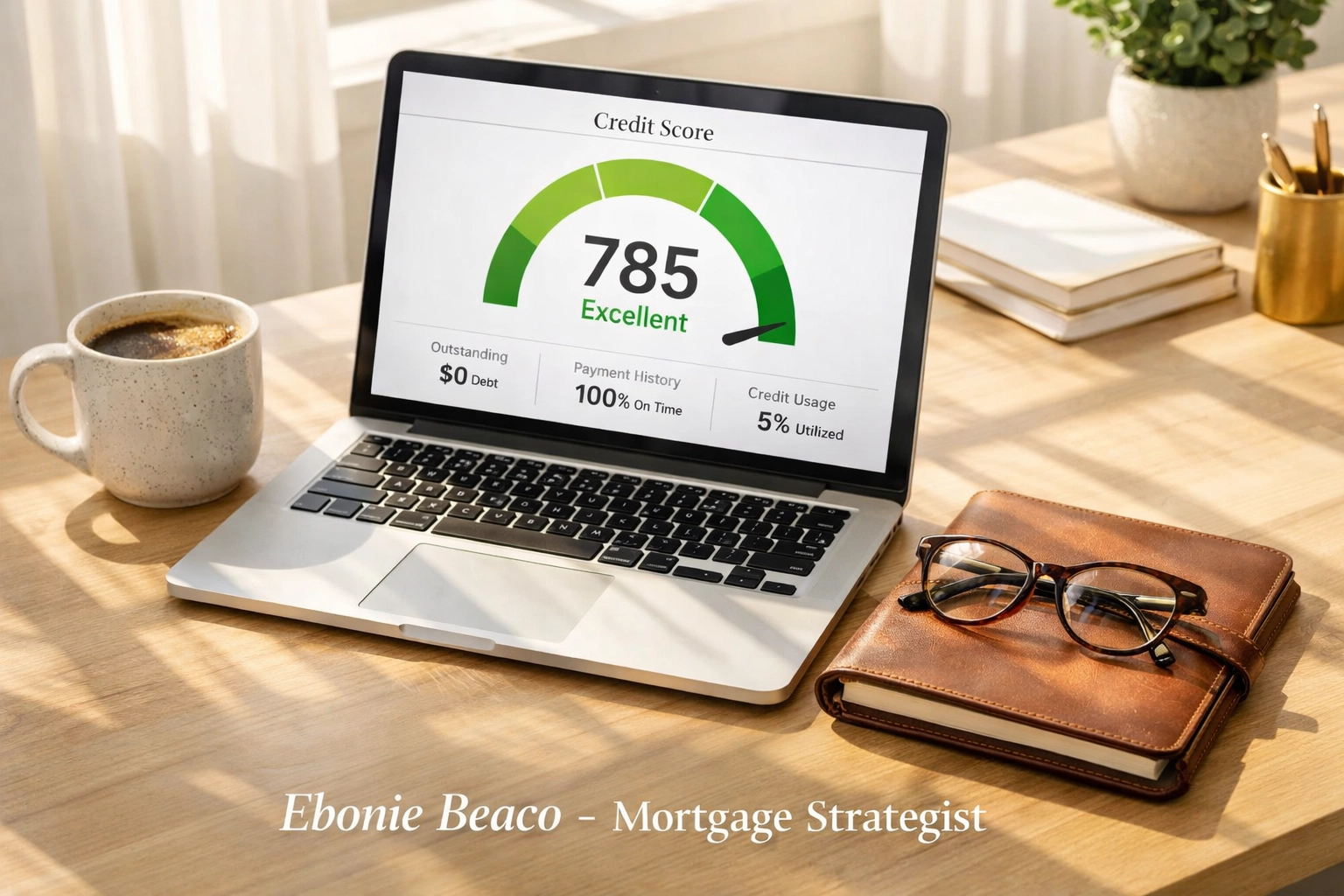
Small errors on your report can lead to higher interest rates or even a loan denial. According to recent consumer research, a significant percentage of credit reports contain errors that negatively impact scores. Cleaning these up can sometimes boost your score by 20 to 40 points in a short window.
Jump in by pulling your reports from all three bureaus. Look for late payments that weren't actually late or accounts that don't belong to you. If your credit utilization is currently maxed out, your score might be suppressed.
The beauty of the HELOC strategy is that once the debt is consolidated, your utilization on your credit cards drops to zero, which usually results in a massive credit score spike. But you need the score to be "good enough" to get the HELOC in the first place.
Step 2: The Math of Consolidation
You cannot manage what you do not measure. You need to create a "Debt Attack Map." List every single credit card, personal loan, or high-interest line of credit you currently hold.
For each item, note:
- The current balance.
- The APR.
- The minimum monthly payment.
Now, let's look at a real-world scenario. Imagine you have a home in Virginia or Florida valued at $500,000. You owe $300,000 on your first mortgage.
Financial Breakdown: The Equity Equation
| Category | Value |
|---|---|
| Home Value | $500,000 |
| Current Mortgage Balance | $300,000 |
| Max Combined Loan-to-Value (CLTV) (85%) | $425,000 |
| Available HELOC Limit | $125,000 |
If you have $40,000 in credit card debt at an average of 26% APR, your monthly interest alone is roughly $866.
If you use your HELOC at an 8.5% APR to pay that off, your monthly interest drops to approximately $283.
That is over $580 in "found money" every single month. You can use our mortgage calculators to run these numbers for your specific situation.
CLTV (Combined Loan-to-Value): The ratio of all loans on a property (first mortgage plus the HELOC) divided by the property's appraised value. Practical application: Lenders often allow a CLTV up to 80% or 85%, which determines the maximum size of your credit line.

Step 3: Gather Your Documentation Before the Clock Ticks
Speed is your friend. If you want to get this done before your next statement hits and potentially lowers your credit score due to high utilization, you need to be prepared.
A Missouri HELOC lender or an Alabama HELOC lender will generally ask for:
- Income Verification: Your two most recent pay stubs and W2s from the last two years.
- Tax Returns: Usually the last two years of federal filings.
- Mortgage Statement: Your most recent statement for your primary mortgage.
- Homeowners Insurance: A copy of your current declarations page.
- Debt Statements: A list of the accounts you intend to pay off.
Access the loan process page to see a detailed breakdown of how we move from application to funding.
Why Location Matters: From Chicago to the Gulf Coast
Home Loans Network operates across a wide footprint, including Illinois, Michigan, Indiana, Kentucky, Georgia, and Arkansas. Each of these markets has different trends in home equity growth.
In California and parts of Florida, equity has skyrocketed over the last few years. Homeowners who bought even three years ago often find themselves sitting on six figures of untapped equity. Even in more stable markets like Michigan or Indiana, the steady rise in home values has created a buffer that many homeowners aren't utilizing to their advantage.
If you are a landlord or a real estate investor in Chicago or Atlanta, you can also use HELOCs on investment properties to consolidate business debt or fund your next acquisition. The strategies are similar, though the terms for investment property HELOCs may vary slightly from primary residences.
Explore our loan programs to see the different ways we structure these deals for homeowners and investors alike.
The Transparency Check: Is a HELOC Always the Right Move?
At Home Loans Network, we believe in being transparent. A HELOC is a powerful tool, but it is not a magic wand.
When you consolidate credit card debt into a HELOC, you are moving "unsecured" debt to "secured" debt. Your credit cards aren't tied to your house; your HELOC is. This means if you fail to make your HELOC payments, your home is at risk.
Furthermore, if you use a HELOC to pay off your cards but don't change the spending habits that led to the debt, you could find yourself in a worse position: maxed-out cards and a maxed-out HELOC.
We only recommend this strategy for clients who are committed to closing those high-interest accounts or keeping them at a zero balance. If you are ready to be disciplined, the interest savings are life-changing.
The Trigger: Why You Must Act Before the Statement Date
Credit scores are calculated based on data at a specific point in time. Most credit card companies report your balance to the bureaus on your statement closing date.
If you are currently carrying high balances, your "Credit Utilization Ratio" is likely high, which drags your score down. If you apply for a HELOC after a particularly heavy spending month is reported, you might get hit with a higher interest rate.
By starting the process now, you can often lock in your profile before the next data dump to the credit bureaus.
Draw Period: The timeframe (usually 10 years) during which you can take money out of your HELOC. Practical application: During this time, many HELOCs allow for interest-only payments, giving you maximum flexibility to aggressively pay down the principal on your own schedule.
Your Next Steps to Financial Freedom
The path to zero debt starts with a single calculation. Compare what you are paying now to what you could be paying with a structured home equity strategy. Whether you need a fixed-rate mortgage or a flexible line of credit, the goal is the same: stop wasting money on interest.
Don't let another month of 28% interest eat away at your hard-earned equity. Explore your options, gather your documents, and take control of your balance sheet.
Schedule a 1 on 1 at https://calendly.com/homeloansnetwork
Ebonie Beaco
Mortgage Strategist | Senior Loan Officer
Home Loans Network powered by Loan Factory Inc.
NMLS #2389954
HomeLoansNetwork.com
312-392-0664