
The Secret Home Equity Drain: Why “Low Intro Rates” Can Get Expensive Fast
A HELOC (Home Equity Line of Credit) is a revolving credit line secured by your home.
You can draw funds, repay, and draw again during the draw period, which is why people compare it to a credit card.
A HELOC can be a smart tool in Florida and beyond, but here’s the quiet part: many borrowers focus on the “starting rate” and ignore the fees, the variable-rate risk, and the payment shock when the draw period ends.
Action you can take: Ask for a full fee worksheet and payment scenarios at multiple rate levels before you apply.
Quick definitions (so you can compare offers cleanly)
HELOC
Definition: A revolving line of credit secured by home equity.
Practical use: Access cash for projects, reserves, or investing without replacing your first mortgage.
Draw period
Definition: The early phase when you can borrow and repay repeatedly, often with interest-only payments.
Practical use: Flexible access for renovations or staged investing (BRRRR, flips, short-term rentals).
Repayment period
Definition: The later phase when borrowing typically stops and you repay principal plus interest.
Practical use: Predictable payoff timeline, but monthly payments often rise.
Variable rate
Definition: An interest rate that can change over time, commonly tied to Prime.
Practical use: Can start lower than fixed options, but your payment can rise later.
CLTV (Combined Loan-to-Value)
Definition: Total liens on the home divided by the home value (first mortgage + HELOC + any other liens).
Practical use: Lenders use CLTV to set your max line and pricing.
The “No Closing Costs” Claim: What to Ask Before You Sign
Some lenders advertise “no closing costs” HELOCs.
Sometimes that’s real. Sometimes it’s just costs moved into other buckets.
The fee categories that sneak up on homeowners
- Appraisal or valuation fee: Cost to confirm property value.
- Title fees: Title search, lender’s title policy, recording.
- Annual fee: A recurring charge to keep the line open.
- Inactivity fee: A charge if you do not draw for a set period.
- Early closure fee: A penalty if you close the HELOC too soon.
- Rate floor language: Fine print that limits how low your rate can go.
The three questions banks hope you don’t ask
- “Is there an early termination fee if I close within 12 to 36 months?”
- “Do you charge an annual fee or inactivity fee?”
- “If you ‘cover’ closing costs, do you recapture them if I refinance or sell?”
Action you can take: Request the fee schedule in writing and compare two lenders side-by-side before you commit.
Florida HELOC Reality Check: Variable Rates + Insurance + Coastal Costs
A Florida HELOC can be powerful, especially if you’re sitting on strong appreciation in markets like Miami, Fort Lauderdale, Tampa, Orlando, Jacksonville, Naples, or Sarasota.
But Florida has its own dynamics.
Why Florida borrowers feel HELOC swings faster
- Variable-rate exposure: Many HELOCs track Prime, so your payment can move quickly.
- Insurance-driven budget pressure: Rising property insurance and HOA dues can squeeze your monthly cash flow.
- Condo underwriting changes: Some condos require extra review, which can affect timelines and lender options.
Action you can take: Stress-test your payment at higher rates and confirm condo eligibility early if applicable.
Compare These Equity Options Before You Pick a HELOC
A HELOC is not the only way to access equity.
If you choose the wrong tool, you can pay more or reduce flexibility.
HELOC vs cash-out refinance vs second mortgage
Cash-out refinance
Definition: Replaces your current first mortgage with a larger loan and you receive the difference in cash.
Practical use: Works best when your new rate and terms still improve your overall monthly picture.
Explore refinance basics here: https://www.homeloansnetwork.com/home-refinance
Home equity loan (fixed second)
Definition: A lump-sum second mortgage with a fixed rate and fixed payment.
Practical use: Useful when you want predictable payments for a single big project (roof, foundation, large renovation).
HELOC
Definition: Revolving line you draw as needed.
Practical use: Useful for phased projects, reserves, or investing strategies where timing is uncertain.
Action you can take: Run all three scenarios with the same assumptions (rate, fees, timeline) so you are comparing apples to apples.
The Secret Payment Shock: What Happens When the Draw Period Ends
A common HELOC structure is 5 to 10 years draw, followed by 10 to 20 years repayment.
During the draw period, some HELOCs allow interest-only payments, which can feel “cheap” monthly.
Then the draw period ends.
Your payment can jump because you are now paying principal + interest on a remaining balance, potentially at a higher rate than you started with.
How to reduce payment-shock risk
- Principal-first habit: Pay more than interest-only when you can.
- Fixed-rate conversion option: Some lenders allow you to lock portions into fixed segments.
- Shorter payoff plan: Use the line for short-term use, then pay it down aggressively.
Action you can take: Ask: “Do you offer fixed-rate segments, and what are the conversion fees?”
A Simple Equity Example (With Numbers You Can Recreate)
Let’s break down a common scenario I see with homeowners and investors across Florida, Georgia, and Illinois.
Example: Estimating potential HELOC availability using CLTV
Assumptions:
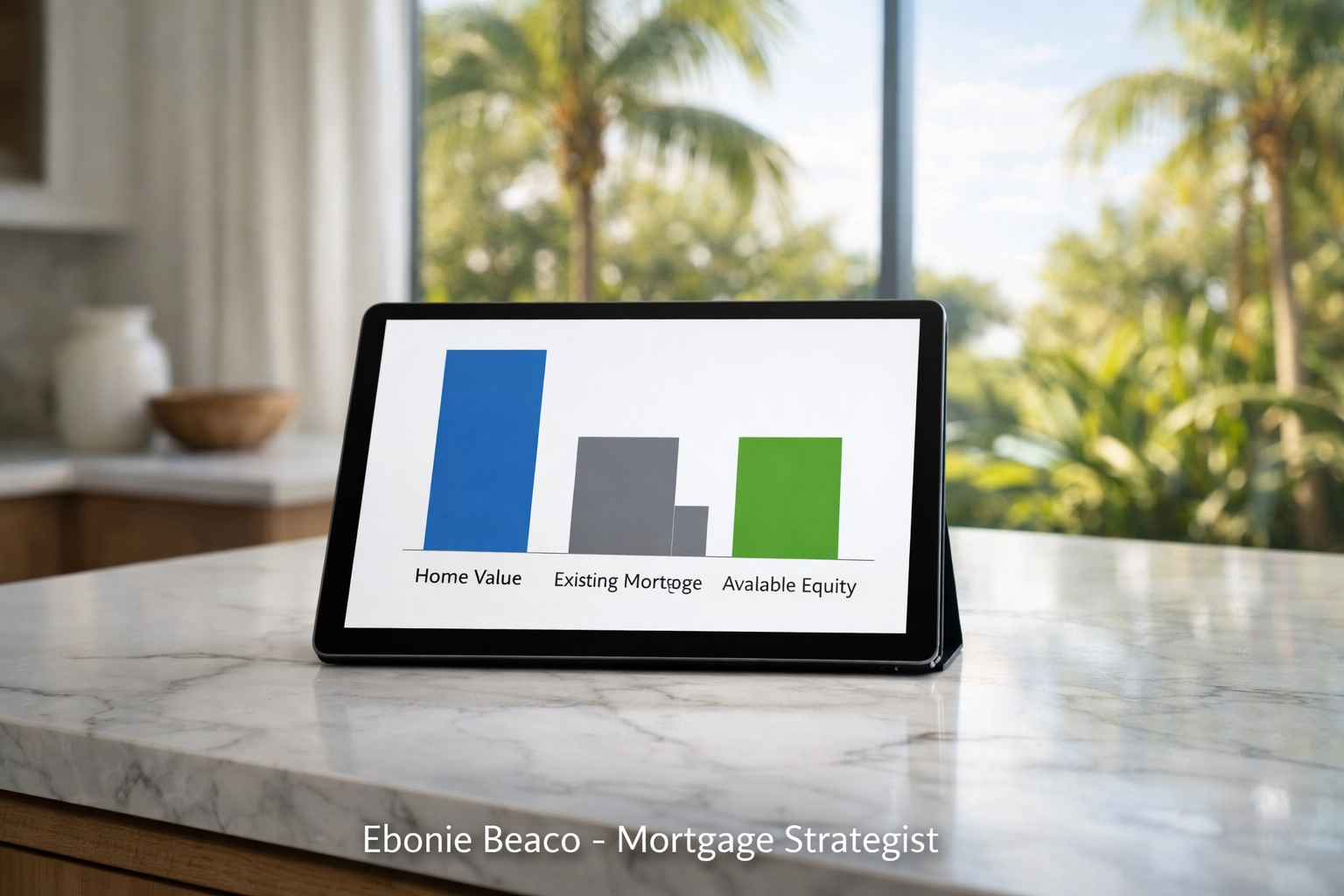
- Home value: $500,000
- Current first mortgage balance: $280,000
- Max allowed CLTV: 85%
- Max total liens allowed: $500,000 x 0.85 = $425,000
- Potential HELOC limit: $425,000 - $280,000 = $145,000
What this tells you (and what it does not)
- Tells you: A rough estimate of the line size a lender might consider.
- Does not tell you: Final approval, pricing, or whether fees reduce your net usable funds.
Action you can take: Use a calculator to pressure-test payments and borrowing amounts before you apply: https://www.homeloansnetwork.com/mortgage-calculators
Investor Angle: How a HELOC Funds BRRRR, Fix and Flip, and Short-Term Rentals
Homeowners are not the only HELOC users.
Real estate investors often use HELOCs as flexible capital, especially when traditional funding is slow.
Where HELOCs fit in common investor strategies
BRRRR (Buy, Rehab, Rent, Refinance, Repeat)
Definition: An investing method that recycles capital by refinancing after rehab and stabilization.
Practical use: A HELOC can front renovation costs or serve as a liquidity backstop between phases.
Fix and flip
Definition: Purchase + renovate + resell for profit, typically on a short timeline.
Practical use: A HELOC can cover gaps like change orders, carrying costs, or quick materials buys.
Airbnb and short-term rental investing
Definition: Operating furnished rentals for nightly or weekly stays.
Practical use: A HELOC can help fund furnishing, upgrades, or reserves during seasonality.
The risk investors underestimate
- Velocity risk: If you draw too much too fast, you can create a large variable-rate balance.
- Exit risk: If the refinance or sale timeline slips, you can carry the line longer at a higher rate.
- Liquidity risk: HELOCs can be frozen or reduced by lenders during market stress.
Action you can take: Build a Plan B: define your payoff trigger and your cash reserve target before you draw.
Multi-State HELOC Strategy: What Changes Across AL, AR, CA, FL, GA, IL, IN, KY, MI, MO, VA
You will see similar HELOC fundamentals across states, but the local market realities change how you should use the product.
Florida (FL)
- Common use: Renovations, storm resilience upgrades, liquidity without touching a low first-mortgage rate.
- Watch-outs: Insurance, condo review, and variable-rate sensitivity.
California (CA)
A California HELOC can look attractive when you have significant equity, especially in metro areas like Los Angeles, San Diego, the Bay Area, Sacramento, and Inland Empire.
- Common use: Large remodels, ADU projects, bridge funding for moves.
- Watch-outs: Jumbo pricing tiers and lender overlays can vary widely.
Action you can take: If you’re shopping a California HELOC, ask specifically about CLTV caps in your county and any jumbo HELOC minimums.
Georgia (GA)
If you’re searching for a Georgia HELOC lender, you’ll see a wide spread in fee structures and rate margins, especially around Atlanta, Marietta, Alpharetta, Decatur, and growing suburban corridors.
- Common use: Renovations, debt consolidation, investor liquidity lines.
- Watch-outs: DTI and credit score pricing hits can be sharper than expected.
Action you can take: Ask your Georgia HELOC lender for margin details: “Prime plus what, and is there a rate floor?”
Illinois (IL) and Chicago
- Common use: Cash reserves, tuition planning, and remodeling older housing stock.
- Watch-outs: Taxes and escrowed payment changes can affect your overall monthly budget.
Michigan (MI), Indiana (IN), Missouri (MO), Kentucky (KY), Alabama (AL), Arkansas (AR), Virginia (VA)
- Common use: Renovations, debt consolidation, down payment assistance for investor purchases, emergency reserves.
- Watch-outs: Appraisal variability by neighborhood and stricter CLTV when property types are unique (rural, manufactured, non-warrantable condos).
Action you can take: Wherever you live, request a “worst-case” payment illustration at higher rates so you can decide with clarity.
The Bank’s Favorite HELOC Mistake: Treating It Like Free Money
This is the pattern I see most often:
People open a HELOC for “just in case,” then slowly convert it into a long-term balance with no payoff plan.
Use these guardrails instead
- Rule: Set a purpose. Renovation budget, reserve fund, or investor capital. Pick one.
- Rule: Set a ceiling. Choose a max draw amount below your approved limit.
- Rule: Set an exit. A payoff date tied to a tax refund, bonus, sale, or refinance event.
- Rule: Automate payments. Missed payments damage credit and can trigger fees.
Action you can take: Write your HELOC plan in one paragraph and keep it with your closing documents.
HELOC Pre-Flight Checklist (Use This Before You Apply)
Credit, DTI, and documentation
- Credit score: Higher scores typically improve pricing and reduce required reserves.
- DTI (Debt-to-Income): Lower DTI improves approvals and line size flexibility.
- Income docs: W-2, pay stubs, tax returns, or business bank statements depending on profile.
Property and lien readiness
- Title clarity: Confirm any old liens are released.
- Insurance status: Keep your policy current, especially in Florida coastal zones.
- Occupancy type: Primary, second home, and investment properties can price differently.
Learn how lenders typically move a file from application to closing here: https://www.homeloansnetwork.com/loan-process
Action you can take: Gather documents first, then shop lenders. That is how you keep leverage in the conversation.
Next Step: Get a Clean HELOC Strategy, Not Just a Rate Quote
If you’re weighing a HELOC versus a cash-out refinance, or trying to structure a line for investing, get a scenario review that includes fees, rate assumptions, and a payoff plan.
Schedule a 1 on 1 at https://calendly.com/homeloansnetwork
Ebonie Beaco
Mortgage Strategist | Senior Loan Officer
Home Loans Network powered by Loan Factory Inc.
NMLS #2389954
HomeLoansNetwork.com
312-392-0664
Cliffhanger: The One HELOC Clause That Can Freeze Your Line Overnight
In the next post, I’m breaking down the “line freeze” language that shows up in HELOC agreements, what triggers it, and how investors and homeowners can protect access to cash when the market tightens.