What Is the Best Way to Finance a Multi-Unit Property in Illinois?

In the competitive landscape of Chicago real estate, the "multi-unit" property: specifically the classic 2-to-4 unit building: stands as the undisputed champion of wealth creation. Whether you are eyeing a greystone in Logan Square or a brick two-flat in Bronzeville, the question is rarely if you should buy, but how you should finance it to maximize your leverage. For the serious investor, financing is not a one-size-fits-all product; it is a strategic tool that dictates your long-term portfolio health.
The Illinois market, particularly in high-density urban centers, offers unique challenges and opportunities. Understanding the pivot between residential and commercial-style financing is essential for any investor or realtor looking to navigate these waters effectively. Therefore, we must examine the specific pathways available to secure these assets, balancing immediate cash flow needs against long-term debt sustainability.
The Strategy of the "House Hack": FHA and Conventional 5% Down
For many new investors in Illinois, the most pragmatic entry point into the multi-unit market is through owner-occupied financing. This strategy, commonly referred to as "house hacking," allows a buyer to live in one unit while renting out the others to cover the mortgage.
FHA Loans (3.5% Down)
The FHA 203(b) loan remains a cornerstone for multi-family acquisition. In fact, it allows for a down payment as low as 3.5% for properties with up to four units. As a result, an investor can control a high-value asset with minimal capital out-of-pocket. However, properties with 3-4 units must pass the FHA "self-sufficiency test," meaning the net rental income must exceed the total mortgage payment (PITI). If the numbers don't work, the deal won't close.
Conventional 5% Down (The Game Changer)
Recent changes in the lending landscape have made conventional loans for 2-4 unit properties much more accessible. Historically, a 15-25% down payment was standard for multi-family homes. Today, owner-occupants can leverage 5% down options. This is a significant shift because conventional loans often carry lower private mortgage insurance (PMI) costs than FHA loans and do not require the same stringent self-sufficiency tests.
Contrast: Low Leverage vs. High Leverage
- Low Leverage (25% Down): Safer, higher monthly cash flow, but ties up significant capital.
- High Leverage (3.5% - 5% Down): Rapidly scales a portfolio, preserves cash for repairs, but carries higher monthly debt service.

The DSCR Loan: Financing Based on Property Performance
When you transition from a "homebuyer" mindset to a "portfolio builder" mindset, your reliance on personal income (W-2 or tax returns) becomes a bottleneck. This is where DSCR (Debt Service Coverage Ratio) loans become your most powerful weapon.
Unlike traditional mortgages that scrutinize your personal debt-to-income (DTI) ratio, a DSCR loan focuses almost exclusively on the property's ability to generate income. Thus, if the rental income from the Illinois property covers the mortgage payment (typically 1.2x coverage or higher), the loan is viable.
Why Investors Choose DSCR in Chicago
Chicago’s rental market is robust. In many neighborhoods, the rents are high enough to easily satisfy DSCR requirements.
- No Tax Returns Required: Ideal for investors with complex tax filings or those who take significant write-offs.
- Scalability: You can close multiple DSCR loans simultaneously because they do not impact your personal DTI.
- Entity Closing: You can close the loan in the name of an LLC, providing an extra layer of asset protection.
Moreover, for those looking to avoid the common pitfalls of this program, it is worth reviewing the 7 mistakes you’re making with DSCR loans to ensure your Illinois deals remain profitable.
Bank Statement Loans: The Entrepreneur’s Edge
If you are a self-employed investor or a realtor in Illinois, your tax returns might not reflect your true earning potential. In fact, many entrepreneurs write off business expenses that lower their taxable income, making them ineligible for traditional conventional financing.
Bank Statement Loans allow you to qualify using 12 to 24 months of personal or business bank deposits rather than tax transcripts. This "Residual Reality" approach acknowledges the actual cash flow of your business. As a result, you can secure a 2-4 unit property in a prime Chicago neighborhood based on the strength of your business operations rather than an arbitrary number on a tax form.
Bridge to DSCR: The Value-Add Strategy
For investors targeting distressed properties in Illinois that need significant renovation, a standard mortgage is often out of the question. These properties are frequently "un-lendable" due to their condition.
The Bridge Loan serves as the acquisition and rehab phase. Once the property is stabilized and units are rented out at market rates, the investor refinances into a long-term DSCR loan.
Therefore, this "Bridge-to-DSCR" strategy allows you to:
- Acquire properties below market value.
- Fund the renovations.
- "Force" appreciation.
- Pull your initial capital back out through a cash-out refinance.
Case Study: The Chicago 3-Unit Calculation
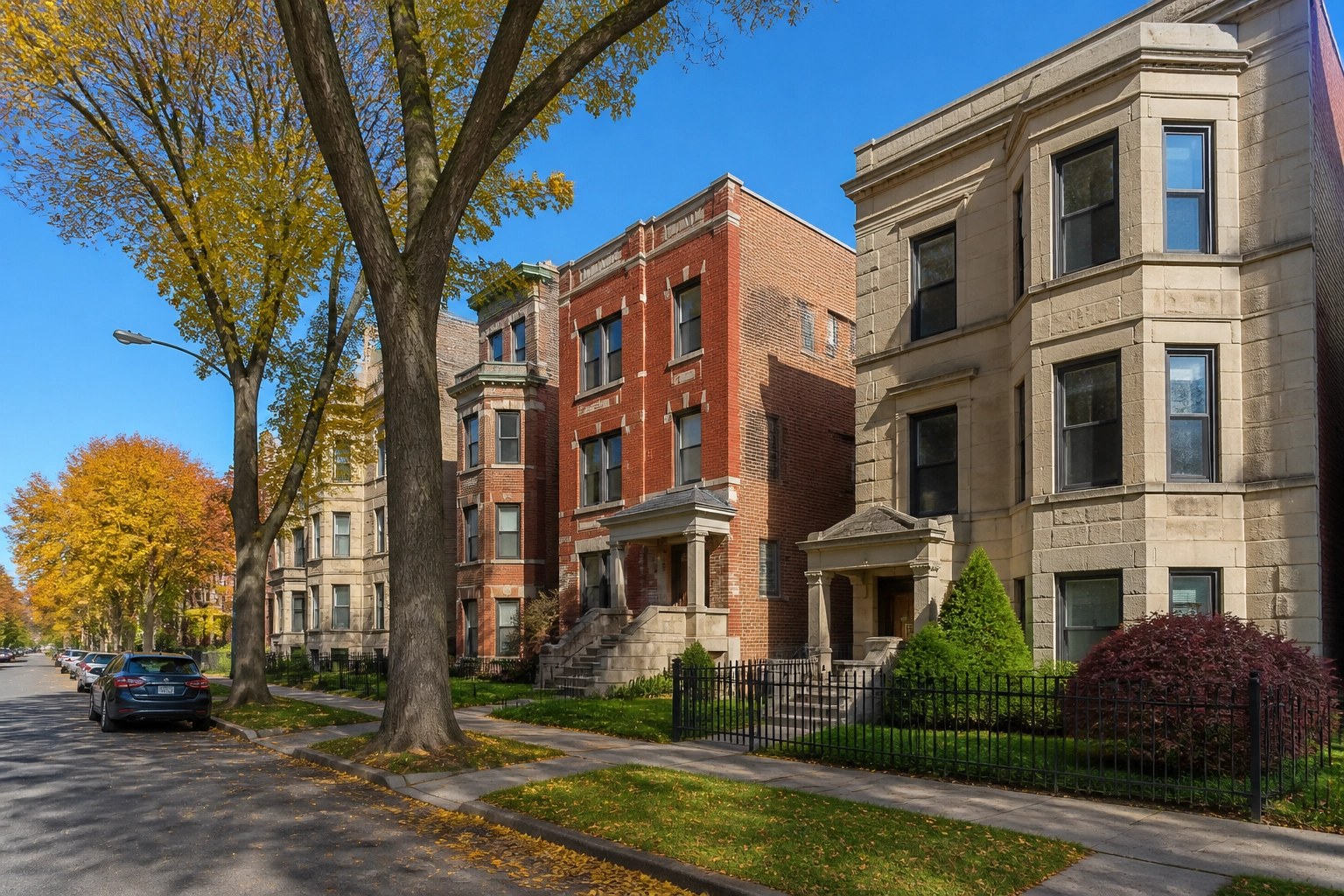
To illustrate the power of strategic financing, let’s look at a hypothetical 3-unit building purchase in an appreciating Chicago neighborhood like Avondale.
- Purchase Price: $650,000
- Renovation Budget: $50,000
- Total Investment: $700,000
- Post-Renovation Appraised Value (ARV): $825,000
The Financing Math (DSCR Approach)
- Loan Amount (75% LTV of ARV): $618,750
- Estimated Monthly Payment (PITI): $4,200
- Projected Monthly Rent (3 units x $2,100): $6,300
- Net Monthly Cash Flow: $2,100
- DSCR Ratio: $6,300 / $4,200 = 1.5
In this scenario, a DSCR ratio of 1.5 is considered excellent. Therefore, the investor not only secures a loan with no personal income verification but also realizes a healthy monthly profit that can be reinvested into the next property.
Strategic Comparison: Conventional vs. DSCR vs. Bank Statement
| Feature | Conventional (Owner-Occ) | DSCR (Investor) | Bank Statement |
|---|---|---|---|
| Down Payment | 5% | 20% - 25% | 10% - 20% |
| Income Verification | W-2 / Tax Returns | Property Income Only | Bank Deposits |
| DTI Requirement | Strict (usually <45%) | None | Flexible |
| Interest Rate | Lower | Moderate | Moderate |
| Closing Speed | 30-45 Days | 14-21 Days | 21-30 Days |
Frequently Asked Questions
Can I use rental income from the property to qualify for an Illinois mortgage?
Yes. Both FHA and Conventional guidelines allow you to use up to 75% of the projected rental income (as determined by an appraiser's market rent schedule) to help offset the mortgage payment. Moreover, DSCR loans use 100% of the rent for the calculation.
What is the maximum number of units for a residential loan in Illinois?
Residential financing covers properties with 1 to 4 units. Anything with 5 units or more is considered commercial real estate and requires different underwriting standards and higher down payments.
Do I need a high credit score for multi-unit financing?
While a higher score (720+) gets you the best rates, many Non-QM and DSCR programs in Illinois can accommodate scores as low as 620. As a result, even investors with minor credit hurdles can still participate in the market.
Is Chicago a good place for multi-family investing in 2026?
Chicago remains one of the few major U.S. cities where the rent-to-price ratio still allows for positive cash flow on multi-unit properties. Thus, it continues to be a top destination for both local and out-of-state investors.
Strategic move: If you are ready to stop looking at properties and start closing deals, you need a strategist who understands the nuances of the Illinois market. Whether you are a first-time "house hacker" or a seasoned pro scaling a portfolio, Ebonie Beaco can help you navigate these complex financing waters.
Contact: Ebonie Beaco, Loan Officer (NMLS #2389954) Phone: 312-392-0664 Website: www.HomeLoansNetwork.com Powered by Loan Factory, Inc. (NMLS #320841)
Disclaimer: This content is for educational purposes only and does not constitute a loan approval or commitment. Loan programs, terms, and eligibility requirements are subject to change and vary by borrower and property.