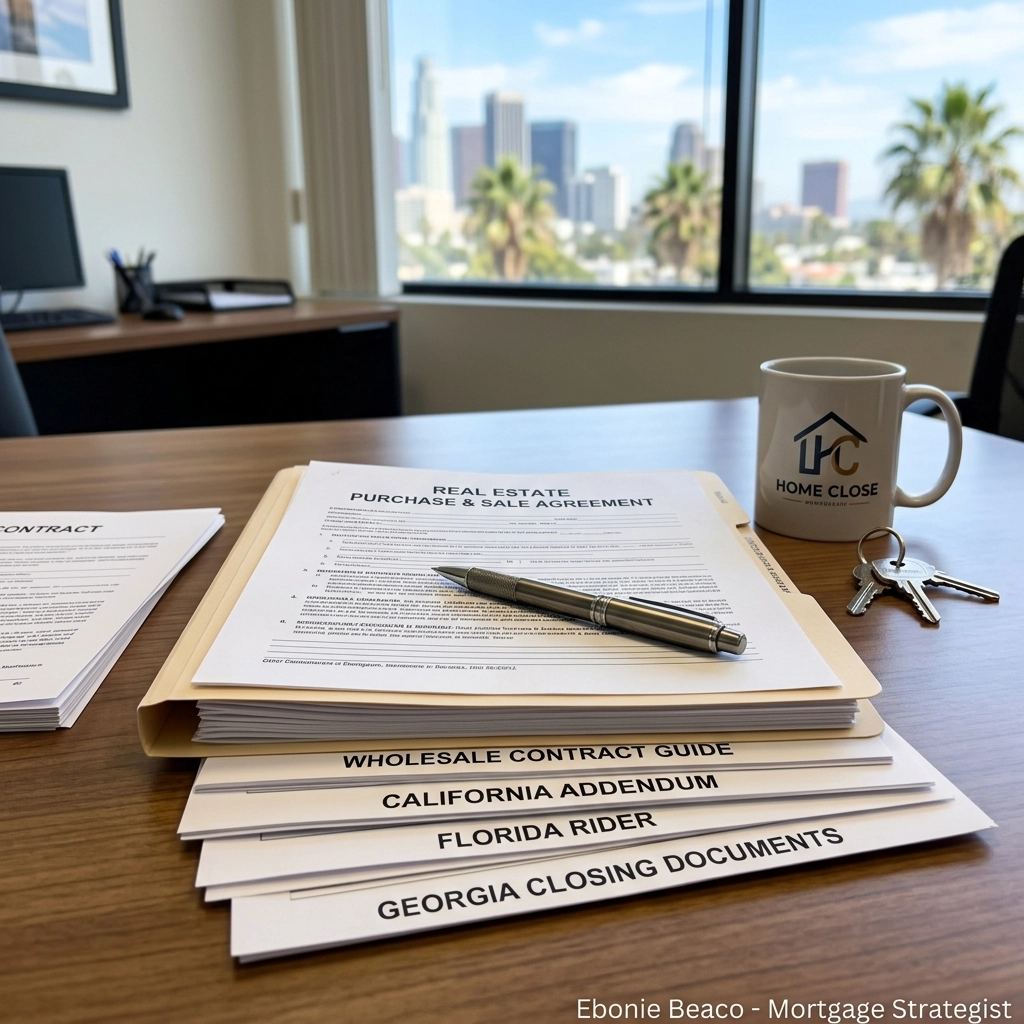
Real estate wholesaling is often described as the fast track to entering the investment market without needing a massive down payment or a stellar credit score.
While the concept sounds simple: find a deal, flip the contract, and collect a check: the logistics are where many newcomers get stuck.
To succeed in high-velocity markets like California, Florida, and Georgia, you need to understand the nuances of the wholesale contract, the assignment process, and the legal requirements that vary by state.
This guide provides a transparent look at how to structure your deals, protect your interests, and ensure your end buyers have the right financing in place to close.
Wholesaling Definitions: Speak the Language
Before diving into the logistics, it is helpful to define the core terms you will encounter during a transaction.
Wholesale Real Estate Contract
A legally binding agreement between a seller and a buyer (the wholesaler) where the wholesaler intends to transfer their rights to an end buyer.
Practical application: This document secures your interest in the property so you can legally market the deal to others.
Assignment of Contract
A secondary legal document used to transfer the rights and obligations of a purchase agreement from the original buyer to a new end buyer.
Practical application: This is the "flip" document that allows you to exit the deal while passing the purchase rights to a cash buyer or investor.
Assignment Fee
The profit earned by a wholesaler for finding the deal and facilitating the transfer of the contract.
Practical application: This is paid to you at the closing table, typically out of the funds provided by the end buyer.
Double Closing
A transaction where the wholesaler actually purchases the property and then immediately sells it to an end buyer in a separate closing.
Practical application: This strategy is often used to keep your assignment fee private from both the original seller and the end buyer.
Equitable Interest
The legal right to obtain full ownership of a property based on a signed contract, even if the title has not yet transferred.
Practical application: Wholesalers market their equitable interest in the contract rather than the physical real estate itself.
The Core Components of a Wholesale Contract
Your contract is your protection.
If your paperwork is weak, you risk losing your fee or, worse, facing legal challenges from sellers who feel misled.
Every wholesale contract should include a few specific clauses to ensure you can actually execute the strategy.
First, you need clear Assignment Language.
The buyer's name on the contract should typically be written as "[Your Name and/or Assigns]."
This simple phrase signals to the seller that you have the right to transfer the contract to another party.
Second, ensure there is an Assumption of Obligations clause.
This protects you by stating that once the contract is assigned, the new buyer takes on all responsibilities and liabilities originally held by you.
Third, you must include a Seller Consent provision if you are working in a state that requires explicit permission for assignments.
Transparency helps build trust and keeps the deal moving forward without surprises at the closing table.
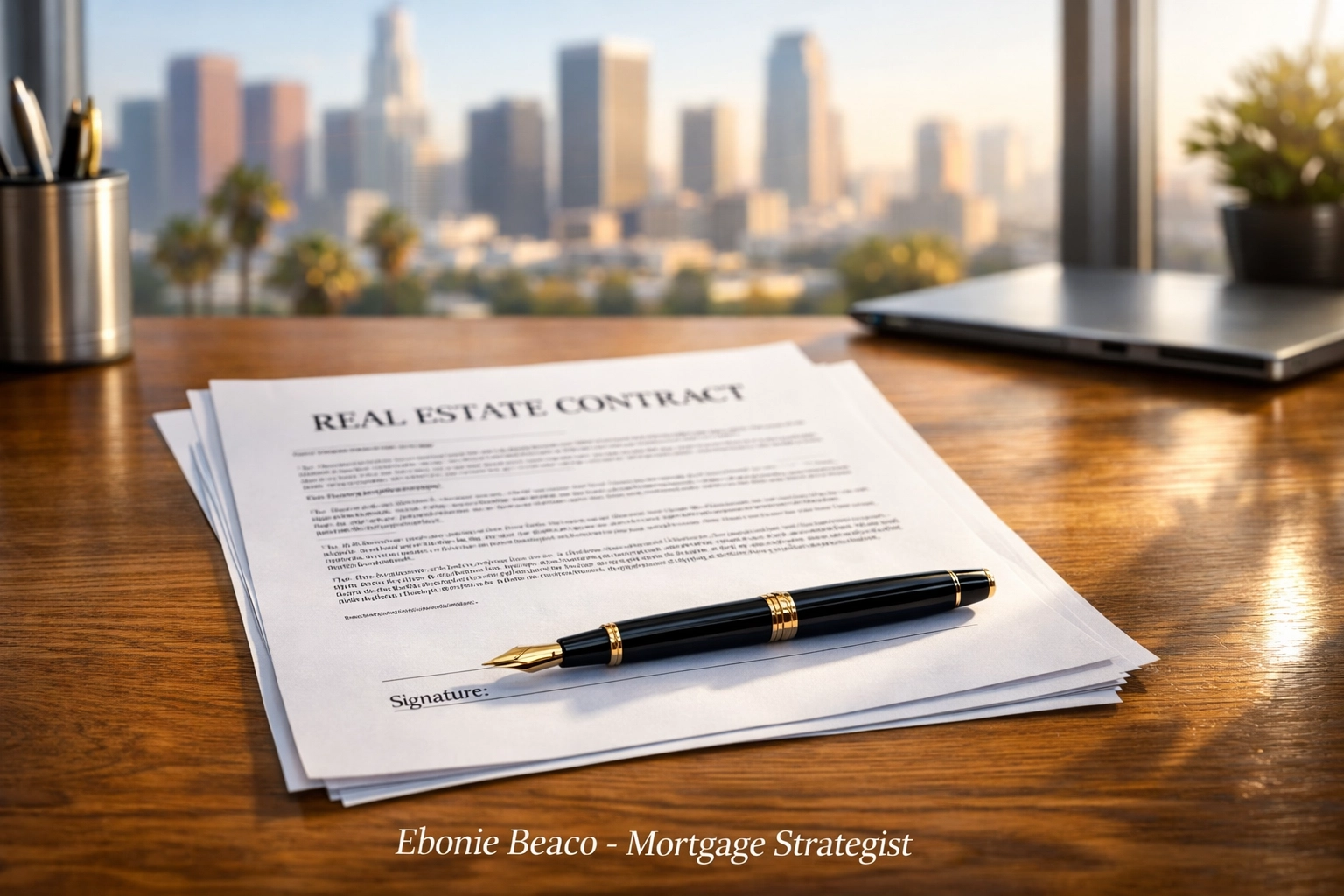
How the Wholesaling Process Moves from Start to Finish
- Find and Negotiate the Deal: Locate a distressed property or a motivated seller and negotiate a price that leaves enough room for your fee and the end buyer's profit.
- Execute the Purchase Agreement: Sign the initial contract with the seller, ensuring it includes your assignment language.
- Find a Cash Buyer: Reach out to your network of landlords, fix-and-flip investors, or property managers who are looking for their next project.
- Sign the Assignment Agreement: Once a buyer is found, execute the assignment of contract and collect a non-refundable earnest money deposit from them.
- Coordinate the Closing: Send all paperwork to the title company or closing attorney to ensure the title is clear and the funds are ready.
- Collect Your Fee: Once the end buyer brings the funds and the deal closes, the title company cuts you a check for your assignment fee.
Market Spotlight: California, Florida, and Georgia
While the basic steps remain the same, the regional specifics are significant.
Each of these three states has a different legal landscape that affects how you handle your contracts and closings.
Wholesaling in California
California remains one of the highest-earning markets for wholesalers in 2026.
Because property values in cities like Los Angeles, San Diego, and San Francisco are so high, a small percentage spread can lead to massive assignment fees.
In this market, it is common to see assignment fees ranging from $15,000 to $25,000 per deal.
However, California is also a highly litigious state, so your disclosures must be perfect.
You must clearly state that you are the buyer in the contract and that you intend to make a profit.
Wholesaling in Florida
Florida has specific regulations under Chapter 475.41 regarding the marketing of real estate.
To stay compliant in Florida, you must be careful to market the contract you hold, not the house itself.
If you represent yourself as an agent selling a home without a license, you could face significant fines.
Florida investors often prefer double closings to keep their high assignment fees confidential, especially in hot markets like Miami, Orlando, and Tampa.
Wholesaling in Georgia (Atlanta)
Georgia is a "closing attorney state," meaning all real estate transactions must be handled by a licensed attorney rather than just a title company.
In Atlanta, wholesalers often see high assignment fees, sometimes averaging around $22,000 due to the high demand for rental inventory.
Your attorney will review the assignment of contract to ensure it meets state standards.
It is essential to work with an investor-friendly attorney who understands the wholesaling process and won't flag the transaction as "unusual."
Assignment Fees vs. Double Closings: Which is Right for You?
Choosing between an assignment and a double close usually depends on the size of your profit and the personalities involved in the deal.
The Assignment Route
This is the most common method because it is inexpensive.
You don't need to bring any of your own money to the table (other than a small earnest money deposit).
The downside is that both the seller and the end buyer can see exactly how much you are making.
If you are making a $5,000 fee, most people won't care.
If you are making a $50,000 fee, the seller might feel they underpriced the home, or the buyer might feel they are overpaying.
The Double Closing Route
In a double close, you actually buy the house (the A-to-B transaction) and then sell it to the end buyer (the B-to-C transaction) a few minutes later.
This requires you to have the funds to close the first deal, which many wholesalers solve by using bridge loans or transactional funding.
The primary benefit is privacy.
Because there are two separate transactions, the seller never sees your final sale price, and the buyer never sees your original purchase price.
Explore the Home Loans Network loan process to see how timing and documentation impact these fast-moving deals.
A Real-World Financial Breakdown
Let’s look at a typical wholesale deal in a market like Atlanta or Orlando.
Imagine you find a distressed property with an After Repair Value (ARV) of $400,000.
The home needs about $50,000 in work.
You negotiate a purchase price with the seller for $240,000.
| Item | Amount |
|---|---|
| Wholesale Purchase Price (A-B) | $240,000 |
| End Buyer Purchase Price (B-C) | $265,000 |
| Gross Assignment Fee | $25,000 |
| End Buyer Rehab Costs | $50,000 |
| End Buyer Total Investment | $315,000 |
| Projected End Buyer Profit | $85,000 |
In this scenario, you walk away with $25,000 for your work in finding the deal.
The end buyer is happy because they still have plenty of equity left for their flip or rental strategy.

Helping Your End Buyer Close
As a wholesaler, your deal is only as good as your end buyer’s ability to close.
Many investors use conventional loans or fixed-rate mortgage products for their long-term holds.
However, many professional flippers rely on more specialized financing.
If your buyer is planning to keep the property as a rental, they might look into DSCR Investor Loans, which qualify based on the property’s rental income rather than the borrower’s personal income.
Understanding these loan programs allows you to vet your buyers more effectively.
If a buyer tells you they are using a traditional bank for a distressed property that doesn't have a working kitchen, you should be skeptical.
That deal likely won't close.
Guide your buyers toward lenders who understand investment properties, fix-and-flip scenarios, and bridge financing to ensure your assignment fee actually hits your bank account.
Compliance and Expert Guidance
The laws surrounding wholesaling are constantly shifting.
In 2025, several states updated their disclosure requirements, and more are expected to follow in 2026.
Staying compliant means being honest about your role as an investor and always using contracts reviewed by a legal professional in your specific state.
Whether you are working in California, Florida, Georgia, or any of the other states we serve, having a mortgage strategist in your corner helps you understand the financing side of the equation.
This knowledge makes you a more valuable partner to your cash buyers and helps you structure deals that are destined to close.
If you are an investor or wholesaler looking for guidance on how to fund your next acquisition or how to help your end buyers secure the right financing, let's connect.
Schedule a 1 on 1 at https://calendly.com/homeloansnetwork
Ebonie Beaco
Mortgage Strategist | Senior Loan Officer
Home Loans Network powered by Loan Factory Inc.
NMLS #2389954
HomeLoansNetwork.com
312-392-0664