

Hard money is the lifeblood of the fix and flip industry.
Whether you are scouting properties for California fix and flip loans or eyeing a distressed multi-unit in Atlanta, the speed of private capital allows you to move faster than the competition.
However, many investors treat hard money like a standard bank loan, which often leads to expensive surprises.
When you understand how these short term instruments function, you can leverage them to scale your portfolio across Florida, Georgia, and Illinois.
Let’s explore the most common pitfalls and how you can navigate them with transparency.
1. Underestimating the Total Cost of Capital
Many investors look only at the interest rate and ignore the surrounding expenses.
Hard money carries higher costs because the lender assumes more risk on a distressed asset.
Points (Origination Fees): A percentage of the loan amount paid upfront to the lender at closing.
Practical Application: These fees typically range from 1% to 3% and significantly impact your initial cash out of pocket.
Interest-Only Payments: Monthly payments that cover only the interest accrued, without reducing the principal balance.
Practical Application: This keeps monthly carrying costs lower but requires a large payoff at the end of the term.
If you are calculating your profit on Florida fix and flip loans, you must account for the "total price of speed."
This includes the interest, the points, the appraisal fees, and the document preparation costs.
The Fix: Create a comprehensive deal sheet that subtracts every possible fee from your projected profit before you sign the term sheet.
2. Ignoring the Reality of the Construction Timeline
Time is your most expensive line item in a flip.
A delay of two months in a market like Chicago can eat $5,000 to $10,000 in additional interest payments.
Loan Term: The duration of the loan agreement, typically ranging from 6 to 18 months for bridge and flip products.
Practical Application: If your project exceeds this timeframe, you may face expensive extension fees or default interest rates.
Investors often assume a kitchen remodel will take three weeks, but in reality, permit delays or contractor shortages can push that to eight weeks.
If you are utilizing Chicago fix and flip loans, you need to account for local inspection timelines and weather constraints.
The Fix: Always add a 20% "time buffer" to your project schedule. If you think it will take six months, secure a nine-month loan term.

3. Shopping Solely on the Lowest Interest Rate
Chasing the lowest rate can actually cost you the deal.
In the world of private lending, the cheapest money is often the slowest or the most rigid.
Reliability of Funding: The track record and capital capacity of a lender to close a deal on the promised date.
Practical Application: A lender offering 9% who takes 30 days to close is less valuable than a lender at 11% who closes in 7 days when you are in a bidding war.
When you are competing for high-equity deals in Atlanta or Los Angeles, speed is your primary advantage.
If your lender stalls during the underwriting process, the seller will move on to a cash buyer.
The Fix: Prioritize the lender’s reputation and speed over a half-point difference in interest. Ask for references or proof of recent closings in your specific market.
Access our mortgage basics section to compare different loan structures.
4. Walking In Without a Valid Exit Strategy
A hard money loan is a bridge, not a destination.
Lenders want to know exactly how you plan to pay them back.
Exit Strategy: The pre-defined method an investor uses to repay the loan, usually through selling the property or refinancing into a long-term mortgage.
Practical Application: Having a backup plan, such as a DSCR Rental Property Loan, ensures you aren't stuck with a high-interest balloon payment.
Balloon Payment: A large, lump-sum payment due at the end of the loan term.
Practical Application: This requires you to have your sale closed or your refinance ready before the maturity date.
If you plan to keep the property as a rental, you must ensure you meet the requirements for a home refinance early in the process.
The Fix: Verify your "Plan B" before you buy. If the market cools and you can’t sell, ensure the property’s rental income can support a DSCR (Debt Service Coverage Ratio) loan.
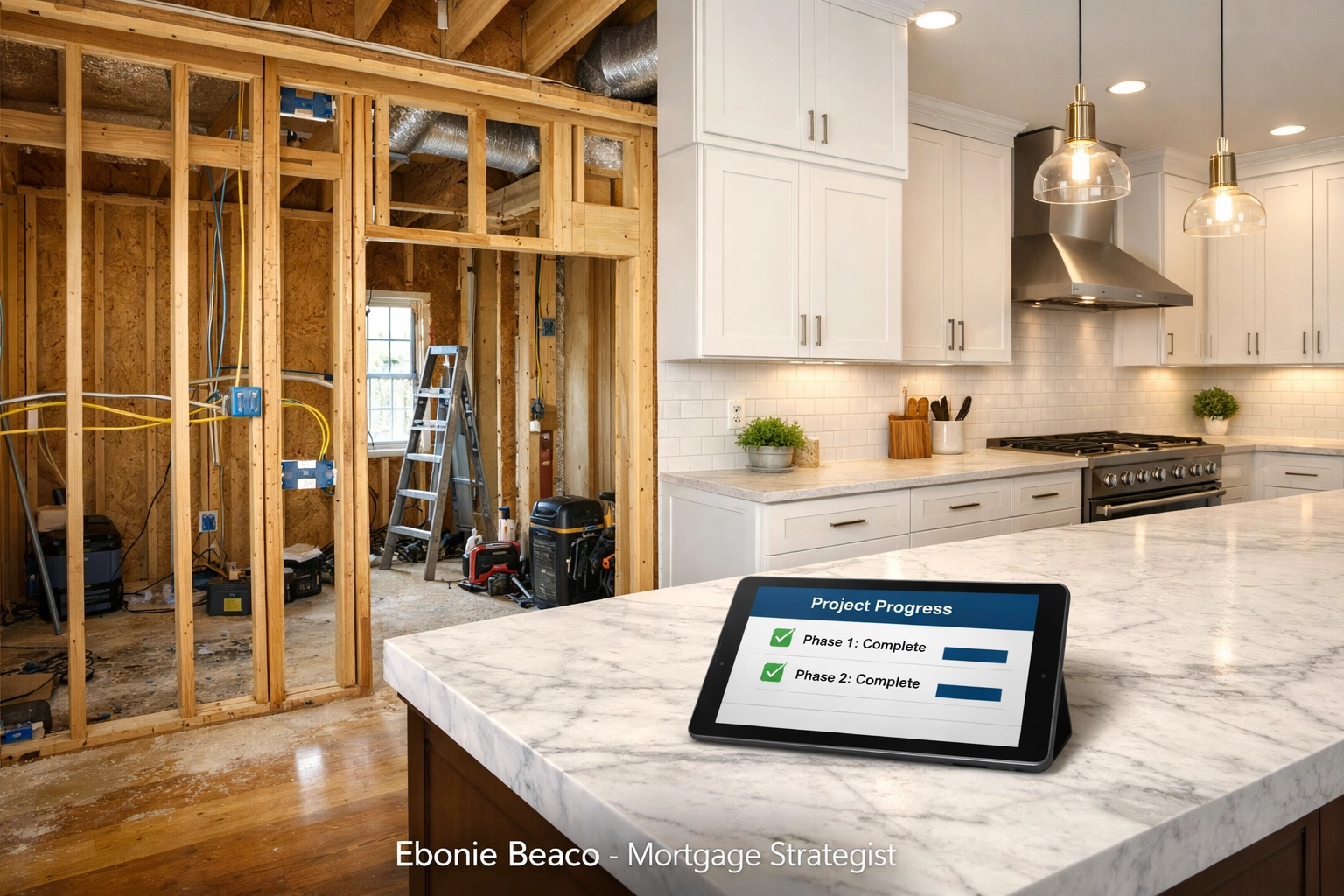
5. Mismanaging the Draw Schedule
The lender does not give you the renovation money all at once.
They hold it in escrow and release it in "draws" as you complete specific phases of work.
Draw Schedule: A timeline of payments released by the lender to the borrower based on completed milestones of construction.
Practical Application: Understanding this schedule helps you manage your contractor’s expectations and your own cash flow.
Inspector's Report: A verification process where a third party confirms work is completed before funds are released.
Practical Application: You must have enough liquidity to pay your contractors for the first phase of work before you can request the first draw.
Many investors get stuck because they run out of cash before the first draw is released.
The Fix: Keep at least 10% of the total project cost in liquid reserves to "float" the construction until the lender reimburses you.
6. Using Emotional or Optimistic Valuations
Overestimating the ARV is the fastest way to lose money in real estate.
ARV (After-Repair Value): The estimated market value of a property after all planned renovations and improvements are finished.
Practical Application: Lenders typically lend a percentage of this value, so if it is wrong, your entire budget is flawed.
Comps (Comparables): Recently sold properties in the immediate area that are similar in size, condition, and features.
Practical Application: You should look at what has sold in the last 90 days, not what is currently listed for sale.
Whether you are looking at California fix and flip loans or properties in Florida, the market can shift quickly.
Relying on "hope" that the market will rise while you are renovating is a dangerous gamble.
The Fix: Be conservative. Use the lowest comparable sale as your baseline ARV. If the deal still makes sense with a lower sale price, it’s a solid investment.
Explore our mortgage calculators to run different scenarios.
7. Neglecting the Lender Relationship
New investors often treat hard money lenders as a one-time transaction.
This is a mistake that limits your future growth.
Private Lender Partner: A lending entity that views the relationship as a long-term collaboration rather than a single deal.
Practical Application: A lender who knows your work ethic and quality of renovations is more likely to offer higher leverage and lower rates on your third or fourth deal.
As you build a portfolio in cities like Miami, Atlanta, or Chicago, having a lender who understands your strategy is invaluable.
They can provide insight into local market trends and help you vet potential deals.
The Fix: Maintain transparent communication. If a project is running behind, tell your lender immediately. Honesty builds the trust needed for better terms in the future.
Real World Scenario: The Chicago Flip
Let’s look at a practical example of how these numbers work in a real-world environment.
An investor finds a distressed bungalow in a Chicago suburb.
- Purchase Price: $150,000
- Renovation Budget: $60,000
- Total Project Cost: $210,000
- Projected ARV: $300,000
The lender offers a Fix and Flip Loan with 90% of the purchase price and 100% of the renovation costs.
- Loan Amount: $135,000 (Purchase) + $60,000 (Rehab) = $195,000
- Interest Rate: 11% (Interest-only)
- Monthly Payment: Approximately $1,787
If the project takes 6 months to complete and sell:
- Total Interest Paid: $10,722
- Points (2%): $3,900
- Closing Costs/Fees: $4,000
- Holding Costs (Tax/Insurance): $3,000
Total Financing/Holding Costs: $21,622
Profit Calculation:
$300,000 (Sale) - $210,000 (Cost) - $21,622 (Finance/Holding) - $18,000 (6% Realtor Fees) = $50,378 Net Profit.

This example demonstrates why managing your timeline is so vital. If the project took 12 months instead of 6, the profit would drop significantly due to doubled interest and holding costs.
How to Prepare for Your Next Deal
Before you apply for your next loan, ensure your documentation is in order.
Lenders will want to see your Application Checklist, your experience level, and a detailed scope of work.
Jump in and verify your credit score and liquid assets early.
Transparency in your financial profile allows the lender to move faster and provide more accurate terms.
If you are working in competitive markets like California or Florida, being "pre-approved" with a private lender is just as important as it is in the residential world.
Compare your options and understand the nuances of bridge financing versus long-term rental loans.
Explore your financing options and get a clear picture of your next investment.
Schedule a 1 on 1 at https://calendly.com/homeloansnetwork
Ebonie Beaco
Mortgage Strategist | Senior Loan Officer
Home Loans Network powered by Loan Factory Inc.
NMLS #2389954
HomeLoansNetwork.com
312-392-0664