Unlocking Wealth in Indiana: Why DSCR is the Secret to College Town Investing
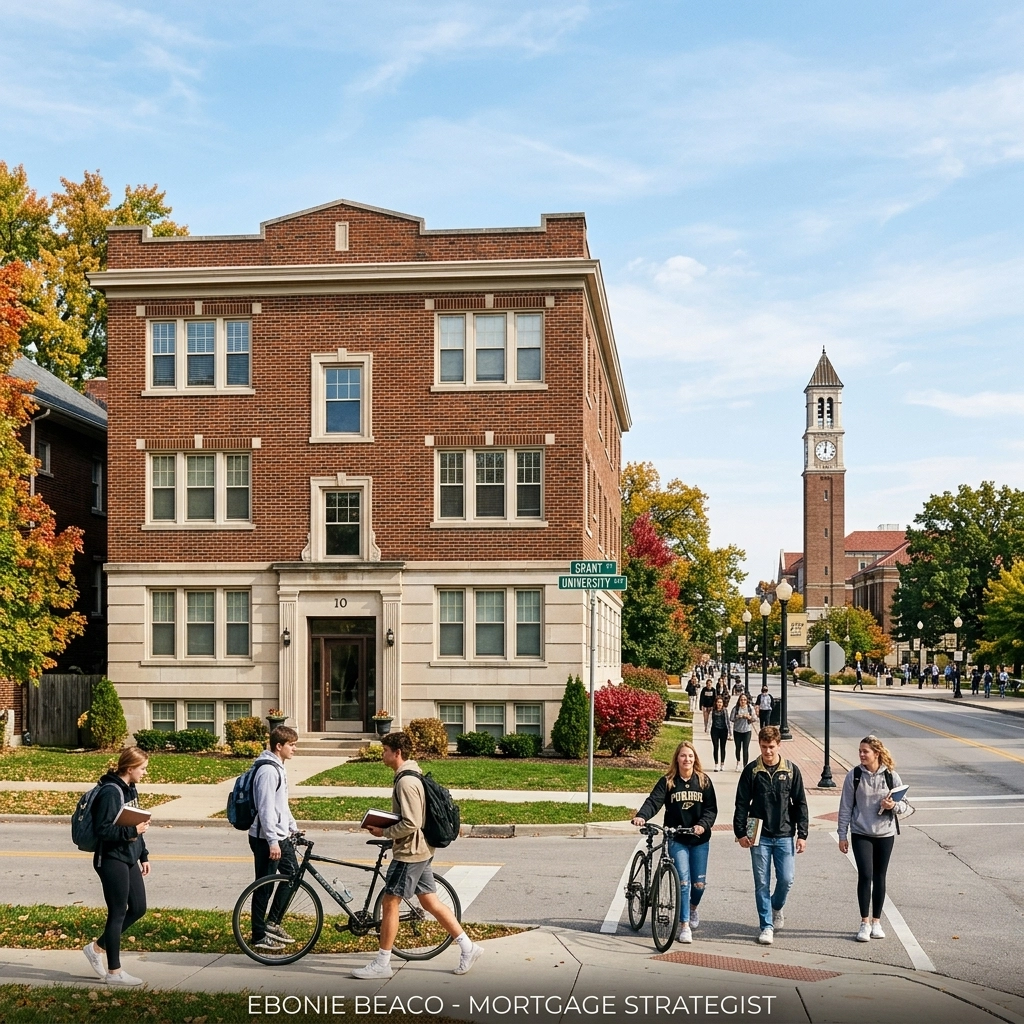
Indiana offers a unique landscape for real estate investors, blending midwestern stability with high-yield opportunities. While many investors fixate on major coastal hubs, savvy property owners are looking toward the "Big Ten" territories of the Hoosier State. Specifically, the college towns surrounding Indiana University (Bloomington) and Purdue University (West Lafayette) provide a recession-resistant environment that is ripe for portfolio expansion.
To succeed in these high-demand markets, you need a financing strategy that matches the speed and nature of the rental business. This is where the Debt Service Coverage Ratio (DSCR) loan comes into play. If you are looking to scale your portfolio without the red tape of traditional banking, understanding how an Indiana DSCR loan lender evaluates your deal is the first step toward unlocking significant wealth.
The Allure of Indiana College Towns for Real Estate Investors
College towns in Indiana are unique because they provide a "captive audience" of renters. Every year, thousands of students, faculty, and support staff flood into Bloomington and West Lafayette, creating a perpetual demand for quality housing. Unlike typical suburban markets where demand might fluctuate based on corporate job growth, university markets remain remarkably stable regardless of the broader economic cycle.
West Lafayette and Purdue University
West Lafayette is home to Purdue University, a world-class institution with over 50,000 students. The demand for student rentals here is consistently high, particularly for properties within walking or biking distance of campus. The entry price for a single-family home or a small multi-unit building in West Lafayette is often much lower than in other major university towns, making it an ideal entry point for new investors.
Bloomington and Indiana University
Bloomington serves as the home for Indiana University and the prestigious Kelley School of Business. The rental market here is diverse, ranging from undergraduate student housing to luxury rentals for graduate students and faculty. The consistent enrollment growth at IU ensures that vacancy rates remain incredibly low, which is a key metric that every Indiana DSCR loan lender looks for when approving a loan.
 A classic Indiana mid-west home with vibrant flower beds and a well-maintained porch, representing the high-quality rental stock found in university neighborhoods.
DSCR Defined: The Investor's Best Tool
Before diving into the mechanics of college town investing, it is essential to understand exactly what a DSCR loan is and how it functions.
DSCR (Debt Service Coverage Ratio): A financial metric used by lenders to measure a property's ability to cover its debt payments with its own rental income. Practical Application: This allows you to qualify for a mortgage based on the property’s cash flow rather than your personal salary or tax returns.
Pitfalls of Traditional Financing: Standard conventional loans require extensive documentation, including two years of tax returns, W-2s, and a strict Debt-to-Income (DTI) ratio. Practical Application: For self-employed investors or those with multiple properties, a high DTI often blocks them from getting more loans. DSCR loans bypass this entirely.
The "Property Resume" Concept: In the eyes of an Indiana DSCR loan lender, the property is the borrower. If the home’s "resume" (its rental income) is strong, the loan is likely to be approved.
Why Traditional Financing Often Fails Student Rental Investors
If you have ever tried to buy a student rental near IU or Purdue using a conventional loan, you likely hit a few roadblocks. Traditional banks are often wary of "student housing" because they perceive it as higher risk. Furthermore, the way conventional lenders calculate rental income often discounts the actual market potential of the home.
Explore the differences:
- Income Verification: Traditional loans look at your paystubs; DSCR loans look at the lease agreement or a market rent survey (Form 1007).
- Property Limits: Most conventional lenders cap you at 10 properties. DSCR programs often have no limit on the number of properties you can own.
- Speed of Closing: Because there is no personal income underwriting, DSCR loans can often close in half the time of a traditional mortgage.
If you find that the housing market is confusing, focusing on the cash flow metrics of a DSCR loan can provide much-needed clarity.
The Math Behind the 1.50 DSCR
Lenders calculate the DSCR by dividing the Gross Monthly Rent by the PITI (Principal, Interest, Taxes, and Insurance). While many lenders are happy with a 1.20 or 1.25 ratio, a 1.50 DSCR is considered a "home run" deal. This indicates the property generates 50% more income than the cost of the mortgage.
Calculating the Ratio
Let’s look at a real-world scenario. Imagine you are eyeing a 4-bedroom home in West Lafayette, just a few blocks from the Purdue engineering buildings.
- Purchase Price: $325,000
- Down Payment (20%): $65,000
- Loan Amount: $260,000
- Estimated PITI (Monthly): $2,000
- Market Rent (Monthly): $3,000
To find the DSCR, we use the formula: $3,000 (Rent) / $2,000 (Debt) = 1.50 DSCR.
![[NOI] Net Operating Income and DSCR Calculation Visual](https://cdn.prod.website-files.com/69b5f571b4bcdf3853a5c52b/69f763f9c848c16d35a6494e_lZl4thPeDnP.webp)
In this example, the property is incredibly healthy. It provides a massive buffer for repairs, vacancies, or management fees while still putting $1,000 of "net" cash flow in your pocket every month. This is the exact type of deal that makes an Indiana DSCR loan lender eager to provide funding.
Case Study: The 1.50 DSCR Win in West Lafayette
Meet "The Investor," a Chicago-based professional who wanted to diversify out of the city and into the Indiana market. They identified a property in West Lafayette that was being used as a primary residence but sat in a prime student rental zone.
The Strategy: The investor used a DSCR loan to acquire the property. Because they didn't need to show their personal tax returns, they were able to close the deal despite having a complex corporate structure for their primary business.
The Result:
- Acquisition: Bought for $310,000.
- Renovation: Spent $15,000 on cosmetic upgrades (paint, flooring, landscaping).
- Rent: Leased to four graduate students for $850 per room ($3,400 total).
- Financing: The monthly PITI was $2,100.
- The DSCR: $3,400 / $2,100 = 1.61 DSCR.
By focusing on the college town demand, the investor secured a property that pays for itself and provides a substantial monthly profit. This investor is now looking at fix and flip loans for their next project in the Bloomington area to continue their growth.
How to Qualify with an Indiana DSCR Loan Lender
Qualifying for a DSCR loan is much more straightforward than a traditional mortgage, but there are still specific requirements you should be aware of.
Credit Score Requirements: Most DSCR lenders look for a minimum credit score of 620 to 660. The higher your score, the better your interest rate will be.
Down Payment: Expect to put down at least 20% to 25%. While some programs allow for 15% down, the interest rates are typically more favorable at the 20% mark.
Appraisal and Rent Survey: The lender will order an appraisal that includes a "comparable rent schedule" (Form 1007). This is the most critical document in the loan file because it determines the "income" side of the DSCR equation.
Experience Level: While many DSCR programs are open to first-time investors, some of the best rates are reserved for "experienced" investors who have owned at least one investment property in the last 24 to 36 months.
Jump in and compare your options:
- Standard DSCR: Best for long-term rentals with 12-month leases.
- No-Ratio DSCR: For properties where the rent doesn't quite cover the mortgage, but the investor has strong assets.
- Short-Term Rental (Airbnb) DSCR: Specifically for properties in Bloomington that cater to weekend visitors for IU football games or graduation.
For those interested in choosing the ideal lender, it is vital to work with someone who understands the nuances of the Indiana market.
Leveraging Equity for Your Next Indiana Acquisition
Many homeowners in the Midwest have seen their property values rise significantly over the last few years. If you already own property, you might be sitting on the "seed money" for your first Indiana college town rental.
You can use a cash-out refinance to pull equity from your current home or an existing rental to use as a down payment on a new DSCR-funded property. This "velocity of money" strategy is how real estate moguls build massive portfolios in a short amount of time.
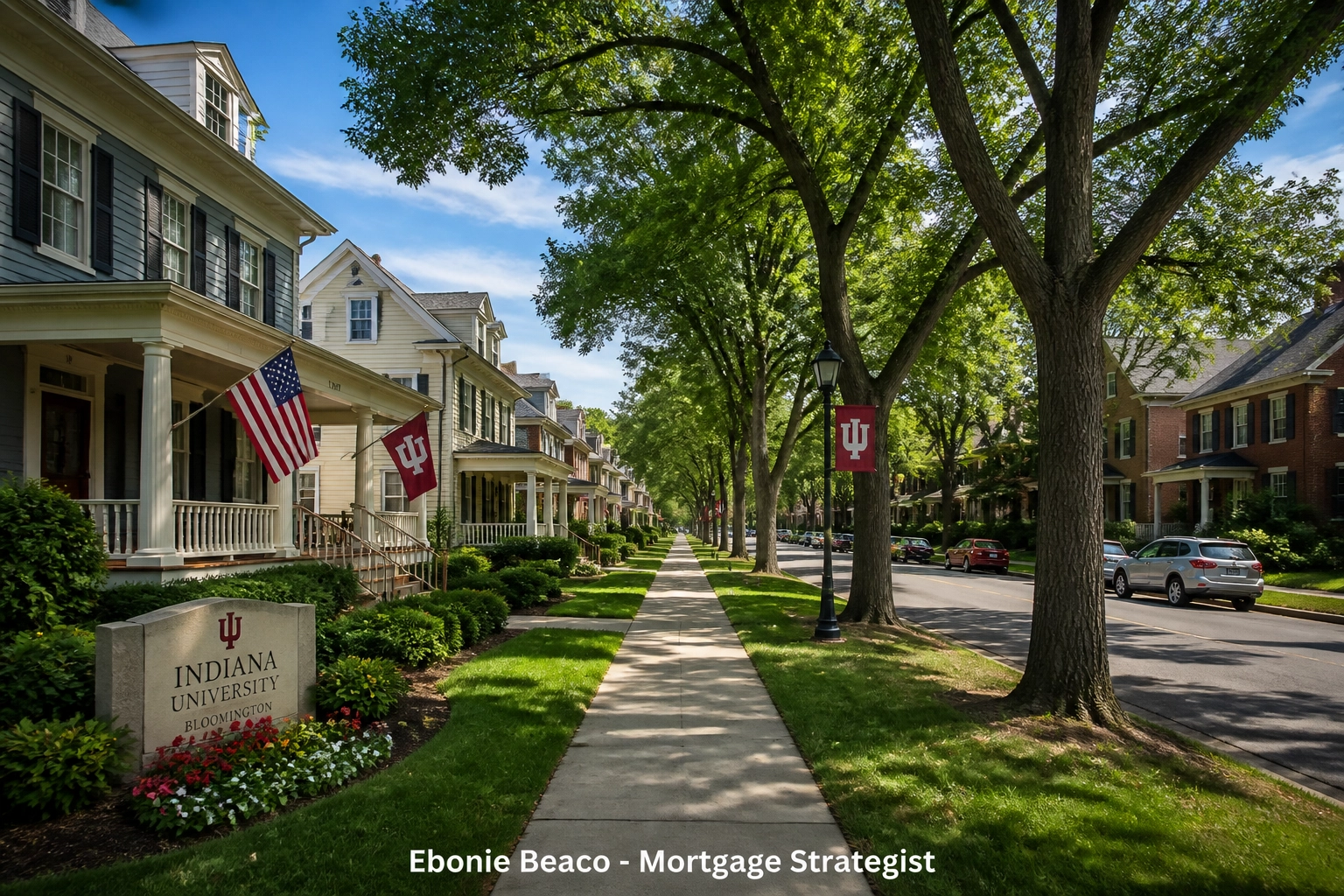 A landscape view of a quiet, tree-lined street in Bloomington, Indiana, showing the type of stable residential neighborhoods that attract long-term graduate student tenants.
Common Mistakes to Avoid in College Town Investing
While the DSCR model is powerful, it is not foolproof. Successful investors in Indiana college towns avoid these common errors:
- Over-Improving the Property: You don't need marble countertops for an undergraduate rental. Focus on durability and cleanliness.
- Ignoring Local Ordinances: Bloomington and West Lafayette have specific rules regarding "unrelated occupants" and rental permits. Always verify local zoning before closing.
- Underestimating Maintenance: Student rentals can take a beating. Always set aside a percentage of your monthly cash flow for future repairs.
- Waiting for "Perfect" Rates: Many investors hesitate when rates fluctuate. However, if the property has a DSCR of 1.50, the cash flow is already there. You can always navigate the mortgage rate dilemma by refinancing later if rates drop significantly.
Final Thoughts on Indiana Real Estate Wealth
Indiana college towns offer a rare combination of affordability and high rental yields. By utilizing DSCR loans, you can step away from the limitations of personal income verification and focus on what truly carries weight: the performance of the real estate.
Whether you are looking at a duplex near Purdue or a single-family home near the IU campus, the right financing partner makes all the difference. As you build your portfolio, remember that each property is a stepping stone to financial independence. Access the tools available to you, study the numbers, and take action in one of the most stable rental markets in the country.
Are you ready to see how the numbers look on your next Indiana investment?
Schedule a 1 on 1 at https://calendly.com/homeloansnetwork
Ebonie Beaco Mortgage Strategist | Senior Loan Officer Home Loans Network powered by Loan Factory Inc. NMLS #2389954 HomeLoansNetwork.com 312-392-0664