The Ultimate Guide to Aging in Place: How Reverse Mortgages Make it Possible

The concept of "Aging in Place" has evolved from a simple preference into a strategic lifestyle choice for many seniors across the United States.
It refers to the ability to live in one’s own home and community safely, independently, and comfortably, regardless of age or income level.
For many homeowners in markets like Atlanta, Chicago, or Northern Virginia, the home is their largest asset.
As retirement nears, the challenge often becomes how to access that wealth without selling the property or taking on burdensome monthly payments.
This is where the reverse mortgage enters the conversation as a sophisticated financial tool.
Explore how this mortgage strategy can provide the liquidity needed to modify a home, cover healthcare costs, and secure a comfortable retirement.
Defining the Concept of Aging in Place
Aging in place is not just about staying put; it is about ensuring the environment adapts to your changing needs.
It often requires physical modifications to the property, such as installing ramps, widening doorways, or updating bathrooms for accessibility.
According to various studies, the vast majority of adults over the age of 50 prefer to remain in their current homes rather than moving to assisted living facilities.
Staying in a familiar neighborhood allows you to maintain social connections and a sense of autonomy.
However, the costs associated with home modifications and in-home care can be substantial.
Accessing home equity through a strategic mortgage product can bridge the gap between wanting to stay and being able to afford to stay.
Understanding the Reverse Mortgage Tool
A reverse mortgage is a unique loan type designed specifically for homeowners aged 62 or older.
Unlike a traditional "forward" mortgage where you make monthly payments to a lender, a reverse mortgage allows the lender to pay you.
The loan is secured by the equity in your home, and you are not required to make monthly principal and interest payments as long as you live in the home as your primary residence.
You remain responsible for property taxes, homeowners insurance, and home maintenance.
The loan is typically repaid when the last surviving borrower moves out, sells the home, or passes away.
This structure provides immediate cash flow while preserving your right to live in the property.
HECM: The Standard Government-Backed Option
The Home Equity Conversion Mortgage (HECM) is the most common type of reverse mortgage and is insured by the Federal Housing Administration (FHA).
It follows strict federal guidelines and has a maximum claim amount that limits how much of the home's value can be considered.
HECMs are popular because they offer several payout options, including a lump sum, monthly tenure payments, or a line of credit that grows over time.
Proprietary Reverse Mortgages: The Jumbo Choice
For homeowners with high-value properties: common in areas like Arlington, Virginia, or luxury pockets of Florida: a HECM might not provide enough capital.
Proprietary reverse mortgages, often called "Jumbo" reverse mortgages, are private loans that are not FHA-insured.
These loans allow for much higher loan amounts, sometimes up to $4 million or more, depending on the lender and the property value.
They also lack some of the upfront mortgage insurance premiums required by HECM loans, which can make them more cost-effective for high-equity positions.

Real-World Scenario: Mrs. Kim’s Atlanta Area Home
To understand how this works in practice, let’s look at a scenario involving Mrs. Kim, a 72-year-old Korean-American widow living in Duluth, Georgia.
Mrs. Kim has lived in her home for over 25 years.
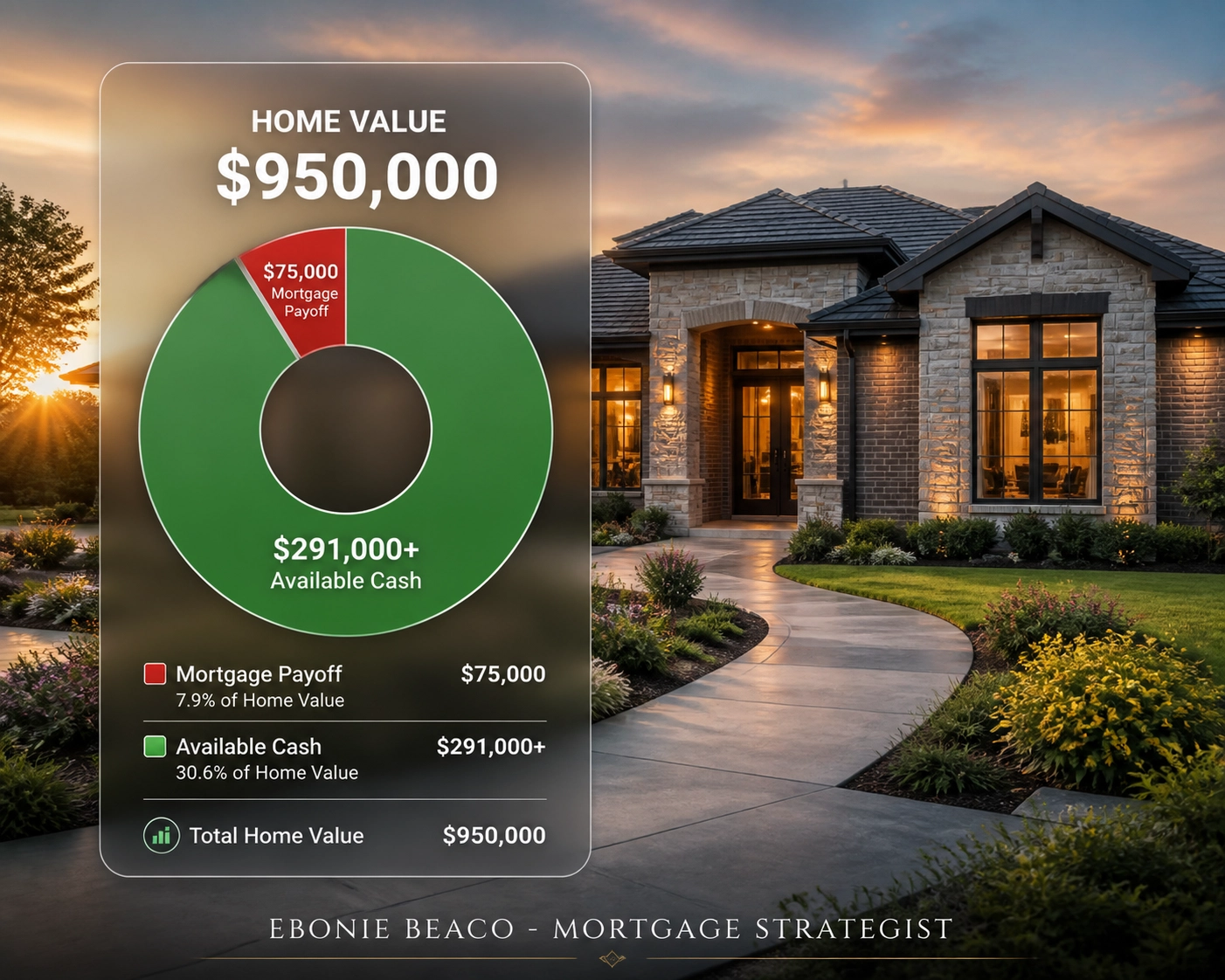
Her property is currently valued at $950,000, and she still owes $100,000 on her traditional mortgage.
Mrs. Kim’s monthly income from Social Security is modest, and she struggles to manage her $1,200 monthly mortgage payment while also dealing with rising healthcare costs.
She wants to stay in her home but needs to renovate her master bathroom to be more accessible and install a chair lift for the stairs.
By utilizing a reverse mortgage, Mrs. Kim can eliminate her $100,000 debt and access additional funds for her renovations.
Breaking Down the Numbers: Loan-to-Value (LTV) Calculations
When evaluating a reverse mortgage, the most critical factor is the Principal Limit, which is essentially the LTV of the loan.
The amount you can borrow is determined by the age of the youngest borrower, current interest rates, and the appraised value of the home.
In reverse mortgage terminology, we use the Principal Limit Factor (PLF) to determine the borrowing capacity.
HECM Principal Limit Calculation
For Mrs. Kim (age 72) with a $950,000 home, the FHA would use the current HECM limit (which is $1,149,825 for 2026).
Since her home value is below the limit, the calculation is based on the full $950,000.
Assuming a PLF of approximately 42% based on her age and current market rates, her total Principal Limit would be $399,000.
First, the $100,000 existing mortgage must be paid off at closing.
This leaves Mrs. Kim with $299,000 in available equity.
She can take a portion of this as a lump sum to pay for her $45,000 in home modifications and keep the rest in a growing line of credit for future medical needs.
Proprietary LTV Calculation
Now, consider a different scenario for a homeowner in a high-priced market like Great Falls, Virginia, with a $2,500,000 home.
A standard HECM would only consider the first $1,149,825 of value, severely limiting the funds available.
A Proprietary Reverse Mortgage might offer an LTV of 35% for a 72-year-old on the full $2.5 million value.
$2,500,000 x 0.35 = $875,000 total loan capacity.
This significantly higher amount allows the homeowner to maintain an expensive property without liquidating other retirement accounts or selling the asset.
Strategic Benefits for Homeowners and Investors
While reverse mortgages are often viewed as a "last resort," savvy homeowners and real estate investors use them as a strategic part of a wealth-building plan.
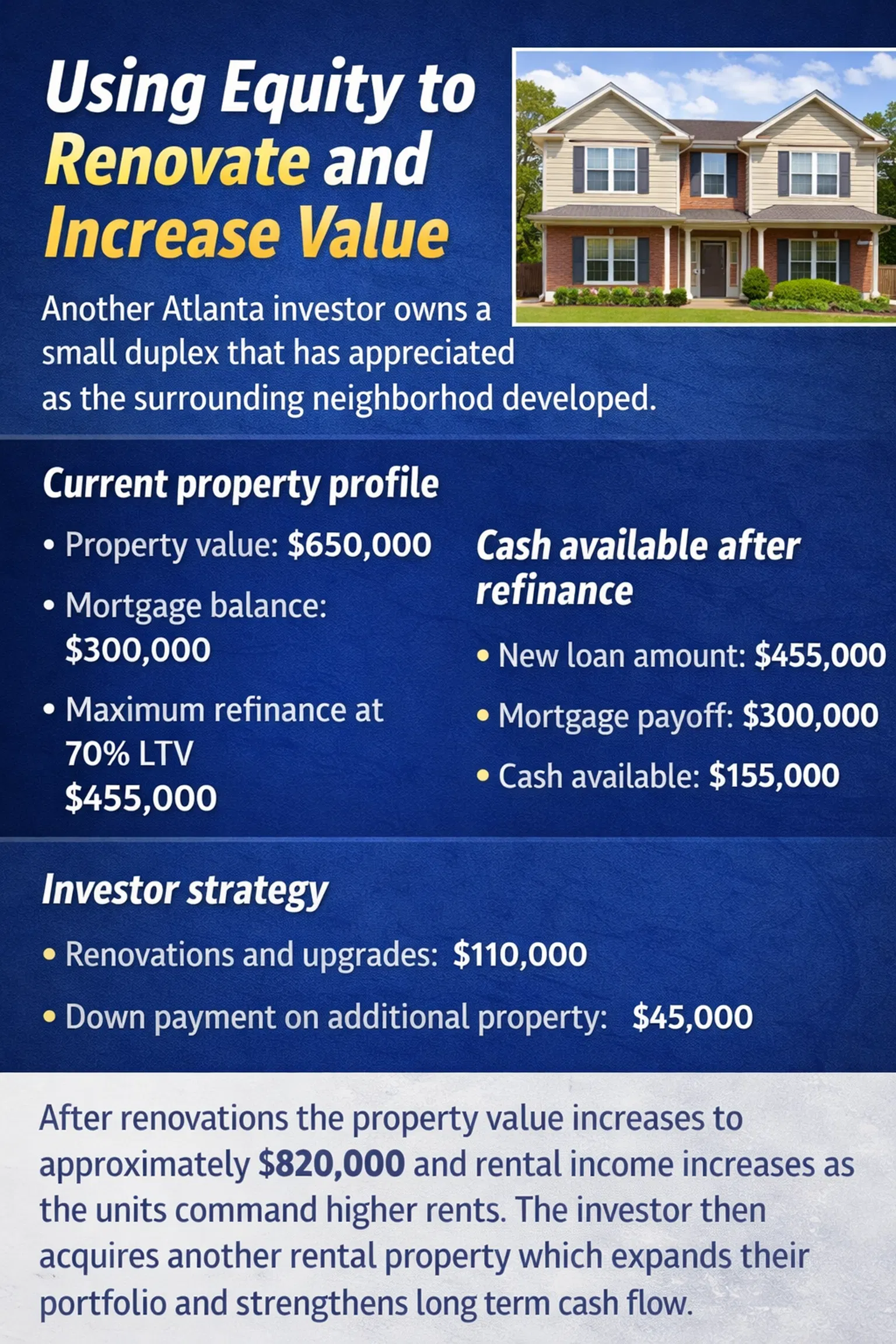
For investors who own their primary residence free and clear, a reverse mortgage can provide a "tax-free" source of capital to fund the purchase of rental properties.
Since the proceeds from a loan are not considered income, you can use that liquidity to enter the real estate market in growing cities like Tampa or Savannah without a tax penalty.
Additionally, the HECM for Purchase program allows seniors to buy a new primary residence using a reverse mortgage, enabling them to downsize or move closer to family while preserving a large portion of their cash.
You can find more details on various loan types and their requirements at our FAQ page.
How to Qualify for a Reverse Mortgage
Qualification for a reverse mortgage is different than a traditional loan.
While there is a "Financial Assessment" to ensure you can pay your property taxes and insurance, the credit and income requirements are generally more flexible.
You must occupy the home as your primary residence.
You must be at least 62 years old for a HECM (some proprietary products allow ages as young as 55).
The property must meet FHA safety standards, which may require an appraisal to determine its current condition.
Counseling is a mandatory requirement for HECM loans to ensure you fully understand the obligations and benefits of the program.
Common Misconceptions About Reverse Mortgages
Many people mistakenly believe that the bank "takes the house."
This is incorrect; you retain the title to your home just as you would with any other mortgage.
The bank simply has a lien on the property.
Another misconception is that your heirs will be burdened with debt.
HECM loans are non-recourse, meaning if the home sells for less than the loan balance, the lender cannot go after your heirs' other assets to cover the difference.
If the home increases in value, the remaining equity belongs to you or your estate after the loan is paid off.
It is important to review your credit and financial goals with a professional to see if this aligns with your estate planning.
Taking the Next Step
Aging in place is a beautiful goal that requires proactive financial planning.
By unlocking the wealth hidden in your home, you can create a safer living environment and a more stable financial future.
Whether you are looking to eliminate an existing mortgage payment or create a "rainy day" fund for healthcare, a reverse mortgage offers a pathway to independence.
For those in the early stages of planning, you can explore our mortgage calculators to see how different scenarios might play out for your specific property value.
If you are a real estate investor looking to help a client or a homeowner ready to explore your own options, getting expert guidance is essential.

At Home Loans Network, we specialize in helping homeowners across Georgia, Florida, Virginia, and beyond navigate the complexities of real estate finance.
We provide the clarity needed to turn your home equity into a lifelong resource.
Schedule a 1 on 1 at https://calendly.com/homeloansnetwork
Ebonie Beaco
Mortgage Strategist | Senior Loan Officer
Home Loans Network powered by Loan Factory Inc.
NMLS #2389954
HomeLoansNetwork.com
312-392-0664