Reverse Mortgages 101: A Beginner’s Guide to Mastering Your Home Equity

You have spent decades paying down your mortgage, painting the walls, and building memories in your home. Now that you are entering your golden years, you might be looking at that four-bedroom house in Chicago or that sunny bungalow in Miami and thinking, "I wish this equity could actually help me pay my bills."
That is exactly what a reverse mortgage is designed to do.
Think of a reverse mortgage as the mirror image of your traditional home loan. Instead of you sending a check to the bank every month to build equity, the bank sends money to you using the equity you have already built. You get to stay in your home, keep the title, and stop worrying about monthly principal and interest payments.
Understanding the Basics
Jump in by understanding the fundamental definitions. In the mortgage world, we use specific terms that might sound like alphabet soup, but they are quite simple once you break them down.
Reverse Mortgage: A loan for homeowners that allows them to access a portion of their home equity as cash, with repayment deferred until the borrower leaves the home.
Practical Application: This allows you to supplement your retirement income without moving out of your house.
Home Equity Conversion Mortgage (HECM): The most common type of reverse mortgage, which is insured by the Federal Housing Administration (FHA).
Practical Application: This provides a government-backed guarantee and specific consumer protections for the borrower.
Proprietary Reverse Mortgage: A private reverse mortgage loan not insured by the government, often designed for high-value "jumbo" homes.
Practical Application: If your home in a neighborhood like Lincoln Park, Chicago, is worth significantly more than the FHA lending limit, this option helps you access a larger pool of cash.
Eligibility: Who Can Apply?
Not everyone can walk into a lender's office and grab a reverse mortgage. There are strict age and property requirements to ensure this program stays sustainable for everyone involved.
For a standard HECM (Home Equity Conversion Mortgage), you must be at least 62 years old. If you are married, your spouse can often be listed as a "non-borrowing spouse" even if they are younger, but the primary borrower must hit that 62-year mark.
However, the market has evolved. For many Proprietary Reverse Mortgages, the age requirement has dropped to 55 years old in several states. This is a game-changer for early retirees in markets like Florida or Virginia who want to restructure their wealth sooner.
Beyond age, you must:
- Own the home outright or have a very low mortgage balance.
- Occupying the home as your primary residence.
- Have the financial capability to continue paying property taxes, homeowners insurance, and maintenance.
- Participate in a mandatory counseling session with a HUD-approved counselor.
The Math: How Much Can You Actually Get?
This is where the magic happens. Many people assume they can borrow 100% of their home's value. That is not the case. The amount of money you can access is determined by a calculation known as the Principal Limit.
Principal Limit: The total amount of equity a borrower is eligible to access at the start of the loan.
Practical Application: It tells you exactly how much "buying power" or "cash power" you have tucked away in your walls.
To find your Principal Limit, lenders use a Principal Limit Factor (PLF). This factor is a percentage based on three things:
- The age of the youngest borrower.
- The current expected interest rate.
- The appraised value of your home (up to the FHA limit).
The Equity Math Formula
Let's look at a hypothetical scenario for a homeowner in Atlanta, Georgia.
- Home Value: $500,000
- Borrower Age: 70
- Estimated PLF: 0.45 (45%)
- Calculation: $500,000 x 0.45 = $225,000 (Principal Limit)
If this homeowner still owes $50,000 on their original mortgage, that balance must be paid off first using the reverse mortgage funds.
- $225,000 - $50,000 = $175,000
In this case, the homeowner now has $175,000 available in cash, monthly payments, or a line of credit, and they no longer have to make that old $50,000 mortgage payment every month.
Case Study: Maria’s Florida Retirement Strategy
To see how this works in the real world, let’s look at Maria, a 72-year-old Hispanic homeowner living in Miami, Florida. Maria worked as a teacher for 30 years and owns a beautiful home valued at $650,000.
Maria’s Social Security and pension cover her basic needs, but she struggles with the rising costs of property insurance in Florida and wants to help her grandson with college tuition. She currently owes $80,000 on her traditional mortgage.
The Strategy:
Maria chooses a HECM. Based on her age and the current interest rates in May 2026, her Principal Limit Factor is roughly 48%.
- Gross Principal Limit: $650,000 x 0.48 = $312,000
- Mandatory Payoff: Maria must pay off her $80,000 existing mortgage.
- Net Available Funds: $312,000 - $80,000 = $232,000 (before closing costs).
The Result:
Maria decides to take $50,000 as a lump sum to pay for her grandson’s tuition and puts the remaining $182,000 into a HECM Line of Credit.
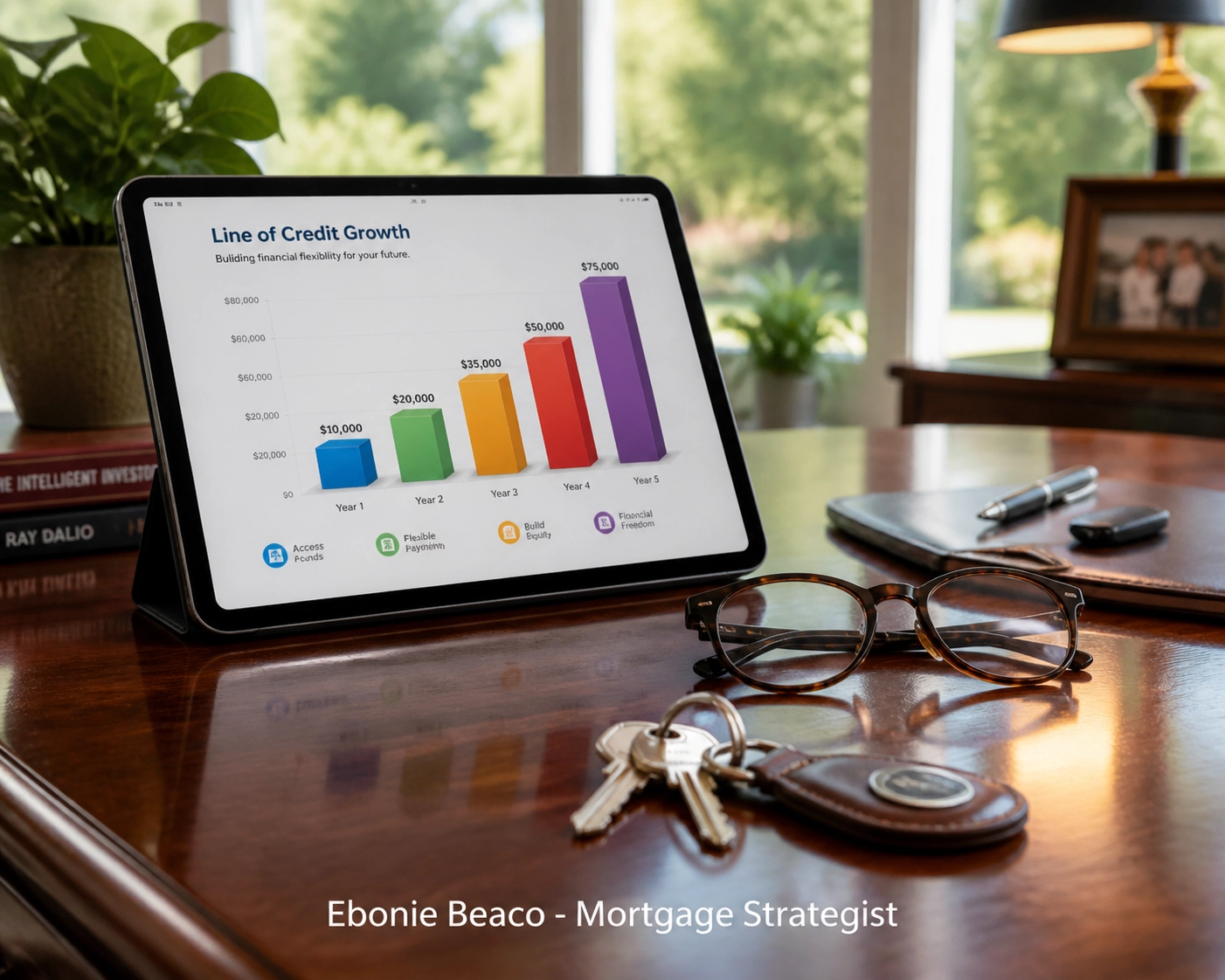
The best part? That line of credit actually grows over time. If Maria doesn't touch that money, the available balance increases at the same rate as the interest on the loan. By the time she is 82, that $182,000 could be worth significantly more, providing a massive safety net for medical expenses or home repairs.
HECM vs. Proprietary: Choosing Your Path
Not all homes fit into the FHA’s box. If you live in a high-value market like California or certain parts of Virginia, you need to understand the distinction between the two main types of loans.
1. HECM (FHA-Insured)
- Lending Limit: As of 2026, the maximum claim amount is capped (check current FHA limits for the exact number, but it usually hovers around $1.1 million).
- Insurance: You pay a Mortgage Insurance Premium (MIP) to the FHA. This ensures that even if the lender goes bust, you still get your money. It also ensures you (or your heirs) will never owe more than what the house is worth.
- Regulation: Highly regulated with specific consumer protections.
2. Proprietary (Private/Jumbo)
- Lending Limit: Can go up to $4 million or even $10 million depending on the lender.
- Insurance: No FHA mortgage insurance is required, which can save you money on upfront fees.
- Age: Often available to those as young as 55.
- Flexibility: Great for luxury condos or high-value estates that exceed FHA limits.
Explore how these options might fit your specific portfolio by looking into choosing the ideal lender to enhance your experience.

How You Receive the Money
You have total control over how you receive your equity. You can mix and match these options to fit your lifestyle.
- Lump Sum: Receive a single pile of cash at closing. (Note: Only available with fixed-rate loans).
- Term Payments: Receive equal monthly payments for a specific number of years.
- Tenure Payments: Receive equal monthly payments for as long as you live in the home.
- Line of Credit: Access the money only when you need it. This is the most popular option because you only pay interest on the money you actually use.
Compare these methods to other equity strategies, such as what an HEI loan is and how it helps homeowners.
Your Responsibilities as a Borrower
Accessing your equity doesn't mean you can ignore the house. To keep the loan in good standing, you must fulfill three main obligations:
- Pay your Property Taxes: Failing to pay taxes can lead to a default.
- Maintain Homeowners Insurance: You must keep the property protected.
- Maintain the Home: You don't need to renovate the kitchen every year, but you must keep the home in good repair.
If you are a real estate investor looking at this for a rental property, keep in mind that standard HECMs are for primary residences only. However, if you are looking to expand your portfolio elsewhere, you might want to discover down payment assistance programs or look into fix and flip loans.
When Does the Loan Become Due?
The reverse mortgage eventually needs to be paid back. This usually happens when:
- The last surviving borrower passes away.
- The home is sold.
- The borrower moves out permanently (usually defined as 12 consecutive months away from the home, such as moving into assisted living).
At that point, the heirs can either sell the home to pay off the loan, keep the home by refinancing the balance into a traditional mortgage, or turn the keys over to the lender if the debt exceeds the home's value (thanks to the "non-recourse" feature of HECMs).
If you are worried about how this affects your estate, it is worth reading about what you need to know about capital gains taxes when selling property.

Conclusion: Is a Reverse Mortgage Right for You?
A reverse mortgage is a powerful financial tool, but it is not a "one size fits all" solution. It is ideal for homeowners in markets like Chicago, Detroit, or Little Rock who plan to stay in their homes long-term and want to increase their monthly cash flow or create a "rainy day" fund.
Accessing your home equity can be the difference between a stressful retirement and one where you have the freedom to travel, invest, or simply breathe easier.
Are you ready to see how the numbers look for your specific home?
Schedule a 1 on 1 at https://calendly.com/homeloansnetwork
Ebonie Beaco
Mortgage Strategist | Senior Loan Officer
Home Loans Network powered by Loan Factory Inc.
NMLS #2389954
HomeLoansNetwork.com
312-392-0664