Is Fix and Flip Financing Right for Chicago, Illinois Investors?
In the Chicago real estate market, opportunity rarely waits for those who are unprepared. As we move through 2026, the landscape for fix and flip investors in Illinois has shifted from a speculative "gold rush" to a disciplined, strategy-first environment. With interest rates stabilizing and institutional capital flowing back into the residential transition loan (RTL) space, the question isn’t whether you can find a deal, but whether you can finance it logically to protect your equity.
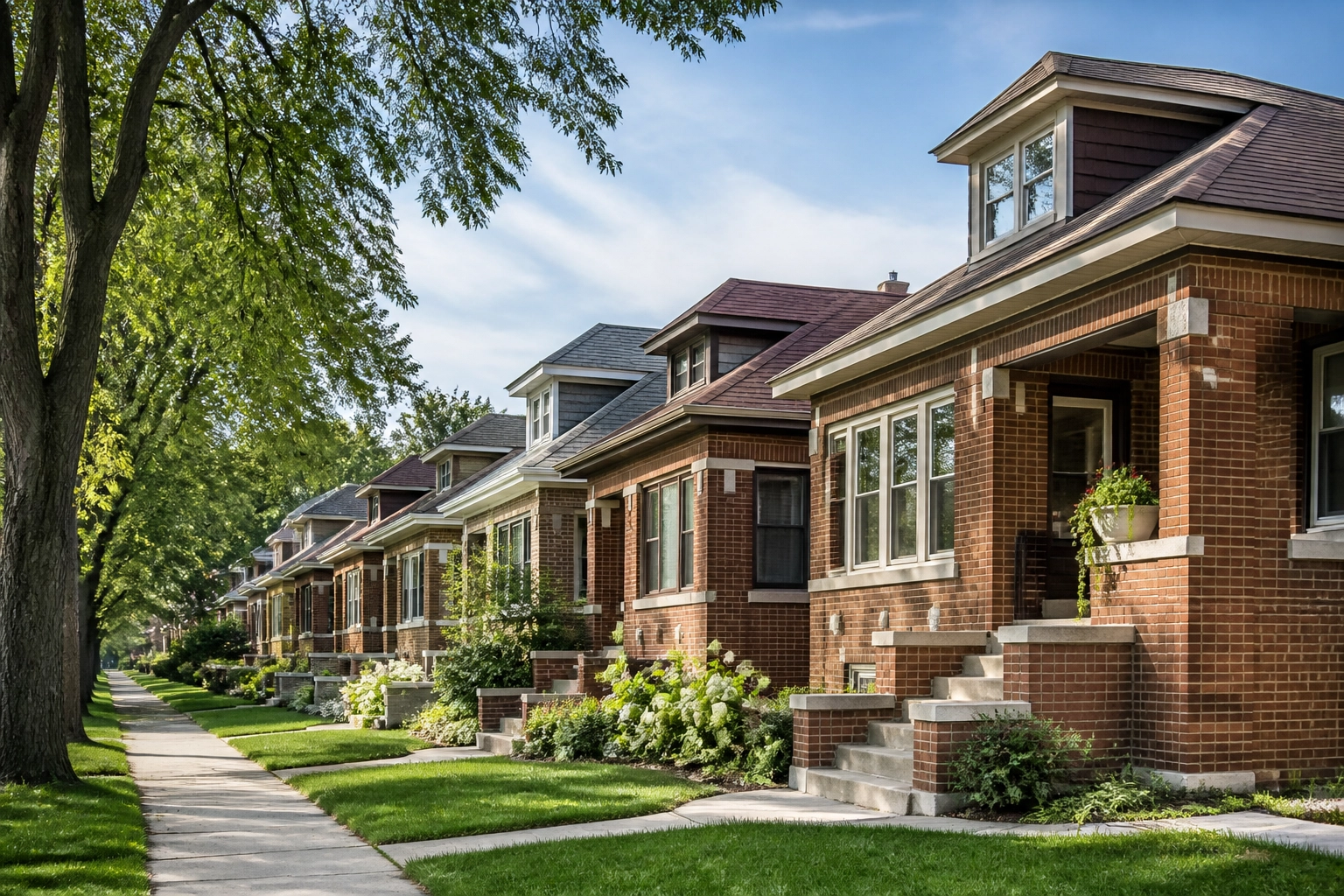
Chicago’s inventory, particularly its iconic brick bungalows and two-flats, remains a prime target for rehabilitation. However, navigating the financing of these projects requires more than just a high-level estimate. It demands an understanding of specific leverage metrics that banks and private lenders use to mitigate their risk. To succeed here, you must move beyond the "commission mindset" of just getting a deal done and adopt a "residual reality" approach that ensures long-term profitability.
The Strategy: Rigid Bank Terms vs. Flexible Funding
Traditional banks often struggle with the speed and complexity of a fix and flip project. They demand tax returns, extensive W-2 history, and months of seasoning, requirements that often result in missed opportunities. For the modern Chicago investor, flexible funding via Non-QM loans or Bridge financing is often the only viable path.
These "deal-saving weapons" allow you to qualify based on the asset’s potential rather than your personal tax write-offs. Whether you are self-employed or a high-net-worth individual with liquid assets, the goal is to secure capital that moves as fast as the Chicago market does.
Breaking Down the Math: LTC vs. LTV
Before you sign a contract on a distressed property in Portage Park or Beverly, you must master the two most critical numbers in your loan package: Loan-to-Cost (LTC) and Loan-to-Value (LTV).
1. Loan-to-Cost (LTC)
LTC is the lender’s primary tool for measuring how much "skin in the game" you have. It compares the loan amount to the total project cost, which includes the purchase price plus the renovation budget.
The Formula:
LTC = (Loan Amount / Total Project Cost) x 100
The Logic: If you purchase a property for $250,000 and have a renovation budget of $100,000, your total project cost is $350,000. If a lender offers 85% LTC, they will provide a total loan of $297,500. This covers a significant portion of both the purchase and the rehab, but it leaves you responsible for the remaining 15% ($52,500) plus closing costs.
2. Loan-to-Value (LTV)
In the world of flipping, LTV is usually calculated against the After Repair Value (ARV). This is the "exit math" that determines if the project is a safe bet for the lender.
The Formula:
LTV = (Loan Amount / ARV) x 100
The Reality: Most fix and flip lenders will cap their total exposure at 70% to 75% of the ARV. Thus, even if your LTC allows for a $300,000 loan, if the ARV is only $380,000, a 75% LTV cap would limit your loan to $285,000. As a result, the lender will always choose the more conservative of the two numbers.
Calculating the ARV: The North Star of Your Deal
The After Repair Value is not a guess; it is a clinical assessment of what the market will pay once the "blood, sweat, and tears" are accounted for. To calculate ARV accurately in Chicago, you must look at:
- Proximity: Comps must be within 0.5 miles, preferably staying within the same neighborhood boundaries (e.g., staying south of Irving Park Rd).
- Property Type: A bungalow is not a Cape Cod. Compare apples to apples.
- Finish Level: Are the comps featuring quartz countertops and open floor plans? Your rehab must match or exceed that standard.
Calculation Example:
- Comp A (Sold): $510,000 (Renovated, 3 bed, 2 bath)
- Comp B (Sold): $495,000 (Renovated, 3 bed, 2 bath)
- Comp C (Sold): $525,000 (Renovated, 4 bed, 2 bath)
- Average Adjusted ARV: ~$510,000.
Case Study: The Chicago Bungalow Renovation
To illustrate the power of strategic structuring, let’s look at a recent scenario in the Northwest Side of Chicago.
The Property: A distressed 3-bedroom brick bungalow.
- Purchase Price: $275,000
- Estimated Rehab: $125,000 (Kitchen, baths, finished basement, new HVAC)
- Total Project Cost: $400,000
- Projected ARV: $575,000
The Financing Structure: Using a Fix & Flip Bridge Loan, the investor secured 90% of the purchase price and 100% of the renovation costs, subject to an LTV cap.
- Lender LTC Offer: 85% of total cost = $340,000
- Lender LTV Cap: 75% of ARV ($575k) = $431,250
- Final Loan Amount: $340,000 (The more conservative figure)
The Outcome: The investor brought $60,000 to the closing table (plus closing costs). After six months of renovation and a sale price of $575,000, the gross profit before holding costs and commissions was $175,000. By valuing repairs accurately and leveraging a high LTC loan, the investor achieved a return on equity that would be impossible with a traditional 20% down mortgage.

Thinking Like an Owner: The Strategic Pivot
Moreover, the most successful Chicago investors don’t just think about the "flip." They prepare for the "hold." If the market shifts during your renovation, you need an exit strategy that doesn't involve a fire sale.
This is where DSCR Loans (Debt Service Coverage Ratio) come into play. If your renovated bungalow can generate $3,500 in monthly rent and your new mortgage payment is $2,800, you have a 1.25 DSCR. You can pivot from a flip to a long-term rental without needing to provide personal income verification. This flexibility is the difference between a portfolio that thrives and one that collapses under market pressure.
Why Chicago Investors Fail (And How to Avoid It)
Most failures in the Chicago market are not due to bad carpentry, but bad math.
- Underestimating the "Chicago Tax": Permit delays and specific city codes can add weeks to your timeline. Your financing must have a long enough term (usually 12 months) to absorb these delays.
- Over-Improving for the Neighborhood: Putting a gold-leaf backsplash in a neighborhood where the ARV ceiling is $350,000 is a guaranteed way to lose money.
- Ignoring Holding Costs: Interest, insurance, and taxes are "silent killers." Every month the property sits, your profit margin thins.

Frequently Asked Questions
Q: Can I use a fix and flip loan if I have no experience? A: Yes, but expect lower leverage. While an experienced flipper might get 90% LTC, a first-time investor might be capped at 75% or 80%. Lenders prioritize "track record" because it reduces their execution risk.
Q: Do I need to show my tax returns for a fix and flip loan? A: Generally, no. These are Non-QM / Alternative Income loans. The lender is primarily interested in the property’s value, your liquidity, and your credit score.
Q: How fast can I close? A: Because these loans do not follow traditional Fannie Mae guidelines, closings can often happen in 10 to 14 days, provided your appraisal and title work move quickly.
Q: What is the minimum credit score required? A: While some programs allow scores as low as 620, the most competitive rates and highest leverage (LTC) are reserved for investors with scores of 700 or higher.
Take Control of Your Investment Strategy
The Chicago real estate market does not reward hesitation. It rewards those who understand the nuance of leverage and the inevitability of local market trends. If you are looking to scale your portfolio or finance your next bungalow renovation, you need a partner who understands the "sweet spot" of non-traditional lending.
Contact: Ebonie Beaco, Loan Officer (NMLS #2389954)
Phone: 312-392-0664
Website: www.HomeLoansNetwork.com
Powered by Loan Factory, Inc. (NMLS #320841)
Disclaimer: This content is for educational purposes only and does not constitute a loan approval or commitment. Loan programs, terms, and eligibility requirements are subject to change and vary by borrower and property.