Why Everyone Is Talking About Today's Treasury Shift (And Why Florida and California Investors Should Too)

The financial landscape experienced a significant tremor on this Monday, May 18, 2026, as Treasury yields shifted in a way that has caught the attention of every major desk from Wall Street to the local real estate offices in Miami and Los Angeles. For the average homeowner in Virginia or a fix-and-flip investor in Michigan, these movements might seem like distant noise, but they represent the foundational pricing for almost every loan product in the market. When the "risk-free" rate of return on government debt moves, it forces a repricing of risk across the entire economy, including the mortgage rates you see on our home purchase page. Investors are specifically tracking the short end of the curve, where yields have climbed as the market digests recent government bond auctions.
Understanding the Treasury Shift
Today's headlines are dominated by a notable rise in short-term Treasury yields, specifically the 2-year Treasury note which has hovered around the 4.1% mark. This movement follows a relatively weak 30-bond auction, signaling that investors are demanding higher compensation for holding long-term U.S. debt. In the world of finance, when bond prices fall, yields rise, and this inverse relationship is currently creating a ripple effect through the mortgage industry. For those of us tracking the markets in states like Illinois and Georgia, this shift suggests that the cost of capital is remaining "sticky" at higher levels than many had hoped for earlier in the year.
Terminology Spotlight
Yield: The earnings generated and realized on an investment over a particular period of time, expressed as a percentage based on the investment's cost or current market value.
This percentage tells you exactly how much your money is making you in "safe" government debt versus more active investments like real estate.
Basis Point (BPS): A standard unit of measure for interest rates and other percentages in finance, where one basis point is equal to one one-hundredth of one percent (0.01%).
Small movements of just 10 or 20 basis points can translate to thousands of dollars in difference over the life of a mortgage loan.
Treasury Bill (T-Bill): A short-term U.S. government debt obligation backed by the Treasury Department with a maturity of one year or less.
These serve as a primary indicator for where short-term interest rates, including many HELOC products, are headed.
The California Advantage: Why State Taxes Change the Equation
For our clients in California, this Treasury shift carries a hidden benefit that investors in other states might overlook. California has some of the highest state income tax brackets in the country, but Treasury interest is uniquely exempt from state and local taxes. When a 2-year Treasury note pays 4.1%, a high-earning Californian is actually seeing a "tax-equivalent yield" that is much higher than a standard bank CD or corporate bond. If you are in a 13.3% state tax bracket, that 4.1% Treasury yield is effectively like earning roughly 4.7% on a fully taxable investment.
This creates a fascinating dynamic for those considering mortgage basics and investment strategies in the Golden State. While mortgage rates may feel higher, the "safe" side of your portfolio is working harder than it has in years. California investors who have traditionally relied on municipal bonds should re-calculate their returns, as the rising Treasury yields might now offer a better risk-adjusted return when state tax exemptions are factored in. This shift influences how you might view your cash reserves while waiting for the perfect investment property in San Diego or San Francisco.

Florida Investors and the Liquidity Play
Florida presents a different scenario because the state does not impose a state income tax. In cities like Tampa, Orlando, and Miami, the decision between holding cash in a Treasury bill versus a high-yield savings account or a rental property is purely a federal tax and liquidity play. With short-term yields back in the 3.5% to 4% range, Florida investors are finding that "safe cash" is no longer "dead money." This makes the opportunity cost of buying a low-yielding rental property much higher than it was three years ago.
Real estate investors in the Sunshine State must now ensure their Debt Service Coverage Ratio (DSCR) is robust enough to outperform these safe government yields. If a rental property is only netting a 4.5% return, but a risk-free 2-year Treasury is paying 4.1%, many investors in Florida might choose the Treasury for its liquidity and lack of management headaches. This pressure on the market is why everyone is talking about the shift; it essentially sets a "floor" for what a real estate investment must return to be considered viable. You can explore how these numbers impact your specific scenario through our mortgage calculators.
Impact on Mortgage Strategies: HELOCs and Refinancing
The movement in the Treasury market is a leading indicator for mortgage rates across our primary service areas, including Alabama, Arkansas, and Virginia. When the 10-year and 30-year Treasury yields move up, fixed-rate mortgages typically follow closely behind. For homeowners in Chicago or Richmond looking at a home refinance, today's shift might mean a temporary pause in the downward trend of rates. However, it also highlights the strategic importance of choosing the right loan product for your current equity position.
Many investors are currently looking at HELOCs as a way to keep their low-interest first mortgage while still accessing equity for new projects. Since HELOC rates are often tied to the Prime Rate, which is influenced by the Federal Reserve's reaction to Treasury yields, today's shift is a signal to act sooner rather than later if you need to secure a line of credit. If the "weak" bond auctions continue, we may see further upward pressure on all consumer borrowing costs, making current rates look attractive in hindsight.

Terminology for the Active Investor
DSCR (Debt Service Coverage Ratio): A measurement of a property's available cash flow to pay current debt obligations, calculated by dividing net operating income by total debt service.
Lenders use this ratio to determine if an investment property generates enough income to cover its own mortgage without relying on the borrower's personal income.
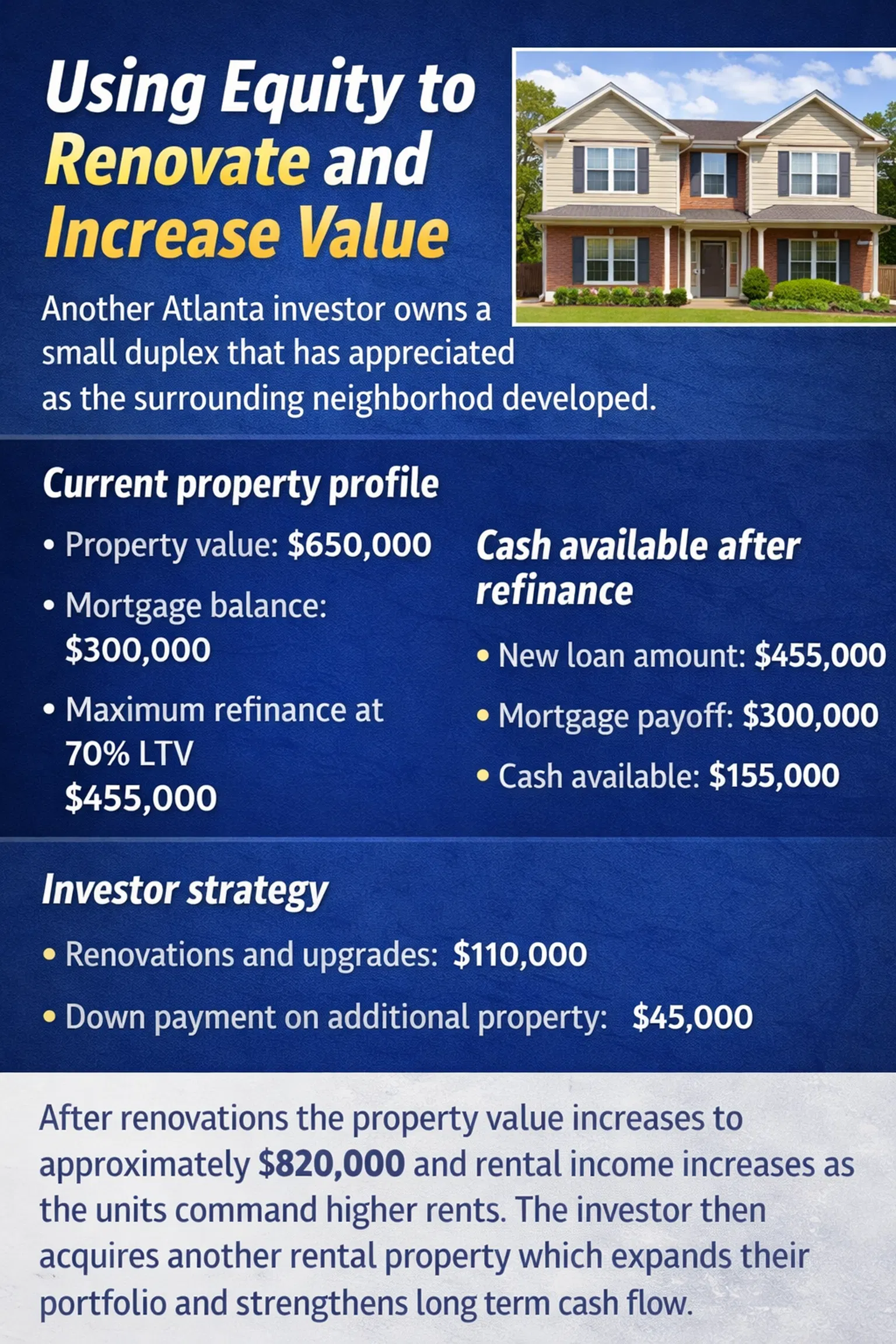
Cash-Out Refinance: A mortgage refinancing option where the new mortgage is for a larger amount than the existing mortgage, and the borrower receives the difference in cash.
This is a powerful tool for investors in states like Virginia or Indiana to pull equity out of a property to fund the down payment on another.
Non-QM (Non-Qualified Mortgage): A loan that does not meet the standard criteria of a qualifying mortgage, often used by self-employed borrowers or those with unique financial situations.
These loans are essential for investors who may have high assets but don't show traditional W-2 income on their tax returns.
How to Pivot Your Strategy Today
If you are an investor in the BRRRR (Buy, Rehab, Rent, Refinance, Repeat) space in Michigan or Missouri, today's Treasury shift requires a fresh look at your exit strategy. Higher yields on the 2-year and 10-year notes mean that your long-term financing might be slightly more expensive when you get to the "Refinance" stage of your project. It is crucial to build a larger "buffer" into your profit projections to account for interest rate volatility. According to Treasury Data, the persistence of these higher yields suggests a "higher for longer" environment that savvy investors must plan for.
For those focusing on fix-and-flip projects in Indiana or Kentucky, the cost of hard money or bridge loans is also sensitive to these Treasury movements. Even a small increase in the base rate can eat into the margins of a quick flip. We recommend that our clients in these regions focus on properties with significant value-add potential to ensure the equity gain outweighs the cost of capital. You can read more about how we help structure these deals on our loan programs page.
Why Real Estate Still Wins Over Treasuries
Despite the attractive 4.1% yield on a 2-year Treasury, real estate offers advantages that government debt simply cannot match. For one, real estate provides a hedge against inflation through asset appreciation and the ability to raise rents over time. Additionally, the tax benefits: including depreciation, interest deductions, and the 1031 exchange: often make the "after-tax" return on a property much higher than the nominal yield on a bond. This is especially true for our landlord clients in Illinois and Virginia who are looking for long-term wealth building rather than just short-term income.
The Treasury shift is an important benchmark, but it is not a reason to abandon your real estate goals. Instead, use this information to negotiate better deals. If other buyers are scared off by the news of shifting yields, it may open the door for you to acquire properties at a lower price point. As the saying goes, "you marrry the house and date the rate." You can always look at refinancing options later when the Treasury market stabilizes.
Final Thoughts for the Week Ahead
As we move through the rest of May 2026, keep a close eye on the weekly Treasury auctions. These events will provide more clues as to whether today's shift is a temporary spike or a new plateau. Whether you are a first-time homebuyer in Chicago or a seasoned portfolio investor in Florida, understanding the underlying mechanics of the bond market gives you a competitive edge. It allows you to anticipate rate changes rather than just reacting to them when they hit the news cycle.
If you are feeling uncertain about how these market shifts affect your specific loan scenario, we are here to help you navigate the complexity. The right strategy depends on your location, your tax bracket, and your long-term financial objectives. From DSCR loans to standard 30-year fixed mortgages, there is always a path forward if you have the right data.
Schedule a 1 on 1 at https://calendly.com/homeloansnetwork
Ebonie Beaco
Mortgage Strategist | Senior Loan Officer
Home Loans Network powered by Loan Factory Inc.
NMLS #2389954
HomeLoansNetwork.com
312-392-0664