Why Everyone Is Talking About HELOCs Right Now (And How to Get Yours in Florida Before It’s Too Late)

The financial landscape of March 2026 looks significantly different than it did just a year ago. If you have been keeping an eye on the news or chatting with neighbors in Florida, California, or Georgia, you have likely heard the term HELOC whispered more than a few times.
There is a reason for this sudden surge in interest. We are currently seeing a unique intersection of high property values and shifting interest rates that has created a "perfect storm" for homeowners. Whether you are sitting on a bungalow in Tampa or a ranch in Virginia, your home equity is likely at an all-time high.
The Secret Home Equity Drain: Why Your Unused Equity is Losing Purchasing Power
Many homeowners view their home equity as a static savings account that just sits there. This perspective is a mistake.
When inflation fluctuates and the cost of living rises, the "purchasing power" of your stagnant equity can actually diminish if you aren't putting it to work. Imagine having $200,000 in equity while credit card interest rates hover near 20% and personal loan rates remain stubbornly high. By not accessing that equity at a lower rate to clear high-interest debt or invest in home improvements, you are essentially letting a low-cost capital resource go to waste.
Explore your options before the market shifts again. Waiting too long to tap into your equity can mean missing out on the current low-rate window that the Federal Reserve has provided through recent cuts.
What Exactly is a HELOC?
HELOC (Home Equity Line of Credit): A revolving credit line secured by the equity in your primary residence or investment property.
Practical Application: Use a HELOC like a credit card with a much lower interest rate, where you only pay for what you spend and can reuse the balance as you pay it back.
Draw Period: The initial phase of a HELOC (typically 10 years) where you can access funds and usually make interest-only payments.
Practical Application: This phase allows for maximum cash flow flexibility during major projects or investment acquisitions.
Repayment Period: The second phase of a HELOC where you can no longer draw funds and must pay back both principal and interest.
Practical Application: Plan your long-term budget around this phase to ensure the monthly increase fits your financial profile.

Why 2026 is the Year of the HELOC in Florida and Beyond
The home equity market experienced 14% year-over-year growth recently, marking the strongest growth period we have seen since 2022. Homeowners across the country: especially in high-growth states like Florida, Georgia, and California: are realizing they are sitting on a goldmine.
The Interest Rate Shift
For the first time in two years, HELOC rates have declined to levels that make them incredibly attractive compared to other forms of debt. If you have been waiting for the right moment to consolidate debt or fund a renovation, the data suggests that the window is wide open right now.
Generational Wealth
Baby Boomers and Gen Xers currently hold nearly 40% of America’s total home equity. We are seeing a massive trend of these homeowners using a Florida HELOC or a California HELOC to help their children with down payments on their first homes, effectively transferring wealth while the market is favorable.
Flexibility Over Cash-Out Refinancing
In previous years, everyone talked about the cash-out refinance. However, many homeowners today have a primary mortgage rate locked in at 3% or 4%. Giving up that rate just to get cash out doesn't make sense. A HELOC allows you to keep your low-rate first mortgage in place while adding a second line of credit only for the amount you need.
Strategic Moves for Florida Homeowners
Florida has seen some of the most consistent equity gains in the nation. Whether you are in Miami, Orlando, or Jacksonville, the demand for a Florida HELOC is skyrocketing.
Homeowners in the Sunshine State are frequently using these lines of credit to:
- Hurricane Proofing: Installing impact windows and reinforced roofing to lower insurance premiums.
- Investment Property Down Payments: Using equity from a primary home to secure a DSCR loan for a rental property.
- Debt Consolidation: Wiping out high-interest credit cards that have become a burden.
Looking at California and Georgia Markets
The trend isn't limited to the Southeast. In the West, a California HELOC remains a primary tool for homeowners to manage the high cost of living. California residents often use their equity to fund Accessory Dwelling Units (ADUs), which can generate immediate rental income.
In the South, finding a reliable Georgia HELOC lender has become a top priority for residents in Atlanta and Savannah. The Georgia market has seen a steady influx of new residents, keeping property values high and equity levels healthy. If you are a homeowner in Georgia, accessing this capital now provides a cushion against any future market volatility.
How Much Can You Actually Get? A Real-World Scenario
Let's look at a practical example of how a homeowner might calculate their available equity for a HELOC.
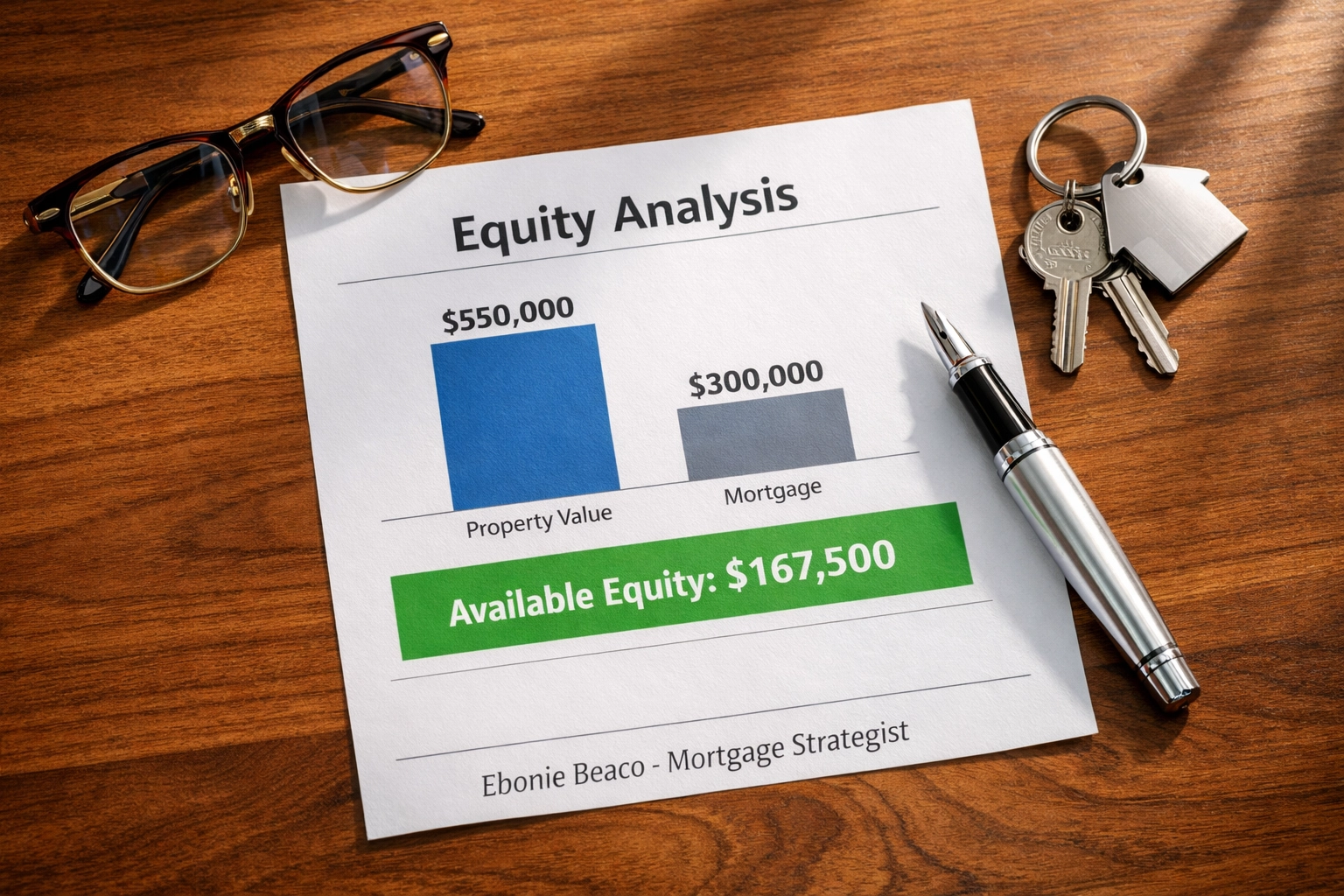
Imagine a homeowner in Virginia with a property currently valued at $550,000. Their existing first mortgage balance is $300,000.
Most lenders will allow you to access up to 85% of your home's value (this is known as the Combined Loan-to-Value or CLTV).
- Property Value: $550,000
- Max CLTV (85%): $467,500
- Current Mortgage: -$300,000
- Available HELOC Amount: $167,500
In this scenario, the homeowner now has access to over $167,000 that they can use for whatever they need. They don't pay interest on that money until they actually draw it out. If they use $20,000 to fix a kitchen, they only pay interest on $20,000, not the full $167,500.
Access our mortgage calculators to run your own numbers and see how much equity you might have available.
The Path to Securing Your HELOC
Getting a HELOC is often faster than a standard mortgage refinance, but it still requires a clear strategy. At Home Loans Network, we guide you through this process with total transparency.
- Check Your Equity: Review your current property value against your mortgage balance.
- Review Your Credit: While HELOCs are secured by your home, your credit score influences the interest rate you'll receive.
- Gather Documentation: You will typically need proof of income, tax returns, and your current mortgage statement.
- Appraisal: The lender will need to verify the current market value of your home.
- Closing: Once approved, you sign your documents and your line of credit is established.
Compare your options and select a loan officer who understands the nuances of your local market, whether you are in Michigan, Illinois, or Arkansas.
Why You Shouldn't Wait Until "Later"
The phrase "before it’s too late" in the title isn't just hype. Lending guidelines can change overnight. While banks are currently aggressive in offering HELOCs because of high equity levels and low default rates, a shift in the economy could cause lenders to tighten their belts.
Securing a line of credit now doesn't mean you have to use it today. It functions as a financial safety net. Having a $100,000 or $200,000 line of credit sitting ready to use is a massive advantage if an emergency arises or a once-in-a-lifetime investment opportunity pops up.
Jump in and secure your financial flexibility while the market conditions are skewed in your favor. Whether you are looking for a Georgia HELOC lender or navigating the Florida HELOC landscape, the time to act is when your equity is high and the rates are trending down.
Building an Investment Portfolio with Home Equity
If you are an aspiring real estate investor, a HELOC is one of the most powerful tools in your arsenal. Many of our clients in Alabama and Missouri use their HELOC funds to purchase distressed properties, renovate them, and then move into a long-term investment loan.
This "Buy, Rehab, Rent, Refinance, Repeat" (BRRRR) strategy is much easier to execute when you have a ready-to-use line of credit for the initial purchase and renovation costs. It eliminates the need for expensive hard money loans and gives you the leverage to move quickly when a deal hits the market.
Final Thoughts on Your Home Equity Strategy
Your home is likely your largest asset. In the current 2026 market, that asset is more liquid than it has been in years. From California to Virginia, homeowners are waking up to the fact that their walls are made of "gold" that can be accessed without selling their home or giving up their primary low-interest mortgage.
Don't let your equity sit idle while the market moves. Take control of your financial profile and explore how a line of credit can provide the liquidity you need for the next chapter of your life.
Schedule a 1 on 1 at https://calendly.com/homeloansnetwork
Ebonie Beaco
Mortgage Strategist | Senior Loan Officer
Home Loans Network powered by Loan Factory Inc.
NMLS #2389954
HomeLoansNetwork.com
312-392-0664
While HELOCs are a fantastic tool for most, there is a specific type of property that lenders are becoming increasingly cautious about in the coming months. If you own a certain type of multi-unit building or a specific style of condo, your window to access equity might be closing much faster than you think. Stay tuned for our next deep dive into the "hidden" property requirements that could stop your HELOC application in its tracks...