Why Everyone Is Talking About DSCR Loans in 2026 (And You Should Too)

Why Everyone Is Talking About DSCR Loans in 2026 (And You Should Too) Explore why DSCR loans are the leading financing strategy for real estate investors in 2026. Learn how to qualify based on property cash flow instead of personal income. why-dscr-loans-are-trending-2026 A professional landscape hero image showing a modern luxury rental property with a financial dashboard overlay for 2026 market trends. Modern luxury rental property highlighting DSCR loan financing opportunities in 2026. Looking to scale your rental portfolio in 2026? DSCR loans are changing the game by focusing on property performance rather than personal tax returns. Here is why every investor is talking about them. DSCR Loans, Real Estate Investing 2026, Rental Property Financing, Investor Loans, Cash Flow Loans, Portfolio Scaling, Non-QM Mortgages
The real estate financing landscape has undergone a significant transformation. As we move through 2026, one specific loan program has moved from a niche alternative to the primary choice for rental property owners: the Debt Service Coverage Ratio (DSCR) loan. This financing model has captured the attention of the investment community because it bypasses the traditional hurdles of personal income verification, focusing instead on the actual performance of the real estate asset.
For those managing portfolios in high-growth states like Florida, Georgia, Alabama, and Illinois, understanding how to leverage these tools is essential. Whether you are looking at a multi-unit building in Chicago or a short-term rental near the coast in California, the DSCR loan provides a streamlined path to acquisition that traditional mortgage programs often block.
Defining the Debt Service Coverage Ratio (DSCR)
Debt Service Coverage Ratio (DSCR): A financial metric that measures the ability of an income-producing property to cover its monthly debt obligations. Benefit: This allows you to qualify for financing based on the property’s rental income rather than your personal W-2 earnings or tax returns.
In 2026, lenders are placing a higher premium on property-level performance. When you use a DSCR loan, the primary concern is whether the rent collected from tenants can satisfy the mortgage, taxes, insurance, and association dues. This shift in focus empowers you to grow a portfolio without being limited by personal debt-to-income (DTI) ratios, which often stall investors who rely on conventional financing.
How the Calculation Works in Today’s Market
To understand why this program is so effective, you must see the numbers in action. Lenders typically look for a ratio of 1.0 or higher, with 1.25 being the "sweet spot" for the most competitive interest rates.
Consider a scenario for a residential rental property in a market like Michigan or Indiana:
- Property Value: $400,000
- Monthly Rental Income: $3,000
- Monthly Mortgage (PITI): $2,400
- Calculation: $3,000 ÷ $2,400 = 1.25 DSCR
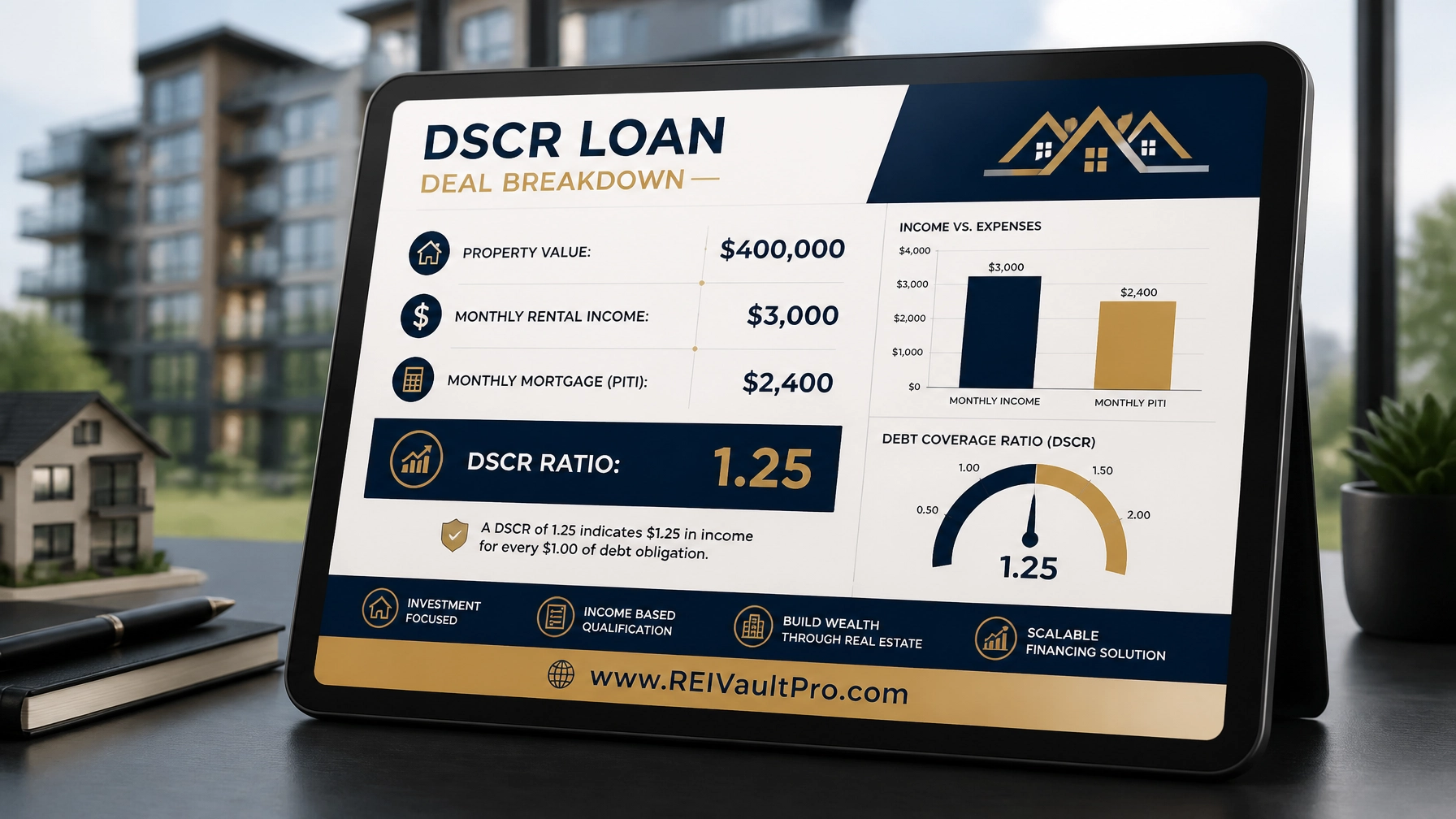
In this example, the property produces 25% more income than the debt requires. This "cushion" gives lenders confidence and rewards you with better leverage. You can use a DSCR Loan Pre-Qualification Worksheet to run these numbers before you ever sign a purchase agreement.
The 2026 Interest Rate Environment
As of mid-2026, DSCR loan rates have stabilized in the mid-6% to high-7% range. While these rates may sit slightly higher than primary residence mortgages, the trade-off is the speed of execution and the lack of personal documentation required.
Investors are finding that the ease of the process outweighs the small rate spread. Because these are classified as non-QM (Non-Qualified Mortgage) products, the underwriting is faster. If you have an accurate Rent Roll Template and a solid credit profile, you can often close in half the time it takes for a traditional bank loan.
Why Investors are Moving Away from Conventional Financing
Conventional loans have their place, but they carry restrictive caps. Most traditional lenders limit the number of financed properties an individual can hold, usually capping out at ten. For those looking to build generational wealth through large-scale acquisition, this is a major roadblock.
DSCR loans do not have these caps. You can finance 20, 50, or 100 properties, provided each deal meets the cash flow requirements. This scalability is why professional landlords in Virginia, Missouri, and Kentucky are transitioning their entire portfolios into DSCR structures.
Furthermore, these loans do not impact your personal DTI. If you want to buy a new primary residence in Florida while owning fifteen rentals, the rental debt generally won't count against you because it is tied to the business performance of the properties.
Strategic Market Selection and Analysis
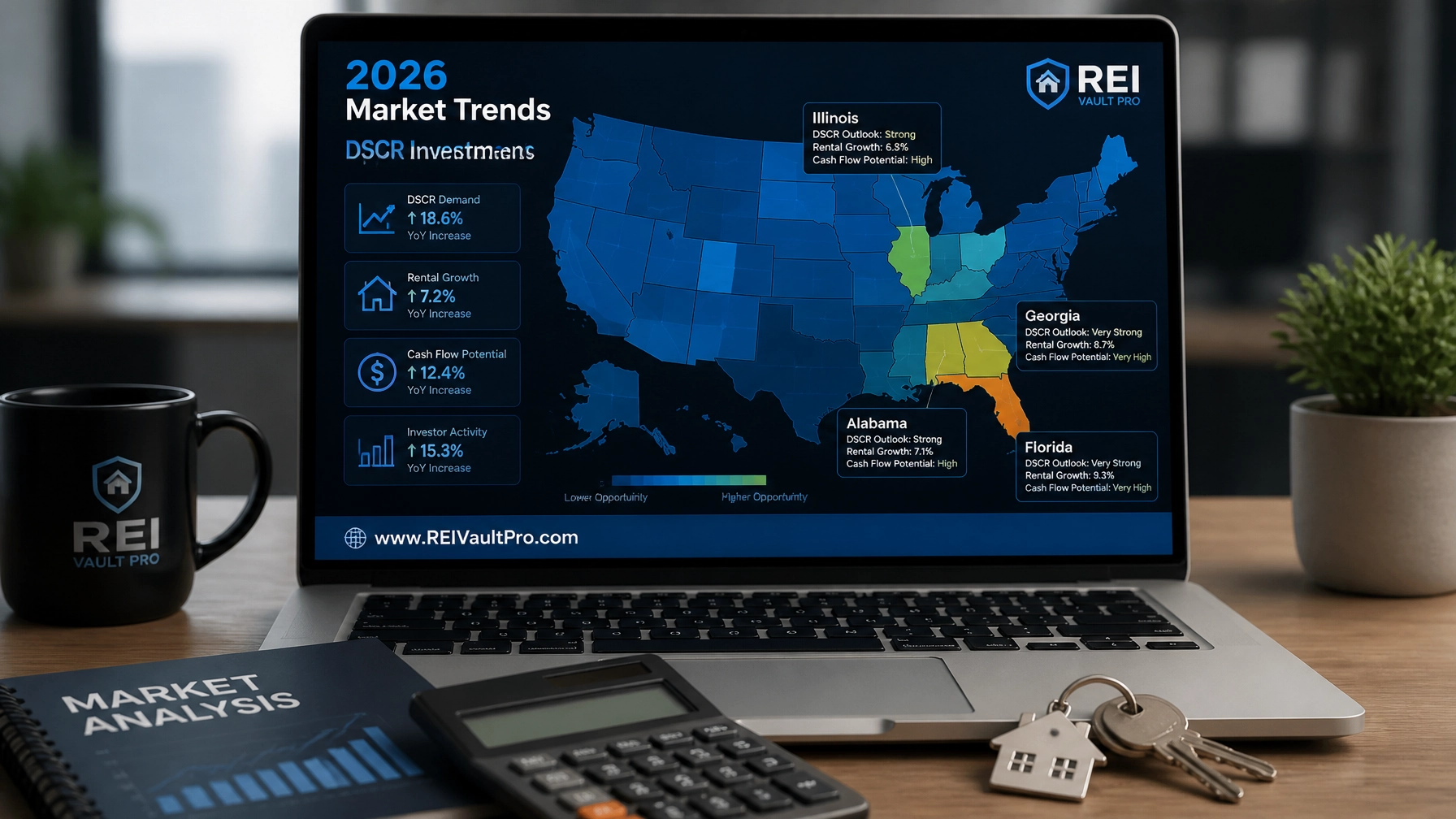
Finding the right property is only half the battle; ensuring the math supports the loan is the other. In 2026, successful investors are using AI Market Analysis to identify regions where rent growth outpaces property appreciation.
Markets in the Southeast, such as Georgia and Arkansas, continue to show strong rent-to-price ratios. When the rent is high relative to the purchase price, your DSCR naturally improves, unlocking lower interest rates and higher loan-to-value (LTV) options.
Diversifying with Short-Term Rentals (STRs)
The DSCR model is not just for long-term tenants. Airbnb and VRBO operators in California and Florida are using these loans by showing projected short-term rental income. Lenders in 2026 have become much more sophisticated in evaluating STR data, often using historical "AirDNA" style projections to justify the loan.
If you are transitioning a property into a short-term rental, ensure your management systems are in place. Having a clear Lease Violation Notice and guest policy is still part of the due diligence process that savvy lenders review during the "lite-doc" underwriting.
Managing Larger Assets: Multifamily and Commercial
While many start with single-family homes, the DSCR logic scales perfectly into the multifamily space. Acquiring a 5-unit or 10-unit building in Missouri or Illinois requires a deep dive into the numbers. You should utilize a Multifamily Due Diligence Checklist to ensure every expense, from utilities to property management, is accounted for in your ratio.

When you move into these larger assets, the Debt Service Coverage Ratio becomes the most significant factor in your "exit strategy." Whether you plan to hold long-term or do a cash-out refinance later, the property's ability to "service its own debt" is what creates value in the eyes of future buyers and lenders alike.
Essential Tools for 2026 Investors
To stay ahead in a competitive market, you must have your data organized. Using professional Real Estate Investment Calculators allows you to pivot quickly when a deal comes across your desk. In 2026, speed is a currency. If you can prove a 1.30 DSCR within minutes of receiving a lead, you are far more likely to secure the financing and the property.
Additionally, communication with sellers and lenders is key. Using proven Real Estate Investor Phone Scripts can help you explain the benefits of your financing strategy to sellers who might be wary of unconventional offers.
Related REI Vault Pro Resources
- Real Estate Investment Calculators: Access a full suite of tools to analyze DSCR, NOI, and Cash-on-Cash returns instantly. This helps you verify if a property meets 2026 lending standards before you apply.
- AI Market Analysis Tool: Use data-driven insights to find high-yield rental markets across AL, FL, GA, and more. It helps you target areas where DSCR ratios are naturally higher due to strong rent-to-price dynamics.
- DSCR Loan Pre-Qualification Worksheet: A structured template to organize your property’s income and expenses. Use this to present a professional package to lenders for faster approval.
- Rent Roll Template: Maintain professional records of your rental income. This document is a core requirement for any DSCR loan application and ensures your data is accurate.
- Multifamily Due Diligence Checklist: Essential for investors moving into 5+ unit properties. It ensures you don't miss hidden expenses that could negatively impact your DSCR ratio.
Summary of the 2026 DSCR Opportunity
The rise of the DSCR loan represents a maturing real estate market where property performance is the ultimate authority. By removing the limitations of personal income and DTI, these loans allow you to scale your portfolio with precision. Whether you are a seasoned investor in Chicago or a first-time landlord in Alabama, the ability to finance based on cash flow is a strategy that provides both flexibility and growth.
As you look toward your next acquisition, remember that the numbers are your strongest advocate. A property that pays for itself is the foundation of a successful real estate business.
Ready to see how your next deal stacks up? Start a Free Trial with REI Vault Pro today and access the tools you need to master DSCR financing.
Frequently Asked Questions (FAQ)
What is the minimum credit score for a DSCR loan in 2026? Most programs require a minimum credit score of 640. However, higher scores (720+) often unlock significantly better interest rates and higher loan-to-value (LTV) ratios.
Can I use a DSCR loan for a fix-and-flip project? Typically, no. DSCR loans are designed for income-producing rental properties that are already occupied or ready for tenants. For renovation projects, a bridge loan or fix-and-flip loan is more appropriate until the property is ready to be refinanced into a long-term DSCR loan.
Does a DSCR loan require a lease agreement? Lenders generally prefer to see an executed lease agreement. However, many 2026 programs allow for "vacant" closings where market rent (determined by an appraiser) is used to calculate the ratio.
Can foreign nationals qualify for DSCR loans? Yes. DSCR loans are a popular choice for foreign national investors because they do not require U.S. tax returns or credit history in the same way conventional loans do, focusing instead on the U.S.-based asset's performance.
Is there a limit to how many DSCR loans I can have? Unlike conventional financing, there is typically no hard limit on the number of DSCR loans an investor can hold. This makes them the ideal tool for building large-scale rental portfolios.