Why AI-Driven Insights Will Change the Way You Find Chicago Investment Property Loans

SEO Title: Why AI-Driven Insights Will Change the Way You Find Chicago Investment Property Loans
Meta Description: Explore how AI-driven insights and advanced mortgage technology are revolutionizing Chicago investment property loans and real estate financing in 2026.
URL Slug: chicago-investment-property-loans-ai-insights
Featured Image Recommendation: A high-resolution landscape image showing the Chicago skyline with digital data overlays and the REI Vault Pro website URL.
SEO Alt Text: Chicago skyline with digital data overlays representing AI-driven real estate investment insights and property loan technology.
Social Media Excerpt: Discover how artificial intelligence is transforming the landscape of Chicago investment property loans. Learn how to use data-driven insights to secure better financing and scale your real estate portfolio in 2026.
SEO Tags: Chicago investment property loans, AI real estate investing, mortgage technology 2026, DSCR loans Chicago, multifamily financing Illinois, real estate data analytics
The landscape of Chicago investment property loans is undergoing a profound transformation as we move through 2026. For decades, securing financing for a two-flat in Logan Square or a multi-unit building in Bronzeville relied heavily on manual appraisals, local bank relationships, and generalized market data. Today, the integration of artificial intelligence (AI) and advanced data analytics has shifted the balance of power toward the informed investor.
Artificial intelligence now allows lenders and borrowers to analyze risk, project rental growth, and evaluate property potential with unprecedented precision. This technological evolution is not just a trend; it is the new standard for anyone looking to build wealth through real estate financing in Illinois.
The Evolution of Real Estate Financing in Chicago
The Chicago market has always been unique, characterized by its diverse neighborhoods and a high concentration of multifamily "workforce" housing. In 2026, the demand for Class B and Class C multifamily assets has reached record highs, with vacancy rates dipping below 5%. This competitive environment requires investors to move faster and with more confidence than ever before.
Traditional underwriting often took weeks to process a single loan application. In contrast, AI-driven mortgage technology can now ingest vast amounts of data, from Chicago rent rolls to neighborhood crime statistics, to provide a preliminary loan approval in a fraction of the time. This speed is critical when you are competing for a high-demand property in a supply-constrained market.
Explore the latest AI tools for real estate to see how technology is streamlining the acquisition process.
Dictionary of AI Real Estate Terms
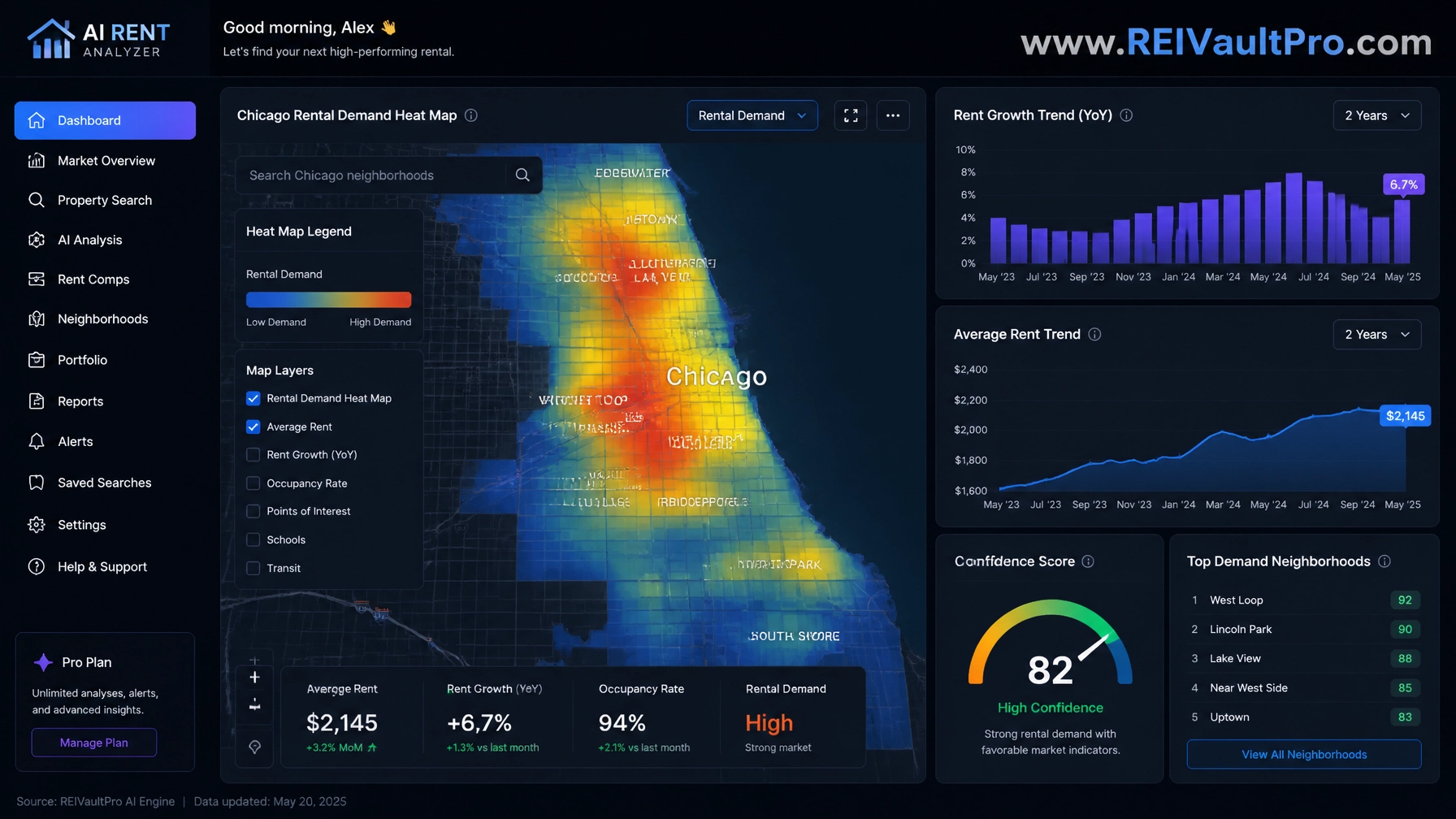
AI Rent Analyzer
A digital tool that uses machine learning algorithms to compare a subject property against thousands of local rental listings to determine an accurate market rent.
Application: You can use this to verify if the projected income of a Chicago four-flat supports a high enough DSCR to qualify for a loan.
Automated Underwriting System (AUS)
A software-driven process that evaluates a borrower's creditworthiness and property value to make an instant loan decision.
Benefit: This allows you to receive a pre-approval for a cash-out refinance or an acquisition loan without waiting for a manual review.
Predictive Market Analytics
The use of historical data and current market trends to forecast future property values and rental demand in specific geographic areas.
Application: Investors use this to identify which Chicago neighborhoods, such as those near the West Loop or the Illinois Medical District, are poised for the highest appreciation.
Leveraging Data for Better Loan Terms
Lenders in 2026 are increasingly using AI to differentiate between stable assets and high-risk investments. When you present a deal backed by precise data, you position yourself as a low-risk borrower. This often results in more favorable interest rates and higher loan-to-value (LTV) ratios.
For instance, using an AI Deal Analyzer allows you to simulate various economic scenarios, such as rising interest rates or increased vacancy. By proving that your property remains profitable under stress, you can secure landlord loans with better terms than an investor relying on "gut feeling."
Understanding the DSCR Advantage in Chicago
One of the most popular programs for Chicago investors is the DSCR (Debt Service Coverage Ratio) loan. Unlike traditional loans that look at your personal income (W-2 or tax returns), a DSCR loan focuses on the property's ability to pay for itself.
AI has significantly improved how DSCR is calculated. Instead of relying on a single appraisal, AI models analyze real-time market data to ensure the rental income is sustainable. In the current 2026 market, Chicago multifamily mortgage rates have stabilized, making the DSCR calculation even more favorable for those buying Class B and C properties.
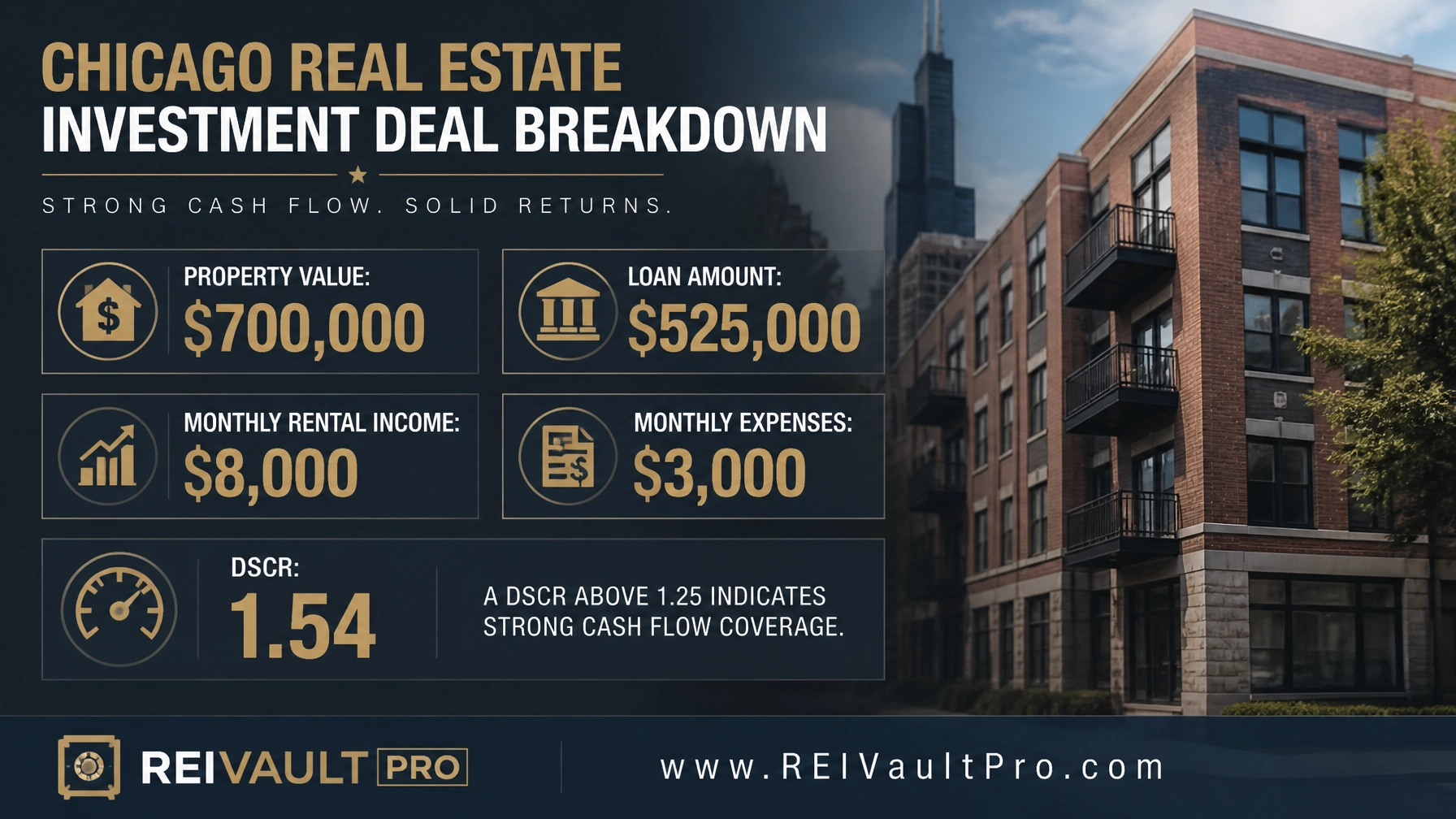
Financial Calculation: Chicago 4-Unit Investment
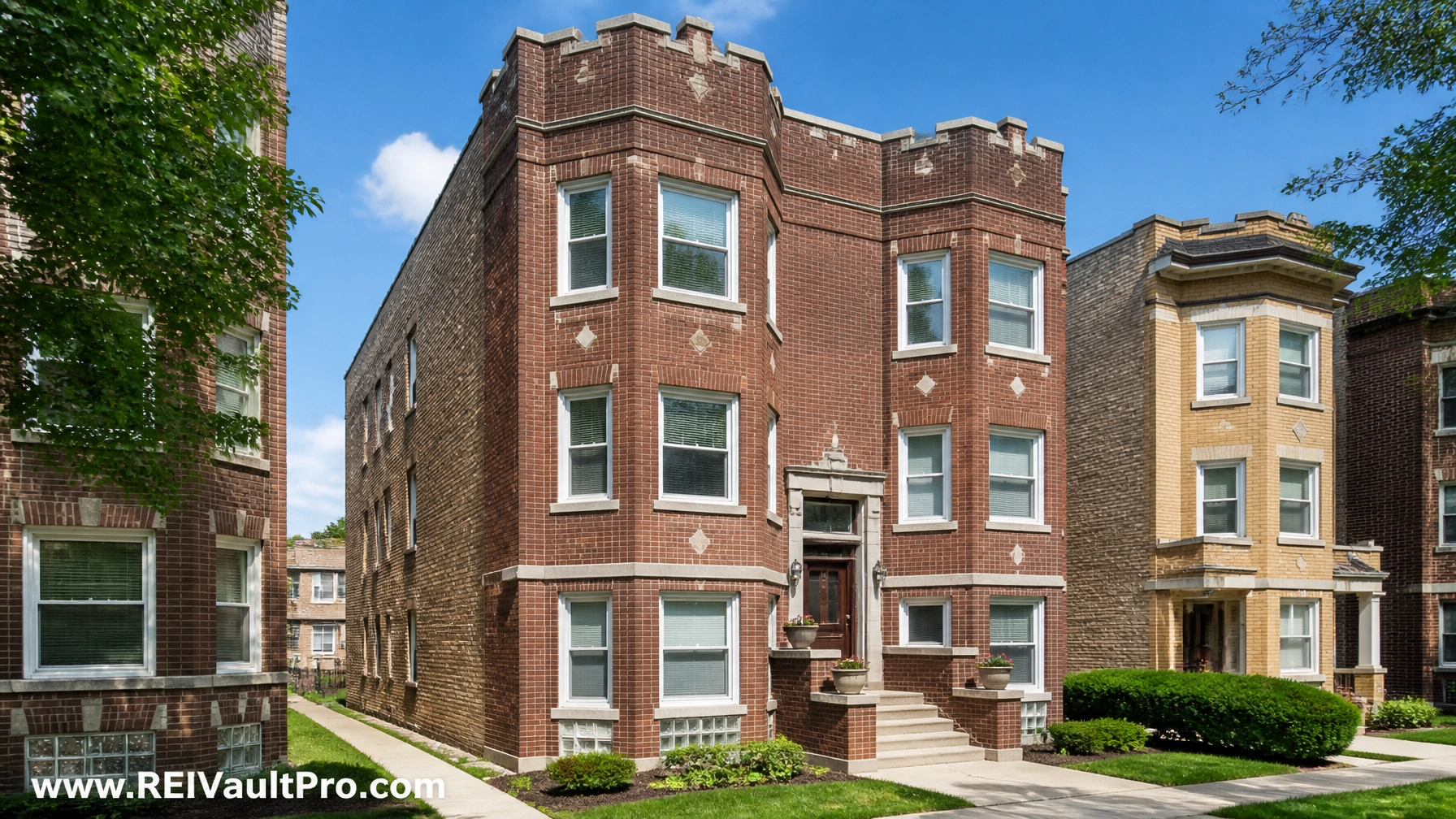
To understand how this works in a real scenario, consider a typical four-unit apartment building in a growing Chicago neighborhood.
- Purchase Price: $700,000
- Monthly Rental Income: $8,000
- Monthly Operating Expenses: $3,000
- Net Operating Income (NOI): $5,000
- Loan Amount (75% LTV): $525,000
- Interest Rate: 6.25%
- Monthly Mortgage Payment (P&I): $3,233
To find the DSCR, we divide the NOI by the mortgage payment:
$5,000 / $3,233 = 1.54
A DSCR of 1.54 is considered very strong by most lenders, who typically look for a ratio of 1.20 or higher. This high ratio could potentially allow you to access lower interest rates or even a higher loan amount.
Navigating the Chicago Market with AI
Chicago's real estate market is a "tale of many cities." While single-family prices in the city rose nearly 10% year-over-year in 2026, different submarkets behave differently. AI-driven insights help you navigate these nuances by providing neighborhood-level risk scoring.
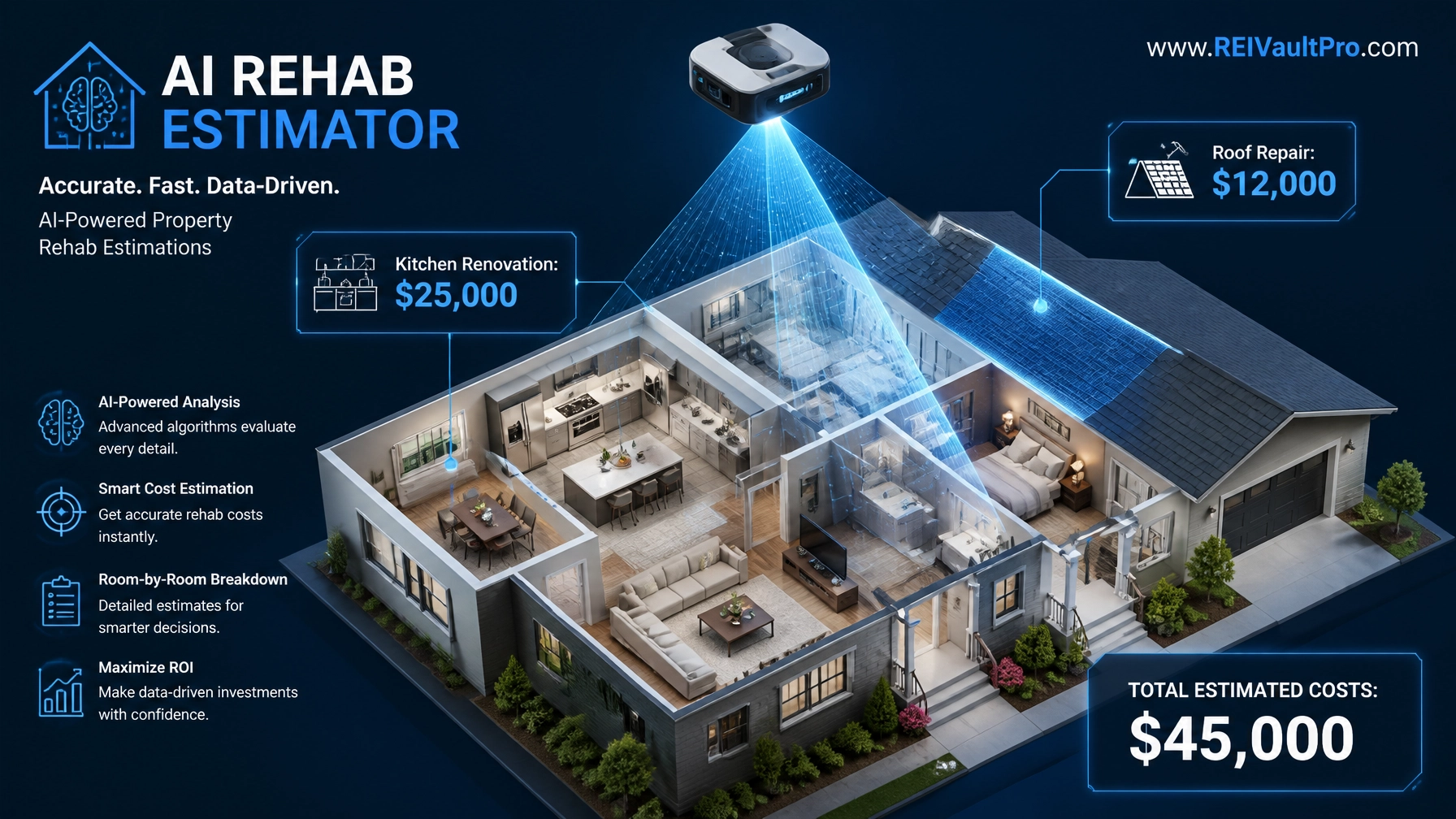
For example, an investor looking at a fix and flip project in the Chicago suburbs, such as Naperville or Aurora, can use an AI Rehab Estimator to predict renovation costs accurately. This ensures that the hard money loan or bridge loan you secure covers the necessary work without leaving you short of capital.
According to research from leading financial institutions, AI is moving from a novelty to core infrastructure in the real estate sector. This shift means that investors who do not adopt these tools may find themselves at a disadvantage when competing for the best Chicago investment property loans.
Strategic Financing for Every Investor Type
The beauty of AI-driven insights is that they apply to all types of real estate strategies. Whether you are a first-time landlord or a seasoned professional scaling a large portfolio, technology can help you find the right fit.
- Short-Term Rental Investors: Use data to analyze Airbnb demand in Chicago's tourist-heavy areas to secure STR financing.
- Self-Employed Borrowers: Leverage AI Underwriting tools that can analyze bank statements to verify income faster than manual reviews.
- Portfolio Investors: Use automated tracking to monitor the equity in your existing properties, identifying the perfect time for a cash-out refinance to fund your next acquisition.
Chicago's investment landscape is thriving in 2026, especially for those focused on workforce housing and multifamily units. By aligning your strategy with AI-driven data, you can navigate the complexities of mortgage loans and real estate financing in Illinois with confidence and clarity.
Related REI Vault Pro Resources
- AI Deal Analyzer: This tool evaluates the financial viability of any property in seconds, helping you compare different loan scenarios and ROI projections.
- AI Rent Analyzer: Access real-time rental data across Chicago to ensure your projected income meets lender requirements for DSCR loans.
- AI Rehab Estimator: Plan your renovations with precision. This tool provides cost estimates that help you secure the right amount of bridge or fix-and-flip financing.
- Investment Decision Engine: A comprehensive platform that aggregates market trends and property data to help you make informed buy, hold, or sell decisions.
- AI Underwriting: Understand how lenders view your profile and property data to streamline your path to a mortgage approval.
Accessing the right data is the first step toward building a successful real estate portfolio. AI-driven insights provide the clarity you need to move forward with your next Chicago investment.
Jump in and discover how modern technology can simplify your financing journey.
Watch a Demo | Join REI Vault Pro
FAQ Section
How does AI improve my chances of getting a Chicago investment property loan?
AI helps by providing more accurate data regarding property value and rental income. When you present a lender with precise, AI-backed reports, it reduces their perceived risk, which can lead to faster approvals and better interest rates.
Can AI help me find the best Chicago neighborhoods for investment?
Yes, predictive analytics tools analyze historical price growth, rental demand, and economic development to identify "hot" submarkets in Chicago before they become mainstream.
Is AI underwriting only for large institutional investors?
Not at all. Technology has made these tools accessible to individual investors, including those looking for 2-4 unit properties or single-family rentals. Modern lenders use AI to process loans of all sizes efficiently.
What is the most important metric for a Chicago multifamily loan?
In 2026, the Debt Service Coverage Ratio (DSCR) remains a critical metric. Lenders want to see that the property's income comfortably covers the mortgage payment and operating expenses.
How do AI-driven rent analyzers compare to traditional appraisals?
AI rent analyzers use real-time data from thousands of local listings, providing a more current and comprehensive view of the market than a traditional appraisal, which may rely on older "comparable" sales.