Why a Reverse Mortgage Will Change the Way You Think About Aging in Place

For many homeowners in states like Virginia, Georgia, and Florida, the home is more than just a place to live: it is a massive bucket of stored wealth. However, as retirement approaches, a common anxiety creeps in: how do you access that wealth without being forced to move?
The concept of "Aging in Place" refers to the ability to live in one's own home and community safely, independently, and comfortably, regardless of age or income level. Historically, seniors felt they had two choices: stay in the home and struggle with a fixed income, or sell the home to "downsize" and unlock cash.
A reverse mortgage changes this dynamic entirely. It shifts the perspective from viewing your home as a dormant asset to viewing it as a functional financial tool that can fund your lifestyle, healthcare, and home modifications.
Understanding the Reverse Mortgage Framework
Before we look at the numbers, we need to define the two primary vehicles used for this strategy: the HECM and the Proprietary Reverse Mortgage.
HECM (Home Equity Conversion Mortgage): A reverse mortgage insured by the Federal Housing Administration (FHA) that allows homeowners aged 62 or older to convert a portion of their home equity into cash.
Practical Application: This is the most common reverse mortgage used for homes valued within the FHA lending limits.
Proprietary Reverse Mortgage: A private reverse mortgage product offered by individual lenders, often referred to as a "Jumbo" reverse mortgage.
Practical Application: These are typically used for high-value properties that exceed the FHA lending limits, often available to borrowers as young as 55 in certain states.
The Mental Shift: Asset Management vs. Debt
Most people spend thirty years trying to get rid of a mortgage. The idea of adding a balance back onto the home can feel counterintuitive. However, the goal of aging in place isn't necessarily to leave a debt-free house to heirs: it is to ensure the homeowner has a high quality of life.
By utilizing a reverse mortgage, you eliminate the requirement to make monthly principal and interest payments. You still own the home. You still keep the title. You are simply choosing to pay the loan back later (usually when the home is sold) rather than today.

Case Study: Sofia’s Strategy in Miami, Florida
Let’s look at a real-world scenario involving Sofia Martinez, a 72-year-old retired educator living in Miami. Sofia owns a vibrant home currently valued at $850,000. She has a small remaining traditional mortgage of $120,000.
Sofia wants to stay in her home but is worried about the rising costs of property taxes in Florida and the need for a walk-in tub and kitchen modifications to accommodate her mobility.
The HECM Calculation
In a HECM scenario, the amount Sofia can access is determined by the Principal Limit Factor (PLF). This factor is a percentage based on the age of the youngest borrower and current interest rates.
- Property Value: $850,000
- Borrower Age: 72
- Estimated PLF: 45% (Note: This fluctuates based on market rates)
- Gross Principal Limit: $850,000 x 0.45 = $382,500
From this $382,500, the first priority is paying off her existing $120,000 mortgage. This immediately eliminates her monthly mortgage payment, significantly increasing her monthly cash flow.
- Remaining Funds: $382,500 - $120,000 (Existing Loan) - $15,000 (Estimated Closing Costs/IMIP) = $247,500
Sofia now has $247,500 available. She can take this as a lump sum, a monthly tenure payment, or a line of credit that actually grows over time.
The Proprietary (Jumbo) Calculation
If Sofia’s home were valued at $1.5 million in a high-end neighborhood in Virginia or California, the HECM (which has a maximum claim amount limit) might not provide enough leverage. This is where a Proprietary loan steps in.
Proprietary loans don’t have the same FHA insurance premiums, but they often have different Loan-to-Value (LTV) structures.
- Property Value: $1,500,000
- Proprietary LTV: Roughly 35% to 40% for a 72-year-old.
- Available Funds: $1,500,000 x 0.38 = $570,000
For high-net-worth individuals, this provides a massive liquidity injection without the tax consequences of selling stocks or pulling from an IRA.
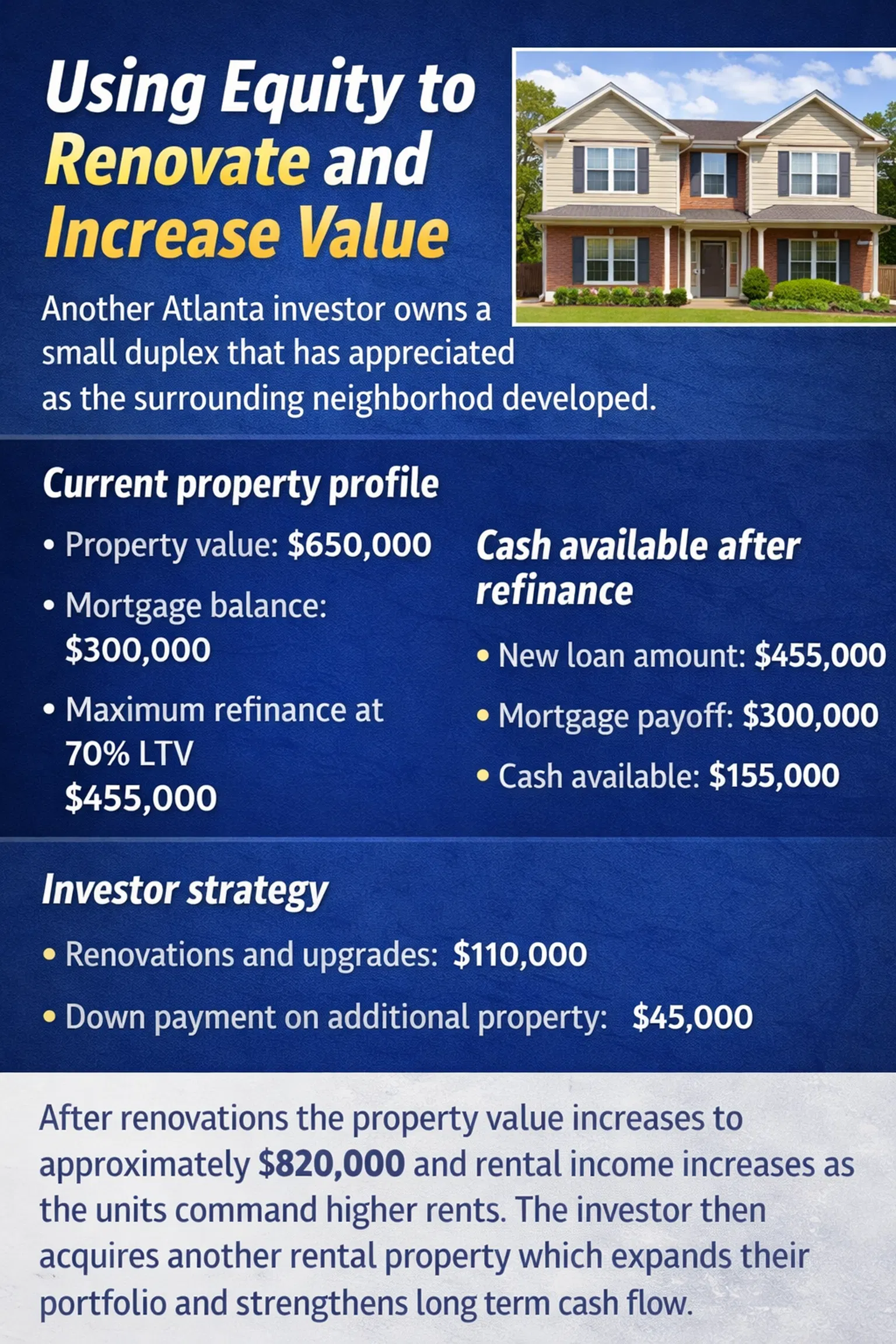
Breaking Down the Loan-to-Value (LTV) Mechanics
When you look at a traditional mortgage, the lender might give you an LTV of 80% or 97%. In the reverse mortgage world, the LTV is much lower.
Loan-to-Value (LTV) in Reverse Mortgages: The ratio of the loan amount to the appraised value of the property, which is restricted to ensure that the loan balance (which grows over time) does not exceed the home's value too quickly.
Why is the LTV lower?
Since you aren't making monthly payments, the interest is "deferred" and added to the loan balance. Lenders and the FHA use lower initial LTVs to create a "cushion" of equity. This ensures that even as the balance grows, there is a high probability the home value will still cover the debt in the future.
Principal Limit Factor (PLF): The specific percentage assigned by HUD for HECM loans that determines the maximum loan amount based on age and rates.
Practical Application: The older you are, the higher your PLF, because the lender expects the loan to be outstanding for a shorter duration.
Strategic Uses for Aging in Place
A reverse mortgage isn't just about "getting cash." It’s about creating a sustainable environment for the next 20 years of your life.
1. Home Modifications
Staying in your home requires the home to adapt to you. Widening doorways, installing ramps, or updating a bathroom for safety can cost between $20,000 and $75,000. Using equity to fund these repairs ensures you don't have to move to an assisted living facility prematurely.
2. In-Home Care
Professional caregiving is expensive. Whether you are in Chicago, Illinois or Richmond, Virginia, the cost of a part-time home health aide can easily exceed $4,000 a month. A reverse mortgage line of credit can be used specifically to pay for these services, allowing you to stay in the comfort of your own furniture and neighborhood.
3. Tax Efficiency
In most cases, the money received from a reverse mortgage is considered a loan advance, not income. This means it is typically tax-free. For retirees concerned about moving into a higher tax bracket or affecting their Social Security benefits, this is a major strategic advantage.

Addressing the Common Ownership Myth
A common misconception is that "the bank takes the house." This is false.
In a reverse mortgage, you retain the title to your home. You are responsible for the "Big Three":
- Property Taxes: You must keep your taxes current.
- Homeowners Insurance: You must maintain adequate coverage.
- Home Maintenance: You must keep the property in good repair.
As long as you meet these requirements and the home remains your primary residence, the loan does not have to be repaid. When the last borrower leaves the home, the heirs can choose to pay off the loan and keep the house, or sell the house and keep the remaining equity.
The Power of the Growing Line of Credit
One of the most unique features of the HECM is the Growth Feature on the unused portion of the line of credit.
If Sofia from our case study leaves her $247,500 in a line of credit rather than taking it all at once, that available balance grows at the same interest rate as the loan balance. Over ten years, her available credit could grow significantly, providing a massive "emergency fund" for late-stage healthcare needs.

Is a Reverse Mortgage Right for Your Strategy?
This financial tool is most effective for those who plan to stay in their home for at least five to ten years. If you are planning to move next year, the closing costs associated with a HECM may not be worth the investment.
However, if you are looking at your home in Michigan, Indiana, or Alabama and realizing that it holds the key to your financial freedom, it’s time to run the numbers.
Reverse mortgages allow you to stop "house rich and cash poor" living. They allow you to reinvest your own equity into your own quality of life.
If you want to see exactly how the LTV and PLF calculations would look for your specific age and property value, the best next step is to speak with a strategist who understands the nuances of both HECM and Proprietary options.
Ready to explore your options?
Schedule a 1 on 1 at https://calendly.com/homeloansnetwork
Ebonie Beaco
Mortgage Strategist | Senior Loan Officer
Home Loans Network powered by Loan Factory Inc.
NMLS #2389954
HomeLoansNetwork.com
312-392-0664