Wholesaling Secrets Revealed: How to Scale Your Business Across CA, FL, and Atlanta

Scaling a real estate wholesaling business is less about working harder and more about building systems that work without you.
When you move from a solo operator to a multi-state powerhouse in markets like California, Florida, and Georgia, you transition from a job to a scalable enterprise.
This guide explores the specific strategies required to dominate these diverse markets and the financial structures that support rapid growth.
The Foundation of Scaling: The 5-Deal Rule
Before you attempt to scale your business across state lines, you must prove your concept locally.
Industry data suggests that investors who complete at least five deals manually develop the "hustle" and operational knowledge necessary to manage a team.
Wholesaling. The practice of sourcing deeply discounted real estate and assigning the contract to an end buyer for a fee. It provides a low-risk entry point into real estate because you rarely take title to the property.
Scaling. The process of increasing revenue while maintaining or decreasing the amount of personal time invested. This is achieved through automation, outsourcing, and entering high-volume markets.
Jump in only after you have mastered the basics of lead generation and contract negotiation.
Phase 1: Mastering the Solo Hustle
In the early stages, your focus is on outbound marketing and lead acquisition.
You are likely pulling government lists, such as code violations or pre-foreclosures, and making direct contact with sellers.
Explore the mortgage basics glossary to understand the terminology you will encounter when speaking with distressed homeowners.
During this phase, you should handle:
- Direct mail campaigns.
- Cold calling and SMS outreach.
- Property walkthroughs and estimations.
- Building a preliminary buyer list.
Once you hit that five-deal milestone, you have the proof of concept needed to start delegating tasks.
Phase 2: Transitioning to Inbound Systems
Scaling requires a shift from manual outbound work to automated inbound lead generation.
This is where your business begins to function as a marketing machine.
Reverse Driving for Dollars. A strategy where you leave physical notes on distressed properties, prompting the owner to call you. This often results in higher connection rates than traditional cold calling.
Inbound Marketing. Strategies such as Facebook Ads or SEO that attract motivated sellers to your website. You use these to build a consistent pipeline of leads that do not require your active time to generate.
Access professional tools to analyze these deals quickly.

Dominating the Atlanta Investment Property Market
Atlanta is a unique landscape for wholesalers due to its rapid urban development and strong rental demand.
The Atlanta investment property market offers a blend of high-margin flips and consistent rental acquisitions for buy-and-hold investors.
To scale here, you must connect with the local investor community.
Atlanta homeowners often look for quick exits to unlock equity for their next move.

Why Atlanta is Prime for Scaling
- Strong Investor Demand: High concentration of institutional and local "Fix and Flip" investors.
- Market Diversity: Opportunities range from urban core revitalization to suburban growth.
- Economic Growth: A steady influx of jobs keeps the housing market moving, ensuring your assigned contracts close quickly.
Expanding to Florida and California: Geographic Nuances
Scaling across California and Florida requires an understanding of different price points and legal requirements.
In California, margins are often much higher, but the volume may be lower due to extreme competition.
In Florida, the high volume of retirees and second-home owners creates a constant stream of distressed or inherited properties.
Virtual Wholesaling. The process of executing real estate wholesale deals in markets where the investor is not physically located. This allows you to cherry-pick the most profitable opportunities in high-growth areas regardless of your home base.
California Strategy
- Focus on "High-Value" assignments where a single deal can equal five deals in a smaller market.
- Use sophisticated skip tracing to find owners of luxury distressed assets.
- Partner with local boots-on-the-ground for property inspections.
Florida Strategy
- Target "Probate" and "Senior Living" transitions.
- Focus on high-growth cities like Tampa, Orlando, and Jacksonville.
- Build relationships with title companies that understand the assignment process.
The Mechanics of the Assignment Fee
To scale successfully, you must be transparent with your buyers and sellers regarding how you get paid.
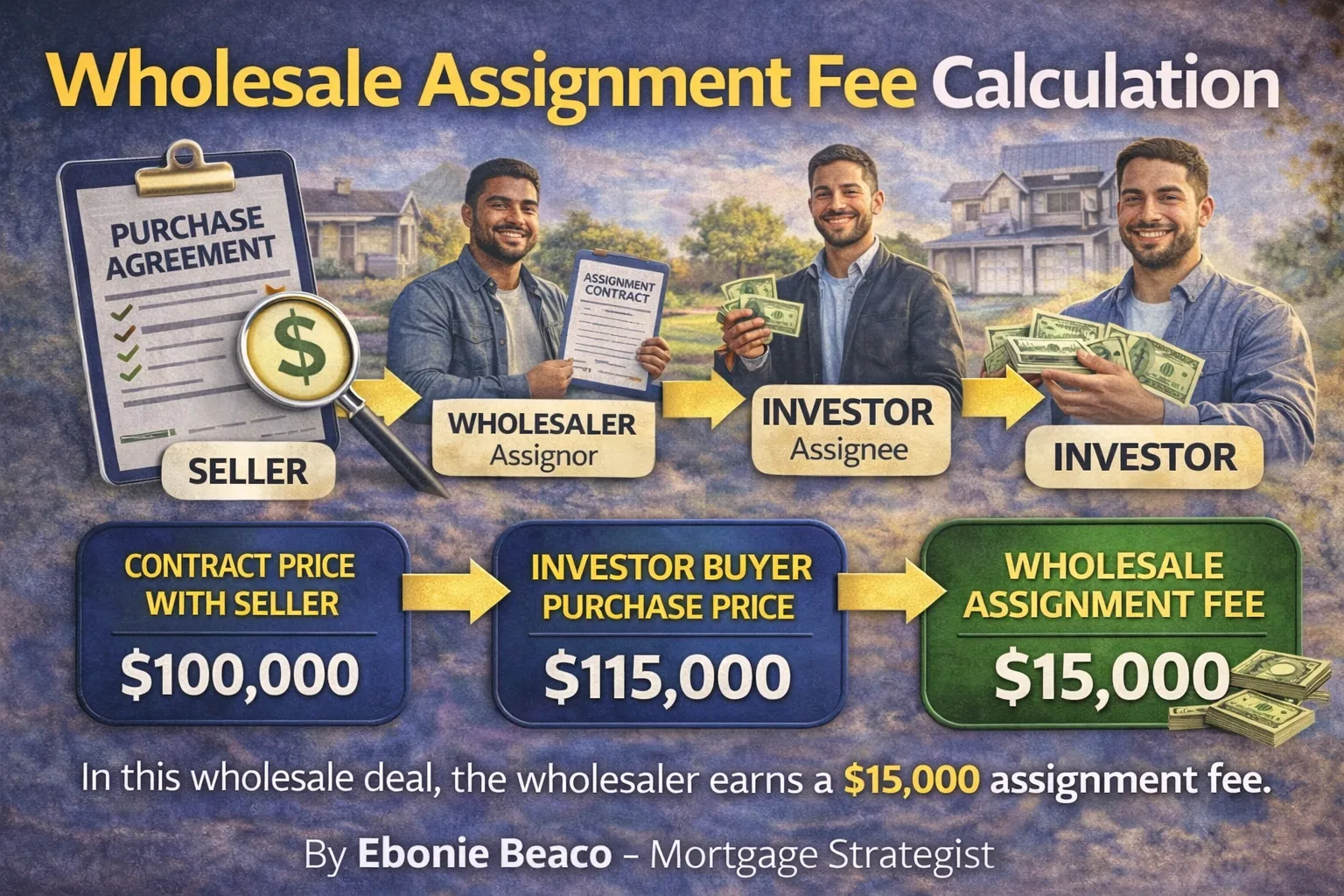
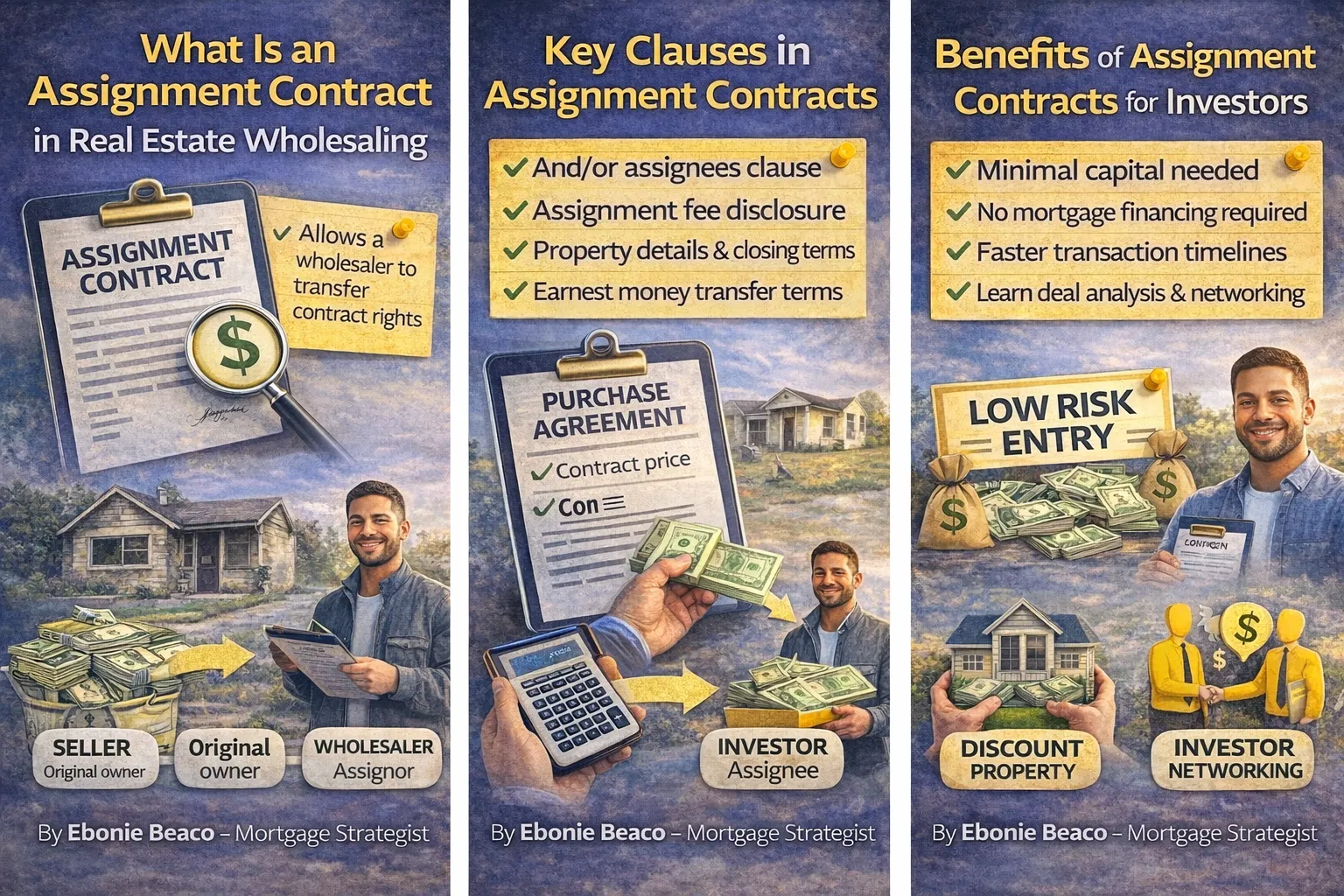
Assignment Contract. A legal document where the original buyer (wholesaler) transfers their rights and obligations of a purchase agreement to a new buyer. You use this to secure your profit without ever needing to take title to the property.
Assignment Fee. The profit kept by the wholesaler, representing the difference between the contract price with the seller and the purchase price of the end buyer.
Compare your options when it comes to closing.
While assignments are common, some high-spread deals may require a Double Closing to protect your privacy and profit margins.
Leveraging Technology and Team Building
You cannot be in three states at once.
Scaling requires a decentralized system where your team can collaborate in real-time.
- CRM Management: Use a platform like Podio or Salesforce to track every lead from California to Atlanta.
- Acquisition Managers: Hire specialists to talk to sellers and negotiate contracts.
- Dispositions Managers: Hire experts dedicated solely to finding buyers and moving contracts.
- Transaction Coordinators: Ensure the paperwork is perfect so you get paid at the closing table.
Explore online forms to streamline your internal data collection.
Real-World Example: An Atlanta Wholesale Deal
To illustrate how these numbers work in a real-world scenario, let's look at a typical deal structure in the Atlanta market.
Imagine you find a distressed duplex in a transitioning Atlanta neighborhood.
- After Repair Value (ARV): $400,000
- Estimated Repairs: $60,000
- Wholesaler's Purchase Price: $220,000
- Assignment Fee: $20,000
- Investor's Buy Price: $240,000
In this scenario, the investor buys the property at 60% of the ARV (minus repairs), leaving them plenty of room for profit.
You, the wholesaler, walk away with a $20,000 assignment fee without ever taking out a loan or swinging a hammer.
Financing the Exit: Connecting Wholesaling to Mortgage Strategy
While wholesalers don't usually need long-term financing, their buyers do.
To scale your business, you should be able to provide your buyers with resources to close the deal.
Whether they are looking for Fix and Flip Loans, DSCR Investor Loans, or Hard Money, having a mortgage strategist on speed dial makes you an invaluable partner.
Investors using the BRRRR method (Buy, Rehab, Rent, Refinance, Repeat) often rely on a cash-out refinance to pull their capital back out and buy their next deal from you.
By understanding how your buyers finance their acquisitions, you can vet them more effectively and ensure your deals actually cross the finish line.
Take the Next Step in Your Scaling Journey
Scaling a wholesaling business across multiple states is a journey of operational excellence.
By focusing on high-growth markets like Atlanta, Florida, and California, and implementing robust systems, you can build a business that generates wealth with precision.
If you are an investor looking to finance your next wholesale acquisition or a wholesaler wanting to learn more about how your buyers can leverage debt to buy more of your deals, we are here to help.
Explore your financing options and bridge the gap between a contract and a closing.
Schedule a 1 on 1 at https://calendly.com/homeloansnetwork
Ebonie Beaco
Mortgage Strategist | Senior Loan Officer
Home Loans Network powered by Loan Factory Inc.
NMLS #2389954
HomeLoansNetwork.com
312-392-0664