Wholesaling Secrets Revealed: How to Find Off-Market Properties in Florida for Pennies on the Dollar
Finding a massive discount on a property in today’s market feels like hunting for a unicorn. If you are browsing the MLS or Zillow, you are likely seeing the same picked over inventory as everyone else. To find the real "pennies on the dollar" deals, you have to go where the competition isn't.
Real estate wholesaling is the art of finding these distressed or off-market gems and connecting them with cash buyers. In Florida, California, and Atlanta, the opportunities are massive if you know how to look.
Explore the strategies used by the pros to bypass the retail market and secure deep discounts.
Defining Real Estate Wholesaling
Wholesaling: A real estate investment strategy where an individual (the wholesaler) acquires a contract to purchase a property and then assigns that contract to an end buyer for a fee. This allows you to control a deal without needing the full purchase price or a traditional mortgage.
Assignment Fee: The profit a wholesaler makes by transferring their interest in a purchase contract to a final investor. Think of this as a finder's fee for doing the hard work of sourcing a motivated seller.
ARV (After Repair Value): The estimated market value of a property after all necessary renovations and upgrades are completed. This number is the North Star for any wholesale deal, as it dictates how much an investor is willing to pay.
Why Florida is a Wholesaling Gold Mine
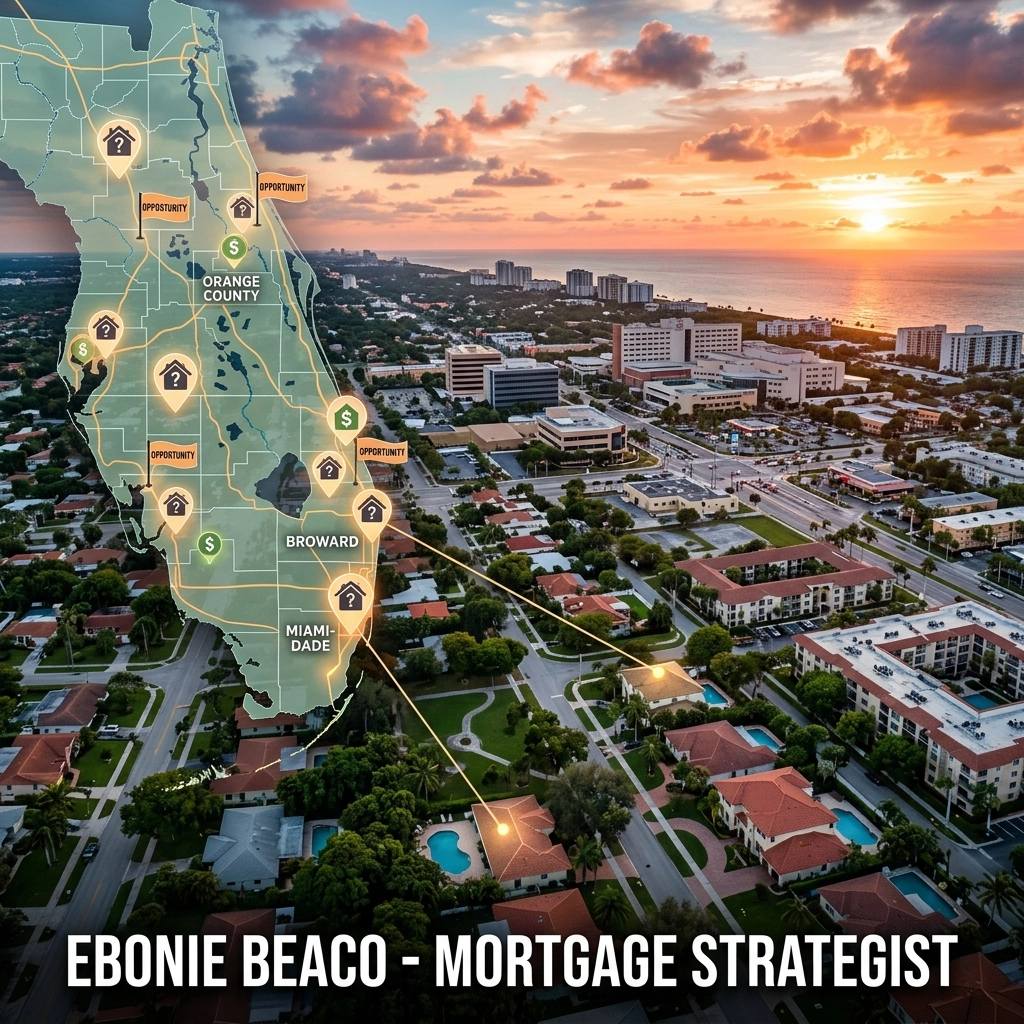
The Florida real estate market is unique. Between the high volume of out-of-state owners and the current condo assessment crisis, motivated sellers are everywhere. Many owners are facing rising insurance costs and are looking for a quick exit.
Jump in by looking at regions like Tampa, Orlando, and Jacksonville. These areas have high demand from fix-and-flip investors who are hungry for inventory. When you find a deal off-market, you aren't just selling a house; you are selling an opportunity.
Strategy 1: Targeted Direct Mail Campaigns
Direct mail is far from dead. In fact, it is one of the most consistent ways to find off-market properties in Florida and Georgia. The key is the list. You don't want to mail everyone; you want to mail people with a reason to sell.
Access these high-converting lists:
- Tax Delinquent Owners: People who are behind on property taxes are often one step away from foreclosure.
- Probate and Estate Sales: Heirs who inherit a property in another state often prefer quick cash over a long listing process.
- Code Violations: Properties with overgrown grass or structural issues often signal an owner who has given up.
- Out-of-State Owners: Managing a rental from 1,000 miles away is stressful. These owners are often open to a "pennies on the dollar" offer to simplify their lives.

Strategy 2: Driving for Dollars
This is the most "boots on the ground" strategy available. It involves literally driving through neighborhoods in cities like Atlanta or Los Angeles and looking for signs of neglect.
Compare a pristine house to one with boarded-up windows, a blue tarp on the roof, or a pile of mail in the box. That "ugly" house is your target. You can use apps to look up the owner's information on the spot and send them a text or a postcard. This method is highly effective because most big-box investors aren't willing to do the manual labor of driving street by street.
Strategy 3: Networking with Industry Pros
You don't have to find every lead yourself. Sometimes, the best deals come from people who are already talking to homeowners.
- Eviction Attorneys: They know which landlords are tired of the business and want to liquidate their portfolios.
- Restoration Companies: When a house has water or fire damage, the owner might prefer to sell "as-is" rather than deal with the insurance company and repairs.
- Other Wholesalers: "Co-wholesaling" is a great way to get started. You find the buyer, they find the deal, and you split the assignment fee.
How to Calculate a "Pennies on the Dollar" Deal
To succeed in Florida real estate investing, you must understand the math. If your numbers are wrong, you won't find a buyer, and you'll waste your time. Most professional investors follow the "70% Rule."
The 70% Rule: A formula used to determine the maximum allowable offer (MAO) on a distressed property. It suggests paying no more than 70% of the ARV, minus the estimated repair costs.
Let’s look at a real-world scenario in a market like Orlando:
| Item | Value |
|---|---|
| After Repair Value (ARV) | $350,000 |
| 70% of ARV | $245,000 |
| Estimated Repairs | ($60,000) |
| Wholesale Assignment Fee | ($10,000) |
| Maximum Allowable Offer (MAO) | $175,000 |
In this example, you would put the house under contract for $175,000. You then assign that contract to a fix-and-flip investor for $185,000. You walk away with a $10,000 check at closing, and the investor gets a deal with plenty of equity.

Lead Generation in California and Atlanta
While Florida is a hotbed for wholesaling, California and Atlanta require slightly different approaches.
In California, the price points are much higher. Finding a property for "pennies on the dollar" might mean finding a house that needs $200k in work but has an ARV of $1.5 million. The margins are bigger, but the stakes are higher. Focus on "niche" lists like pre-foreclosures and high-equity seniors who may be looking to downsize.
In Atlanta, the market moves fast. You need to be ready to close. Many wholesalers in Georgia use bridge loans or partnership structures to "double close" on deals if they can't find an assignment buyer immediately.
Connecting the Dots: Financing the End Deal
Wholesalers are the lifeblood of the investment community because they provide the inventory. Once you have a deal under contract, your end buyer will need financing to take it across the finish line.
Understanding how your buyers fund these deals makes you a better wholesaler. Most of your buyers will use:
- Hard Money Loans: Short-term, asset-based financing used for fix-and-flip projects.
- DSCR Investor Loans: Used by buy-and-hold investors who want to turn your wholesale deal into a long-term rental without using their personal income to qualify.
- Fix and Flip Financing: Specific loan products designed to cover both the purchase and the renovation costs.
If you can point your buyer toward a solid lender, you become an even more valuable partner in the transaction. You can even check out our mortgage calculators to help your buyers estimate their potential monthly carry costs.
Transparency in the Transaction
The secret to long-term success in wholesaling is transparency. Some wholesalers try to hide their assignment fees or "smoke and mirror" the repair estimates. This is a mistake.
The best wholesalers are upfront with their sellers about their intentions and honest with their buyers about the property's condition. If you are transparent about the numbers, you build a reputation as a straight shooter. This leads to repeat buyers who will take any deal you bring them because they trust your math.
Taking Your Next Step
Wholesaling isn't just about finding houses; it's about solving problems for homeowners who are in a bind. Whether it's a tax lien in Florida or a distressed estate in California, your job is to provide an exit strategy.
If you are an investor looking to fund a deal you just found from a wholesaler, or if you are a homeowner looking to see how much equity you can pull from your current property to start your own wholesaling business, we are here to help.
Schedule a 1 on 1 at https://calendly.com/homeloansnetwork
Ebonie Beaco Mortgage Strategist | Senior Loan Officer Home Loans Network powered by Loan Factory Inc. NMLS #2389954 HomeLoansNetwork.com 312-392-0664