Wholesale Logistics 101: A Beginner's Guide to Mastering the Closing in CA, FL, and GA

Real estate wholesaling is often described as the fastest way to get your feet wet in the investment world without needing a massive bankroll or a perfect credit score.
You find a deal, secure it under contract, and then pass that contract to a cash buyer for a fee.
While the concept is straightforward, the logistics of actually getting to the closing table can feel like a maze, especially when you are navigating different state laws in California, Florida, and Georgia.
Jump in as we break down the mechanics of wholesale logistics, from the first contract to the final wire transfer.
Understanding the Wholesale Foundation
Wholesaling is a strategy where you act as the bridge between a motivated seller and a real estate investor.
You are not buying the house to live in it or even to renovate it yourself.
Instead, you are selling the rights to the contract you hold.
In markets like Atlanta, Miami, or Los Angeles, the speed of the transaction is your biggest asset.
To succeed, you must understand the two primary ways to close these deals: the Assignment of Contract and the Double Closing.
Real Estate Wholesale Contracts
A real estate wholesale contract is a legally binding agreement between a seller and a wholesaler to purchase a property at a specific price.
This document serves as your "control" over the property while you find an end buyer.
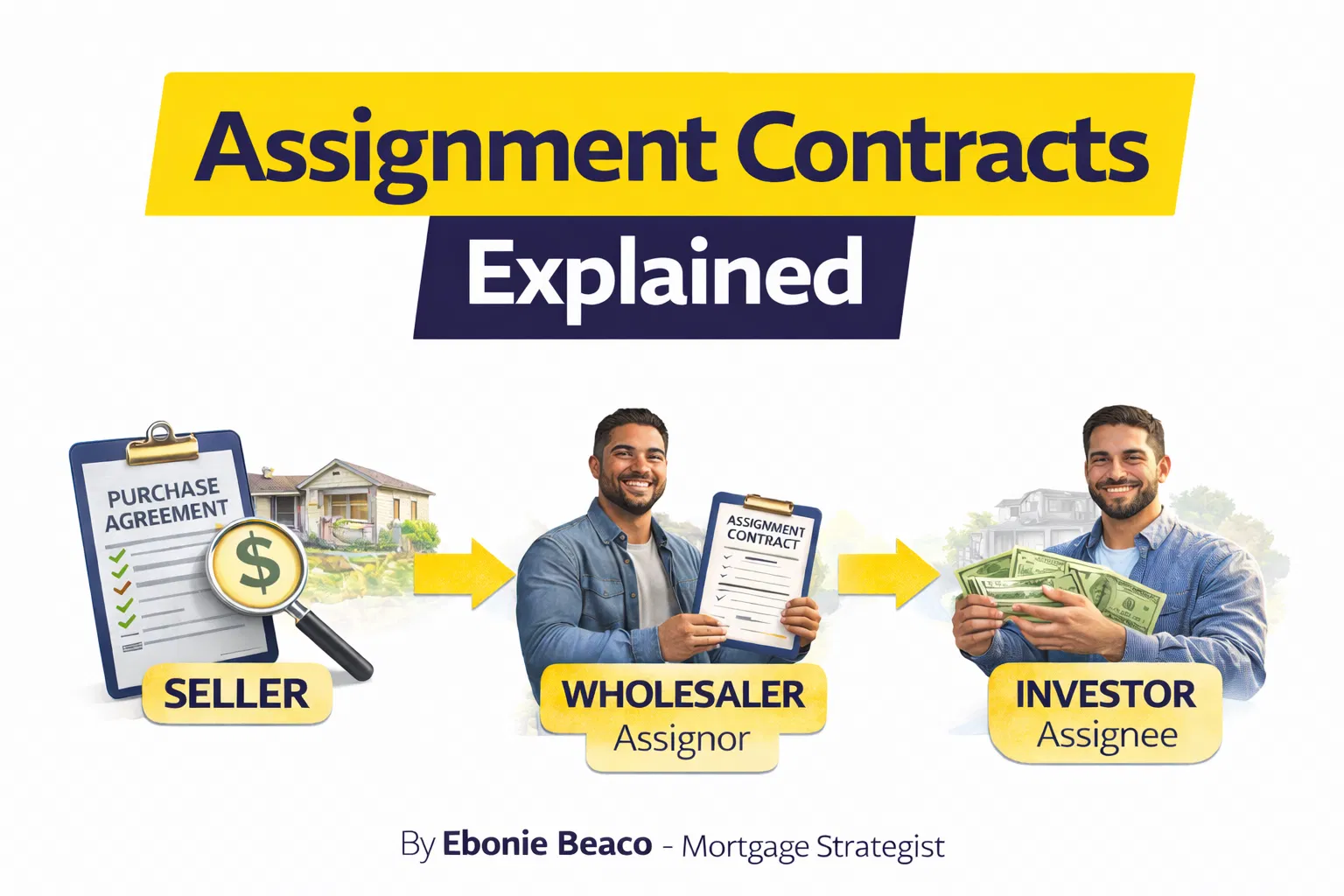
Assignment of Contract: A legal clause or separate document that allows the original buyer to transfer their rights and obligations to another party. This is the most common tool for wholesalers because it requires the least amount of capital.
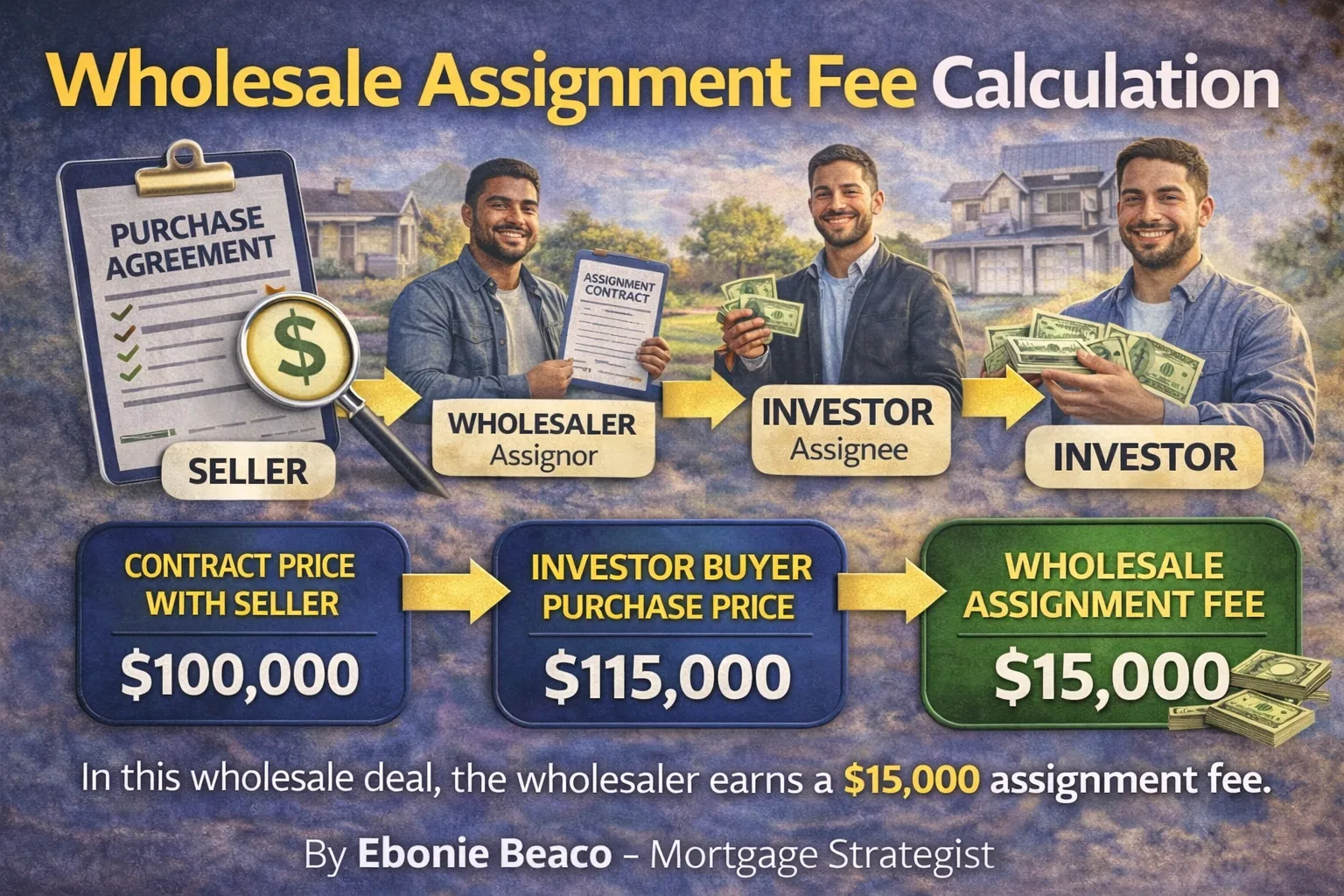
Assignment Fee: The profit margin kept by the wholesaler, representing the difference between the price on the original contract and the price paid by the end buyer. You earn this fee for your ability to source a discounted property and find a qualified buyer.
Navigating the Assignment Process
The assignment process is the heartbeat of a wholesale deal.
Once you have a property under contract with the seller, you need to find an investor who wants the deal.
This investor is usually a fix and flip pro or a landlord looking for DSCR rental property loans to build their portfolio.
When you find that buyer, you sign an Assignment of Contract.
This document tells the title company or the closing attorney that the new buyer is stepping into your shoes.
They will pay the purchase price to the seller, and they will pay the assignment fee directly to you at the closing.
Calculating Your Assignment Fee
Let’s look at a real-world scenario.
Suppose you find a distressed property in Jacksonville, Florida, with an After Repair Value (ARV) of $300,000.
You negotiate a purchase price of $180,000 with the seller.
You then find a cash buyer who is willing to pay $200,000 for the property because it still fits their investment criteria.
Contract Price with Seller: $180,000 Assignment Fee: $20,000 Purchase Price for End Buyer: $200,000
In this case, the end buyer pays $200,000 at closing. The seller receives their $180,000, and you walk away with a $20,000 check for your work.
The Double Closing: When Privacy is Priority
Sometimes, an assignment is not the best route.
If your assignment fee is exceptionally large, some sellers or buyers might feel uneasy.
In these cases, you might choose a double closing.
Double Closing: A transaction where the wholesaler actually purchases the property from the original seller (A-B transaction) and then immediately sells it to the end buyer (B-C transaction). This keeps the two prices separate, so neither party sees exactly how much profit you are making.
Double closings require you to have the funds to buy the property for a few minutes or hours.
Most wholesalers use transactional funding for this.
Transactional funding is a short-term loan specifically designed for back to back real estate closings.
Explore more about specialized funding options at our loan process page.
State Specific Logistics: CA, FL, and GA
Real estate laws vary significantly by state, and ignoring these differences can stall your deal.
California Logistics
California is a high-cost market where transparency is key.
Title companies in California are very familiar with assignments, but they often require clear disclosures.
Because property values are higher, your earnest money deposit (EMD) will likely be larger than in other states.
You should always ensure your contract includes a "Buyer's Inspection Contingency" to give you time to find your end buyer.
Florida Logistics
Florida is a massive hub for wholesaling.
Most closings in Florida are handled by title companies or title attorneys.
The "As-Is" Residential Contract for Sale and Purchase is the gold standard here.
One unique aspect of Florida logistics is the prevalence of "Wholesale-friendly" title companies that understand how to handle assignment fees without a hitch.
Georgia (Atlanta Focus)
Georgia is an attorney-closing state.
This means a licensed attorney must oversee the transaction and handle the funds.
In the Atlanta market, competition is fierce.
Speed and clear communication with your closing attorney are your best tools.
Attorneys in Georgia will review the assignment agreement to ensure it complies with state bar regulations regarding the practice of law and real estate brokerage.

Building Your Wholesale Power Team
You cannot master wholesale logistics alone.
You need a team that understands the "investor" side of the business.
Your team should include:
- A Wholesale-Friendly Title Company or Attorney: Someone who won't get confused when they see an assignment fee.
- A Reliable Inspector: To help you estimate repair costs quickly.
- A Mortgage Strategist: To help your end buyers secure investor financing like DSCR or Bridge loans.
- A Contractor: For quick "ballpark" renovation quotes.
By connecting your buyers with solid financing options, you make your deals more attractive.
Many investors use DSCR loans to buy wholesale deals because they don't require personal income verification, focusing instead on the property's cash flow.
Understanding these mortgage basics allows you to speak the same language as your buyers.
Essential Tools for Wholesale Success
To stay organized, you need a suite of tools that help you analyze deals on the fly.
From CRM systems to property data software, your logistics rely on accurate information.
Deal Analyzer: A spreadsheet or software used to calculate maximum allowable offers (MAO) based on repair costs and ARV. Using an analyzer ensures you never overpay for a property, protecting your profit margin.
Proof of Funds (POF): A document showing you have the capital (or access to it) to close the deal. Sellers will rarely take you seriously without a POF, even if you plan to assign the contract.

Common Pitfalls to Avoid
Even the most seasoned wholesalers run into logistical snags.
Here are a few things to watch for:
- Vague Contracts: Ensure your contract explicitly states that it is assignable. Use "Your Name and/or Assigns" as the buyer.
- Missing Deadlines: Your assignment must happen within your inspection or feasibility period. If that period expires, your earnest money is at risk.
- Unqualified Buyers: Always vet your cash buyers. Ask for their own Proof of Funds before signing an assignment agreement.
- Legal Compliance: Some states are tightening regulations on wholesaling without a real estate license. Always check local legal guidelines.
Finalizing the Closing
The day of closing is when all your logistical planning pays off.
In an assignment deal, the title company or attorney will provide a Settlement Statement (often a HUD-1 or ALTA).
Review this document carefully to ensure your assignment fee is listed correctly.
Once the end buyer wires the funds and the seller signs the deed, the deal is recorded.
Your fee is then disbursed, usually via wire or check.
Navigate the complexities of real estate finance with confidence by staying informed and building the right relationships.
Whether you are in the heart of Atlanta or the suburbs of Southern California, mastering these logistics is the key to a sustainable wholesaling business.
Access more resources or contact us to discuss how financing can help you or your buyers scale.
Schedule a 1 on 1 at https://calendly.com/homeloansnetwork
Ebonie Beaco Mortgage Strategist | Senior Loan Officer Home Loans Network powered by Loan Factory Inc. NMLS #2389954 HomeLoansNetwork.com 312-392-0664