What Are the Down Payment Requirements for Non-QM Investment Loans?
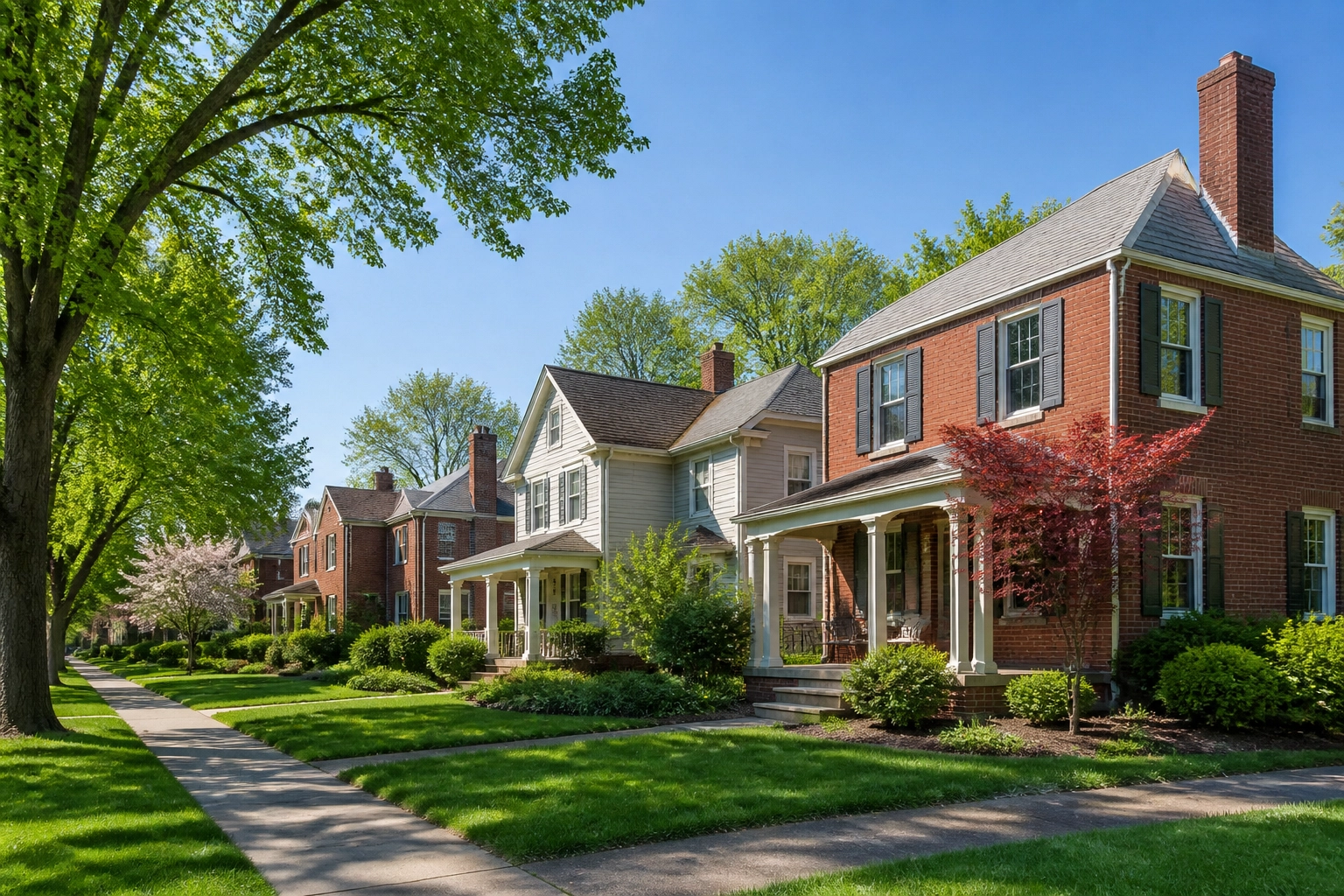
For many real estate investors in Jackson, Michigan, the path to property ownership often hits a wall at the local bank branch. You find a promising duplex near Sparks Foundation County Park or a solid single-family rental in the Cascades area, but your tax returns, carefully optimized for deductions, don’t show the "income" a traditional underwriter wants to see. This is the primary friction point in modern real estate: the disconnect between actual cash flow and "paper" profitability.
Traditional lending is built on a "box" system. If your financial profile has even one corner sticking out, whether you are self-employed, a 1099 contractor, or an investor with multiple existing mortgages, the traditional system often defaults to a rejection. However, Non-QM (Non-Qualified Mortgage) loans provide a strategic alternative. These programs look at the reality of your business and the potential of the asset rather than just the checkboxes on a standard W-2 form. Therefore, understanding the specific down payment requirements for these loans is the first step toward building a sustainable portfolio in the Jackson market.
Rigid Bank Terms vs. Flexible Non-QM Funding
In the world of real estate finance, we see a constant battle between two distinct philosophies: the Commission Mindset and the Residual Reality.
Traditional lenders often operate with a commission mindset, where the goal is to process "clean" files that fit federal guidelines for quick resale to the secondary market. Consequently, they demand 20% to 25% down payments alongside two years of perfect tax returns and low Debt-to-Income (DTI) ratios. If you are a business owner in Jackson writing off equipment or travel expenses, your "taxable income" might look too low for their rigid formulas, regardless of the cash sitting in your bank account.
In contrast, Non-QM funding focuses on the residual reality, the actual cash flow moving through your business or the rental income generated by the property itself. While Non-QM loans are more flexible regarding how you qualify (using bank statements or property income), they typically require a more strategic approach to the down payment. In fact, these loans are designed to protect the "portfolio health" of both the lender and the investor by ensuring there is enough skin in the game to weather market fluctuations.

The Down Payment Tiers: Credit Scores and Asset Performance
The question of "how much" depends heavily on your specific profile. In the Jackson, Michigan market, we generally see Non-QM down payment requirements fall into three primary tiers.
Tier 1: The Prime Non-QM Borrower (15% – 20% Down)
If you possess a credit score of 720 or higher and are looking at a Debt Service Coverage Ratio (DSCR) loan, where the property’s rent covers the mortgage payment, you can often secure financing with as little as 15% to 20% down. This is particularly effective for seasoned investors who have a track record of property management. Thus, a strong credit profile acts as a lever, allowing you to preserve more liquidity for your next acquisition.
Tier 2: The Mid-Range Portfolio Builder (20% – 25% Down)
For borrowers with credit scores between 660 and 719, or those using bank statement programs to prove income, a 20% to 25% down payment is the standard benchmark. Moreover, lenders in this tier will look closely at your liquid reserves. They want to see that after you pay the down payment and closing costs, you still have 3 to 6 months of mortgage payments set aside. As a result, the down payment serves as the primary tool for risk mitigation.
Tier 3: The Recovery or Complex Scenario (25% – 35% Down)
If you have a credit score below 640, or you are only one day out of a bankruptcy or foreclosure, you aren't disqualified from investing in Michigan. However, the price of this flexibility is a higher down payment, usually in the 30% range. By putting more capital upfront, you offset the perceived risk of your credit history. Therefore, the "down payment" isn't just a cost; it is the key that unlocks the door to credit recovery through real estate ownership.
Case Study: The Jackson Duplex Strategy
To illustrate how these numbers work in the real world, let's look at a common scenario we see in the Jackson area.
The Investor: Marcus is a self-employed contractor in Jackson who earns $150,000 annually but shows only $40,000 in taxable income after business write-offs. Traditional banks rejected his application for a $220,000 duplex because of his "high DTI."
The Property: A renovated duplex near downtown Jackson.
- Purchase Price: $220,000
- Monthly Rental Income: $2,400 ($1,200 per unit)
- Estimated PITIA (Principal, Interest, Taxes, Insurance, Assoc): $1,850
The Solution: Marcus used a DSCR Loan, which ignores his personal income and looks only at the property’s ability to pay for itself.
The Math Breakdown:
- Down Payment (20%): $44,000
- Closing Costs & Reserves: $12,000
- Total Cash Invested: $56,000
- DSCR Calculation: $2,400 / $1,850 = 1.29
Because the DSCR is above 1.0 (in fact, it’s a healthy 1.29), Marcus qualified easily despite his tax returns. Thus, he was able to secure a long-term cash-flowing asset while keeping his business deductions intact.
Calculating Your Cash-on-Cash Return
When evaluating Non-QM down payment requirements, you must look past the "sticker price" of the deposit and focus on the Cash-on-Cash (CoC) Return. Many investors hesitate at a 25% down payment compared to a 15% conventional down payment, but the "Residual Reality" often proves the Non-QM route is more profitable over time.
For instance, consider a $200,000 property in Jackson.
- Low Down Payment (15% - Conventional): $30,000 Down. Includes Private Mortgage Insurance (PMI) and stricter debt requirements.
- Strategic Down Payment (25% - Non-QM): $50,000 Down. No PMI, faster closing, and no personal DTI stress.
If the 25% down payment allows you to close a deal that a traditional bank would have spent 60 days "investigating" before denying, the true cost of the conventional loan is the opportunity cost of the lost deal. In real estate, a deal you can't close has an ROI of zero. Therefore, paying a slightly higher down payment to ensure a guaranteed, flexible closing is often the more pragmatic business move.
Why Jackson, Michigan is the Target for Non-QM Investors
Jackson offers a unique blend of affordability and steady rental demand. Unlike the highly inflated markets of coastal California or Florida, Jackson allows for "entry-level" institutional investing. With a median home price often falling below the national average, an investor can acquire multiple doors using Non-QM strategies for the same amount of capital required for a single unit in a primary metro area.
Consequently, we are seeing a surge in Asset Utilization loans in this region. This is where a borrower’s liquid assets (stocks, bonds, 401k, or cash) are divided by a set number of months to "create" an income stream for qualification. This is a game-changer for retirees or high-net-worth individuals looking to diversify into Jackson real estate without returning to a 9-to-5 job.
FAQ: Common Questions on Non-QM Down Payments
Q: Can I use a gift for my Non-QM down payment?
A: For investment properties, most Non-QM lenders prefer to see "seasoned" funds, money that has been in your account for at least 60 days. However, some programs allow for a portion of the down payment to be gifted if the borrower contributes at least 10% of their own funds.
Q: Does a higher down payment lower my interest rate?
A: Absolutely. In the Non-QM world, "Loan-to-Value" (LTV) is the primary driver of pricing. In fact, moving from an 80% LTV (20% down) to a 75% LTV (25% down) can often significantly reduce your interest rate and monthly payment.
Q: Are there Non-QM programs with 0% down?
A: No. Non-QM loans for investors are risk-based. Without "skin in the game," the risk is too high for the private capital markets that fund these loans. You should plan for a minimum of 15% to 20% down.
Q: Can I use business funds for the down payment?
A: Yes. If you are using a Bank Statement loan or a P&L loan, lenders typically allow you to use business funds, provided you can show that the withdrawal won't negatively impact the health of your company.
Thinking Like an Owner
Navigating the Jackson, Michigan real estate market requires a shift from a "borrower" mindset to an "owner" mindset. An owner understands that the down payment is not an expense, it is equity. It is a protective buffer that secures your cash flow and provides the leverage needed to scale.
If you have been told "no" by a traditional bank because of your employment status, your tax returns, or the number of properties you already own, it’s time to look at the strategic flexibility of Non-QM financing. We specialize in structuring deals that others find too complex, ensuring that your investment goals aren't sidelined by outdated banking rules.
Contact: Ebonie Beaco, Loan Officer (NMLS #2389954)
Phone: 312-392-0664
Website: www.HomeLoansNetwork.com
Powered by Loan Factory, Inc. (NMLS #320841)
Disclaimer: This content is for educational purposes only and does not constitute a loan approval or commitment. Loan programs, terms, and eligibility requirements are subject to change and vary by borrower and property. For specific guidance on your financial situation, please contact a licensed mortgage professional. Use only the phone number 312-392-0664 for inquiries.