What are Bridge-to-Perm Loans? Best of Both Worlds

Navigating the world of real estate financing often feels like choosing between two extremes. On one side, you have quick, short-term bridge loans that help you snag a property fast. On the other, you have long-term, permanent mortgages that offer stability and lower interest rates.
But what if you didn't have to choose?
Bridge-to-Perm loans represent a strategic financing structure that combines a short-term bridge loan with a pre-arranged path to convert into a permanent, long-term mortgage. Instead of applying for two separate loans: and paying two sets of closing costs: you secure the entire lifecycle of the investment upfront.
This "best of both worlds" approach is becoming a go-to strategy for investors in fast-moving markets like Chicago, Florida, and California. It provides the speed necessary to compete with cash buyers while ensuring you aren't left scrambling for a refinance when your bridge term ends.
Defining the Bridge-to-Perm Structure
To understand why this is effective, we have to look at the two components separately.
Bridge Loan: A short-term financing tool (typically 12 to 36 months) used to "bridge" the gap between the purchase of a property and its eventual stabilization or sale. Practical Application: Use this to acquire a distressed property, fund renovations, or quickly close on a deal before traditional financing is ready.
Permanent Loan: A long-term mortgage (typically 5 to 30 years) with a stabilized interest rate and longer amortization. Practical Application: Use this to hold the property as a long-term rental, providing consistent cash flow and equity build-up.
In a Bridge-to-Perm scenario, the lender provides the initial capital to buy and improve the asset. Once the property hits certain milestones: like reaching 90% occupancy or completing a specific renovation list: the loan automatically or semi-automatically rolls into a permanent debt obligation.
How the Transition Works
The beauty of this product is the seamless transition. In a traditional loan process, you would take out a hard money loan, finish your project, and then start a completely new application for a DSCR loan or a conventional mortgage.
With Bridge-to-Perm, the exit strategy is baked into the initial agreement.
- The Acquisition Phase: You receive funding to purchase the property. This phase often allows for higher leverage to cover renovation costs.
- The Stabilization Phase: You execute your business plan. This might mean finishing a kitchen remodel in a Virginia townhouse or finding tenants for a multi-unit building in Michigan.
- The Conversion Phase: Once the property is "stabilized" (meaning it is functional and generating income), the loan converts. You move from interest-only payments to a standard principal and interest structure.
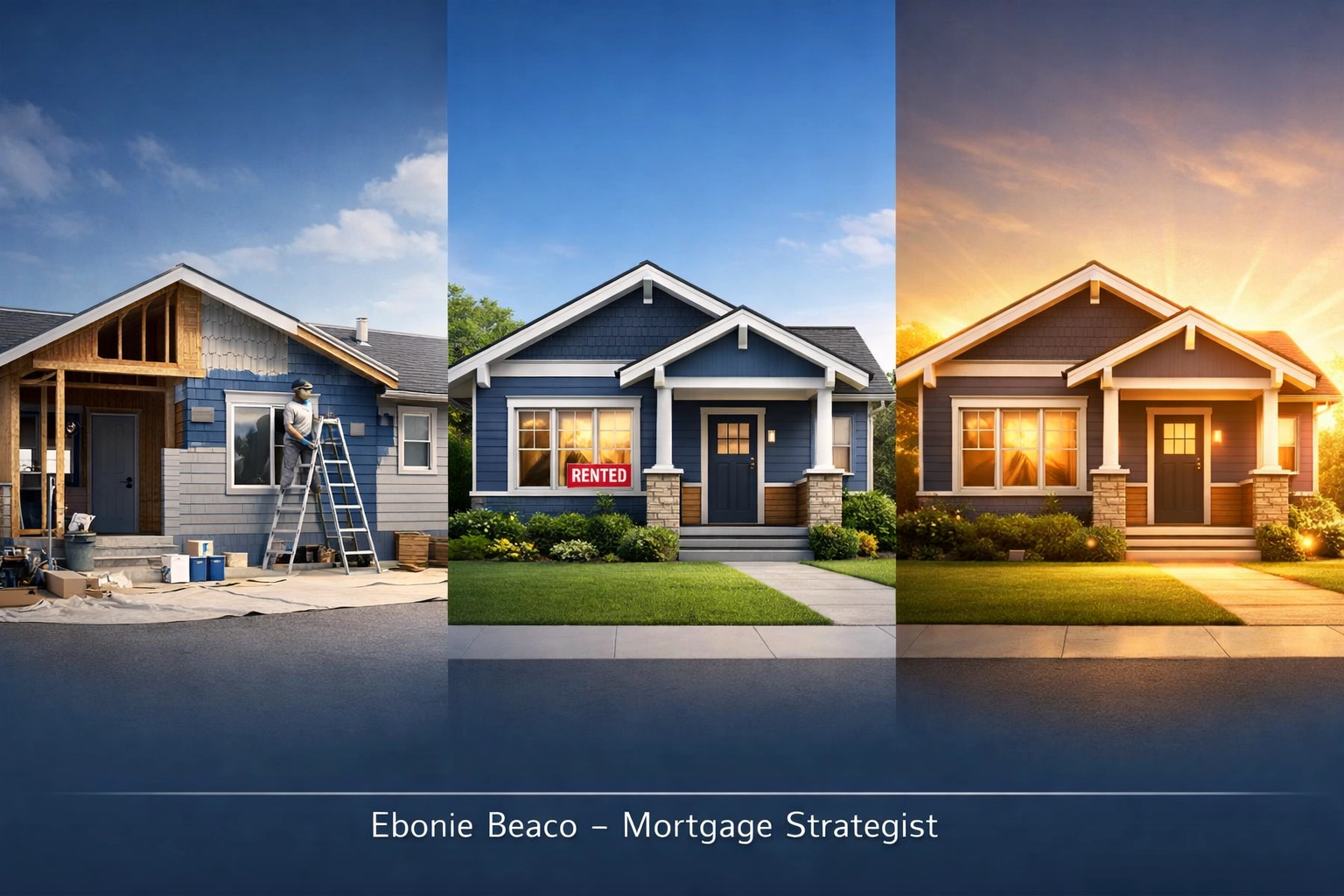 Visualizing the Bridge-to-Perm Timeline: Purchase/Renovation (12 months) -> Stabilization -> Permanent 30-Year Mortgage.
Key Advantages for Real Estate Investors
Why are savvy investors across Alabama, Arkansas, and Georgia moving toward this model? It comes down to three main factors: speed, certainty, and cost.
1. Speed to Close
In competitive markets, the ability to close in 14 to 21 days is vital. Conventional long-term loans often take 45 days or more because of the rigorous underwriting required for the "perm" side. Bridge-to-Perm products prioritize the asset's value and the investor's experience, allowing for a rapid close on the front end.
2. Eliminated Refinance Risk
One of the biggest fears for a "fix-and-flip" investor who decides to pivot to a "fix-and-rent" strategy is the refinance risk. If interest rates spike or lending guidelines tighten while you are mid-renovation, you might find yourself stuck with a high-interest bridge loan you can't exit. Bridge-to-Perm locks in the transition plan from day one.
3. Cost Efficiency
Closing a loan involves appraisal fees, title insurance, and processing costs. By combining these into a single lifecycle, you often save significantly on the administrative burden and total out-of-pocket expenses compared to doing two entirely separate closings.
Real-World Scenario: The BRRRR Strategy in Chicago
Let’s look at how a real estate investor might use this in a practical scenario using the BRRRR (Buy, Rehab, Rent, Refinance, Repeat) method.
Imagine you find a distressed duplex in Chicago for $250,000. It needs $50,000 in work. You expect the After Repair Value (ARV) to be $400,000.
- Bridge Phase: The lender provides $225,000 (90% of purchase) plus the $50,000 for rehab. You pay interest-only during the six months it takes to renovate.
- Stabilization: You place tenants in both units, generating $3,500 in monthly rent.
- Perm Phase: The loan converts to a 30-year DSCR rental property loan. Based on the new $400,000 appraisal, the lender rolls your debt into a permanent mortgage at 75% LTV ($300,000). You’ve covered your original debt and potentially pulled some capital back out to fund your next deal.
Example Calculation Table:
| Component | Amount |
|---|---|
| Purchase Price | $250,000 |
| Renovation Budget | $50,000 |
| Total Project Cost | $300,000 |
| New Appraised Value (ARV) | $400,000 |
| Permanent Loan (75% LTV) | $300,000 |
| Cash Remaining in Deal | $0 (Infinite Return Scenario) |
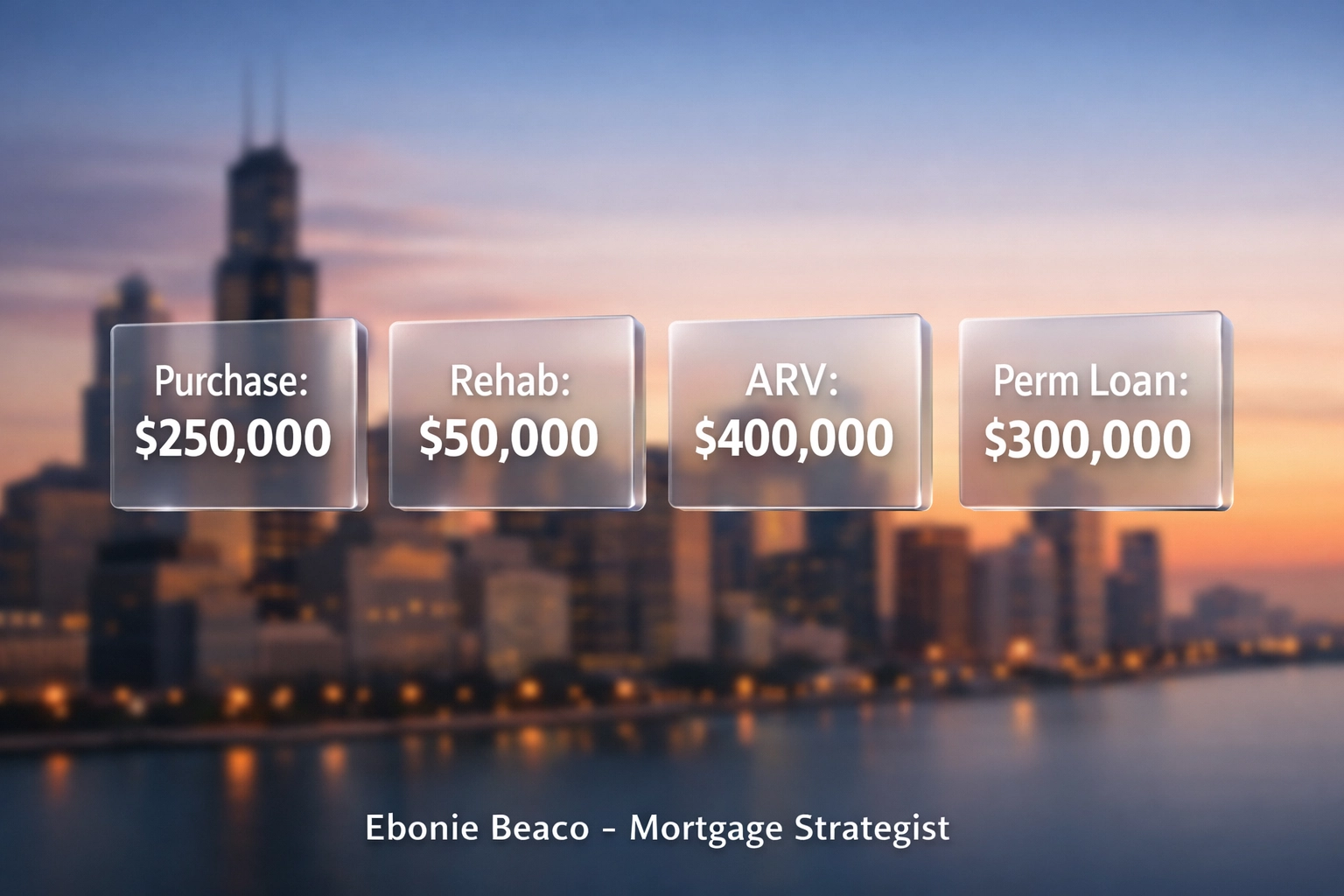 Title: What are Bridge-to-Perm Loans? Ebonie Beaco - Mortgage Loan Officer. [A financial breakdown showing Purchase: $250k, Rehab: $50k, ARV: $400k, and the transition to a $300k Perm Loan]
Who Benefits Most from Bridge-to-Perm?
While any investor can use this, certain profiles find it particularly effective:
- Short-Term Rental (Airbnb) Hosts: If you are buying a property in a vacation market like Florida or California, you may need a few months to furnish the home and get your first reviews. The bridge phase carries you through that setup period.
- Value-Add Multi-Family Investors: If you're buying an apartment building with high vacancy, you can't get a permanent loan until the units are filled. This product covers the "lease-up" period.
- Self-Employed Borrowers: Often, these investors use bank statement loans for the permanent phase. Securing both at once simplifies the documentation process.
Strategic Market Insights
In 2026, we are seeing specific trends in different regions that make Bridge-to-Perm attractive:
- Florida and Georgia: High demand for updated rental housing means the renovation phase is usually short. Investors use bridge-to-perm to move quickly on foreclosures.
- Virginia and Missouri: We see many investors targeting "middle-market" homes that need cosmetic updates. The bridge-to-perm structure allows them to stabilize the property and then hold it for long-term appreciation.
- California: Given the high entry price points, having a guaranteed exit into a permanent loan is a critical safety net for investors working with large capital outlays.
Navigating the Terms and Requirements
When you explore your options, keep a few technical requirements in mind:
- DSCR (Debt Service Coverage Ratio): For the "perm" side of the loan, the lender will look at the property’s ability to cover the mortgage with its rental income. A ratio of 1.2 or higher is usually the sweet spot.
- Experience Level: Some bridge-to-perm lenders want to see that you’ve completed at least one or two successful flips or rentals before. However, mentoring is available for those just starting out.
- Credit Score: While bridge loans are asset-based, the permanent phase often has minimum credit requirements (typically 660+).
Choosing the Right Strategy
Is Bridge-to-Perm right for you? It depends on your timeline. If you plan to sell the property within 12 months, a standard bridge loan or fix-and-flip loan is likely better. But if your goal is to build a portfolio of income-producing assets, this structure is nearly impossible to beat for efficiency.
At Home Loans Network, we believe in transparency. We want you to understand exactly how your capital is working for you. You can check our FAQ for more details on specific loan programs or browse our about us page to see our commitment to the investor community.
If you are looking for a partner who understands the nuances of the Chicago market or the growth potential in cities throughout Virginia and Florida, let's talk. Whether you need the financing itself or looking for mentoring on how to structure your next deal, I am here to help.
Explore your potential and secure your investment's future today.
Schedule a 1 on 1 at https://calendly.com/homeloansnetwork
Ebonie Beaco
Mortgage Strategist | Senior Loan Officer
Home Loans Network powered by Loan Factory Inc.
NMLS #2389954
HomeLoansNetwork.com
312-392-0664