Wait for the Check: When Exactly Do Wholesalers Get Their Assignment Fee?

Wholesaling houses is a fast-paced and highly effective entry point into the world of real estate investing for many entrepreneurs looking to build capital. You essentially find off-market deals, secure them under contract, and then assign that contract to cash buyers for a predetermined fee. The question of when you actually see that money in your bank account is easily the most common one I get from new investors just starting their journey. In a standard transaction, your assignment fee is professionally handled and paid out by the title company or real estate attorney once the entire deal officially crosses the finish line. This structured process ensures all parties involved are legally protected and that the property title is confirmed as clear before any funds are disbursed. Maintaining complete transparency throughout this entire process is the absolute key to building and keeping strong relationships with your buyers. You want to ensure every single step of the agreement is documented properly within the formal escrow instructions for the closing agent. Jumping into this industry requires a clear understanding of these mechanics so you can manage your business cash flow with confidence.
Most wholesale real estate deals follow a standard timeline of 15 to 45 days from the initial contract execution to the final closing date. During this critical period, the title company performs an exhaustive search to ensure there are no hidden liens, judgments, or encumbrances on the property. Your cash buyer is likely performing their own due diligence, which may include inspecting the property and finalizing their chosen funding source. You will generally receive your assignment fee via a secure wire transfer or a physical check immediately following the successful close of escrow. This traditional model remains the most common way for wholesalers to get paid because it aligns perfectly with the standard flow of real estate finance. It represents the safest way to ensure that the seller receives their full proceeds and the buyer receives a clean, marketable title. In busy markets like Chicago or the suburbs of Virginia, sticking to this timeline helps maintain a professional reputation among local title agents.

While waiting for the final closing is the industry standard, some experienced wholesalers choose to negotiate a two-stage payment structure with their cash buyers. In this scenario, you might receive a portion of your fee, perhaps 20% to 30%, at the exact moment the assignment contract is formally signed by all parties. The remaining balance of the fee is then paid out at the final closing table alongside the seller's proceeds and other transaction costs. This strategy helps significantly with business cash flow, providing immediate capital that can be used to cover marketing costs for your next potential deal. However, this arrangement requires a very high level of trust and a solid prior working relationship between you and your investor. If you decide to pursue this route in states like Michigan or Indiana, you must ensure that the language in your assignment agreement is ironclad and legally binding. It is also important to remember that many buyers may resist this unless they have a long history of successful closings with you.
Assignment fee advances are an emerging trend in the industry that allows high-volume wholesalers to access their capital even faster than traditional methods. Some specialized funding groups or high-volume buyers may offer to pay the assignment fee within 24 to 48 hours after the buyer’s Earnest Money Deposit (EMD) is officially verified by the title company. This typically requires a non-refundable EMD from the buyer and a very clean purchase contract that has no remaining contingencies left to clear. While this is certainly not the norm for every transaction, it highlights how the modern market is evolving to support active real estate investors. You can learn more about how different loan programs and escrow procedures impact these timelines by reviewing our internal educational resources. Always verify the credentials of any company or buyer offering an advance to ensure the entire transaction remains secure and professional. Most wholesalers find that as they scale their business in Florida or Georgia, these advanced options become more accessible through established networks.
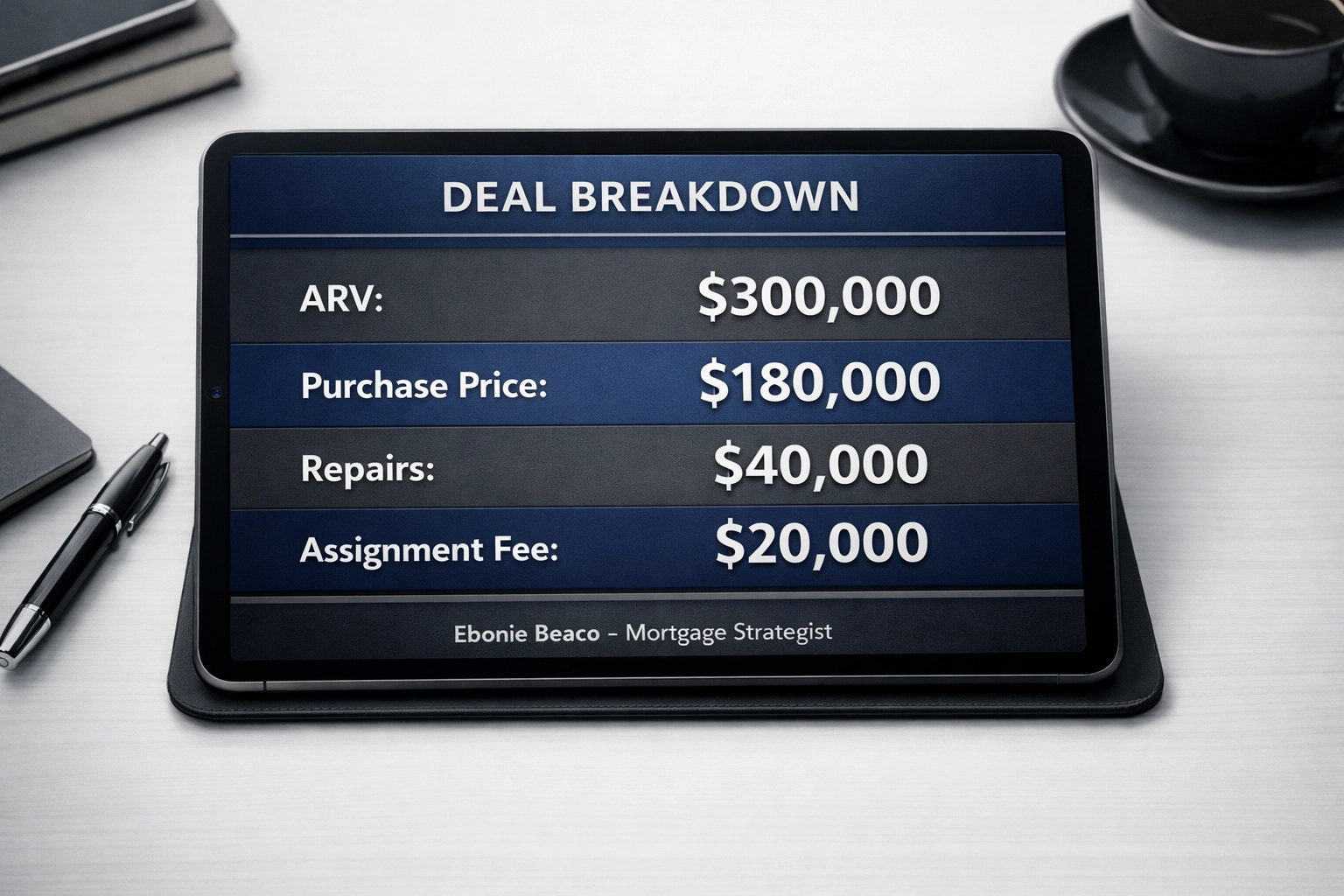
Let's look at a practical financial example of how the numbers and timing work in a real-world wholesale transaction. Imagine you find a distressed property in a growing neighborhood with an After Repair Value (ARV) of $300,000. After analyzing the property, you negotiate a purchase price with the seller for $180,000, accounting for an estimated $40,000 in necessary repairs and a healthy profit margin for your end buyer. You then successfully assign this contract to a local fix-and-flip investor for a total price of $200,000, which creates a $20,000 assignment fee for your business. If the buyer agrees to pay a $5,000 non-refundable deposit upfront upon signing the assignment, you might receive that $5,000 immediately to cover your overhead. The $15,000 balance would then arrive in your account on the day of closing, once the deed has been recorded. This allows you to realize a quick return on your marketing efforts while keeping the majority of the fee tied to the successful completion of the real estate deal.
It is vital to understand that paying assignment fees before the official closing carries inherent risks for the end buyer that must be managed carefully. If the seller discovers significant title issues that cannot be cured or if the property suffers major damage before the transfer, the entire deal could potentially collapse. If you have already received and spent your assignment fee, the buyer is left in a very difficult position trying to recover those funds from you. This is precisely why most professional title companies in states like California and Alabama insist on holding all transaction funds in escrow until the deed is recorded. Keeping the transaction transparent and following the standard escrow process protects your professional reputation over the long term. Professionalism during these early stages of your career often leads to consistent repeat business from high-net-worth investors and landlords. Being known as a wholesaler who follows the rules and respects the process makes you a much more attractive partner for serious cash buyers.
The specific type of financing your buyer chooses to use can also significantly influence how quickly you get paid your assignment fee. If your buyer is utilizing a DSCR investor loan or a hard money loan, the lender will have very specific requirements for how the assignment is handled. Some institutional lenders prefer to see the assignment fee listed clearly on the final Settlement Statement (HUD-1) to ensure their loan-to-value ratios remain accurate. Being proactive and working closely with a knowledgeable mortgage strategist helps ensure these financial details are handled correctly well before you reach the closing table. You can explore our FAQ for more detailed insights on how these various loan structures interact with professional investor deals. Proper coordination between the wholesaler, the buyer, and the lender is absolutely essential for ensuring a smooth and timely payday for everyone involved. Investors in Arkansas and Virginia often find that having a lender who understands wholesaling makes the entire process much less stressful.
Finalizing your payday as a successful wholesaler requires consistent attention to detail and a clear understanding of the local escrow process. Whether you are working in the busy urban markets of Illinois or the developing suburbs of various cities in Florida, the closing table is where your hard work finally pays off. Make sure you provide your accurate wiring instructions to the title company or real estate attorney well in advance to avoid any administrative delays on the actual closing day. Successful wholesaling is about much more than just finding a good deal; it is about managing the entire transaction professionally until the very end. If you are ready to take your real estate investing business to the next level, having the right financing partners in place is a total game changer. Reach out to discuss how we can help your buyers secure the specific funding they need to close your deals faster and more reliably. By understanding the timeline of your assignment fee, you can build a sustainable business that thrives in any housing market.
Scedule a 1 on 1 at https://calendly.com/homeloansnetwork
Ebonie Beaco
Mortgage Strategist | Senior Loan Officer
Home Loans Network powered by Loan Factory Inc.
NMLS #2389954
HomeLoansNetwork.com
312-392-0664