Treasury Yields Influence: How Today’s Afternoon Shifts Impact Your Mortgage Rate Forecast

The bond market experienced a significant shift this afternoon that directly affects how you should view your home financing timeline. For anyone navigating the real estate markets in Alabama, Florida, Virginia, or Illinois, understanding the movement of the 10-year Treasury yield is essential for predicting where mortgage rates are headed. Today’s activity suggests a clear upward bias, signaling that the window for lower rates may be closing in the immediate term.
Jump in as we explore exactly what happened in the markets today, why the "spread" between yields and mortgage rates remains wide, and how you can position yourself to protect your purchasing power or investment returns. Whether you are a homeowner looking for a cash-out refinance or an investor analyzing a DSCR rental property loan, these technical shifts influence your bottom line.
Decoding the Afternoon Market Movement
Across the bond market today, longer-term yields pushed higher with significant momentum. The 10-year Treasury yield, which serves as the primary benchmark for the 30-year fixed mortgage, climbed to approximately 4.59%. This move represents a jump of nearly 0.10 percentage points in a single day, a volatility level that forces mortgage lenders to adjust their pricing quickly.
At the same time, Mortgage-Backed Securities (MBS): the specific bonds that fund most home loans: showed significant weakness during afternoon trading. When MBS prices fall, mortgage rates typically rise. According to Mortgage News Daily, this combination of rising yields and falling bond prices often leads to intraday price changes, meaning a quote you received at 10:00 AM might be higher by 4:00 PM.
Treasury Yield: The return on investment, expressed as a percentage, for the U.S. government's debt obligations.
Lenders use this as a "risk-free" baseline to determine how much interest they should charge on private loans.
Mortgage-Backed Securities (MBS): Asset-backed securities that are secured by a mortgage or a collection of mortgages.
These are the actual engines that drive the liquidity of the mortgage market and dictate daily rate fluctuations.
Understanding the "Spread" and Your Actual Rate
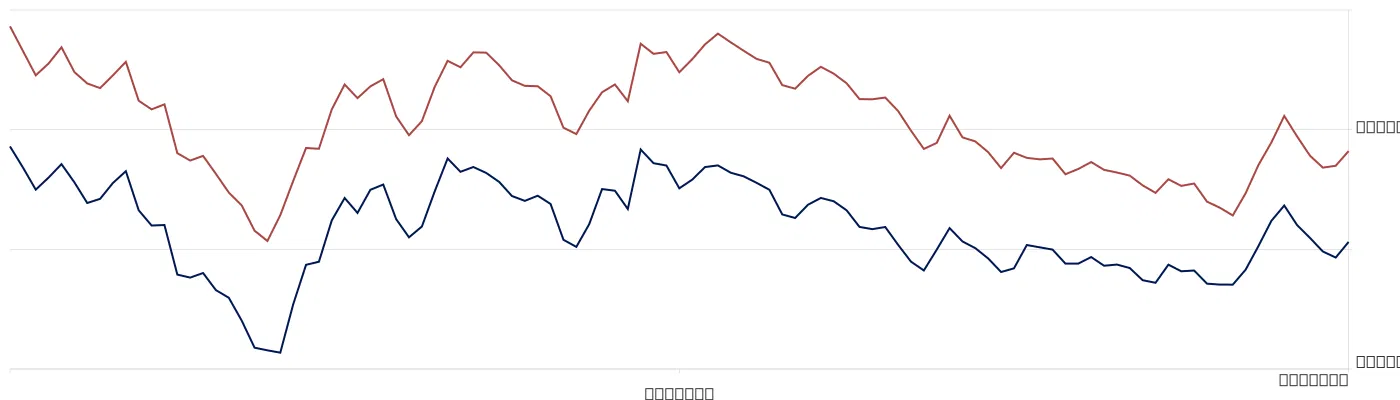
You might notice that while the 10-year Treasury is sitting around 4.6%, your quoted mortgage rate is likely closer to 6.6% or higher. This gap is known in the industry as the "spread." Historically, the spread between the 10-year yield and a 30-year fixed mortgage averages about 1.7 to 1.8 percentage points. However, today’s market is operating with a spread closer to 2.1 to 2.2 percentage points.
This elevated spread exists because investors are currently demanding a higher premium to take on the risks associated with mortgages, including prepayment risk and economic uncertainty. For a borrower in California or Georgia, this means that even if Treasury yields stay flat, mortgage rates can remain "sticky" and high until the market feels more confident.
Spread: The difference between the interest rate on a 10-year Treasury note and the interest rate on a 30-year fixed mortgage.
A wider spread means you pay more for your mortgage relative to the government's borrowing costs.
Prepayment Risk: The risk that a borrower will pay off their loan earlier than expected, usually through a refinance.
When rates are volatile, investors worry about loans being paid off too soon, leading them to demand higher interest rates upfront.
Impact on Investment Strategies: DSCR and Fix-and-Flips
For real estate investors in Michigan, Indiana, and Missouri, today’s yield hike has immediate implications for debt service. If you are utilizing DSCR Investor Loans (Debt Service Coverage Ratio), higher interest rates can tighten your cash flow margins. Because DSCR loans qualify based on the property’s rental income rather than your personal income, a higher rate increases the monthly payment, which could potentially lower your maximum loan amount.
Investors pursuing Fix and Flip Loans or Bridge Loans should also pay close attention. While these are often short-term interest-only products, they are still influenced by the broader cost of capital. If you are currently in the middle of a renovation in Chicago or Richmond, your exit strategy: whether that is selling the property or moving into a long-term Landlord Loan: just became more expensive to execute if you haven't locked in a rate.
DSCR Loan: A mortgage program for investment properties that uses rental income to cover the monthly debt payment.
This allows investors to scale portfolios without using personal debt-to-income ratios.
Cash-Out Refinance: A refinancing option where the new mortgage is for a larger amount than the existing one, with the difference paid to the borrower in cash.
Investors use this to pull equity from one property to fund the down payment on the next.

Calculation Graphic: A DSCR scenario showing a $300,000 property with $2,500 rental income. At a 6.2% rate, the DSCR is 1.25. At a 6.7% rate, the DSCR drops to 1.18, potentially impacting loan eligibility.
Regional Outlook: From Virginia to Arkansas
Market shifts do not happen in a vacuum; they interact with local housing inventory and demand. In Virginia and Georgia, where inventory remains relatively tight, higher rates may cool some of the buyer competition, but they also discourage current homeowners from selling: a phenomenon known as the "rate lock-in effect."
In Arkansas and Kentucky, where home prices are often more accessible, a 0.10% move in the Treasury yield might only translate to a few dozen dollars a month in payment. However, for a high-balance loan in California or Florida, that same move can represent hundreds of dollars in lost monthly purchasing power. This makes it critical to work with a mortgage strategist who understands how to navigate these fluctuations across different state lines.
Access the Mortgage Basics page to see how different loan programs react to these national economic shifts.
Strategic Guidance: To Lock or To Float?
Given today's afternoon movement, the decision to "lock" your interest rate or "float" it becomes the most pressing question. A "lock" guarantees your interest rate for a set period, protecting you from further market declines. "Floating" means you wait, hoping that yields will drop before you close your loan.
If you are closing in the next 30 days:
Locking your rate immediately is likely the safest move. Today's yield jump suggests that lenders will be repricing their rate sheets higher tomorrow morning. Floating in an environment where the Fed is signaling "higher for longer" policy is a high-risk strategy that could cost you thousands over the life of the loan.
If you are in the planning stages:
Focus on the variables you can control. Improving your credit score can often have a bigger impact on your final rate than a small daily shift in Treasury yields. Use this time to explore Non-QM Mortgage Loans or Bank Statement Loans if you are self-employed, as these programs sometimes offer different pricing tiers that aren't as sensitive to daily Treasury volatility.
Explore our Mortgage Calculators to see how today's rate shifts change your projected monthly payment.

Conclusion and Next Steps
The bond market moves fast, and today's afternoon shift is a reminder that mortgage rates are constantly in flux. While the 10-year Treasury yield pushed higher today, your individual strategy should depend on your specific goals: whether that is building a rental portfolio in Alabama, buying a first home in Indiana, or executing a BRRRR strategy in Missouri.
We specialize in helping homeowners and investors navigate these complex market conditions with clarity and confidence. Don't let market volatility stall your real estate ambitions. Compare your options and get a clear forecast for your specific scenario.
Schedule a 1 on 1 at https://calendly.com/homeloansnetwork
Ebonie Beaco
Mortgage Strategist | Senior Loan Officer
Home Loans Network powered by Loan Factory Inc.
NMLS #2389954
HomeLoansNetwork.com
312-392-0664