Today’s Rate Shift: How New Daily Updates Impact Your Next Florida Investment

The mortgage landscape in May 2026 is moving with a level of velocity that requires constant attention. Today’s rate environment is shaped by a complex blend of persistent inflation data, global geopolitical uncertainty, and a Federal Reserve that has remained on hold following its late-April meeting. For real estate investors in Florida, these daily shifts are more than just numbers on a screen; they are the primary driver of acquisition costs and portfolio scalability. Staying informed about the latest movements allows you to pivot your financing strategy before a market shift impacts your bottom line.
Current market data indicates that 30-year fixed conforming rates are hovering in the mid-6% range, typically between 6.4% and 6.7%. This follows a period of upward drift triggered by bond market volatility and rising energy prices, with crude oil reaching near $95 a barrel. While these rates are higher than the lows seen in early 2026, the Florida market continues to show remarkable resilience. Investors are increasingly moving away from "wait-and-see" stances and are instead utilizing sophisticated loan products to navigate the current environment effectively.
Decoding the Global Impact on Local Florida Real Estate
Global headlines often feel distant, but their impact on the 10-year Treasury yield directly influences the rates you receive at the closing table in Miami, Orlando, or Tampa. Bond market turmoil linked to international conflicts has created a risk premium that keeps mortgage rates elevated despite the Fed's pause in rate hikes. This volatility means that a quote received on a Monday could look significantly different by Friday. For a high-stakes investment, these minor fluctuations can translate into thousands of dollars in annual debt service.
The Federal Reserve’s current federal funds rate of 3.50% to 3.75% suggests a "higher for longer" stance that is intended to cool the economy. For Florida investors, this environment creates a unique "unlocking" phase where pent-up demand is finally reaching the market. Buyers who were previously paralyzed by rate increases are now accepting the mid-6% range as the new standard. This acceptance is fueling a spike in closed sales across the Sunshine State, even as borrowing costs remain firm.
Florida Market Dynamics: Homes vs. Condominiums
The Florida housing market is currently bifurcated, presenting two very different opportunities for the strategic investor. Single-family home inventory remains tight, sitting between 5.1 and 5.3 months of supply, which is just shy of a perfectly balanced market. This scarcity supports property values and ensures that rental demand for detached homes stays high. Investors in this segment are prioritizing long-term appreciation and consistent cash flow from relocating families.
Conversely, the Florida condo market is currently a buyer’s market in several major metropolitan areas. With over nine months of supply in certain regions, investors can find significant leverage during negotiations. This shift is largely due to rising insurance costs and new legislative requirements for structural reserves. While these carrying costs are higher, the lower acquisition prices provide an entry point for those focused on high-yield short-term rental strategies or long-term urban holdings.

Why DSCR Loans are the Professional Investor’s Tool of Choice
In a market where personal debt-to-income (DTI) ratios can be a barrier, the Debt Service Coverage Ratio (DSCR) loan has emerged as a dominant financing solution. These loans qualify the borrower based on the income generated by the property rather than personal tax returns or W-2 employment history. This is particularly beneficial for self-employed entrepreneurs or investors with large existing portfolios. If the projected rental income covers the monthly mortgage payment, the property effectively qualifies itself.
The DSCR ratio is calculated by dividing the monthly gross rental income by the total monthly mortgage payment, including taxes, insurance, and HOA fees. A ratio of 1.0 or higher is generally required, but many Florida properties are currently achieving ratios of 1.25 to 1.40 or more. This high coverage provides lenders with confidence and allows investors to scale their portfolios without the limitations of traditional bank financing. In Florida’s high-velocity rental market, the DSCR loan is often the fastest path to a closed deal.
Strategic Equity Access: Cash-Out Refinance and HELOCs
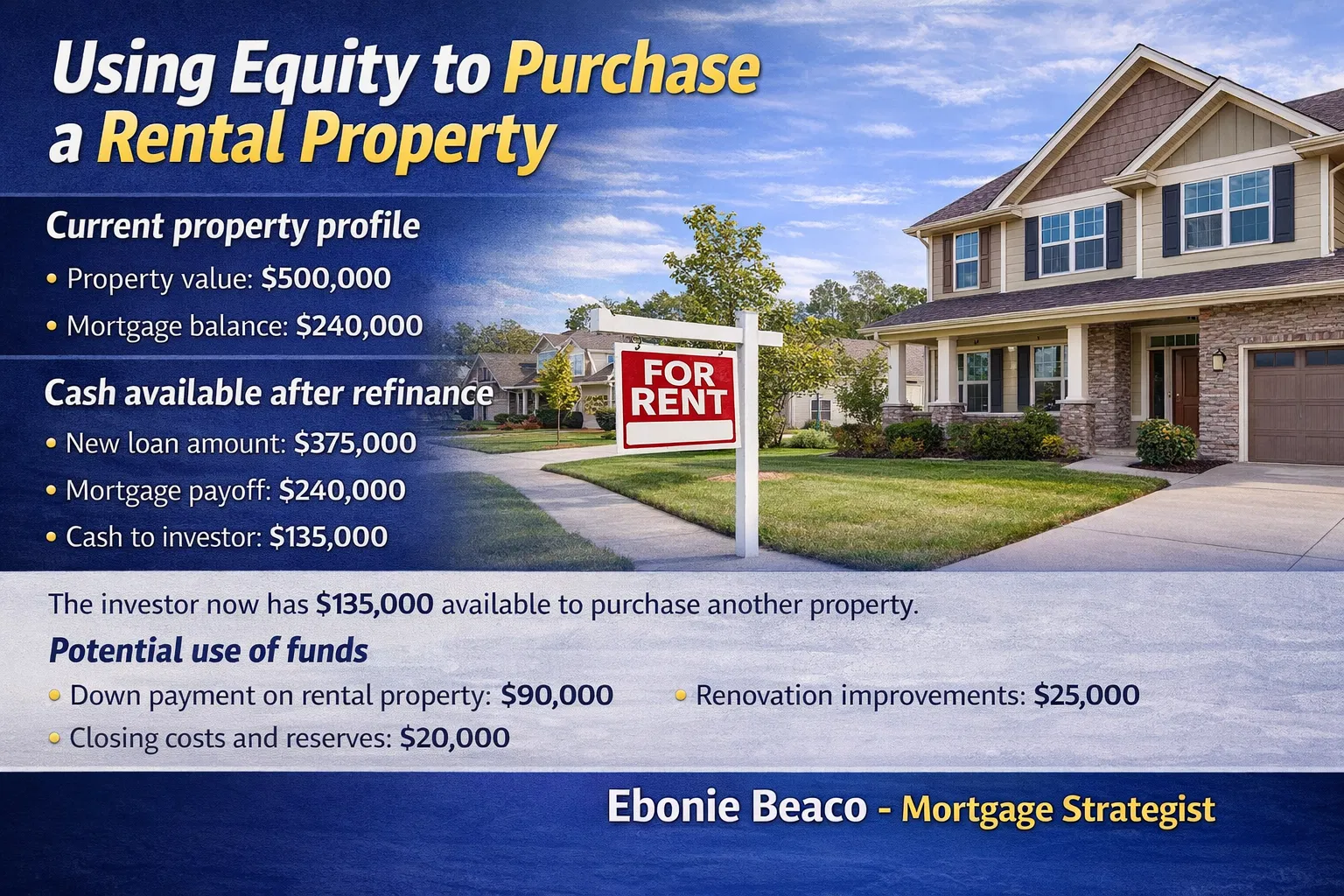
Florida homeowners have seen significant equity growth over the last five years, with many property values sitting 60% higher than their purchase price. This "lazy equity" can be put to work through a cash-out refinance or a Home Equity Line of Credit (HELOC). A cash-out refinance replaces your current mortgage with a new, larger loan, providing you with a lump sum for property renovations or a down payment on a new acquisition. This is a powerful way to recycle capital into higher-performing assets.
For those who want to keep their existing low primary mortgage rate, a HELOC offers a revolving line of credit backed by their home equity. This allows you to borrow only what you need, when you need it, and pay interest only on the amount used. Investors often use HELOCs as a "ready fund" to snap up distressed properties or bridge the gap during a renovation project. Both strategies allow you to leverage your existing success in the Florida market to fund future growth.
Financial Example: The Orlando Duplex Strategy
To understand how today’s rates translate into real-world numbers, let’s look at a common scenario for an Orlando duplex investment. In this example, the investor is using a DSCR loan to acquire a property with strong existing rental income. Despite the mid-6% interest rate environment, the high demand for rentals in Central Florida allows the numbers to work effectively. This demonstrates that "waiting for lower rates" can often cost more in lost rent than is saved in interest.
| Investment Metric | Value |
|---|---|
| Purchase Price | $625,000 |
| Down Payment (25%) | $156,250 |
| Loan Amount | $468,750 |
| Interest Rate | 6.75% |
| Total Monthly Income (Gross) | $5,650 |
| Monthly Payment (PITI) | $4,040 |
| Net Monthly Cash Flow | $1,610 |
| DSCR Ratio | 1.40 |
As shown in the table above, the property produces a net monthly cash flow of over $1,600 after all financing costs are covered. The DSCR ratio of 1.40 indicates that the rental income is 140% of the debt obligation, which is a very strong position for a lender. This scenario highlights how investors are successfully closing deals in May 2026 by focusing on high-performing assets. By securing the property now, the investor begins building equity and benefiting from cash flow immediately.

Navigating Short-Term Volatility with Bridge Loans
When market cycles extend and properties stay on the market longer, liquidity can become an issue for even the most seasoned investors. Bridge loans provide a short-term financing solution that allows you to leverage the equity in an existing property to secure a new acquisition. This effectively turns you into a "cash buyer," which is a significant advantage in competitive Florida markets. Bridge loans are typically 6 to 12 months in duration and are designed to be replaced by long-term financing once the new property is stabilized.
This strategy is particularly useful for fix-and-flip investors or those participating in the BRRRR (Buy, Rehab, Rent, Refinance, Repeat) method. By using a bridge loan to cover the initial purchase and renovation costs, you can act quickly when a deal becomes available. Once the renovations are complete and the property is leased, you can refinance into a long-term DSCR or conventional loan. This proactive approach to financing ensures that you never miss an opportunity due to a lack of immediate liquidity.
Actionable Strategies for Today’s Market
If you are looking to expand your portfolio in Florida, Alabama, or Georgia this month, the key is to stay nimble. Daily rate updates should be used as a guide to time your locks, but they should not paralyze your decision-making process. The most successful investors in 2026 are those who focus on the property's fundamentals and use specialized financing products to mitigate the impact of higher interest rates. Accessing professional guidance is essential to ensure your financing plan aligns with your long-term wealth-building goals.
Explore your options by comparing different loan structures, such as 5/1 ARMs which currently offer lower initial rates, or 30-year fixed DSCR loans for long-term stability. Jump in by analyzing your current home equity and determining how much you can safely access for your next down payment. Compare the benefits of a cash-out refinance versus a HELOC based on your current primary rate. By taking these active steps, you position yourself to thrive in any rate environment and continue building your real estate legacy.
For a deeper look into the current trends in Florida investment, you can review the latest Real Estate Deal Room reports or use our Mortgage Calculators to run your own scenarios.
Schedule a 1 on 1 at https://calendly.com/homeloansnetwork
Ebonie Beaco
Mortgage Strategist | Senior Loan Officer
Home Loans Network powered by Loan Factory Inc.
NMLS #2389954
HomeLoansNetwork.com
312-392-0664