Today’s National Mortgage News and State-Specific Trends Explained in Under 3 Minutes

Navigating the mortgage market often feels like tracking a moving target, especially when national headlines seem to conflict with what you see in your local neighborhood. Today, we are seeing a shift where bond market volatility and economic data are pushing rates slightly higher after a period of relative calm. Jump in as we break down the latest figures and explain how these shifts impact homeowners and investors across our primary service states.
Whether you are looking to purchase a primary residence in Virginia or leverage equity from a rental portfolio in Florida, understanding the current climate is the first step toward a successful transaction. We provide this daily update to ensure you have the clarity required to make informed financial decisions. Access the details below to see where the market stands as of May 17, 2026.
Current National Mortgage Rate Snapshot
The national averages provide a baseline for comparison, though individual quotes will vary based on credit profile and property type. Currently, the 30-Year Fixed Mortgage: a home loan with an interest rate that remains the same for the entire 30-year term: is hovering between 6.4% and 6.7%. This type of loan offers stability for long-term homeowners who want a predictable monthly payment regardless of future market fluctuations.
For those seeking a shorter path to full ownership, the 15-Year Fixed Mortgage is currently pricing between 5.8% and 6.1%. While the monthly payments are higher, the interest savings over the life of the loan are significant for those with the cash flow to support it. Additionally, Government-Backed Loans like FHA and VA programs remain competitive, with interest rates often landing in the 6.1% to 6.2% range, though borrowers should account for the impact of mortgage insurance premiums on the total APR.
Adjustable-Rate Mortgages (ARMs), specifically the 5-year and 7-year varieties, are currently structured between 5.7% and 6.6%. These programs can be highly effective for investors or homeowners who plan to sell or refinance before the initial fixed-rate period ends. However, the recent upward pressure on bond yields has narrowed the gap between fixed and adjustable options, making the choice more nuanced for today's borrowers.
Why Rates Are Trending Upward This Week
Understanding the "why" behind rate movements helps you anticipate future trends and timing. One of the primary drivers is the 10-Year Treasury Yield, which serves as a benchmark for long-term borrowing costs. Mortgage rates generally track this yield; when the yield rises due to investor sentiment or economic data, mortgage rates follow suit to maintain a competitive return for lenders.
Recent data suggests that inflation remains a persistent challenge, leading the Federal Reserve to maintain a "higher for longer" stance on interest rates. This shift in expectations has caused markets to dial back hopes for immediate rate cuts, which naturally pushes borrowing costs higher. When the economy shows signs of strength, such as robust employment numbers, it often signals to the market that the Fed does not need to lower rates to stimulate growth.
Geopolitical tensions also play a role in market volatility, as global uncertainty often causes investors to shift their capital into different asset classes. While Mortgage-Backed Securities (MBS) purchases by entities like Fannie Mae and Freddie Mac help provide some stability, they cannot entirely offset the broader movement of the bond market. For more detailed data on these daily shifts, you can explore resources like Mortgage News Daily or Bankrate.

Exploring State-Specific Trends: AL, AR, CA, FL, GA, IL, IN, KY, MI, MO, VA
While national averages get the headlines, real estate is fundamentally local. In states like California and Virginia, high-cost markets often see a higher concentration of Jumbo Loans, which are mortgages that exceed the conforming loan limits set by the FHFA. Interestingly, Jumbo rates can sometimes be lower than conforming rates because lenders view these high-net-worth borrowers as lower risk.
In Florida and Alabama, the cost of homeownership is heavily influenced by the insurance environment. Rising premiums for wind and flood insurance can impact a borrower’s Debt-to-Income (DTI) ratio: a personal financial measure that compares a flat amount of your debt to your overall income. Even if the interest rate is identical to a property in Michigan or Indiana, the higher insurance costs in coastal regions might limit the total loan amount a borrower can qualify for.
Markets like Illinois (Chicago), Georgia (Atlanta), and Missouri (St. Louis) continue to see strong demand for investment properties. In these regions, many investors are utilizing DSCR Investor Loans: a Debt Service Coverage Ratio loan that qualifies a borrower based on the property’s rental income rather than personal income. This strategy allows investors to scale their portfolios more rapidly without being restricted by their personal tax returns or employment history.
Strategic Solutions for Homeowners: HELOCs and Refinancing
If you currently own a home in Arkansas or Kentucky and have significant equity, today's rate environment might still offer opportunities. A HELOC (Home Equity Line of Credit) is a revolving line of credit that allows you to borrow against the equity in your home. It functions similarly to a credit card but uses your home as collateral, typically offering much lower interest rates than unsecured debt.
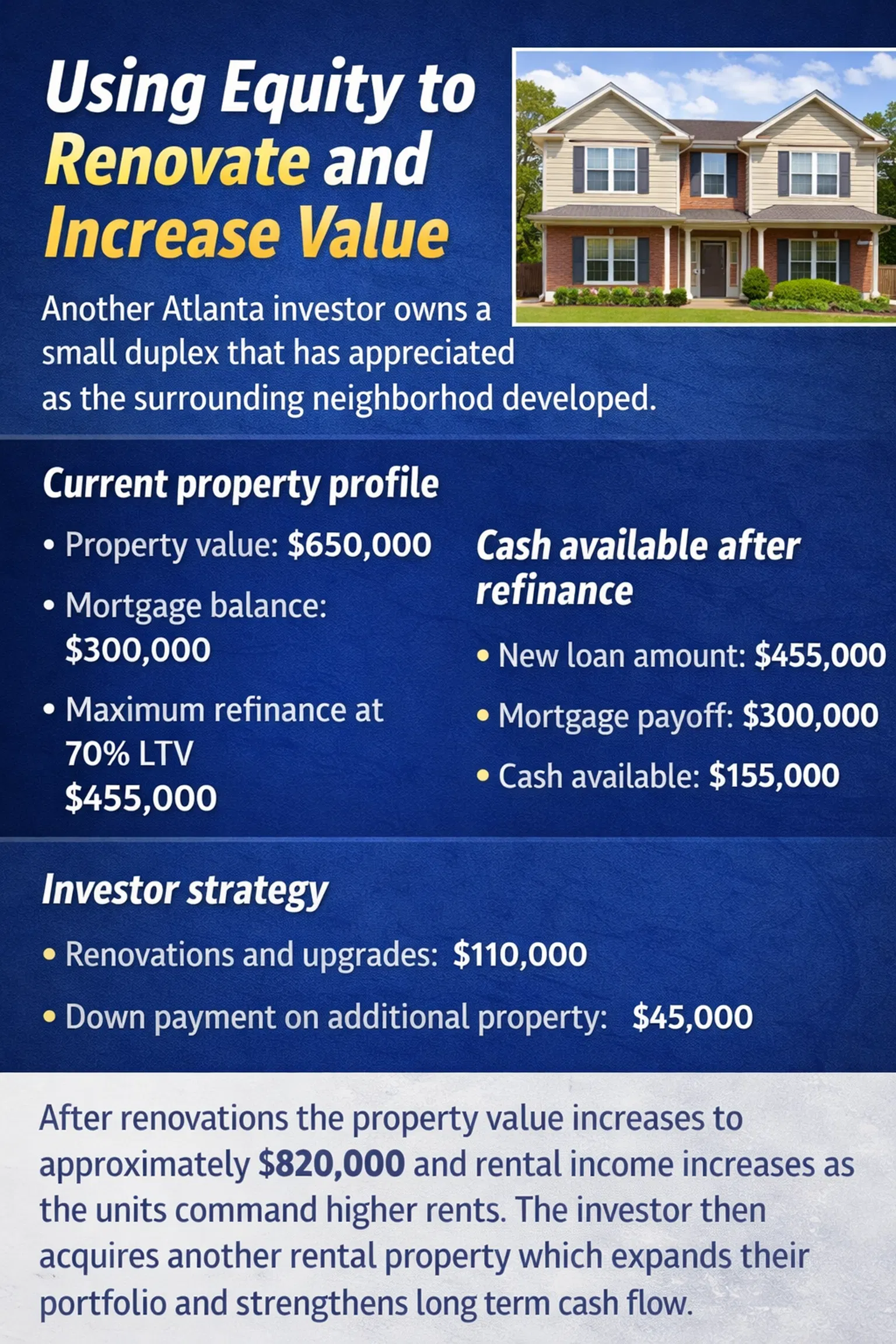
Another popular strategy is the Cash-Out Refinance, which involves replacing your existing mortgage with a new one for a larger amount than you currently owe and taking the difference in cash. This is frequently used to fund home renovations, consolidate high-interest debt, or provide a down payment for a second property. For example, a homeowner in Georgia with a $500,000 property and a $280,000 balance could potentially access up to $145,000 in equity, depending on the lender's loan-to-value (LTV) limits.
Explore how these numbers work in practice:
- Current Property Value: $500,000
- Existing Mortgage Balance: $280,000
- Max Loan-to-Value (85%): $425,000
- Available Equity for Extraction: $145,000
Accessing this capital can be a powerful tool for wealth building when the funds are reinvested into appreciating assets or used to eliminate debt that carries double-digit interest rates.
Investor-Focused Financing: DSCR and Bridge Loans
For real estate investors active in Michigan or Indiana, the focus is often on cash flow and speed. DSCR Rental Property Loans are the gold standard for buy-and-hold investors. By focusing on the income the property generates, these loans eliminate the need for traditional income verification, making them ideal for self-employed individuals or those with multiple rental properties.
Compare the DSCR approach with traditional lending:
- DSCR Formula: Monthly Rental Income / Monthly Debt Service (PITIA)
- Target Ratio: 1.0x to 1.25x or higher
- Benefit: No personal income verification required, allowing for faster approvals and easier portfolio scaling.
If you are pursuing a "fix and flip" strategy in Illinois or Virginia, a Bridge Loan or Hard Money Loan might be the better fit. These are short-term financing options used to purchase and renovate distressed properties. Once the renovation is complete and the property is leased, many investors then move into a long-term DSCR loan: a process commonly known as the BRRRR Method (Buy, Rehab, Rent, Refinance, Repeat).
Navigating Today’s Market Realities
The current volatility in mortgage rates means that shopping around is more important than ever. Compare at least three to five quotes from different sources, including local brokers and national lenders. Always look beyond the headline interest rate and examine the APR (Annual Percentage Rate), which includes the interest rate plus other costs such as broker fees and points.
If you find a rate and payment that fits your budget, consider a Rate Lock. This is an agreement between a borrower and a lender that guarantees a specific interest rate for a set period. Given that current momentum leans toward upward volatility, locking in a rate early in the process can protect you from sudden market spikes before your loan closes.
Compare the following considerations when shopping:
- Points vs. Credits: Ask if the quote includes "points" (prepaid interest to lower the rate) or "credits" (higher rate in exchange for lower closing costs).
- Loan Term: Evaluate if a 15-year term is manageable to maximize interest savings.
- Lock Period: Ensure your rate lock is long enough to cover your expected closing date, especially in states with longer processing times.

Your Next Steps in Real Estate Finance
Whether you are a first-time homebuyer in Missouri or a seasoned landlord in California, the mortgage landscape is constantly evolving. Staying informed about both national news and state-specific trends allows you to pivot your strategy as the market changes. Our goal is to serve as your educational resource, providing the insights you need to navigate these complexities with confidence.
If you are curious about how these trends specifically apply to your financial goals or want to see a personalized scenario for a property in any of the states we serve, reaching out for a detailed consultation is the most effective way to gain clarity.
Schedule a 1 on 1 at https://calendly.com/homeloansnetwork
Ebonie Beaco
Mortgage Strategist | Senior Loan Officer
Home Loans Network powered by Loan Factory Inc.
NMLS #2389954
HomeLoansNetwork.com
312-392-0664