Today's Mortgage Rate Volatility Explained in Under 3 Minutes: What Investors Need to Know

The mortgage market in late May 2026 continues to navigate a landscape defined by rapid shifts and structural changes. While the extreme spikes of previous years have largely subsided, daily fluctuations remain a primary challenge for homeowners and real estate investors looking to lock in financing. Understanding the current rate environment requires a look at the interplay between central bank policy and economic data. Even as the Federal Reserve has moved toward a more accommodative stance, external pressures keep the market on its toes. This brief overview provides the essential context you need to navigate these financial shifts with confidence and precision.
The Forces Driving Current Rate Movements
The volatility we see today is primarily fueled by "sticky" inflation reports and evolving expectations regarding the Federal Reserve’s next steps. When consumer price data comes in higher than anticipated, bond yields often climb, pushing mortgage rates upward in response. Conversely, signs of a cooling labor market can provide much-needed relief to borrowing costs, though these windows of opportunity are often short-lived. Geopolitical events and global supply chain shifts also contribute to the daily noise in the bond market. For those tracking the latest mortgage news updates, it is clear that stability is relative rather than absolute in the current cycle.
Real estate professionals and savvy investors are paying close attention to the "spread" between 10-year Treasury yields and 30-year fixed mortgage rates. Historically, this gap stays around 200 basis points, but recent market conditions have seen it widen significantly due to reduced demand for mortgage-backed securities. This wider spread means that even when government bond yields drop, mortgage rates might not follow as quickly or as deeply as they once did. Navigating this environment requires a proactive strategy that accounts for these technical market nuances. You can explore how these trends affect different loan products by visiting the Home Loans Network loan programs page.
Strategic Focus for Real Estate Investors
For real estate investors operating in competitive markets like Chicago, Illinois, or high-growth areas in Florida and Georgia, volatility represents both a risk and an opportunity. Rising rates can dampen buyer competition, allowing prepared investors to negotiate better purchase prices on distressed or off-market properties. Using specialized products such as DSCR (Debt Service Coverage Ratio) Loans allows you to qualify based on the property’s income rather than your personal tax returns. This flexibility is vital when traditional lending criteria become more restrictive during periods of high market movement. Jump in and evaluate your next deal by looking at the property’s specific cash flow potential rather than just the headline interest rate.

Investors should also consider the benefits of Non-QM Mortgage Loans, which offer alternative documentation options for the self-employed and those with complex financial profiles. These programs often provide a path forward when conventional guidelines fail to accommodate the unique needs of entrepreneurs. Whether you are scaling a rental portfolio in Virginia or looking for a fix-and-flip project in Michigan, having access to diverse funding sources is a competitive advantage. Explore the Home Loans Network mortgage basics to learn more about how these specialized programs function in today's market.
Analyzing the Numbers: The DSCR Calculation
One of the most effective ways to shield your investment strategy from rate volatility is to focus on the DSCR metric. This ratio compares the net operating income of a property to its total debt obligations, ensuring the asset can support its own financing. Lenders typically look for a ratio of 1.20 or higher to ensure there is a comfortable margin for expenses and vacancies. By prioritizing properties with strong rental demand and healthy margins, you can secure financing even when interest rates are higher than historical averages. Use the following example to see how a typical rental property performs in the current rate environment.
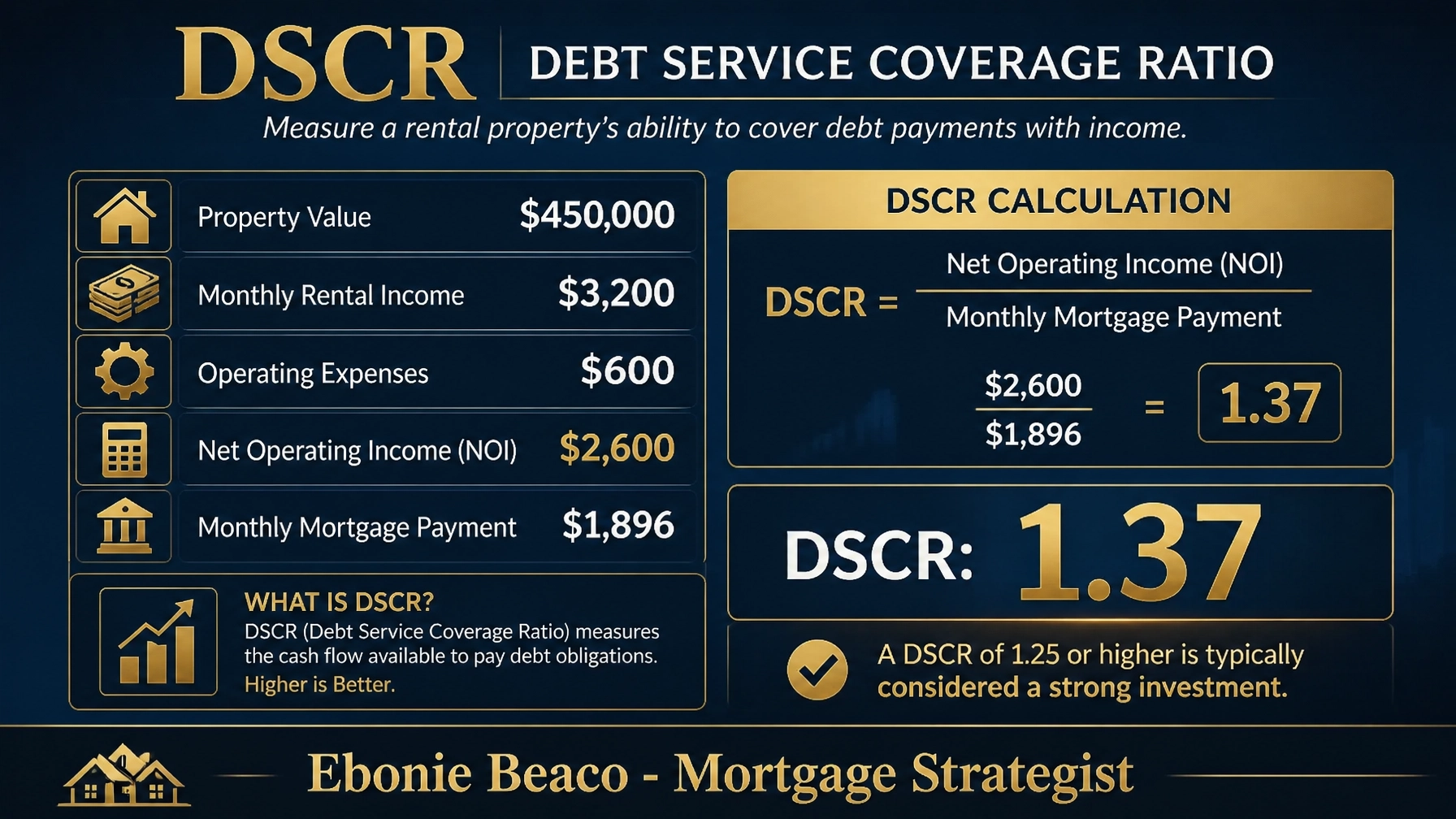
In this scenario, a property valued at $450,000 generates $3,200 in monthly rental income. After accounting for $600 in monthly expenses such as taxes, insurance, and maintenance, the Net Operating Income (NOI) stands at $2,600. With a monthly mortgage payment of $1,896 at current market rates, the resulting DSCR is 1.37. This healthy ratio suggests the property is a strong candidate for an investor loan, providing a buffer against future rate increases or unexpected costs. Accessing a mortgage calculator can help you run these numbers for your own potential acquisitions.
Leveraging Equity in a Shifting Market
Homeowners who have seen significant property appreciation in states like California or Florida can use rate volatility to their advantage through strategic refinancing. A Cash-Out Refinance allows you to access the built-up equity in your primary residence or investment property to fund further acquisitions or property improvements. This strategy is particularly effective for those looking to transition from a single property to a larger portfolio. While the new interest rate may be higher than your original mortgage, the ability to deploy capital into high-yield investments often outweighs the increase in borrowing costs. Compare your options carefully to ensure the return on your new investment exceeds the cost of the additional debt.

For those who wish to keep their current low-rate first mortgage intact, a HELOC (Home Equity Line of Credit) offers a flexible alternative. This second mortgage provides a revolving line of credit that you can draw from as needed for renovations, down payments, or emergency reserves. Because a HELOC is often a variable-rate product, it is important to monitor market trends and have a plan for repayment if rates continue to fluctuate. Many investors in the Home Loans Network community use these tools to maintain liquidity while waiting for the right deal to emerge. You can learn more about these strategies in the home refinance section of our website.
Regional Insights and Market Activity
The impact of rate volatility varies significantly across the different regions where we provide lending services. In the Midwest, cities like Indianapolis and St. Louis are seeing steady demand for affordable housing, which keeps rental yields attractive for multi-family investors. Meanwhile, the Southeast markets in Alabama and Arkansas are attracting investors seeking lower entry points and favorable tax environments. Each state has its own set of market drivers that can either amplify or mitigate the effects of national interest rate trends. Staying informed about local housing inventory and employment data is just as critical as watching the Fed's announcements.

Florida remains a primary focus for both short-term rental operators and long-term buy-and-hold investors due to its robust tourism and growing population. High-demand areas like Orlando and Tampa require a sophisticated approach to financing, as property values have remained resilient despite higher rates. In Virginia and Maryland, the proximity to major employment hubs provides a stable tenant base, making these markets ideal for those prioritizing low vacancy rates. By aligning your financing strategy with the specific characteristics of your target market, you can build a more resilient and profitable real estate portfolio. Explore the Freddie Mac PMMS for a deeper look at historical regional trends.
Essential Industry Definitions
- DSCR (Debt Service Coverage Ratio): A financial metric used by lenders to measure a property's ability to cover its monthly debt payments with its generated income.
- LTV (Loan-to-Value): A ratio that expresses the amount of a first mortgage lien as a percentage of the total appraised value of real property.
- DTI (Debt-to-Income): A personal finance measure that compares an individual’s monthly debt payments to their monthly gross income.
- Non-QM Loan: A mortgage loan that does not meet the standards of a qualified mortgage, often used by borrowers with unique income structures.
- Cash-Out Refinance: A refinancing option where the new mortgage amount is higher than the existing mortgage balance, with the difference being paid to the borrower in cash.
The current environment of mortgage rate volatility is complex, but it does not have to be a barrier to your real estate goals. By focusing on fundamental investment metrics, staying informed on market drivers, and utilizing specialized loan programs, you can continue to build wealth through homeownership and real estate investment.
Schedule a 1 on 1 at https://calendly.com/homeloansnetwork
Ebonie Beaco
Mortgage Strategist | Senior Loan Officer
Home Loans Network powered by Loan Factory Inc.
NMLS #2389954
HomeLoansNetwork.com
312-392-0664