Thinking Big: The Guide to Wholesaling Multifamily Properties

Most wholesalers spend their entire careers hunting for single-family houses. They look for the distressed ranch-style home or the suburban fixer-upper. While that is a proven path to success, there is a whole other world waiting for those who decide to scale up.
Wholesaling multifamily properties is the "big league" version of the game. Instead of a $5,000 assignment fee on a small house, you might be looking at a $50,000 or $100,000 fee on an apartment complex.
This guide is your introductory course into the world of apartment and multi-unit wholesaling. We will explore how to find these deals, how to crunch the numbers, and how to get them across the finish line.
Module 1: The Core Differences in Multifamily
When you move from single-family homes to multifamily, the fundamentals of wholesaling stay the same, but the scale and the "why" shift significantly.
Multifamily Wholesaling: The process of finding a distressed multi-unit property (2 to 100+ units), putting it under contract at a discount, and assigning that contract to an investor for a fee. Practical Application: This allows you to control a multi-million dollar asset without ever having to take out a loan or manage tenants.
The biggest difference is how these buildings are valued. Houses are valued based on comparable sales (what the neighbor's house sold for). Apartment buildings are valued based on the income they produce. This makes your job as a wholesaler easier in some ways because the math is more objective.
Explore our mortgage basics to understand how different property types are classified by lenders.
Module 2: Essential Terminology for the Multifamily Wholesaler
To speak the language of commercial investors, you need to know these terms inside and out.
Net Operating Income (NOI): The total income a property generates minus all operating expenses (but before debt service). Practical Application: This number is the heartbeat of a deal; it tells the buyer if the building is actually profitable.
Cap Rate (Capitalization Rate): A percentage that indicates the expected rate of return on an investment based on the income the property produces. Practical Application: Investors use this to compare a 10-unit building in Alabama to a 10-unit building in Chicago.
Debt Service Coverage Ratio (DSCR): A calculation used by lenders to ensure the property makes enough money to pay the mortgage. Practical Application: If the DSCR is too low, your buyer won't be able to get financing, and your deal will fall apart.
Module 3: Hunting for Apartment Deals
Finding a 20-unit building is different than finding a 3nd-bedroom house. You can't just drive for dollars in the same way. You have to be more targeted.
Direct Mail to Mom-and-Pop Owners
Many 5 to 20-unit buildings are owned by "mom-and-pop" landlords. These are individuals who have owned the building for 30 years and might be tired of dealing with "toilets, tenants, and trash." A personalized letter expressing interest in their specific building can go a long way.
Commercial Brokers
Unlike single-family wholesaling, where you often avoid agents, building relationships with commercial brokers is vital. Sometimes a broker has a listing that is "stale" or a seller who needs to move fast. If you can provide a quick, guaranteed exit, the broker might help you facilitate the deal.
Specialized Lists
Target owners with high equity or those facing building code violations. In cities like Chicago or throughout Florida, local municipalities keep records of buildings with multiple safety violations. These are prime targets for a wholesale offer.
 Text on image: Ebonie Beaco - Mortgage Strategist. Visual: A professional chart showing a 12-unit apartment building deal breakdown with Purchase Price: $1,200,000, Wholesale Fee: $75,000, and Projected NOI: $110,000.
Module 4: Analyzing the Deal (The Math)
If you get the math wrong in multifamily, you don't just lose a deal: you lose your reputation. Multifamily investors are data-driven.
Let's look at a real-world scenario. Imagine you find a 10-unit building in Birmingham, Alabama.
- Current Rents: $800/month per unit ($96,000/year).
- Expenses: 45% of gross income ($43,200).
- NOI: $52,800.
- Market Cap Rate: 8%.
To find the value, you divide the NOI by the Cap Rate ($52,800 / 0.08). Current Value: $660,000.
If you can get this building under contract for $500,000 because it needs some cosmetic work and has high vacancy, you have a massive spread. You could assign this to an investor for $550,000. They get a deal below market value, and you walk away with a $50,000 assignment fee.
Compare this to a single-family house where the fee might only be $5,000 or $10,000. The effort to find the deal is similar, but the reward is ten times higher.
Module 5: Financing the Exit Strategy
You must understand how your buyer is going to pay for the building. Most multifamily buyers use specialized financing.
DSCR Investor Loans: Loans where the qualification is based on the property’s cash flow rather than the borrower’s personal income. Benefit: This allows your buyer to close quickly without providing years of tax returns.
Bridge Loans: Short-term financing used to "bridge" the gap until permanent financing is secured. Benefit: Ideal for buildings that need significant renovation before they can qualify for a standard bank loan.
Many of your buyers will be looking for fix and flip financing or specialized landlord loans. If you can point your buyer toward a solid lender, you become an even more valuable partner to them.
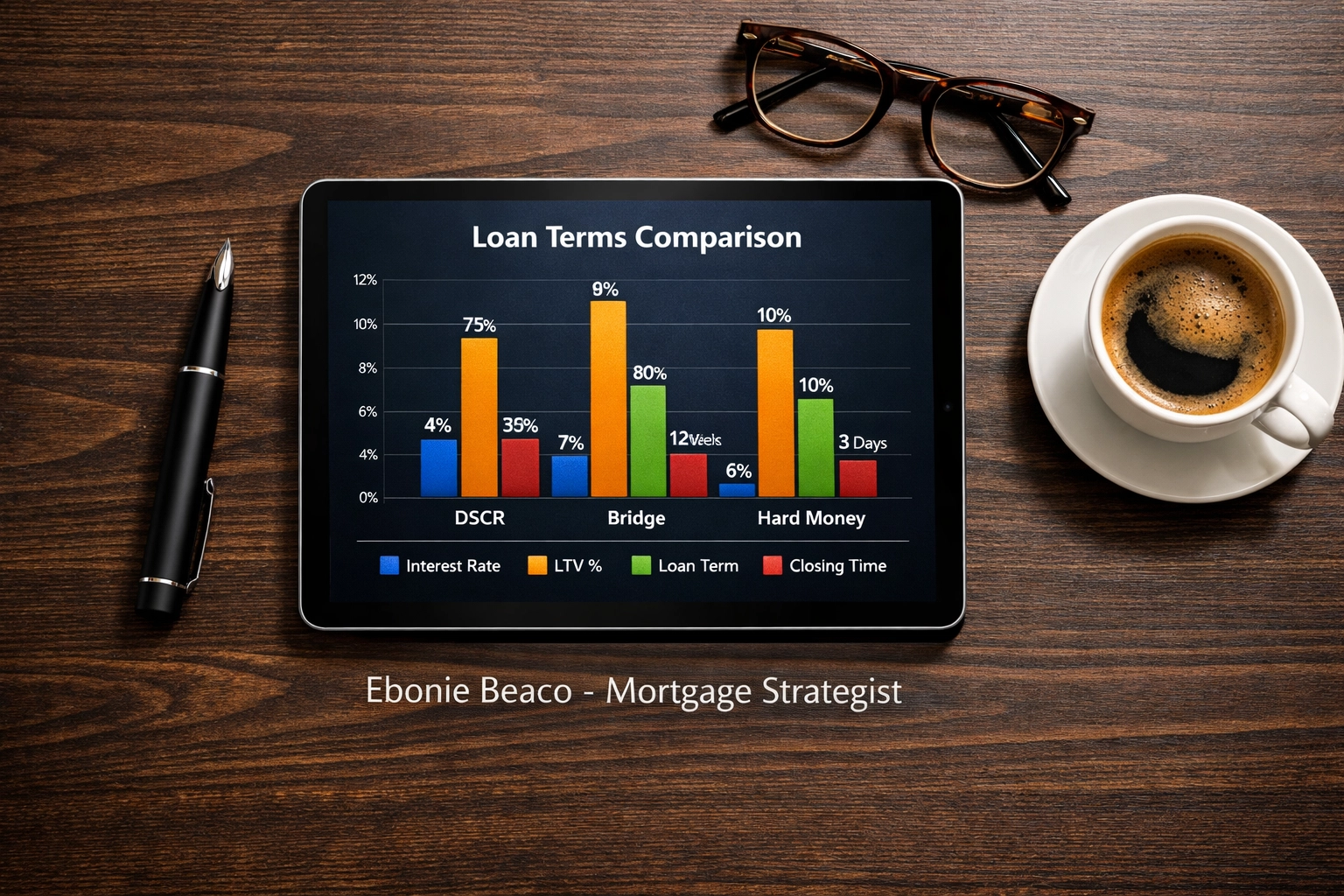 Text on image: Ebonie Beaco - Mortgage Strategist. Visual: A comparison table of Multifamily Financing options showing DSCR Loans, Bridge Loans, and Hard Money side-by-side with typical interest rates and loan-to-value percentages.
Module 6: Building a Specialized Buyer’s List
You can't sell a 50-unit apartment complex to the same person who buys your $50,000 flip properties. You need a different kind of buyer.
- Syndicators: These are investors who pool money from multiple people to buy large buildings.
- REITs (Real Estate Investment Trusts): Large companies that own and operate income-producing real estate.
- Local "Heavy Hitters": Every city has a few names that seem to own half the town. These are the people you want on speed dial.
When you present a deal to these buyers, they expect a Pro Forma. Pro Forma: A financial document that projects the future income and expenses of a property. Practical Application: This shows the buyer what the building could be worth after they fix it up and raise the rents.
Module 7: The Legal Side (Contracts and Due Diligence)
Wholesaling multifamily requires a more robust contract. You cannot use a simple one-page agreement for a $2 million asset.
Due Diligence Period: A set timeframe where the buyer can inspect the property, review financial records, and confirm the details. Practical Application: In multifamily, this usually takes 30 to 45 days. You need to negotiate this time into your contract with the seller.
Because the stakes are higher, always ensure your contracts allow for an assignment. This is the clause that lets you transfer your rights to the final buyer. Jump in and review our FAQ for more common questions about real estate transactions.
Module 8: Why Multifamily Wholesaling is Trending
In current markets like Florida, Georgia, and Virginia, the demand for rental housing is at an all-time high. Investors are hungry for "value-add" opportunities.
Value-Add: A property that has the potential to increase in value by increasing rents, reducing expenses, or making physical improvements. Practical Application: As a wholesaler, you are hunting for these value-add gems. Your job is to find the potential that the current owner is missing.
Accessing these deals requires persistence. Whether you are looking at small duplexes in Indiana or massive complexes in California, the logic remains the same: solve the seller's problem and provide a clear path for the buyer.
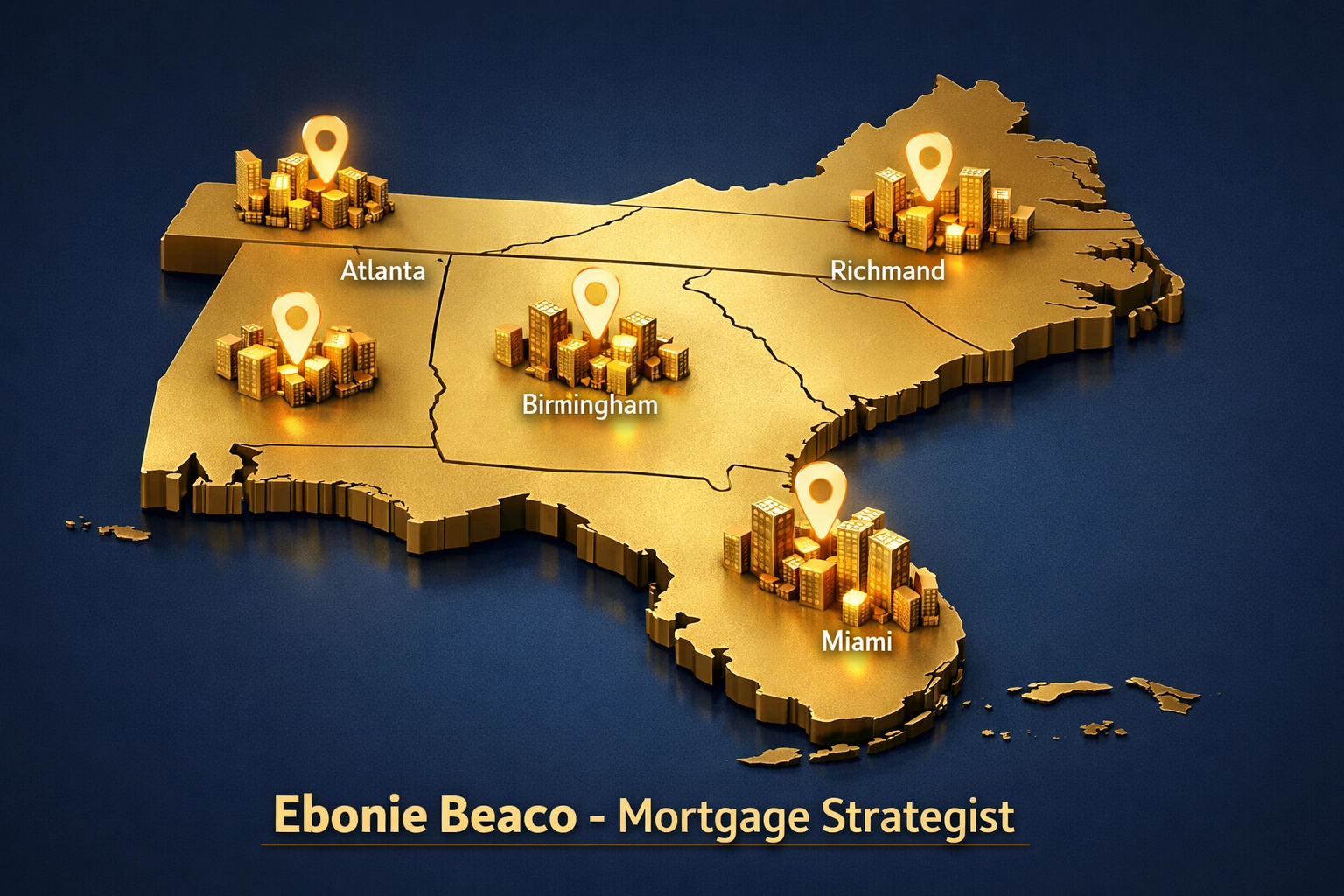 Text on image: Ebonie Beaco - Mortgage Strategist. Visual: A map highlighting Florida, Georgia, Alabama, and Virginia with icons representing growing multifamily investment hubs.
Closing the Deal
Wholesaling multifamily is about thinking bigger. It requires more professional communication, better data, and a deeper understanding of financing. But for those willing to put in the work, it offers a path to financial freedom that single-family wholesaling often struggles to match.
If you are an investor looking to fund one of these deals or a wholesaler who wants to understand how your buyers are getting financed, let's talk. I specialize in the strategies that make these big deals happen.
Schedule a 1 on 1 at https://calendly.com/homeloansnetwork
Ebonie Beaco Mortgage Strategist | Senior Loan Officer Home Loans Network powered by Loan Factory Inc. NMLS #2389954 HomeLoansNetwork.com 312-392-0664