The Ultimate Guide to Wholesaling Logistics: Everything You Need to Succeed with Assignments and Closings

Wholesaling real estate is often described as the fast track to making money in the housing market without needing a massive bankroll.
While that is true to an extent, the difference between a "one-and-done" wholesaler and a professional who builds a scalable business is logistics.
You can find the best distressed property in the world, but if you do not understand the flow of the paperwork, you will never see a check.
In this guide, we are pulling back the curtain on the mechanics of real estate wholesale contracts, the nuances of assignment of contract, and how to navigate closings in high-activity markets like California, Florida, and Atlanta.
What is Wholesaling Logistics?
Wholesaling logistics refers to the strategic movement of a property from a motivated seller to an end buyer through a series of legal and financial steps.
It involves managing timelines, coordinating with title companies, and ensuring all parties remain compliant with local regulations.
Explore the two primary ways wholesalers exit a deal: assignments and double closings.
The Assignment of Contract
Assignment of Contract: A legal transaction where the original buyer (the wholesaler) transfers their rights and obligations of a purchase agreement to a new buyer (the investor).
Practical Application: This allows you to "sell" your position in a deal for a fee without ever actually taking ownership of the property.
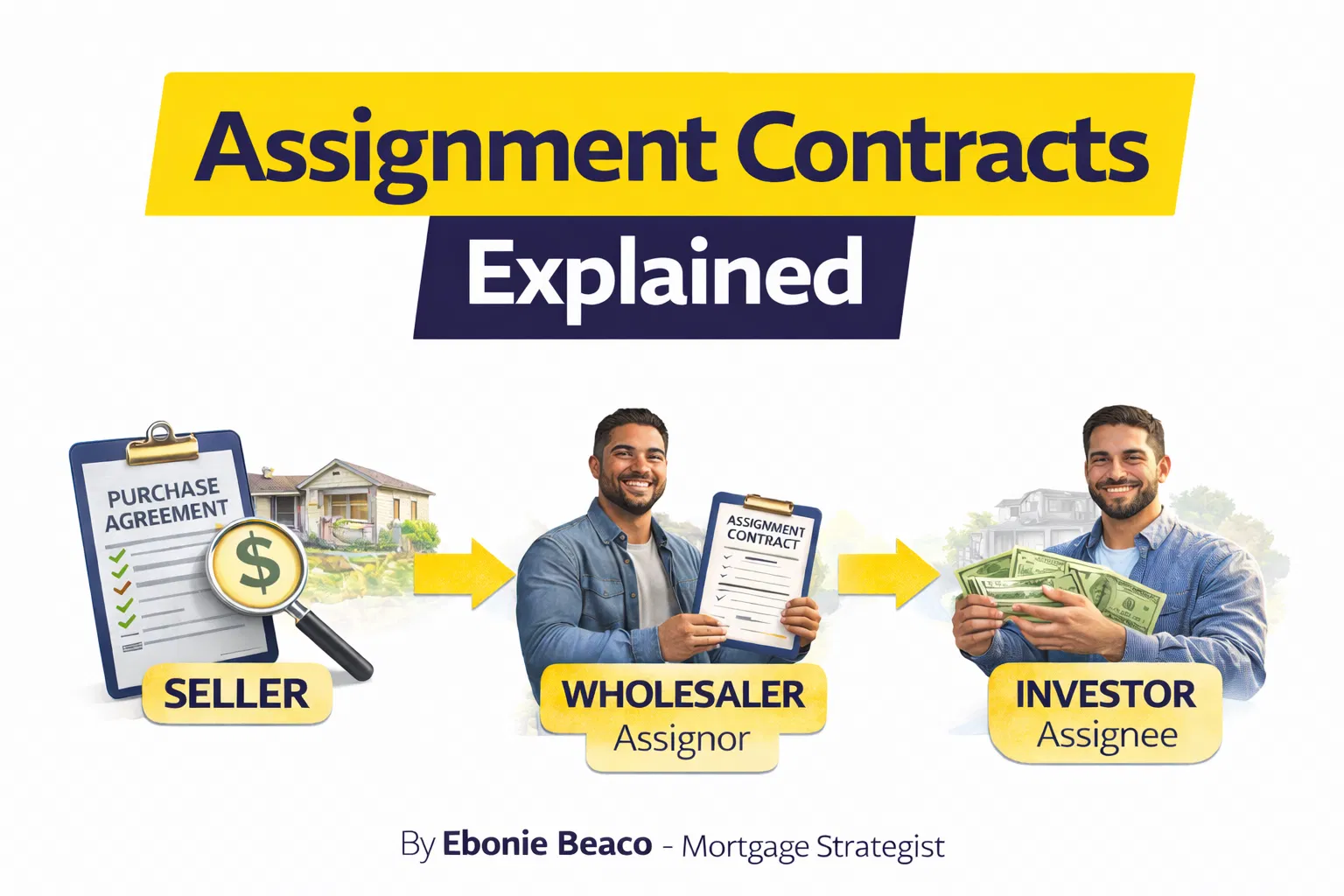
Mastering Real Estate Wholesale Contracts
Your contract is the most vital tool in your inventory.
A standard purchase agreement used by realtors often lacks the specific language needed for a smooth wholesale transaction.
Real Estate Wholesale Contracts: Legally binding agreements between a seller and a buyer that specifically include "and/or assigns" language.
Practical Application: Including this phrase ensures you have the legal right to pass the deal to an end investor.
Jump in and ensure your contracts include an inspection period or "due diligence" clause.
This gives you a window of time to market the property to your cash buyers list and secure an assignment.
Access our mortgage basics page to understand how these contracts differ from traditional home purchase agreements.
The Anatomy of the Assignment Fee
The assignment fee is the profit you pocket for finding the deal and putting the logistics together.
It is the difference between what you agreed to pay the seller and what the investor is willing to pay you.
Assignment Fee: The dollar amount paid by the end buyer to the wholesaler for the right to purchase the property.
Practical Application: This fee is typically paid at the time of closing by the title company or escrow agent.
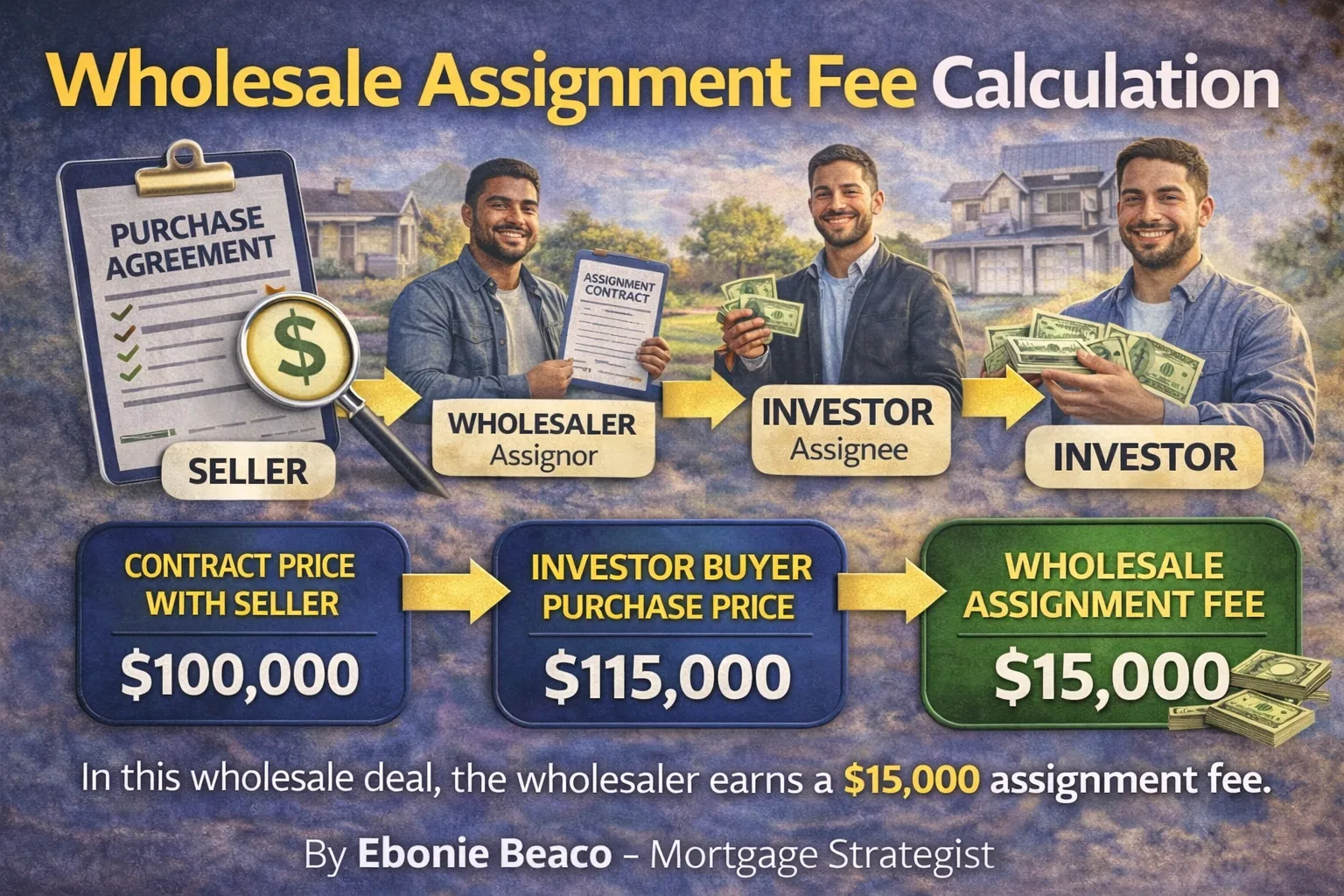
In the graphic above, you can see how a $100,000 contract price with a $15,000 assignment fee results in a $115,000 total price for the investor.
Compare this to a traditional real estate commission; while an agent might make 3%, a wholesaler with a great deal can often see significantly higher spreads depending on the property's value.
Double Closings vs. Assignments
Sometimes, an assignment of contract isn't the best move.
If your assignment fee is exceptionally high: say $50,000 or more: the end buyer or the seller might feel uneasy seeing that amount on the settlement statement.
Double Closing: A transaction involving two separate settlements where the wholesaler buys the property from the seller and immediately sells it to the investor on the same day.
Practical Application: This keeps your profit private because the seller only sees their sale price, and the buyer only sees their purchase price.
Double closings require more logistics, including "transactional funding."
This is short-term capital used to close the first leg of the deal before the second leg pays it back.
Wholesaling in California, Florida, and Atlanta
Logistics vary depending on where you are doing business.
Every state has its own culture and legal expectations regarding real estate.
California Wholesaling
In California, the market is competitive and the price points are high.
Wholesalers here often focus on transparency and high-tech marketing.
Due to the high values, a 1% assignment fee on a $1,000,000 property is still a $10,000 payday.
Florida Wholesaling
Florida is a hub for international investors and retirees.
The logistics here often involve navigating homeowners' associations (HOAs) and specific disclosure requirements.
Florida title companies are very familiar with assignments, making the closing process relatively smooth for experienced wholesalers.
Atlanta, Georgia Wholesaling
Atlanta has become a powerhouse for real estate investment.
The city is filled with older homes perfect for the BRRRR (Buy, Rehab, Rent, Refinance, Repeat) strategy.
Wholesalers in Atlanta often work closely with investors looking for properties that qualify for DSCR investor loans.

Essential Tools for Deal Analysis
To succeed in wholesaling logistics, you must be able to run the numbers accurately.
If you overestimate the After Repair Value (ARV) or underestimate the repair costs, your deal will fall apart during the assignment phase.
ARV (After Repair Value): The estimated value of a property after all necessary renovations and repairs have been completed.
Practical Application: Investors use this number to determine if the deal meets their ROI (Return on Investment) criteria.

Using a mortgage calculator can help you understand the monthly carrying costs an investor might face, which influences how much they can pay for your wholesale deal.
Working with Investor-Friendly Title Companies
Not all title companies or closing attorneys understand wholesaling.
Some might refuse to process an assignment of contract because they view it as too complex or risky.
Your logistics plan must include a list of "investor-friendly" title companies.
These are firms that regularly handle wholesale transactions, understand double closings, and know how to clear title issues quickly.
Ask potential partners: "Do you allow for the assignment of contracts?" and "Are you comfortable with double closings using transactional funding?"
Transitioning from Wholesaler to Investor
Many people start in wholesaling to build the capital needed for their own long-term investments.
Once you have a few assignment fees under your belt, you might consider keeping a property as a rental.
This is where understanding loan programs like DSCR (Debt Service Coverage Ratio) becomes important.
A DSCR loan allows you to qualify for financing based on the property's rental income rather than your personal income or DTI (Debt-to-Income) ratio.
DSCR: A financial metric used by lenders to measure a property's ability to cover its debt payments.
Practical Application: This allows wholesalers to transition into being landlords and building long-term wealth.
Logistics Checklist for a Successful Closing
- Secure the Purchase Agreement: Ensure the "and/or assigns" language is present.
- Open Escrow: Send the contract to an investor-friendly title company immediately.
- Market the Deal: Share the details with your cash buyers list.
- Execute the Assignment Agreement: Once a buyer is found, have them sign the assignment and pay a non-refundable earnest money deposit (EMD).
- Coordinate with the Title Company: Ensure they have both the original contract and the assignment agreement.
- Review the Settlement Statement: Confirm your assignment fee is correctly listed.
- Close and Get Paid: The title company wires your fee after the end buyer's funds are received.
If you are a homeowner in Atlanta or Florida looking to understand the value of your property before selling to a wholesaler, exploring a cash-out refinance might be a better way to access your equity without giving up ownership.
Moving Forward with Confidence
Wholesaling is a business of movement and paper.
When you master the logistics, you stop being a "house hunter" and start being a real estate strategist.
Whether you are navigating the fast-paced markets of California or the high-yield opportunities in Atlanta, your success depends on your ability to manage the contract flow.
Understanding how these deals close also makes you a better partner for real estate agents and lenders.
When everyone knows their role in the transaction, the process becomes predictable and profitable.
Schedule a 1 on 1 to discuss your investment strategy or financing needs.
Schedule a 1 on 1 at https://calendly.com/homeloansnetwork
Ebonie Beaco
Mortgage Strategist | Senior Loan Officer
Home Loans Network powered by Loan Factory Inc.
NMLS #2389954
HomeLoansNetwork.com
312-392-0664