The Ultimate Guide to Wholesaling Logistics: Everything You Need to Succeed in FL, CA, and Atlanta
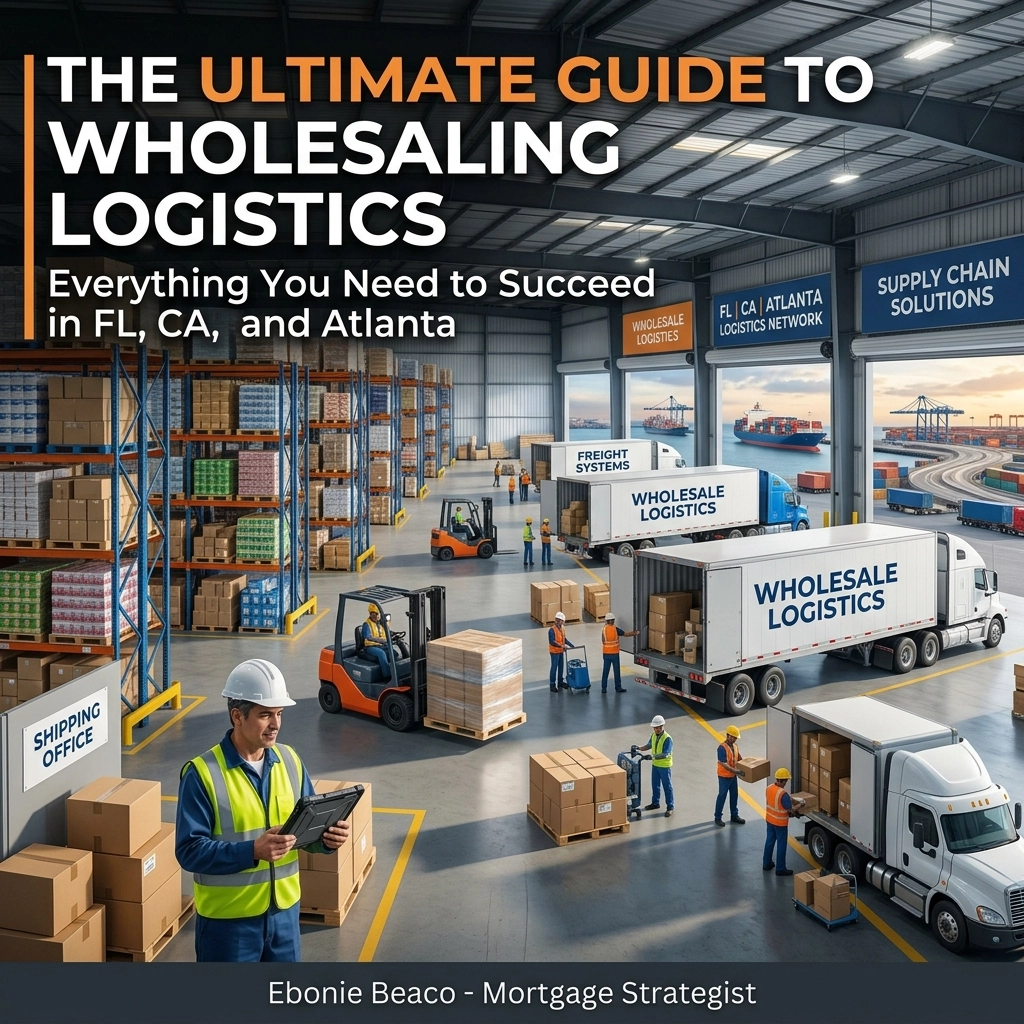
Wholesaling real estate is often described as the "entry level" of property investing, but the actual logistics behind a successful deal are anything but basic.
If you are looking to flip contracts in high-velocity markets like Atlanta, Florida, or California, you need a solid grasp of how a deal moves from an initial handshake to a funded assignment fee.
The process is less about owning property and more about managing the flow of information and legal rights.
Understanding Wholesaling Logistics
Wholesaling Logistics: The systematic coordination of property sourcing, contract execution, and buyer matching to ensure a seamless transfer of equitable interest.
This framework allows you to control a property without ever taking title or managing a renovation.
Equitable Interest: A legal right to acquire ownership of a property based on a signed purchase agreement.
This interest is what you are actually selling to your end buyer, rather than the physical dirt or sticks.
In a typical transaction, you are the bridge between a motivated seller and a cash-heavy investor.
Your job is to find the "meat on the bone" and then pass that opportunity to someone with the capital to close.
The Foundation: Real Estate Wholesale Contracts
Everything in wholesaling begins and ends with the paperwork.
If your contract is not structured correctly, you don't have a deal; you have a headache.
Real Estate Wholesale Contract: A legally binding agreement between a seller and a wholesaler that includes specific language allowing for the assignment of rights.
This document ensures you have the legal authority to market the property to your investor list.
Assignment of Contract: A legal clause or separate document that transfers the rights and obligations of a purchase agreement from the wholesaler to an end buyer.
This is the primary tool used to collect an assignment fee without needing to secure traditional financing yourself.
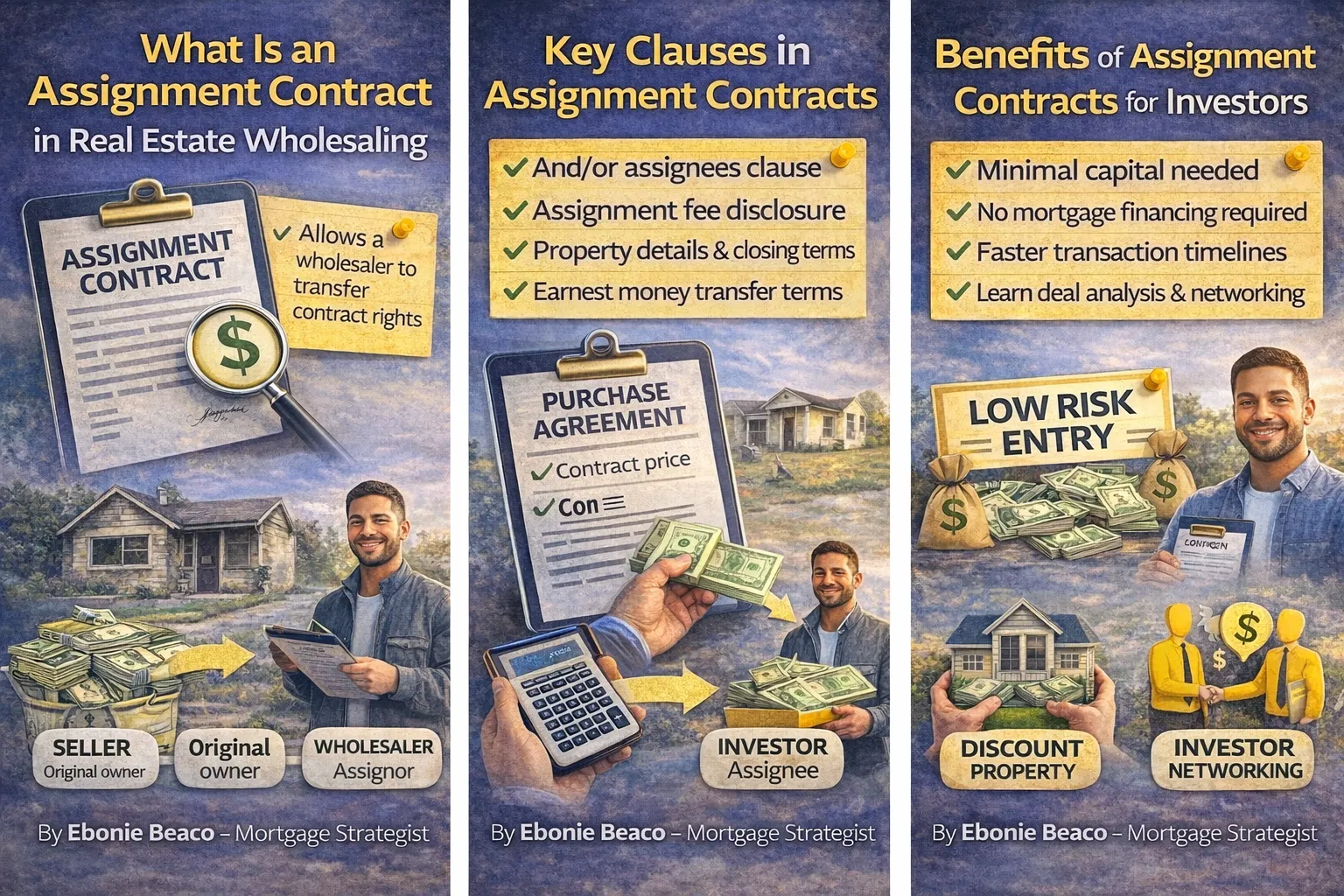
When drafting these agreements, you must ensure they are "assignable."
In states like Florida and Georgia, most standard contracts are assignable unless specifically stated otherwise, but you should always add "and/or assigns" after your name to be safe.
Explore more about legal terminology in our mortgage glossary.
Breaking Down the Assignment Fee
How do you actually get paid?
The assignment fee is the difference between the price you negotiated with the seller and the price your end buyer is willing to pay.
Assignment Fee: The profit a wholesaler earns for finding a deal and transferring the contract to a third party.
This fee is usually paid by the end buyer at the time of closing and is distributed by the title company or escrow officer.
Let’s look at a quick logistics example:
- You find a distressed home in Atlanta for $200,000.
- You sign a contract with the seller.
- You find a fix-and-flip investor who wants the home for $215,000.
- You assign the contract for a $15,000 fee.
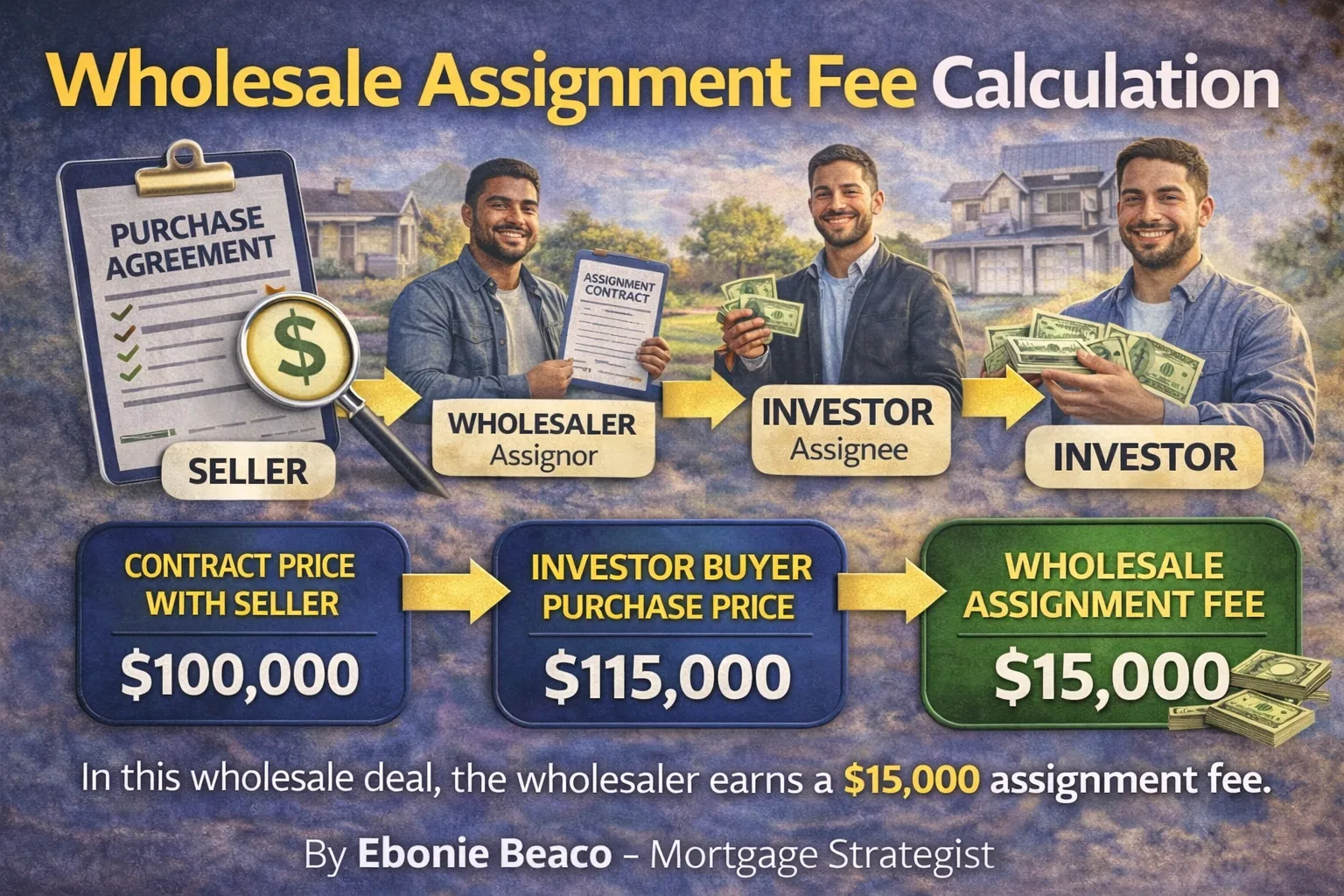
In this scenario, your end buyer will need to bring the full $215,000 (plus closing costs) to the table.
They might use a Fix and Flip Loan or a Bridge Loan to cover the acquisition and renovation costs.
Regional Logistics: Atlanta, Florida, and California
Each of these markets has its own rhythm and legal landscape.
Atlanta, Georgia
The Atlanta market is currently a goldmine for wholesalers because of its diverse neighborhood profiles and strong investor demand.
- Focus Areas: Keep an eye on suburbs like Milton and Alpharetta for high-end flips, or the Southside for rental portfolio builders.
- Logistics Tip: Georgia is an "attorney state," meaning a real estate attorney must oversee the closing.
- LLC Formation: It is highly recommended to operate through an LLC in Georgia to protect your personal assets.

Florida (Miami, Orlando, Tampa)
Florida is a "title company state," and the logistics often revolve around finding a "wholesaler-friendly" title agency.
- Transparency: Some title companies are hesitant to work with assignments, so you need to build a "rolodex" of professionals who understand the double-closing or assignment process.
- Market Velocity: Deals move fast here, especially with the influx of out-of-state investors looking for DSCR Rental Property opportunities.
California (Los Angeles, San Diego, Bay Area)
The logistics in California are more complex due to higher price points and stricter disclosure requirements.
- Capital Requirements: Because California homes are expensive, your "earnest money deposit" (EMD) might be higher, requiring more skin in the game.
- Non-QM and Creative Financing: Many end buyers in CA use Non-QM Mortgage Loans or Bank Statement Loans to fund their purchases.
- Disclosure: Be incredibly transparent with your sellers about your intent to assign the contract to avoid legal pushback.
Double Closings: When Assignments Aren't Enough
Sometimes, the logistics of an assignment don't work: perhaps the fee is so large that the seller might get upset, or the buyer's lender doesn't allow for assignment fees on the HUD-1 statement.
Double Closing: A transaction where the wholesaler buys the property from the seller and immediately sells it to the end buyer in two separate back-to-back closings.
This method keeps your profit private and is often required by certain traditional lenders.
Transactional Funding: A short-term, often 24-hour loan used by wholesalers to facilitate a double closing.
This allows you to show "proof of funds" and close on the first leg of the deal before immediately selling to your end buyer.
If your end buyer is using a standard Home Purchase loan, they might be restricted from paying an assignment fee.
In these cases, the double closing is your best logistical friend.
Sourcing the End Buyer: The Financing Connection
The most important part of wholesaling logistics is knowing that your end buyer can actually close.
A deal is only as good as the financing behind it.
Most of your buyers will be real estate investors.
They aren't looking for primary residence loans; they are looking for:
- DSCR Investor Loans: Loans based on the property’s income rather than the borrower’s personal income.
- Hard Money Loans: High-interest, short-term funding for quick acquisitions and renovations.
- Cash-Out Refinance: Investors often use equity from their current portfolio to fund the cash purchase of your wholesale deal.
Jump in and learn about DSCR rental property loans to better understand what your buyers need.
Analyzing the Deal Logistics
Before you put a property under contract, you have to run the numbers.
If the math doesn't work for the investor, the deal won't move.
After Repair Value (ARV): The estimated value of a property after all necessary renovations and improvements have been completed.
This figure is the North Star for every fix-and-flip investor you work with.
Maximum Allowable Offer (MAO): The highest price a wholesaler can offer a seller while still leaving room for renovations, holding costs, and an assignment fee.
Calculating this correctly ensures you don't overpay and get stuck with a contract you can't move.
You can use our mortgage calculators to help your end buyers estimate their potential carrying costs.
The Wholesaler's Tech Stack
To manage the logistics of multiple deals in different states, you need the right tools.
- CRM: Track your leads in Atlanta, FL, and CA in one place.
- PropStream or BatchLeads: Source distressed properties and pull data on motivated sellers.
- DocuSign: Essential for getting real estate wholesale contracts signed remotely.
- Proof of Funds (POF): You will need this to show sellers you are a serious buyer, even if you plan to assign the deal.
Avoiding Common Logistical Pitfalls
Many new wholesalers fail because they ignore the small details.
- The "No-Buyer" Trap: Never put a property under contract if you don't have a solid lead on a buyer or a very long inspection period.
- Communication Gaps: Keep the seller informed. If they feel ignored, they might back out or sell to someone else.
- Wrong Closing Agent: Ensure your title company or attorney knows exactly how an assignment of contract works.
If you are an investor looking to fund a deal you just found from a wholesaler, or if you are a homeowner looking to access equity to start your wholesaling journey, we can help.
Access our online forms to get started on a pre-approval.
https://www.homeloansnetwork.com/online-forms
Final Thoughts on Wholesaling Strategy
Wholesaling is a business of movement.
You are moving contracts, moving capital, and moving properties from people who don't want them to people who do.
By mastering the logistics in high-demand areas like California, Florida, and Atlanta, you position yourself as a vital player in the real estate ecosystem.
Whether you are looking to scale your current wholesaling business or you are a landlord looking to expand your portfolio with wholesale deals, understanding the financing side is key.
Investors who use DSCR loans or HELOCs to fund these deals often find more success because they can close quickly and reliably.
Schedule a 1 on 1 at https://calendly.com/homeloansnetwork
Ebonie Beaco
Mortgage Strategist | Senior Loan Officer
Home Loans Network powered by Loan Factory Inc.
NMLS #2389954
HomeLoansNetwork.com
312-392-0664