The Ultimate Guide to Wholesaling Logistics: Everything You Need to Close Deals in Florida
Wholesaling real estate is often described as the entry point for many investors because it requires little of your own capital. However, the simplicity of the concept masks a complex logistical engine. To succeed in competitive markets like Florida, California, or Atlanta, you have to move beyond just finding a house; you have to master the legal and financial paperwork that keeps the deal together.
At Home Loans Network, we see the backend of these transactions daily. Whether you are assigning a contract to a fix-and-flip investor or preparing for a double closing, the logistics of the deal dictate your reputation and your profit.
Understanding the Florida Wholesaling Landscape
Wholesaling is perfectly legal in the Sunshine State, but it is a transparent process. In Florida, you are not selling a property; you are selling the equitable interest in a purchase contract.
Equitable Interest: A legal concept where a party has the right to obtain full ownership of a property based on an executed contract, even if the title has not yet transferred. Practical application: This allows you to market the contract itself to a buyer without being a licensed real estate agent.
To keep your operations compliant, you must clearly state that you are the buyer in the original contract and that you intend to assign that contract to a third party. Florida law requires transparency to ensure you aren't acting as an unlicensed broker.
The Core Logistics: Real Estate Wholesale Contracts
The most critical piece of equipment in your toolkit is the contract. A standard "As-Is" residential contract is common in Florida, but for wholesaling, you need specific language to ensure the deal can actually move.
The Assignment Clause
Without an assignment clause, your deal is stuck. This clause must explicitly state that the contract is "assignable."
Assignment of Contract: A legal procedure where the original party (the wholesaler) transfers their rights and obligations under a real estate contract to a new party (the end buyer). Practical application: This document is what you actually sell to your cash buyer to collect your assignment fee.
The Inspection Period
In Florida, a 7 to 14-day inspection period is standard. This is your "exit strategy" window. If you cannot find a buyer within this timeframe, the inspection contingency allows you to cancel the contract and protect your earnest money deposit.
The Earnest Money Deposit (EMD)
Expect to put down a deposit. In Florida, a $500 to $1,000 deposit is typical for lower-priced homes, while 1% of the purchase price is standard for higher-value properties. This shows the seller you are a serious participant.
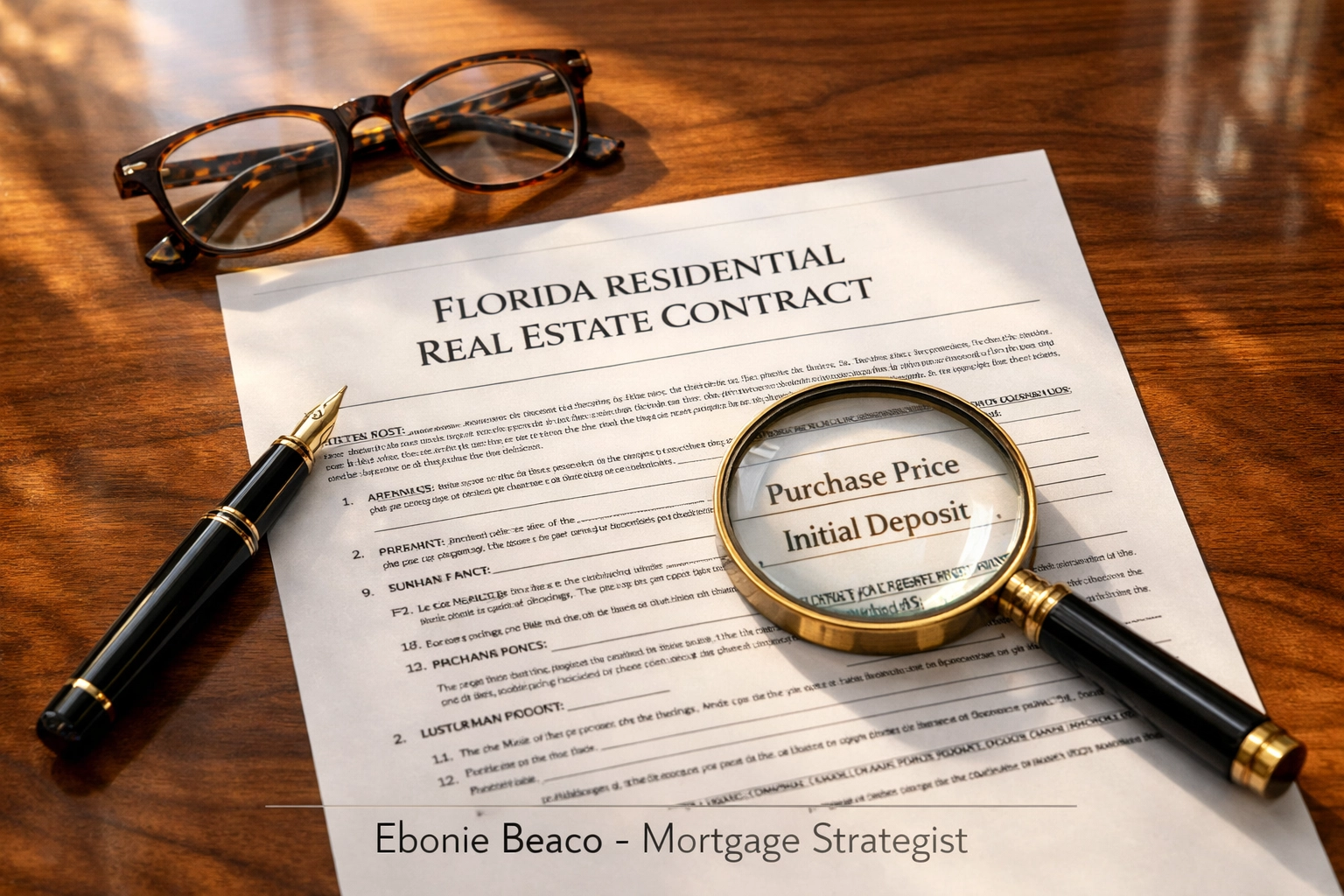 Visual: A sample breakdown of a Florida real estate contract highlighting the Assignment Clause and Inspection Period sections.
Finding the Right Properties in High-Demand Hubs
While this guide focuses on Florida, the logistics apply across our other service areas like Atlanta, Georgia, and various cities in California. The goal is to find distressed assets where the owner needs a quick exit.
Explore these strategies for finding deals:
- Driving for Dollars: Physically looking for vacant or neglected homes in neighborhoods like Little Havana in Miami or the historic districts of Jacksonville.
- The MLS: Search for listings that have been active for more than 60 days or those marked "Cash Only" or "As-Is."
- Direct Mail: Sending postcards to out-of-state owners who may no longer want the responsibility of a Florida rental property.
Analyzing the Numbers: The MAO Formula
Before you sign any contract, you must know your Maximum Allowable Offer (MAO). Overpaying is the fastest way to lose a buyer.
After-Repair Value (ARV): The estimated market value of a property after all necessary renovations and repairs have been completed. Practical application: Investors use ARV to determine if the potential profit margin justifies the purchase and renovation costs.
The Math in Action
The standard industry formula is: ARV × 70% − Repair Costs − Your Assignment Fee = MAO
Let’s look at a real-world scenario for a property in Orlando:
- ARV: $350,000
- 70% Rule: $245,000
- Estimated Repairs: $45,000
- Your Desired Fee: $15,000
- Maximum Allowable Offer: $185,000
If you can get the seller to agree to $180,000, you have built in a cushion for yourself or the end buyer.
 Visual: An investment analysis chart showing the MAO calculation: $350k ARV, 70% factor, $45k repairs, and the resulting offer price.
Closing Strategies: Assignment vs. Double Closing
The logistics of how you get paid generally fall into two categories. Each has its own benefits depending on the size of your fee and the sensitivity of the parties involved.
1. Assignment of Contract
This is the most common method. You find a buyer, they sign your assignment agreement, and they pay the assignment fee directly to you at the time of closing.
- Pros: Low closing costs; no need for personal funding.
- Cons: The seller and buyer both see exactly how much you are making.
2. Double Closing
A double closing involves two separate transactions. You buy the property from the seller (A to B) and immediately sell it to your buyer (B to C).
- Pros: Keeps your profit private; better for large fees (e.g., $30,000+).
- Cons: Higher closing costs; requires "transactional funding" or your own cash for a few hours.
3. Wholetailing
This is a hybrid approach often seen in California and Florida markets. You purchase the property, do very minor "lipstick" repairs (like cleaning and paint), and list it on the MLS to reach a wider pool of buyers, including those using traditional financing.
 Visual: A comparison table side-by-side showing the workflow of a Contract Assignment versus a Double Closing.
Building a Bulletproof Buyer’s List
Your logistics aren't complete until you have someone to buy the contract. A buyer's list is a database of active real estate investors looking for their next project.
Jump in and build your list by:
- Attending REIA Meetings: Real Estate Investor Associations in cities like Tampa or Atlanta are goldmines for networking.
- Connecting with Hard Money Lenders: Lenders know who is actively buying and who has the funds.
- Checking Public Records: Look for recent cash sales in the neighborhood where your subject property is located.
When you find a buyer, ensure they have their financing in order. Many of these buyers utilize DSCR Investor Loans to scale their portfolios.
DSCR Loan: A Debt Service Coverage Ratio loan that qualifies an investor based on the property’s ability to generate enough rental income to cover the mortgage payment, rather than the borrower's personal income. Practical application: Professional investors use these to close quickly on wholesale deals without the red tape of traditional bank loans.
Managing the Closing Process
In Florida, the closing usually happens at a title company or an attorney’s office. You need to work with an "investor-friendly" title company that understands how to handle assignments and double closings.
Access the following checklist for a smooth closing:
- Submit the Contract: Send the original purchase agreement to the title company immediately.
- Verify the EMD: Ensure the title company has received your earnest money.
- Deliver the Assignment Agreement: Once you find a buyer, get the signed assignment to the title company.
- Confirm Buyer Funds: Ensure your buyer has provided their proof of funds or a pre-approval letter for a Fix and Flip Loan or bridge financing.
- Review the Settlement Statement: Check the HUD-1 or ALTA statement to ensure your assignment fee is listed correctly.
Logistics in California and Georgia
While Florida is a major focus, wholesaling in California and Georgia requires slightly different logistical adjustments.
- California: Market prices are significantly higher, meaning assignment fees are often larger, but the competition is fierce. Double closings are more frequent here to maintain privacy on high-margin deals.
- Atlanta, GA: The market moves incredibly fast. You need a highly organized system and a title company that can move as quickly as the investors.
Moving Beyond Wholesaling
Many wholesalers eventually transition into being the "end buyer" themselves. By keeping the deal, you capture the long-term appreciation and rental income. This often involves using a Cash-Out Refinance strategy or a HELOC to fund future acquisitions.
If you are a wholesaler who has found a deal you want to keep for your own portfolio, or if you are a cash buyer looking to finance your next acquisition, the right mortgage strategy is essential. Understanding the nuances of DSCR Investor Loans can help you scale from one deal a year to one deal a month.
Compare your financing options and see how professional leverage can transform your wholesaling business into a full-scale real estate empire.
Schedule a 1 on 1 at https://calendly.com/homeloansnetwork
Ebonie Beaco
Mortgage Strategist | Senior Loan Officer
Home Loans Network powered by Loan Factory Inc.
NMLS #2389954
HomeLoansNetwork.com
312-392-0664