The Ultimate Guide to Wholesaling Logistics: Closing Deals Like a Pro from Florida to California

Wholesaling real estate often feels like a high-stakes game of connect-the-dots. You find a distressed property, secure it under contract, and then find a buyer who wants to take it over for a fee. It sounds simple on paper, but the logistics of moving a deal from a motivated seller in Miami to a fix-and-flip investor in Los Angeles requires a sharp eye and even sharper paperwork.
Whether you are operating in the heart of Atlanta or navigating the coastal markets of California and Florida, understanding the flow of a wholesale transaction is the difference between a five-figure payday and a deal that falls apart at the closing table. At Home Loans Network, we see investors at every stage of their journey, and many of our most successful landlords started right where you are: mastering the art of the wholesale.
The Logistics: Moving Deals Across State Lines
Logistics in wholesaling refers to the systematic management of the transaction lifecycle, from lead generation to the final distribution of funds. It involves coordinating sellers, buyers, title companies, and attorneys across different time zones and legal jurisdictions.
When you are wholesaling virtually: meaning you might be sitting in Chicago while closing a deal in Orlando: your logistics must be airtight. You need a reliable boots-on-the-ground contact to take photos, a mobile notary to handle signatures, and a title company that understands the nuances of real estate wholesale contracts.
In high-volume corridors like the path between Florida and California, wholesalers often treat their deals like inventory. Much like the vehicle transport markets that move cars across Interstate 10, real estate wholesalers move equitable interest in properties. You are essentially a transaction coordinator who happens to have a financial stake in the outcome.

The Anatomy of Real Estate Wholesale Contracts
A real estate wholesale contract is a legally binding agreement between a seller and a wholesaler that grants the wholesaler the right to purchase the property or assign that right to another party.
Assignment of contract: A legal maneuver where the original buyer (the wholesaler) transfers their rights and obligations under a purchase agreement to a new buyer (the end investor). You use this to "sell" your position in the deal without ever actually taking title to the property.
To protect yourself, your contract must include a "Right to Assign" clause. Without this, you are stuck buying the house yourself, which might be a problem if you do not have the liquidity ready. You also need to ensure your inspection contingency period is long enough to find an end buyer but short enough that the seller does not feel like you are wasting their time.
Key Clauses for Every Wholesale Contract
- Inspection Period: The window of time you have to walk away if the deal does not pencil out.
- Assignment Clause: Explicit permission to pass the deal to a third party.
- Closing Date: A firm timeline that keeps all parties moving forward.
- Earnest Money Deposit (EMD): The "skin in the game" you put down to show the seller you are serious.
Explore our loan process to see how end buyers eventually secure the funds to take these properties off your hands.
Closing Strategies: Assignment Fee vs. Double Closing
There are two primary ways to get paid in the wholesaling world. Each has its pros and cons depending on the size of your profit and the transparency you want to maintain with your parties.
1. The Assignment Fee
This is the most common method. You sign a contract with the seller for $200,000, and you find a buyer for $215,000. You assign the contract to the buyer, and the title company cuts you a check for $15,000 at closing. The downside? The seller and the buyer both see exactly how much you are making. If your fee is $50,000, a seller might get cold feet, thinking they left too much money on the table.
2. The Double Closing
In a double closing, you actually buy the property and sell it immediately afterward. There are two separate transactions (A-to-B and B-to-C). This keeps your profit private. However, you will have to pay two sets of closing costs, and you may need "transactional funding": a short-term loan that lasts only a few hours: to pull it off.

Regional Playbook: California, Florida, and Atlanta
Navigating different states requires a "chameleon" approach to your logistics. What works in a Chicago suburb might not fly in a California beach town.
California (CA)
California is a high-priced market. While the assignment fees can be massive (think $50k to $100k on a single deal), the competition is fierce. Many wholesalers here focus on jumbo loans territory, sourcing distressed luxury assets for high-end flippers. Transparency is key here, as California has strict disclosure laws.
Florida (FL)
Florida is a "hot" market with a high volume of out-of-state investors. Because of the high number of retirees and second-home owners, you will often deal with probate and inherited properties. Mobile notaries are your best friend in Florida, especially when the seller is living in a different county than the property.
Atlanta, Georgia (GA)
Atlanta is a hub for fix-and-flip investors and those building rental portfolios. Many wholesalers in Atlanta work closely with investors looking for DSCR investor loans to turn wholesale deals into long-term rentals. Georgia is an attorney state, meaning an attorney must oversee the closing, unlike California or Florida where title companies often take the lead.
The Math Behind the Assignment
Let's look at how a typical wholesale deal might look in a market like Atlanta or a mid-sized Florida city. Imagine you find a property that needs some love.
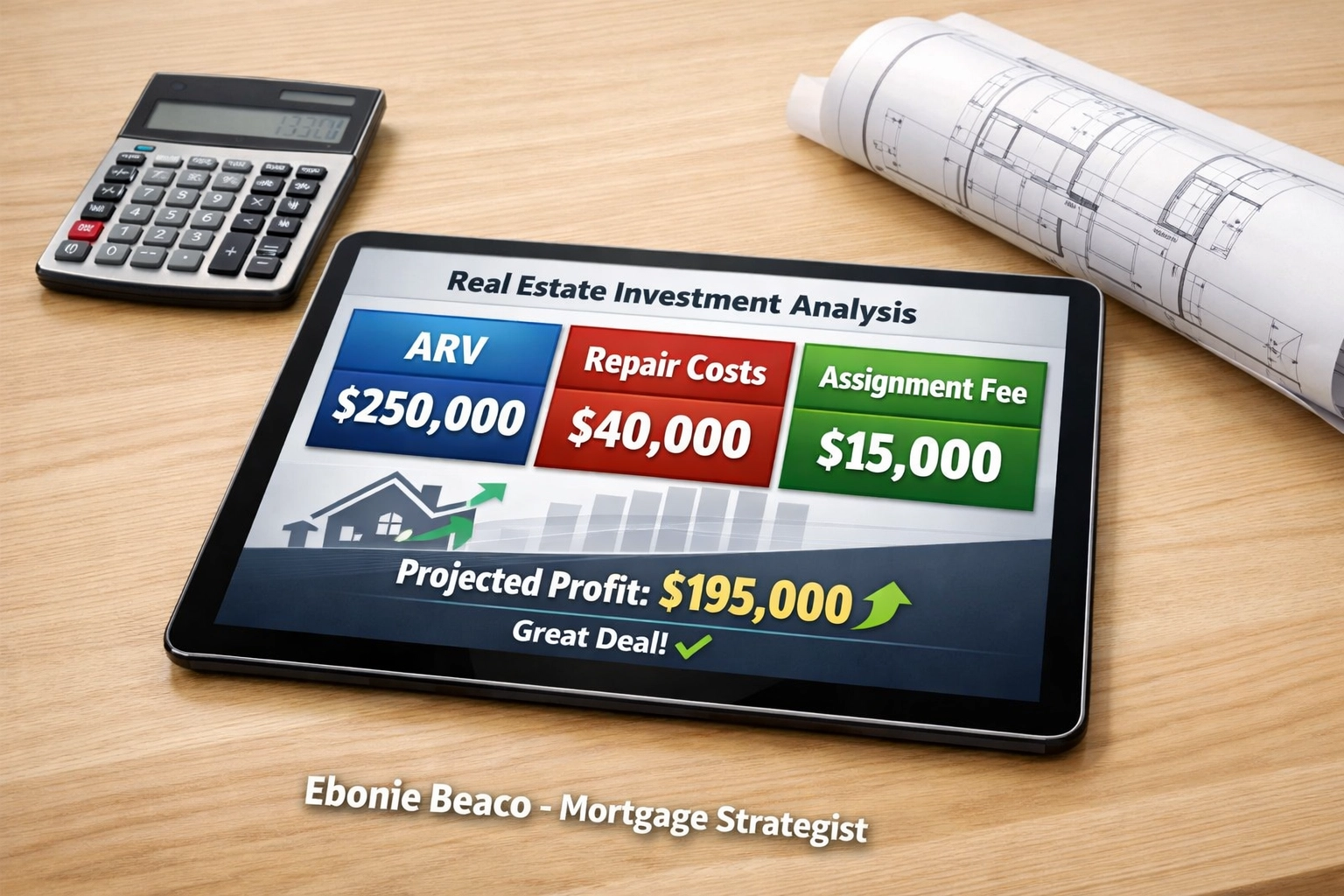
Property Analysis Example:
- After Repair Value (ARV): $400,000
- Estimated Repairs: $60,000
- Fixed Costs (Holding/Closing): $20,000
- Investor Profit Goal: $40,000
- Maximum Allowable Offer (MAO): $280,000
If you negotiate the purchase price with the seller at $260,000, and your end buyer is willing to pay $275,000, your Assignment of Contract fee is $15,000.
| Line Item | Amount |
|---|---|
| Seller Contract Price | $260,000 |
| End Buyer Purchase Price | $275,000 |
| Gross Assignment Fee | $15,000 |
| Marketing/Logistics Costs | $2,000 |
| Net Profit | $13,000 |
This $13,000 profit is achieved without you ever needing to qualify for conventional loans or put down a 20% deposit.
Scaling Your Game: From Wholesaler to Portfolio Owner
Wholesaling is a great way to build capital, but it is "active" income. You only get paid when you close a deal. Many wholesalers eventually transition into being the "end buyer" themselves. They start using their assignment fees to fund down payments on rental properties.
Jump in and explore landlord loans if you are ready to stop passing deals and start keeping them. Using a DSCR (Debt Service Coverage Ratio) loan allows you to qualify for financing based on the property’s rental income rather than your personal debt-to-income ratio. This is the ultimate "level up" for any wholesaler.
If you already own property and want to move into wholesaling or bigger investments, you might consider a cash-out refinance to tap into your existing equity. This provides the "dry powder" needed to put down earnest money on multiple wholesale deals at once.
Navigating the Legal Landscape
Wholesaling is perfectly legal, but you must do it correctly. You are not selling a house; you are selling a contract. In many states, including Illinois and Florida, performing too many "unlicensed" real estate activities can get you into hot water.
Always ensure you are acting as a principal in the transaction. This means you have a valid, equitable interest in the property. Avoid "co-wholesaling" unless you have a clear joint venture agreement in place. Professionalism in your logistics protects your reputation and your wallet.
Access our mortgage basics guide to understand how the financing side works, so you can better vet your end buyers. Nothing kills a wholesale deal faster than an end buyer whose financing falls through at the last minute.

Final Thoughts on Wholesaling Logistics
Closing deals like a pro from Florida to California requires a blend of marketing, negotiation, and administrative discipline. You are the glue that holds the transaction together. By mastering real estate wholesale contracts and the nuances of the assignment of contract, you position yourself as a valuable asset to the real estate ecosystem.
Whether you are looking to flip your first contract or you are ready to use your profits to buy your own rental portfolio using VA loans or FHA loans, we are here to help you navigate the financing side of the equation.
If you have questions about how to finance your next big investment or want to see how your wholesale profits can help you qualify for a long-term loan, reach out to us today.
Schedule a 1 on 1 at https://calendly.com/homeloansnetwork
Ebonie Beaco
Mortgage Strategist | Senior Loan Officer
Home Loans Network powered by Loan Factory Inc.
NMLS #2389954
HomeLoansNetwork.com
312-392-0664