The Ultimate Guide to Wholesale Logistics: Everything You Need to Succeed from CA to FL
Wholesaling real estate is often described as the "fast track" to making money in property investment. While that sounds great on a podcast, the reality on the ground from the coast of California to the humid suburbs of Florida is a bit more complex. It isn’t just about finding a distressed house; it’s about the logistics of the deal, the ironclad nature of your contracts, and knowing how to navigate state-specific rules.
Whether you are virtually wholesaling in Atlanta from your home office in San Diego or hitting the pavement in Miami, you need a strategy that moves as fast as the market does. This guide breaks down the essential logistics of real estate wholesaling, focusing on the paperwork, the profits, and the regional nuances that can make or break your assignment fee.
The Foundation: Wholesale Logistics Definitions
To succeed, you have to speak the language fluently. Here are the core concepts you need to master.
Real estate wholesale contracts: A legally binding agreement between a seller and a wholesaler that grants the wholesaler the right to purchase the property at a specific price. This document is your primary asset, as it allows you to control a property without actually owning it yet.
Assignment of contract: A legal clause or separate document that transfers the rights and obligations of the original purchase agreement from the wholesaler to an end buyer. This is the mechanism that allows you to collect a check at closing for finding the deal.
Assignment fee: The profit margin a wholesaler earns by selling their interest in a purchase contract to a third-party investor. You earn this by bridging the gap between a motivated seller and a cash-rich buyer.
Double closing: A transaction where the wholesaler actually purchases the property from the seller and then immediately sells it to the end buyer in a second, back-to-back closing. This strategy is often used to keep large assignment fees private or when the original contract is not assignable.
Mastering the Paperwork: The Assignment of Contract
The logistics of a wholesale deal live and die by the contract. If your paperwork is sloppy, your deal will fall apart at the title company. In high-stakes markets like California and Florida, clarity is your best friend.
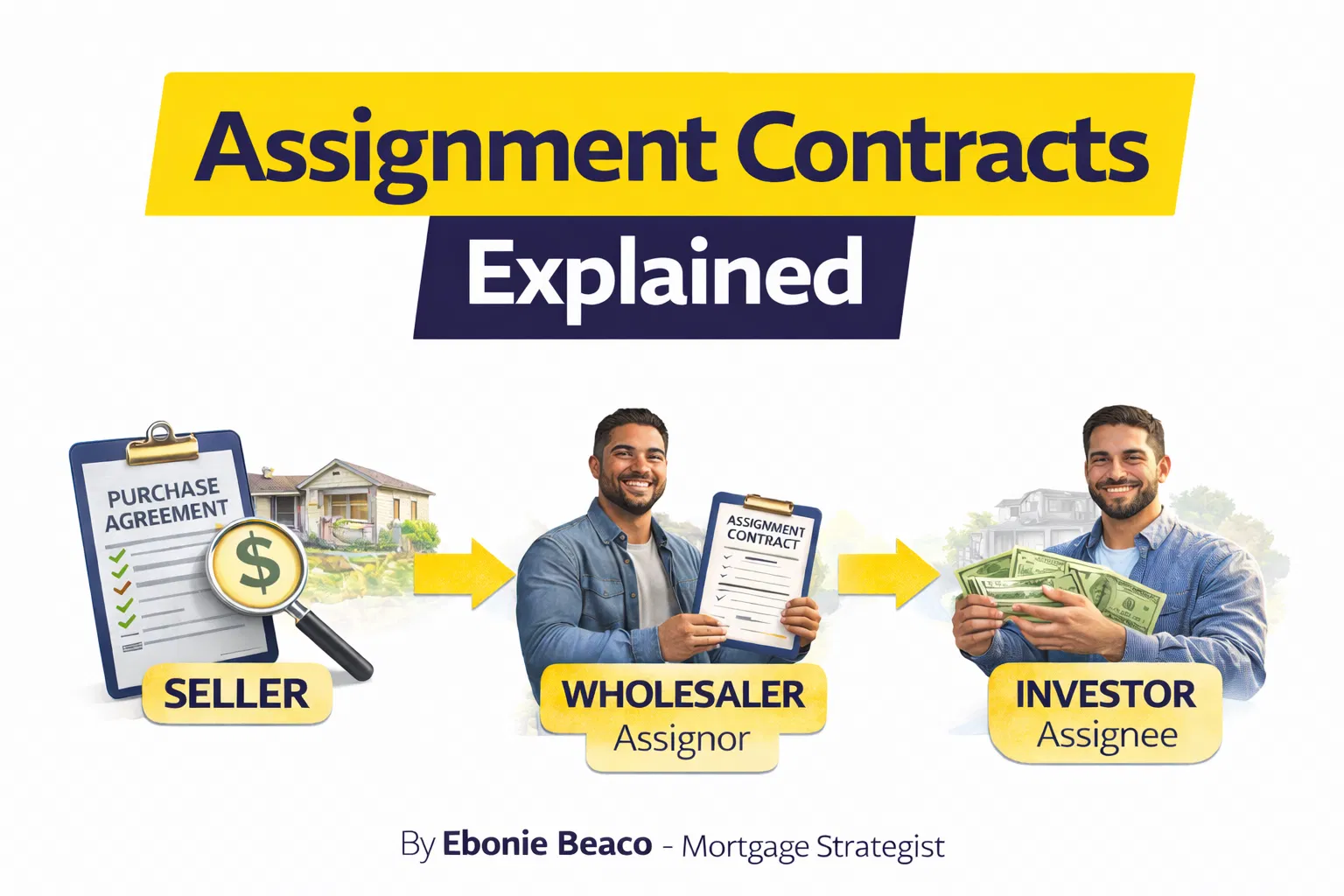
When you are putting a property under contract, your "Buyer" line should typically read "[Your Name and/or Assigns]." This simple phrase signals to the seller: and the title company: that you intend to potentially transfer this contract to someone else.
Explore the key elements that must be in your wholesale real estate contracts:
- Inspection Period: Ensure you have enough time to market the deal to your buyers list.
- Earnest Money Deposit (EMD): This shows you are serious but should be kept as low as possible to minimize your risk.
- Right to Assign: A clear statement that the buyer has the right to assign the contract to another entity.
If you are unsure about the legal language in a specific state, it is always wise to visit our legal page to understand how we approach compliance and disclosures.
The Money: Assignment Fees vs. Double Closings
One of the biggest logistical hurdles for wholesalers is deciding how to get paid. Transparent wholesaling is becoming the norm, but sometimes a double closing is the better strategic move.
The Standard Assignment
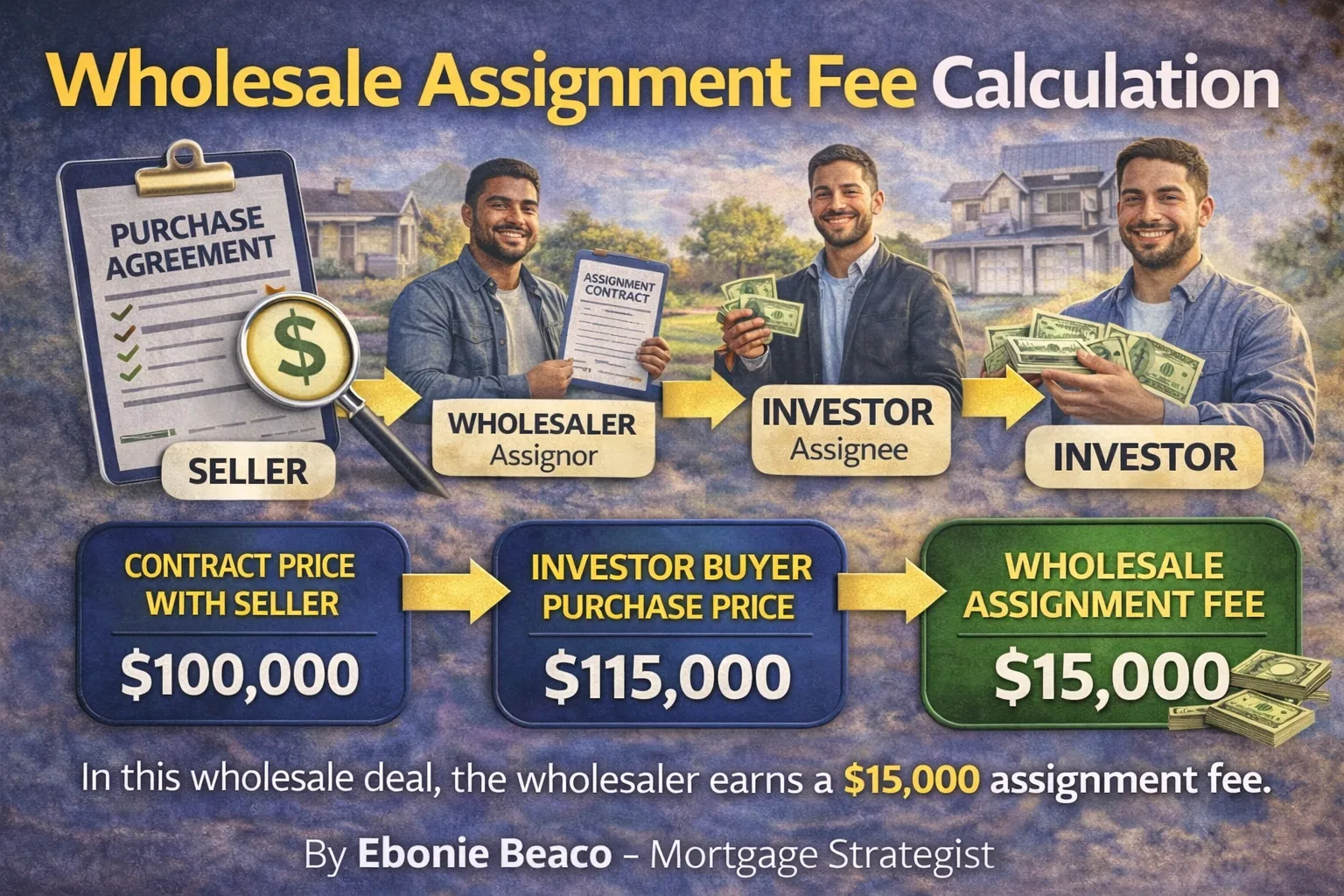
In a standard assignment, the end buyer sees exactly how much you are making. If you put a house under contract for $200,000 and assign it for $215,000, the buyer knows you are pocketing $15,000. For most "fix and flip" investors, this is perfectly fine as long as the numbers still work for their ROI.
The Double Closing Strategy
If you have a massive spread: say, a $50,000 assignment fee: the end buyer might get "buyer's remorse" seeing your profit. In this scenario, you perform a double closing.
Compare the two methods:
- Assignment: Lower closing costs, transparent fees, faster process.
- Double Closing: Higher privacy, two sets of closing costs, requires "transactional funding" or your own cash for a few hours.
If you are an investor looking to move beyond wholesaling and into "buy and hold," you might want to look into DSCR investor loans to help you keep those deals for yourself rather than assigning them.
Regional Logistics: CA, FL, and the Atlanta Market
Wholesaling isn't a "one size fits all" game. The logistics change as you cross state lines.
California: The High-Stakes Game
California is known for high property values and complex disclosures. Wholesalers here often deal with sophisticated sellers and high EMD requirements. The logistics involve heavy digital marketing and a deep understanding of probate or off-market lead generation.
Florida: The Investor's Playground
Florida is a massive market for wholesalers due to the high volume of distressed properties and a robust community of out-of-state investors. Florida title companies are generally very familiar with "assignment of contract" logistics, making the closing process smoother than in many other states.
Atlanta, Georgia: The Wealth Machine
Atlanta has become a powerhouse for real estate investment. The logistics in Atlanta often involve navigating specific city ordinances and a very competitive landscape. Homeowners in Atlanta are increasingly aware of their property's value, so your strategy must be data-driven.

A Real-World Financial Example
Let’s look at a typical wholesale deal in a market like Orlando, FL or Atlanta, GA to see how the numbers play out.
The Scenario:
- Property Value (ARV): $350,000
- Estimated Repairs: $50,000
- Wholesaler’s Purchase Price: $210,000
- End Buyer’s Purchase Price: $235,000
- Assignment Fee: $25,000
In this case, the wholesaler secures the property for $210,000. They find a "fix and flip" investor who is happy to pay $235,000 because, after $50,000 in repairs, the investor still has a significant equity cushion.

(Graphic Idea: A balance sheet showing the $210k contract, the $235k assignment, and the $25k fee being paid at the closing table.)
To help analyze these deals quickly, you can use our mortgage calculators to reverse-engineer what an end buyer's financing might look like.
Scaling Your Wholesale Business with Better Financing
Many wholesalers eventually want to transition into being the "end buyer" themselves. Why give away a $25,000 assignment fee when you could make $100,000 in equity? This is where strategic mortgage solutions come into play.
Access these programs to level up your game:
- Fix and Flip Loans: Short-term funding for acquisition and renovation.
- Bridge Loans: Temporary financing to close quickly before securing long-term debt.
- Cash-Out Refinance: Once you’ve rehabbed a property, use this to pull your capital back out for the next deal.
Jump in to the process by visiting our loan process page to see how we help investors move from wholesaling to portfolio building.

Essential Checklist for Wholesale Logistics
Before you send that next contract to a title company, run through this checklist:
- Verify the Title: Ensure there are no unexpected liens that will eat into your buyer's profit.
- Confirm Assignment Language: Double-check that your contract allows for "assignment of contract."
- Secure the EMD: Make sure your end buyer has put down a non-refundable deposit to ensure they don't walk away.
- Coordinate with the Title Company: Ensure they are "investor-friendly" and understand how to handle assignment fees.
Wholesaling is a business of movement. The more efficient your logistics, the more deals you can close each month. By focusing on solid contracts and understanding the unique needs of markets like California, Florida, and Atlanta, you position yourself as a professional strategist rather than just another "middleman."
If you are ready to take your real estate investment strategy to the next level, we are here to help you navigate the financing side of the equation. Whether you are looking for your first home purchase or you are a seasoned investor scaling a rental portfolio, the right strategy makes all the difference.
Schedule a 1 on 1 at https://calendly.com/homeloansnetwork
Ebonie Beaco
Mortgage Strategist | Senior Loan Officer
Home Loans Network powered by Loan Factory Inc.
NMLS #2389954
HomeLoansNetwork.com
312-392-0664