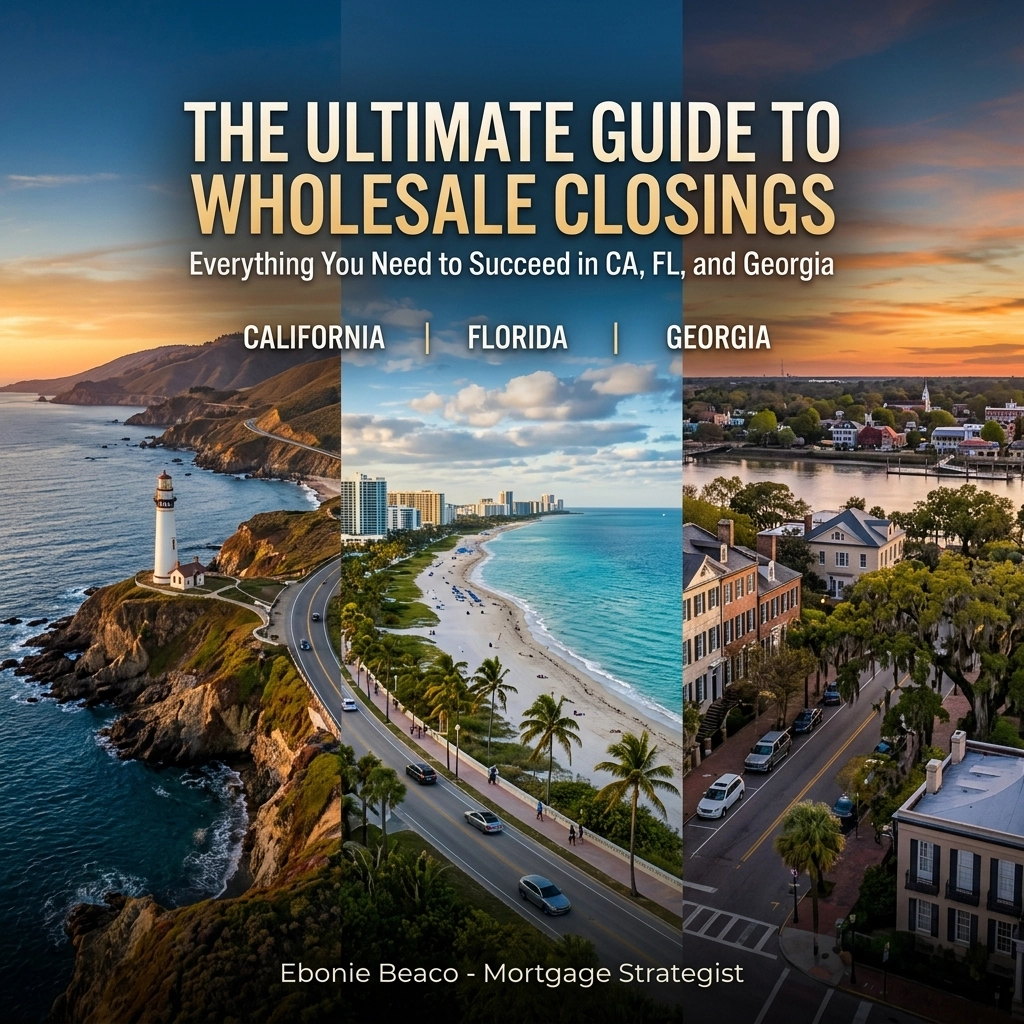
The Ultimate Guide to Wholesale Closings: Everything You Need to Succeed in CA, FL, and Georgia
Wholesaling real estate is often described as the fastest way to enter the investment market without needing significant capital or a high credit score.
While the concept is straightforward, the logistics of closing a deal involve a specific set of legal and financial maneuvers.
Successful wholesalers understand that the profit is not just in finding a discounted property but in navigating the paperwork with transparency and precision.
Whether you are operating in the busy streets of Atlanta, the coastal markets of Florida, or the high-stakes environment of California, understanding wholesale closings is essential for long-term growth.
Defining the Wholesale Closing
Assignment of contract: A legal mechanism where the original buyer (wholesaler) transfers their rights and obligations in a purchase agreement to a new buyer (investor) before the closing date.
You use this strategy to monetize your ability to source deeply discounted off-market deals.
Double closing: A transaction involving two separate settlement statements where the wholesaler buys the property from the seller and immediately resells it to an end buyer on the same day.
Jump in and explore the specific mechanisms that make these deals move from a signed contract to a funded assignment fee.

Choosing Your Strategy: Assignment vs. Double Closing
The route you take depends on your profit margins, your state's regulations, and the preferences of your end buyer.
The Standard Assignment
In a standard assignment, you never actually take title to the property.
You sign a contract with a seller and then find an investor who wants to purchase that property for a higher price.
You then execute an assignment of contract for a fee, which is paid to you by the end buyer at the time of closing.
This method is popular because it requires almost no capital, but it does require total transparency regarding your fee.
The Double Closing Process
A double closing involves two distinct transactions: Transaction A-B (Seller to Wholesaler) and Transaction B-C (Wholesaler to End Buyer).
This strategy is often used when the assignment fee is exceptionally large and the wholesaler prefers to keep their profit confidential from both parties.
While this protects your margins, it often requires "transactional funding" or a "bridge loan" to cover the purchase of the first leg before the second leg funds.
Explore our loan programs to see how bridge financing supports these complex transitions.
Wholesaling in California: Transparency and Compliance
California is a highly regulated market where the distinction between "wholesaling" and "acting as an unlicensed broker" is closely monitored.
To stay compliant, you must focus your marketing efforts on the contract you hold, rather than the property itself.
California law requires that you have a "clear and equitable interest" in the property, which is established once you have a fully executed purchase agreement.
The Two-Day Rule
In many California jurisdictions, title companies require a specific timeline for double closings.
State title transfer regulations often necessitate that the A-B and B-C transactions occur over a two-day period to ensure proper recording and deed verification.
Working with an investor-friendly escrow company is vital here to ensure your funds are handled correctly without triggering red flags.
Wholesaling in Florida: The Power of Disclosure
Florida remains one of the most active markets for real estate wholesalers due to its high volume of distressed inventory and investor demand.
In cities like Miami, Orlando, and Tampa, the key to a smooth wholesale closing is the "Assignment" clause in your initial contract.
Assignment clause: A specific provision in a real estate contract that explicitly permits the buyer to transfer their interest in the agreement to another party.
If your contract is not assignable, you are forced into a double closing or a more complex entity transfer.
Always include language that states the buyer is "John Doe and/or assigns" to keep your options open from day one.
Investors in Florida often use DSCR investor loans to fund the end-purchase, making it easier for them to close quickly on your assigned deals.
Georgia Requirements: The Attorney-State Nuance
Georgia operates as an "attorney state," meaning a licensed attorney must oversee every real estate closing.
This differs from California and Florida, where title companies and escrow officers handle the majority of the paperwork.
In Atlanta and across Georgia, the attorney acts as the neutral party who ensures all disclosures are met and funds are disbursed according to the settlement statement.
Marketing the Contract, Not the House
Georgia regulators are clear: unless you have a real estate license, you cannot market a property you do not own.
However, you can market the contractual right to buy that property.
Your marketing materials should clearly state that you are selling an equitable interest in a contract, not acting as a listing agent for the seller.
Most Georgia wholesale closings take between 7 and 30 days, depending on how quickly the attorney can clear the title.
The Financial Anatomy of a Wholesale Deal
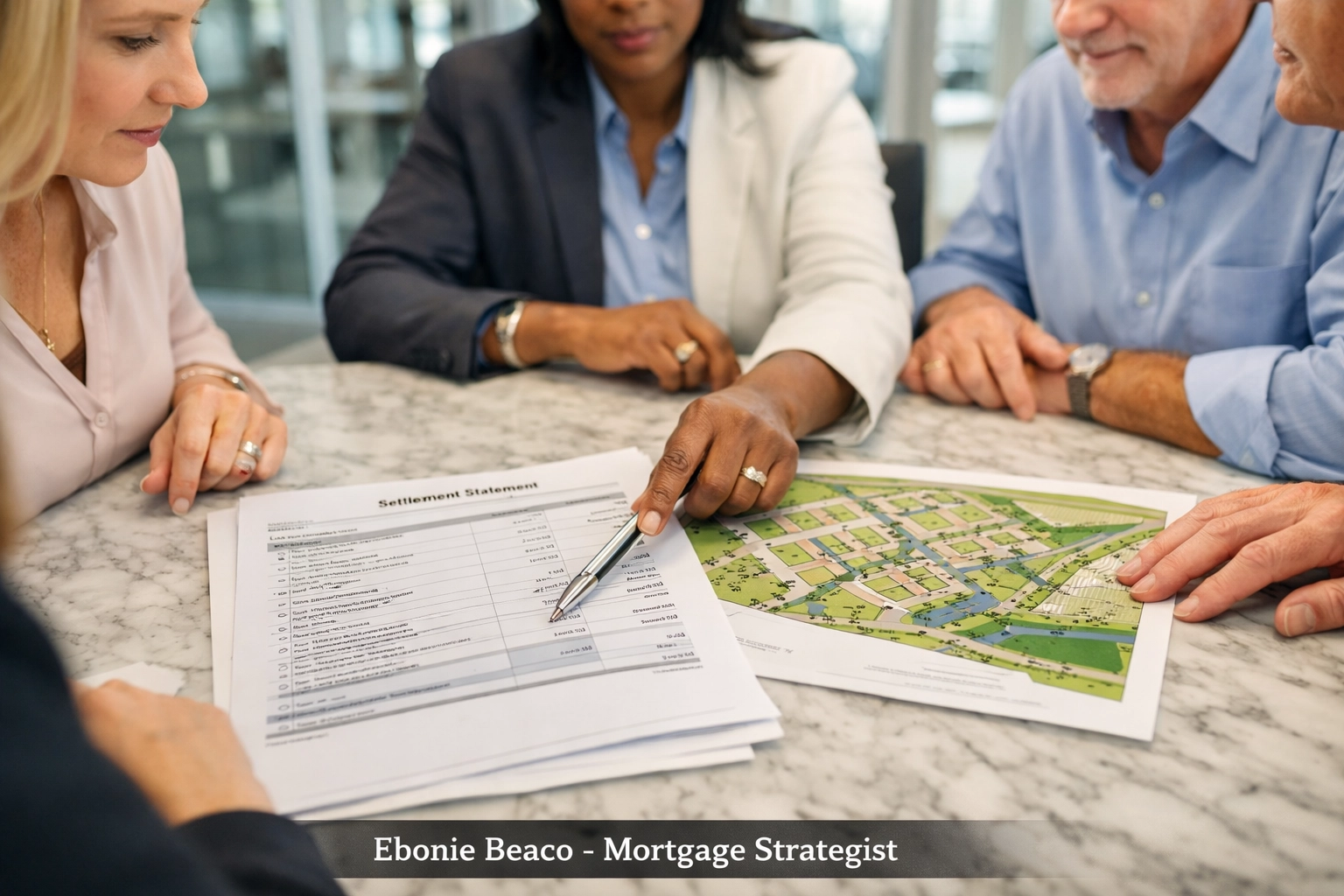
To understand how the money moves, let's look at a practical example of a deal in a market like Atlanta or Tampa.
Imagine you find a distressed property with an After Repair Value (ARV) of $450,000.
Wholesale Deal Example:
- Purchase Price (A-B): $275,000
- Estimated Repairs: $60,000
- End Buyer Purchase Price (B-C): $290,000
- Assignment Fee: $15,000
In this scenario, you secure the property for $275,000 and assign it to a fix-and-flip investor for $290,000.
The investor is happy because they are buying at roughly 64% of the ARV (minus repairs), and you earn $15,000 for your effort in sourcing the deal.
The end buyer might use a fix and flip loan to cover both the acquisition and the renovation costs.
| Component | Amount |
|---|---|
| Seller Price | $275,000 |
| Wholesaler Assignment Fee | $15,000 |
| Investor Acquisition Cost | $290,000 |
| Renovation Budget | $60,000 |
| Total Investor Basis | $350,000 |
| Projected ARV | $450,000 |

Real Estate Wholesale Contracts: Key Provisions
Your contract is your primary tool for securing profit.
It must be robust enough to protect you while remaining attractive to a seller.
Inspection period: A specified timeframe during which the buyer can conduct due diligence and withdraw from the contract without penalty.
Use a generous inspection period (15–21 days) to give yourself enough time to market the deal to your buyer's list.
Earnest money deposit (EMD): A sum of money provided by the buyer to demonstrate "good faith" in the transaction.
In wholesaling, you want to keep your EMD as low as possible ($100 to $1,000) to minimize your risk if you cannot find an end buyer.
Access our mortgage basics page to learn more about how these terms impact the broader closing process.
Funding Options for Your End Buyers
As a wholesaler, your deal is only as good as your buyer's ability to close.
Being able to recommend reliable financing options makes your deals much more attractive.
If your buyer is looking to keep the property as a rental, a DSCR rental property loan is often the best fit.
These loans qualify the property based on its rental income rather than the buyer's personal debt-to-income ratio (DTI).
For those doing a quick renovation, hard money loans or bridge loans provide the speed necessary to meet your wholesale deadlines.
Compliance Best Practices
Maintaining a transparent business model ensures you avoid legal complications in any state.
- Disclose your role: Always inform the seller that you are a real estate investor and that you intend to make a profit.
- Don't over-promise: Be realistic with the seller about the timeline and the fact that you may assign the contract.
- Use licensed professionals: Always close with a reputable title company or a real estate attorney who understands wholesaling.
- Consult legal counsel: Real estate laws change frequently; review your contracts with an attorney in your specific state.
You can view our legal and privacy policy pages for more information on how we handle professional guidelines.
Scaling Your Wholesaling Business
Once you master the logistics of the wholesale closing, you can scale by building a robust "buyer's list."
Your buyer's list should consist of active fix-and-flip investors, buy-and-hold landlords, and even institutional funds.
Knowing what your buyers want: whether it's a jumbo loan eligible property or a small multi-family unit: allows you to reverse-engineer your marketing.
Check our mortgage calculators to help your potential buyers estimate their monthly payments and ROI before they commit to your deal.
Final Thoughts for Modern Wholesalers
The wholesale closing is the bridge between finding a deal and getting paid.
By mastering the assignment of contract and the double closing process, you position yourself as a valuable player in the real estate ecosystem.
Whether you are in California, Florida, or Georgia, transparency and local knowledge are your greatest assets.
If you have questions about how your buyers can secure financing or how to structure a deal for maximum fundability, reach out for guidance.
Schedule a 1 on 1 at https://calendly.com/homeloansnetwork
Ebonie Beaco
Mortgage Strategist | Senior Loan Officer
Home Loans Network powered by Loan Factory Inc.
NMLS #2389954
HomeLoansNetwork.com
312-392-0664