The Ultimate Guide to Scaling Your Real Estate Wholesale Empire: Everything You Need to Succeed in Atlanta

You probably remember the rush of your first assignment check.
The process of finding a distressed property, locking it under contract, and passing it to a cash buyer for a quick fee feels like discovering a hidden cheat code in the economy.
But there is a massive difference between doing a few deals a year and running a scalable business.
To build a true wholesale empire in a competitive market like Atlanta, you must move away from the "hustle" and toward "systems."
Scaling requires a shift in mindset from being a solo practitioner to becoming a strategist who understands market cycles, financing structures, and operational efficiency.
Understanding the Landscape of Atlanta Real Estate Wholesaling
Atlanta has long been a crown jewel for real estate investors.
The combination of corporate growth, a diverse economy, and relatively predictable housing stock makes it an ideal playground for wholesalers.
Unlike older markets with highly varied architecture, much of Atlanta's suburban growth occurred in predictable waves, particularly in the 1990s.
This predictability allows you to standardize your repair estimates and underwriting.
When you know that a certain neighborhood consists primarily of 3-bedroom, 2-bathroom ranch homes built in 1994, you can estimate renovation costs with surgical precision.
This level of local knowledge is what separates successful wholesalers from those who struggle to find buyers for their contracts.
The Georgia Advantage vs. California and Florida
While Atlanta is your primary focus, understanding how it compares to other high-activity states like California and Florida is vital for context.
In California, price points are significantly higher.
A single wholesale deal in Los Angeles or San Francisco might net a $50,000 assignment fee, but the barriers to entry are steep, and the competition is fierce.
Florida markets, such as Miami or Orlando, offer high turnover and consistent demand from out-of-state retirees and vacation rental investors.
However, Florida properties often face higher insurance costs and specific climate-related maintenance issues that can complicate a wholesaler's pitch to cash buyers.
Atlanta offers a middle ground: high demand, manageable entry costs, and a robust pool of local investors looking for Atlanta investment property.
Whether you are looking at neighborhoods in DeKalb County or exploring the rapid growth in Gwinnett, the fundamentals remain strong.
Core Pillars of a Scalable Wholesale Business
Scaling is not about working more hours; it is about making your hours more productive.
To grow, you need to focus on three specific areas: lead generation, team building, and transaction management.
Systematizing Lead Generation
You cannot scale if you are manually searching the MLS every morning.
Successful wholesalers use automated systems to filter for motivated sellers.
This includes direct mail campaigns, cold calling scripts, and digital advertising targeting distressed homeowners.
CRM (Customer Relationship Management): A digital system used to track interactions with potential sellers and buyers to ensure no deal falls through the cracks.
Explore different CRM tools to see which fits your workflow, but ensure it allows for automation and follow-up reminders.

Building Your Team
As you grow, you must delegate tasks that do not require your specific expertise.
- Acquisitions Manager: This person handles the initial contact with sellers, views properties, and signs contracts.
- Dispositions Manager: Their sole job is to build and maintain the buyer's list and sell your contracts to investors.
- Transaction Coordinator: They handle the paperwork, communicate with title companies, and ensure the closing stays on track.
By offloading these roles, you can focus on high-level strategy and market analysis.
Advanced Strategies: From Wholesaling to Wholetailing
As you scale, you will encounter deals that are too good to simply flip for an assignment fee.
This is where "wholetailing" comes in.
Wholetailing: A strategy where an investor purchases a distressed property, performs very minor cosmetic repairs (like trash-out or professional cleaning), and lists it on the MLS for a higher price rather than assigning the contract.
Wholetailing often results in much larger profits than a standard wholesale fee, but it requires access to capital.
This is where understanding mortgage products and bridge financing becomes essential.
Leveraging Short-Term Financing
To execute a wholetail or a fix-and-flip, you need quick access to funds.
Many wholesalers transition into full-scale investing by using hard money loans.
Hard Money Loan: A short-term, asset-based loan secured by real estate, typically used by investors to purchase and renovate properties quickly.
These loans prioritize the value of the property over the borrower's credit score, making them perfect for the fast-paced Atlanta market.
You can also look into bridge loans to cover the gap between purchasing a property and securing long-term financing or selling it.
Accessing these funds allows you to take down deals yourself, increasing your credibility with sellers and your ultimate profit margin.
The Role of DSCR Loans in Your Buyer's Strategy
To be a successful wholesaler, you must understand what your buyers want.
Most of your buyers are likely buy-and-hold investors or fix-and-flip pros.
In today's market, many of these investors are moving toward DSCR Investor Loans.
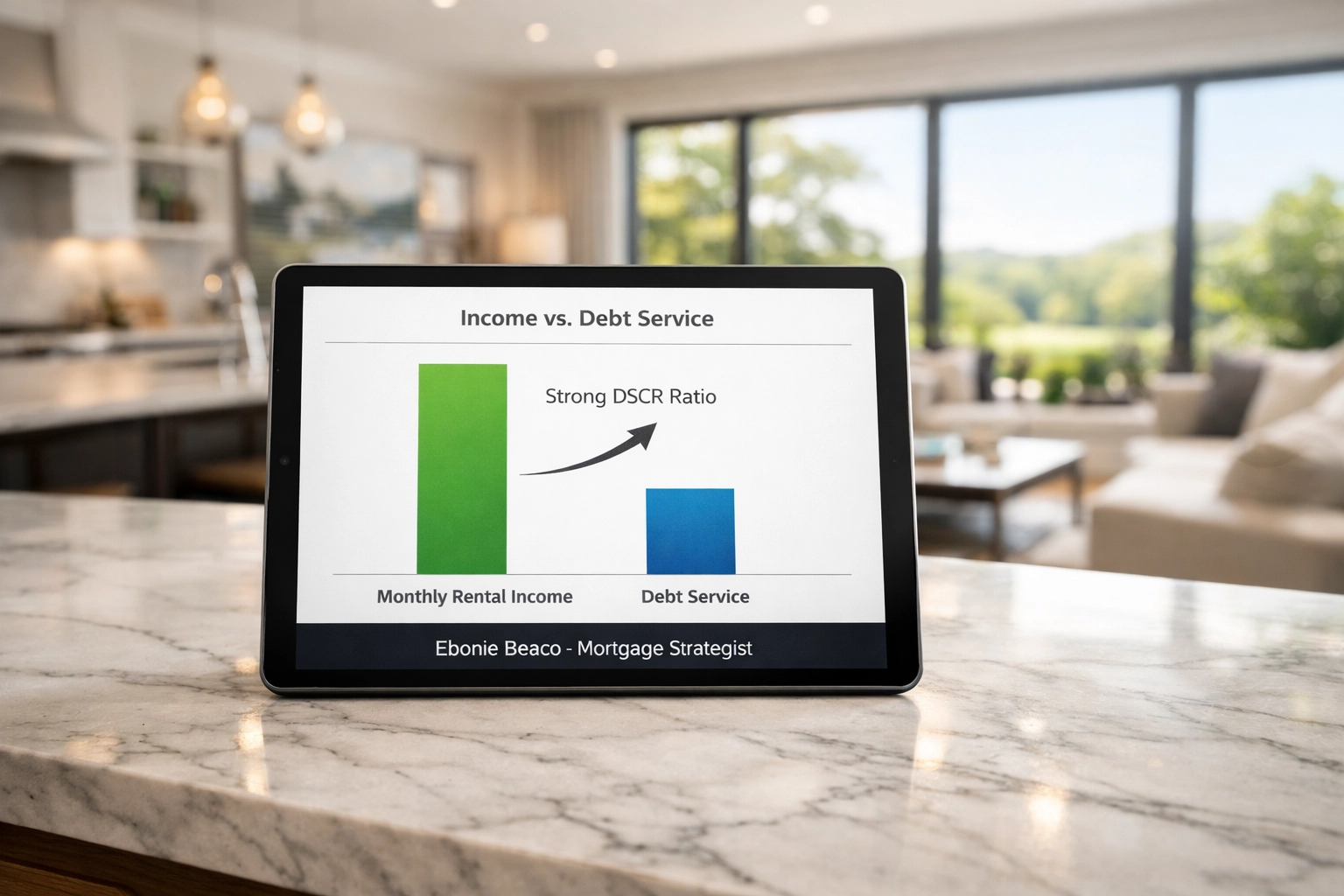
DSCR (Debt Service Coverage Ratio) Loan: A mortgage program for real estate investors that qualifies the borrower based on the rental income generated by the property rather than their personal income or debt-to-income ratio.
Jump in and learn how these work because it helps you sell your deals.
If you can present a wholesale deal to a buyer and show them that the projected rent easily covers the DSCR requirements, you have done half their work for them.
You can compare loan programs to see how different financing options impact an investor’s return on investment (ROI).
Financial Case Study: The Atlanta Wholetail
Let's look at a real-world scenario of how scaling into wholetailing works in the Atlanta suburbs.
Imagine you find a distressed property in Marietta with an After Repair Value (ARV) of $400,000.
The seller is willing to accept $250,000 for a quick cash closing.
Scenario A: Standard Wholesale
- Contract Price: $250,000
- Assignment Fee: $15,000
- Your Profit: $15,000 (Quick, low risk)
Scenario B: Wholetail with Bridge Financing
- Purchase Price: $250,000
- Bridge Loan (80% LTC): $200,000
- Down Payment: $50,000
- Minor Cleanup/Closing Costs: $10,000
- Resale Price on MLS (As-Is): $310,000
- Total Profit (after interest and commissions): ~$40,000
By using short-term financing, you nearly tripled your profit on the same lead.
Using tools like mortgage calculators can help you determine the exact interest carry costs to see if wholetailing is the right move for a specific deal.
Building a Bulletproof Buyer's List
A wholesale business is only as strong as its buyer's list.
In Atlanta, you should be networking with a wide range of investors, from local "mom and pop" landlords to large institutional funds.
Don't just collect email addresses.
Understand their criteria:
- What zip codes do they prefer?
- Do they want FHA-ready homes or total gut jobs?
- Are they looking for multi-unit properties or single-family homes?
By tailoring your deals to your buyers' specific needs, you increase your closing rate and decrease the time a contract sits on your desk.
Navigating Legal and Ethical Transparency
Transparency is a core value at Home Loans Network, and it should be a core value in your wholesale business too.
Always be clear with sellers about your intentions to assign the contract or purchase the home for a profit.
In Georgia, as in states like Illinois or Virginia, staying updated on local real estate regulations regarding wholesaling is non-negotiable.
Ensure your contracts are vetted by a real estate attorney and that you are complying with all local licensing requirements.
Providing a clear, professional experience for the seller ensures that you maintain a positive reputation in the community, which is essential for long-term scaling.
Technology and AI in Wholesaling
The current year, 2026, has seen a massive shift in how AI is used in real estate.
Top-tier wholesalers in Atlanta are now using AI to:
- Predict which homeowners are most likely to sell based on public data.
- Automate initial text and email outreach.
- Analyze photos of distressed properties to estimate repair costs instantly.
If you are still doing everything manually, you are falling behind.
Leverage modern tools to handle the heavy lifting so you can focus on building relationships and closing deals.
Final Steps for Your Atlanta Empire
Scaling your wholesale business requires a combination of local market expertise, standardized systems, and strategic financing.
Atlanta remains one of the best markets in the country for this model, provided you treat it like a business rather than a hobby.
Whether you are looking to refine your own portfolio or help your buyers find the perfect Atlanta investment property, understanding the financial mechanics is key.
If you or your buyers need guidance on how to fund these deals: whether through DSCR loans, fix-and-flip financing, or asset-based lending: reach out for a scenario review.
Schedule a 1 on 1 at https://calendly.com/homeloansnetwork
Ebonie Beaco
Mortgage Strategist | Senior Loan Officer
Home Loans Network powered by Loan Factory Inc.
NMLS #2389954
HomeLoansNetwork.com
312-392-0664