The Ultimate Guide to Scaling Real Estate Wholesale in CA and FL: Everything You Need to Succeed

Wholesaling real estate is often the gateway for many investors. It requires less capital upfront and offers a fast track to understanding how a deal actually comes together. But there is a massive difference between doing one deal a quarter and building a scalable business that generates consistent revenue month after month.
If you are operating in high-velocity markets like California and Florida, you already know the competition is fierce. Scaling real estate wholesale requires a blend of legal savvy, aggressive marketing, and the right financing partners. This guide explores the roadmap to taking your operations from a solo hustle to a streamlined investment machine.
Understanding the Landscape: California vs. Florida
Scaling requires you to understand the ground rules. Both California and Florida are powerhouse markets, but they treat unlicensed wholesalers differently. To scale safely, you must stay compliant.
The Florida Framework
Florida is a playground for wholesalers, but the state is specific about how you market your deals. Under Florida Statute Chapter 475.41, unlicensed individuals cannot market a property they do not own.
Contractual Right: This is the legal interest you hold in a purchase agreement. In Florida, you are not selling a house; you are selling the right to buy that house. When you scale, ensure your marketing materials explicitly state you are selling an equitable interest in a contract.
The California Compliance Check
California allows unlicensed wholesaling, but the penalties for "acting as an agent" without a license are steep. Fines can reach $20,000.
Double Closing: A transaction where the wholesaler purchases the property and immediately sells it to an end buyer in a separate closing. Scaling in California often involves double closings to protect your profit margins and maintain a high level of transparency with all parties involved.

Scaling Real Estate Wholesale: The Three Pillars of Growth
Moving from a side gig to a scaleable business involves shifting your focus from "doing the work" to "managing the systems." You cannot be the one pulling lists, cold calling, and walking through every property if you want to grow.
1. Lead Generation Systems
You cannot scale on word of mouth alone. You need a predictable flow of motivated sellers. This involves diversifying your outreach:
- Direct Mail: High cost but high intent.
- PPC and SEO: Catching sellers when they search for "sell my house fast."
- Propstream/ListSource: Pulling data on foreclosures, tax liens, and inherited properties.
2. Outsourcing Acquisitions and Dispositions
A scaled business separates the "buying" from the "selling."
- Acquisitions: These team members talk to sellers, negotiate prices, and lock up contracts.
- Dispositions: This team focuses solely on building a massive cash buyer list and moving those contracts quickly.
3. Efficient Disposition Channels
Your profit is only realized when the deal closes. Building a robust buyers list is non negotiable. You should constantly be networking with fix and flip investors and buy and hold landlords who use DSCR rental property loans to fund their portfolios.
Explore our mortgage basics to understand the financing your buyers are using.
Market Analysis: Why Atlanta is the Strategic Pivot
While you are scaling in California and Florida, many savvy wholesalers are looking toward the Southeast. Specifically, finding an Atlanta investment property has become a primary goal for many California-based investors looking for better entry prices and strong rental yields.
Atlanta offers a unique "Goldilocks" environment:
- Price Point: Significantly lower than Los Angeles or Miami.
- Growth: High corporate migration and a booming tech scene.
- Investor Demand: Huge appetite from institutional and mid-level investors.
If you are wholesaling in CA or FL, building a virtual wholesaling arm in Atlanta allows you to hedge against market volatility in higher-priced coastal regions.

Deal Structures for Scaled Operations
To scale, you need to be flexible with how you exit a deal. Sometimes an assignment works; other times, you need to hold the property for a minute.
Contract Assignment
This is the leanest way to scale. You agree to a price with a seller and "assign" that contract to a buyer for a fee. It requires zero capital, making it the most common way to start.
Double Closing
As your spreads get larger (think $50k+ fees), sellers or buyers might get cold feet if they see your profit. A double close uses bridge loans or transactional funding to buy the property in the morning and sell it in the afternoon.
Wholetailing
This is a hybrid strategy often used in Florida. You buy a distressed property, do absolutely zero work (or maybe just a quick trash out), and list it on the MLS to reach retail buyers or investors who don't shop off-market. This strategy often requires short-term financing like fix and flip loans.
Access more details on loan programs to see how different funding options impact your exit strategies.
The Financial Breakdown: Scaling a Deal
To understand the impact of scaling, let’s look at a typical wholesale deal vs. a wholetail deal in a market like Atlanta.
Scenario: Distressed Property in Atlanta, GA
- Market Value (After Repair): $350,000
- Purchase Price: $180,000
- Estimated Repairs: $60,000
- Investor Buy Price (70% Rule): $185,000
| Strategy | Action | Capital Required | Potential Profit |
|---|---|---|---|
| Wholesale Assignment | Assign contract to a flipper for $195,000 | $0 | $15,000 |
| Double Close | Buy for $180k, Sell for $200k | $180,000 (Transactional) | $20,000 (minus fees) |
| Wholetail | Buy for $180k, List on MLS for $230k | $180,000 (Bridge Loan) | $40,000 (minus carry) |
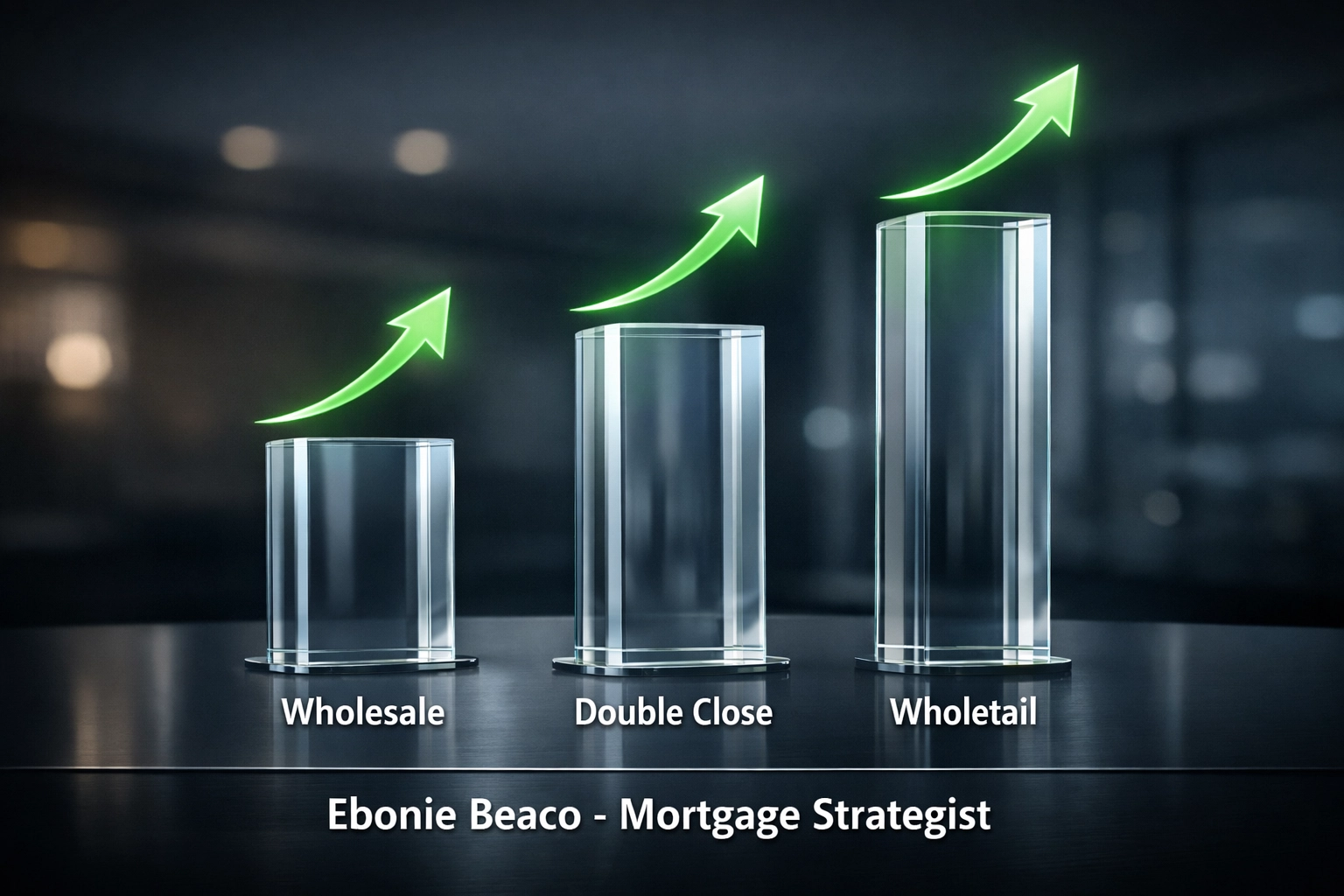
Using a bridge loan or a hard money loan allows you to take down these properties yourself, which often opens up much higher profit margins than a simple assignment fee.
Leveraging Financing to Grow
You cannot scale to the highest levels using only other people's contracts. Eventually, you will want to buy and hold or fix and flip some of these deals yourself. This is where professional mortgage strategy enters the picture.
DSCR Investor Loans: A loan based on the property’s cash flow rather than your personal income. These are perfect for wholesalers who want to transition into being a landlord. If you find a deal that is too good to pass off to another investor, you can use a DSCR loan to keep it for yourself.
Cash-Out Refinance: A strategy to pull equity from an existing property to fund new acquisitions. Once you have built up a small portfolio of rentals, a home refinance or a cash out refinance on an investment property can provide the liquid capital needed to ramp up your wholesaling marketing budget.
Jump in and book an appointment to discuss how your wholesale deals can turn into long-term wealth.
Common Pitfalls to Avoid While Scaling
Growth is exciting, but it brings risks. Transparently, here is where most wholesalers fail when trying to scale:
- Over-Leveraging: Don't take out high-interest loans on too many properties at once without a clear exit.
- Poor Data Management: If you aren't tracking your cost per lead and cost per contract, you aren't running a business; you're gambling.
- Ignoring the Legalities: As mentioned, California and Florida have specific rules. Always consult with a real estate attorney in your specific market.
- Losing Focus: Don't try to wholesale in ten states at once. Master CA, FL, or the Atlanta market before moving to the next one.

Final Thoughts for the Growing Investor
Scaling real estate wholesale is about moving from the role of a "finder" to the role of a "strategist." By implementing systems, understanding the legal nuances of your market, and leveraging the right financing, you can build a business that operates with or without you.
Whether you are looking to master the Florida "wholetail" or you want to expand into the Atlanta investment property market, having a clear financing plan is essential.
Schedule a 1 on 1 at https://calendly.com/homeloansnetwork
Ebonie Beaco Mortgage Strategist | Senior Loan Officer Home Loans Network powered by Loan Factory Inc. NMLS #2389954 HomeLoansNetwork.com 312-392-0664
If you are ready to explore how specialized investor loans can help you take down more deals, contact us today or start by using our mortgage calculators to run your next deal’s numbers.