The Ultimate Guide to Florida Fix and Flip Loans: Everything You Need to Succeed

Florida continues to be a primary destination for real estate investors in 2026. Whether you are eyeing a distressed bungalow in Tampa, a mid-century modern in Miami, or a suburban family home in Orlando, the right financing can determine your success.
Navigating the landscape of Florida fix and flip loans requires a clear understanding of how short-term capital works. Unlike traditional bank mortgages, these loans are designed for speed and flexibility, allowing you to secure a property and fund renovations before the competition even gets an appraisal back.
Explore the nuances of fix and flip financing and how you can leverage these tools to scale your investment portfolio across the Sunshine State.
Understanding Fix and Flip Loans
A fix and flip loan is a short-term financing solution used by real estate investors to purchase and renovate a property with the intent of selling it for a profit. These are often referred to as hard money loans because they are secured by the value of the real estate rather than the personal credit history of the borrower alone.
In the current market, speed is your greatest asset. Accessing capital quickly allows you to act on distressed properties, foreclosures, or off-market deals that traditional lenders won't touch due to the property's condition.
Key Definitions for Investors
After-Repair Value (ARV)
The estimated market value of a property after all planned renovations and improvements are completed.
Practical Application: Lenders use the ARV to determine the total loan amount they are willing to provide, often capping the loan at 70% to 75% of this figure.
Loan-to-Cost (LTC)
The ratio of the loan amount compared to the total cost of the project, including purchase price and construction.
Practical Application: High-leverage loans might offer up to 90% LTC, meaning you only need to bring a 10% down payment for the entire project cost.
Rehab Holdback
A portion of the loan funds set aside specifically for construction costs, released in stages known as draws.
Practical Application: You complete a phase of work, the lender inspects it, and then they release the funds to reimburse you for those specific costs.
Jump in and explore the various loan programs available for your next project.
Why Florida is a Hotspot for Flippers in 2026
Florida has seen a significant shift in housing activity recently. While some areas are seeing price stabilization, the demand for updated, move-in-ready homes remains high. Investors are finding opportunities in markets where older inventory needs a complete overhaul to meet modern buyer expectations.
Florida fix and flip loans are specifically tailored to this environment. Lenders in Florida understand the local nuances: from hurricane-impact windows to specific roofing requirements: and factor these into the renovation budget.
While Florida is a major focus, many of our investors also look at Chicago fix and flip loans and California fix and flip loans. Each market has its own rhythm. For instance, Chicago investors often deal with shorter construction windows due to weather, while California flippers navigate higher entry prices and different regulatory environments.
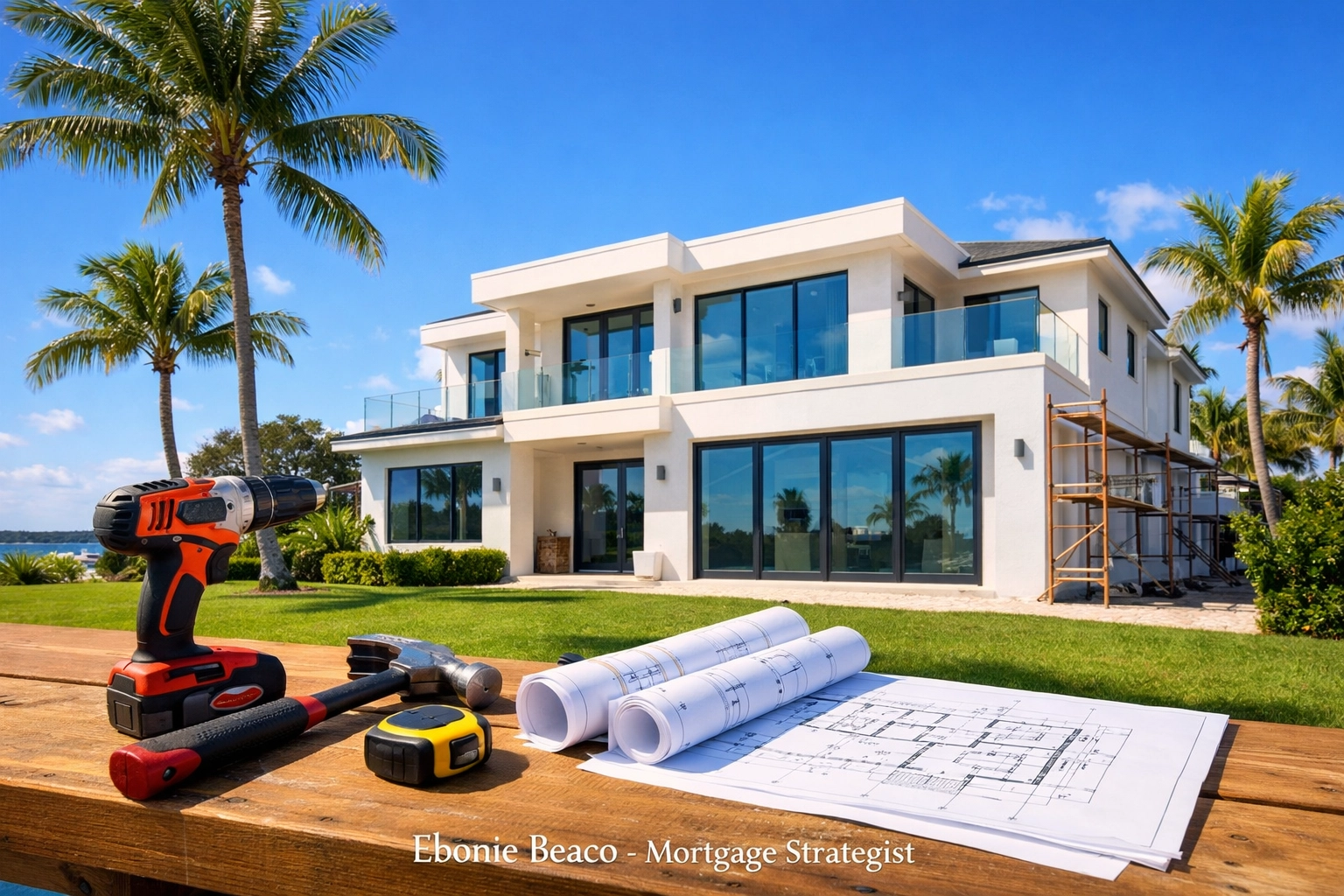
The Mechanics of a Fix and Flip Transaction
When you secure a fix and flip loan, the process differs significantly from a conventional home purchase. Most investors opt for an interest-only mortgage during the renovation phase to keep monthly carrying costs low.
The Application Process
- Property Identification: You find a distressed property and estimate the repair costs.
- Loan Submission: You provide the lender with the purchase contract and a detailed "Scope of Work" (SOW).
- Appraisal and Feasibility: The lender orders an "As-Is" and "As-Complete" appraisal to verify the ARV.
- Funding: Once approved, the lender funds the purchase price (minus your down payment) at the closing table.
- Renovation and Draws: You begin the work and request draws from the rehab holdback as milestones are met.
Access the loan process page to see a step-by-step breakdown of how we move from application to funding.
Financial Breakdown: A Real-World Florida Example
To understand how the numbers work, let’s look at a typical investment scenario in a city like Jacksonville or Orlando.
Imagine you find a property for $200,000. It needs $50,000 in work, and the projected ARV is $350,000.
| Category | Amount |
|---|---|
| Purchase Price | $200,000 |
| Renovation Budget | $50,000 |
| Total Project Cost | $250,000 |
| After-Repair Value (ARV) | $350,000 |
| Loan Amount (90% of Purchase + 100% of Rehab) | $230,000 |
| Down Payment Required | $20,000 |
| Interest Rate (Annual) | 10% |
| Monthly Interest Payment | ~$1,916 |
In this scenario, your total out-of-pocket for the purchase is $20,000 plus closing costs. If the project takes six months to complete and sell, your total interest paid would be roughly $11,500. After selling for $350,000 and paying off the $230,000 loan and selling costs, the potential profit margin is substantial.

Comparing Florida, California, and Chicago Fix and Flip Loans
Investors often diversify their portfolios across state lines. Understanding the regional differences in financing is vital.
California Fix and Flip Loans
California often requires higher loan amounts due to property values. Lenders here are comfortable with Jumbo loans or high-balance bridge loans. The competition is fierce, meaning speed and high leverage (LTC) are the most important factors for California investors.
Chicago Fix and Flip Loans
In the Illinois market, particularly Chicago, investors often focus on multi-unit properties. Financing a 2-4 unit "brick bungalow" or a greystone requires a lender familiar with local building codes and the BRRRR strategy (Buy, Rehab, Rent, Refinance, Repeat).
Florida Fix and Flip Loans
Florida loans often emphasize the "holdback" for specific exterior renovations. With the high volume of foreclosures in some Florida counties in 2026, lenders are looking for investors with a clear exit strategy: whether that is a quick sale or transitioning into a long-term landlord loan.
Qualification Requirements for 2026
While fix and flip loans are asset-based, lenders still evaluate the borrower to mitigate risk. Here is what you generally need to qualify for competitive rates:
- Credit Score: A minimum score of 660 is typically preferred, though some programs allow for lower scores with higher down payments.
- Experience: First-time flippers can get funding, but those with 3+ successful exits in the last 24 months often receive lower interest rates and higher leverage.
- Liquidity: You need enough cash for the down payment, closing costs, and to "float" the first phase of renovations before the first draw is released.
- Entity: Most fix and flip loans are business-purpose loans made to an LLC or Corporation, not an individual.
Compare your options and select a loan officer to discuss your specific experience level.
Common Exit Strategies
A fix and flip loan is a bridge. You need a way to pay it off before the term (usually 12 to 18 months) expires.
The Traditional Flip
You finish the renovation, list the property on the MLS, and pay off the loan with the proceeds from the sale. This is the most common path for investors focused on immediate capital gains.
The BRRRR Method
If you decide to keep the property as a rental, you would use a cash-out refinance or a DSCR loan to pay off the fix and flip loan. This allows you to recover your initial investment and hold the property for long-term cash flow and appreciation.
The Bridge to Long-Term
Sometimes, a project takes longer than expected. In these cases, investors may use a secondary bridge loan to "take out" the initial fix and flip loan, providing more time to find a buyer or a long-term tenant.

Strategic Advice for Florida Investors
The 2026 Florida market rewards those who are disciplined with their numbers. Avoid the temptation of over-improving a property beyond what the neighborhood support. Use mortgage calculators to run multiple scenarios, including a "worst-case" where the property sits on the market for three months longer than planned.
Transparency is vital when working with a lender. Be upfront about your experience and the condition of the property. A reliable mortgage strategist will help you navigate the "draw" process and ensure you have the capital when the contractors are ready for payment.
Explore the mortgage basics to ensure your foundational knowledge is solid before committing to a high-stakes flip.
Ready to Fund Your Next Florida Project?
Fix and flip investing is a high-reward endeavor that requires a reliable financial partner. Whether you are looking for Florida fix and flip loans, searching for capital in the Chicago area, or scaling in California, having a clear strategy and a transparent lender is the key to your success.
The real estate market moves fast. Having your financing lined up before you find the deal puts you in the strongest possible position to negotiate and win.
Schedule a 1 on 1 at https://calendly.com/homeloansnetwork
Ebonie Beaco
Mortgage Strategist | Senior Loan Officer
Home Loans Network powered by Loan Factory Inc.
NMLS #2389954
HomeLoansNetwork.com
312-392-0664