The Ultimate Guide to Building a Rockstar Cash Buyer List

Wholesaling real estate is a high-speed game. You find a deal, you lock it up, and then the clock starts ticking. To succeed, you need someone ready to jump on that deal immediately. That person is a cash buyer. Without a solid list of investors ready to close with their own funds, you are just a person with a contract and a looming deadline.
Building a rockstar cash buyer list is about creating a network that allows you to move properties in days, not months. Whether you are working the markets in Chicago, scouting deals in Florida, or looking for distressed properties in Alabama, your list is your most valuable asset.
Module 1: Understanding the Core Concepts
Before you start dialing numbers, you need to know exactly what you are looking for. Real estate wholesaling relies on specific participants and financial structures. Let’s break down the terminology you will encounter.
Cash Buyer Definition: An individual or entity with the liquid capital to purchase a property without a traditional mortgage contingency. Practical Application: Having these buyers on speed dial allows you to guarantee a fast closing to a motivated seller.
Wholesale Fee Definition: The spread between the price you negotiated with the seller and the price your cash buyer pays to take over the contract. Practical Application: This is your paycheck; a larger list of buyers often leads to higher fees because of increased competition for your deals.
Assignment of Contract Definition: A legal document that transfers the rights and obligations of a purchase agreement from the original buyer (you) to the end investor. Practical Application: This tool allows you to profit from a real estate transaction without ever taking title to the property yourself.
Proof of Funds (POF) Definition: A bank statement or letter showing that a buyer has enough liquid cash to complete a purchase. Practical Application: Always request this early to ensure you are not wasting time with "fake" cash buyers.
Explore more about the fundamentals of the industry by visiting Home Loans Network Mortgage Basics.
Module 2: Quality Over Quantity
Many new wholesalers brag about having thousands of names on their email list. The truth is, a list of 20 active, hungry investors is worth more than 2,000 people who just like to look at pictures of houses. You want "players," not "spectators."
Regardless of the size of your list, focus on active buyers. These are people who have closed on a property in the last 90 days. In hot markets like Virginia or Georgia, properties move fast. You need buyers who are prepared to act just as quickly.
Key Traits of a Rockstar Buyer:
- Decisive: They know their "buy box" and can say yes or no within 24 hours.
- Funded: They have the cash or a reliable hard money lender already lined up.
- Reliable: They don’t try to renegotiate the price at the last minute.
- Communicative: They pick up the phone when you call with a fresh deal.
 Visual: A comparison chart showing "The Spectator" vs. "The Rockstar Buyer." Text: Ebonie Beaco - Mortgage Strategist
Module 3: Sourcing Your Buyers
Finding these investors requires a mix of digital digging and old-school networking. You are essentially a detective looking for footprints left by previous cash transactions.
1. Analyze Public Records Look at recent sales in your target zip codes. Specifically, look for transactions where no mortgage was recorded. This indicates a cash sale. In many counties across Indiana and Michigan, these records are accessible online.
2. Leverage Networking Events Attend local Real Estate Investor Association (REIA) meetings. Jump in and introduce yourself. Don’t just ask for their email; ask what they are buying. Are they looking for "fix and flip" projects or "buy and hold" rentals?
3. Use Social Media Groups Facebook groups for real estate investors are gold mines. Search for "California Real Estate Investors" or "Illinois Landlords." When you see someone posting about a successful renovation, reach out.
4. Connect with Title Companies Title companies see every side of the transaction. They know who the heavy hitters are. While they cannot give out private information, they can often facilitate an introduction if you have a solid deal on the table.
5. Bandit Signs The "We Buy Houses" signs you see on the side of the road in Arkansas or Missouri? Those are your competitors, but they are also your potential buyers. Call them. Tell them you are a wholesaler and ask if they are looking for more inventory.
If you are curious about how these buyers eventually refinance these properties, check out our Home Refinance section.
Module 4: The Script – Vetting Your Leads
When you find a potential buyer, you must vet them. You want to save time for both of you. Use a direct, casual approach to gather the data you need for your CRM (Customer Relationship Management) system.
Questions to Ask Every Potential Buyer:
- "What is your ideal purchase price range?"
- "Which zip codes or neighborhoods are you focusing on right now?"
- "How many units or properties are you looking to add this month?"
- "What is your preferred property type (Single Family, Duplex, 10+ Unit Apartments)?"
- "Do you use cash or private/hard money for your closings?"
By keeping a detailed log of these answers, you can send tailored deals to specific people. If you have a distressed duplex in Chicago, don't blast it to someone who only buys luxury flips in Florida. Targeting your outreach builds trust and keeps you out of the "spam" folder.
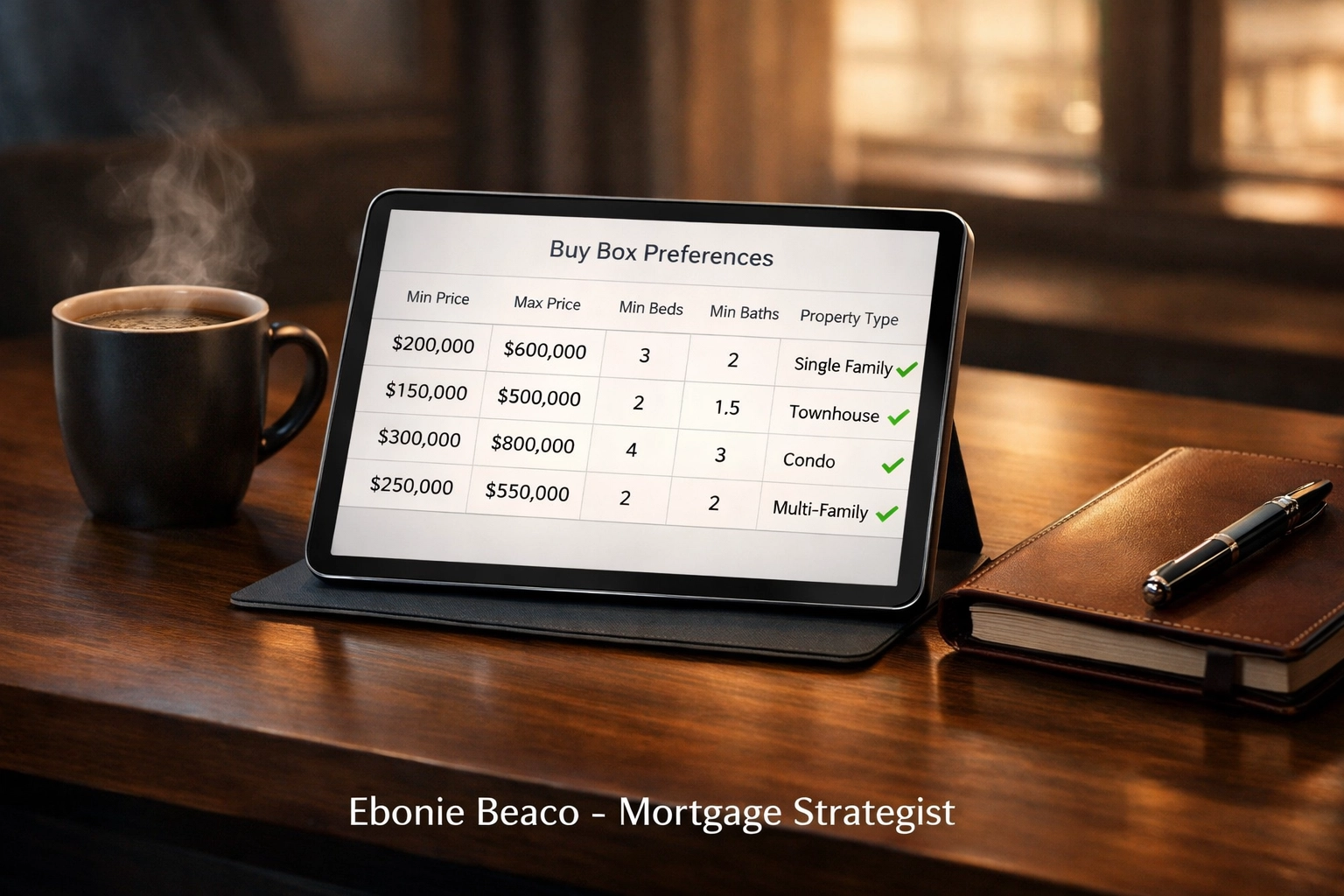 Visual: A sample CRM profile for a buyer showing their "Buy Box" preferences. Text: Ebonie Beaco - Mortgage Strategist
Module 5: Financing Strategies for Your Buyers
While they are "cash buyers," many investors eventually want to pull their capital back out to buy the next property. This is where professional mortgage strategy enters the picture. Understanding the back-end financing makes you a more valuable partner to your buyers.
DSCR Investor Loans Definition: A Debt Service Coverage Ratio loan qualifies a borrower based on the rental income of the property rather than personal income or tax returns. Benefit: This allows your buyers to scale their portfolios quickly without hitting traditional lending limits.
Hard Money / Bridge Loans Definition: Short-term, asset-based loans used to acquire and renovate properties. Benefit: These loans function like cash, allowing for quick closings on properties that wouldn't qualify for traditional financing.
Cash-Out Refinance Definition: A transaction where a borrower replaces their current debt with a larger loan and takes the difference in cash. Benefit: It allows an investor to recoup their initial investment and "BRRRR" (Buy, Rehab, Rent, Refinance, Repeat) their way to wealth.
Investors often look for these options after you have sold them the property. You can find more details on these programs at Home Loans Network Loan Programs.
Module 6: Real-World Wholesale Deal Breakdown
Let's look at a typical scenario an investor might face in a market like Birmingham, Alabama, or a suburb of Atlanta, Georgia. This example shows how the numbers work for you and your cash buyer.
Scenario: The Distressed Rancher
- Estimated After Repair Value (ARV): $250,000
- Your Contract Price with Seller: $140,000
- Estimated Repair Costs: $45,000
- Your Wholesale Fee: $15,000
- Buyer’s Purchase Price: $155,000 ($140k contract + $15k fee)
The Math for the Cash Buyer:
- Total Investment (Purchase + Repairs): $200,000
- Projected Equity/Profit: $50,000
- Potential Rental Income: $1,800/month
In this situation, the buyer is getting a deal at 80% of the ARV (including repairs). This is a strong deal that will move fast if sent to the right person on your list.
 Visual: Financial breakdown of a wholesale deal including ARV, Repair Costs, and Wholesale Fee. Text: Ebonie Beaco - Mortgage Strategist
Module 7: Maintaining the Relationship
The deal doesn't end when the assignment fee is paid. To keep a rockstar list, you must provide ongoing value. Be transparent about the condition of the properties. If a roof is leaking in a property you found in Kentucky, say so. Trust is the currency of the real estate world.
Access our About Us page to see how we prioritize transparency in every transaction.
Regardless of the market shifts in 2026, cash will always be king. Investors are always looking for ways to park their money in tangible assets. By becoming the bridge between a motivated seller and a hungry investor, you position yourself at the center of the wealth-building machine.
Compare different strategies and stay updated on market trends. If your buyers need to transition from cash to a long-term rental loan, pointing them toward a DSCR program can help them free up capital to buy another deal from you.
 Visual: A map highlighting active investment hubs like Florida, Illinois, and California. Text: Ebonie Beaco - Mortgage Strategist
Building this list takes time, but it is the most profitable work you can do in this business. Start today by reaching out to one new investor. Ask them about their goals. Listen to their needs. Before you know it, you won't just have a list: you’ll have a powerhouse network that fuels your success.
If you have questions about how your buyers can leverage financing to take down more of your deals, or if you are an investor looking to structure your next refinance, let's talk.
Schedule a 1 on 1 at https://calendly.com/homeloansnetwork
Ebonie Beaco Mortgage Strategist | Senior Loan Officer Home Loans Network powered by Loan Factory Inc. NMLS #2389954 HomeLoansNetwork.com 312-392-0664