The No-Buyer Nightmare: How to Pivot When Your Wholesale Real Estate Deal Stalls

Wholesaling real estate is frequently presented as a low-risk entry point into the investment world, yet the reality becomes quite stressful when you have a signed contract and a ticking clock with no cash buyers in sight. You might find yourself in a position where your initial projections for the after-repair value (ARV) were slightly too optimistic or the local market dynamics in cities like Chicago or Atlanta have shifted since you originally pulled your comps. When a deal stalls, it usually indicates that the financial spread is too thin for a seasoned investor to comfortably manage the risks of renovation and carrying costs. Instead of panicking or walking away from the seller, you should step back and objectively analyze why the property is sitting stagnant on your disposition list. A stagnant deal is a clear signal that something in your equation: whether price, condition, or marketing exposure: is out of alignment with what active investors are searching for in the current climate.
One of the most common reasons wholesaling houses becomes difficult is a failure to accurately estimate the Maximum Allowable Offer (MAO), which often results in a contract price that leaves no room for your assignment fee. Let us examine a real-world scenario where a deal might stall: if a property has an ARV of $300,000 and you estimated repairs at $60,000, the standard 70% rule suggests an all-in price of $210,000. If you contracted that property at $195,000 hoping for a $15,000 assignment fee, but your cash buyers walk through and estimate the rehab at $85,000 instead, your deal is effectively dead because the investor’s profit margin has vanished. To rescue this transaction, you must recalculate your numbers using more conservative data or consider a "wholetail" strategy where you close on the property yourself and list it on the MLS. 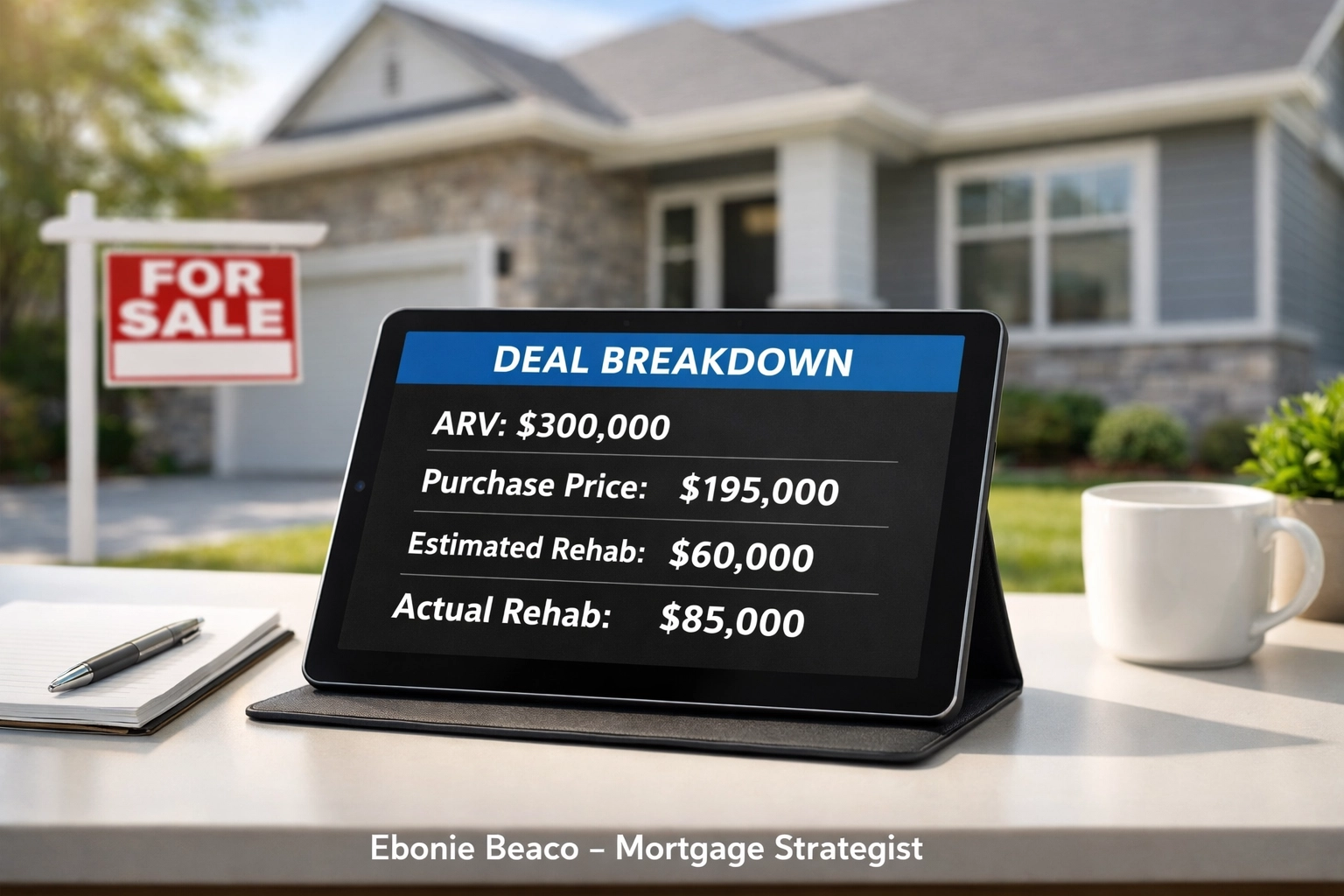
If you cannot find a third-party buyer to take the assignment, you might consider becoming the buyer yourself by utilizing specialized investment financing. Many successful wholesalers transition into fix and flip or buy and hold investors by using DSCR Investor Loans or Bridge Loans to take down the property when an assignment fails to materialize. By closing on the deal personally, you remove the immediate pressure of the assignment deadline and gain the flexibility to either renovate the property for a higher profit or hold it as a long-term rental asset. This pivot requires a relationship with a mortgage strategist who understands how to structure Non-QM Mortgage Loans for investors who may not have traditional W-2 income. Taking ownership allows you to capture the full equity spread rather than just a small fee, turning a seemingly failed wholesale attempt into a high-ROI portfolio addition.
Another powerful way to pivot when your wholesale real estate deal stalls is to explore a lease option assignment, which opens the property to tenant-buyers who cannot currently qualify for a traditional mortgage. Instead of strictly seeking out high-volume cash buyers, you can market the opportunity to individuals who have a significant down payment but need time to repair their credit or save for a traditional Home Purchase. You negotiate a sandwich lease or a straight assignment of the option with the seller, providing them with a higher overall price in exchange for favorable terms over time. This strategy is particularly effective in markets like Virginia or Michigan where there is a high demand for path-to-ownership programs among hard-working families. It allows the seller to achieve their financial goals while you collect an option fee that often exceeds what a standard wholesale assignment would have provided.
When all other avenues fail and the numbers simply do not work for your local buyers list, the most professional path is to return to the seller for a transparent price renegotiation. You must approach this conversation with data-backed honesty, showing the seller the feedback from actual contractors and investors who have toured the home and pointed out structural issues. Explain that the cost of materials or the current interest rate environment has altered the feasibility of the project at the original contract price. Sellers are often more flexible when they see that you have done the work and are genuinely trying to solve their problem rather than just trying to lower their profit. If the seller agrees to a lower price, your deal becomes instantly more attractive to your cash buyers, and you can get the transaction back on track for a successful closing.
To prevent the "no-buyer nightmare" in your future business, you should focus on building a deep, vetted list of investors before you even put a new property under contract. Connect with local landlords and flip specialists at REIA meetings in Indiana or Florida to understand exactly what specific "buy-box" they are currently targeting in their local neighborhoods. Ask them about their preferred zip codes, their required cash-on-cash return, and whether they typically use Fix and Flip Loans or long-term Landlord Loans to fund their acquisitions. Understanding the financing side of the transaction provides you with a competitive advantage because it allows you to vet your deals through the lens of a professional lender. When you can present a deal to a buyer and explain how they can use a DSCR Rental Property Loan to recover their capital, you become a trusted consultant rather than just another middleman.
The most successful wholesalers in 2026 are those who act as deal architects, understanding that the exit strategy must sometimes change to fit the market's current appetite. Whether you are working in the busy corridors of California or the growing suburbs of Georgia, having multiple exit strategies: like double closings or owner financing: ensures you never have to walk away empty-handed. Explore different loan programs and stay informed about how your buyers are getting their funding so you can speak their language during the disposition process. Accessing professional guidance on deal structuring can be the difference between a canceled contract and a life-changing assignment fee. Jump in and treat every stalled deal as a learning opportunity to refine your underwriting and strengthen your network of investors and lenders.
📞 Work With Ebonie Beaco
If you are a wholesaler looking to:
- Close more deals
- Connect your buyers with financing
- Structure deals that actually get approved
- Learn how to grow into a real estate investor
I can help you every step of the way.
Ebonie Beaco Mortgage Strategist | Senior Loan Officer Home Loans Network powered by Loan Factory Inc. NMLS #2389954
Phone: 312-392-0664 Schedule a 1 on 1: https://calendly.com/homeloansnetwork Website: HomeLoansNetwork.com/contact-us
👉 Whether you need lending, deal structuring, or mentorship, reach out today.
Meta Title: No-Buyer Nightmare: Pivoting Stalled Wholesale Real Estate Deals Meta Description: Stuck with a wholesale contract and no cash buyers? Learn how to pivot using DSCR loans, lease options, and renegotiation strategies to save your deal.