The First Check: How Long Your First Wholesale Real Estate Deal Actually Takes

Meta Title: How Long Does Your First Wholesale Real Estate Deal Take? | Ebonie Beaco
Meta Description: Wondering how long it takes to close your first wholesale real estate deal? Learn the realistic timeline from marketing to your first assignment fee check.
The dream of the "quick check" in wholesale real estate is often what draws people into the industry, but the reality is more of a disciplined process than a stroke of overnight luck. While you might see social media influencers claiming they closed a high-five-figure deal in just forty-eight hours, the typical beginner should realistically expect a thirty to ninety-day window for their first transaction. This timeframe depends heavily on your consistency in marketing and your ability to filter through hundreds of unmotivated leads to find that one golden opportunity. Your first deal is usually the hardest because you are simultaneously building a buyers list and learning how to evaluate off-market properties in real-time. Once you push through this initial learning curve, the speed of your transactions will naturally increase as your professional network and reputation grow.
The first phase of any successful journey in wholesaling houses is the lead generation stage, which typically takes anywhere from two to four weeks of focused effort. You need to decide on a marketing strategy, whether it is driving for dollars, cold calling, or sending direct mail to high-equity or pre-foreclosure lists. During this period, you are essentially planting seeds and waiting for the phone to ring with motivated sellers who are ready to talk. It is vital to remember that most deals are won in the follow-up, meaning your first week might yield zero results while your fourth week produces a signed contract. Success in real estate investing requires a high-volume mindset where you understand that a hundred calls might lead to ten conversations and eventually one solid deal.
Once a seller expresses interest, the negotiation and contracting phase can take between five and ten days depending on the complexity of the situation. You have to walk the property, estimate repairs accurately, and ensure your offer allows for a healthy assignment fee while still leaving profit for a cash buyer. This is the stage where many beginners get stuck because they fear making an offer that is too low or getting a "no" from a frustrated seller. However, a professional wholesaler knows that a firm, data-backed offer is the only way to secure a property that will actually sell to a seasoned investor. Getting that signed Purchase and Sale agreement is a major milestone, but it is only the halfway point in the race toward your first check.
After you have the property under contract, you must transition immediately into finding a reliable cash buyer, a process that usually spans one to two weeks. If you have been building your buyers list in tandem with your marketing, you might already have a few investors in mind who specialize in that specific neighborhood or property type. You will need to market the deal through email blasts, social media investor groups, or even reaching out to local landlords who recently purchased similar homes. The goal is to find a buyer who sees the value in the deal and is willing to sign an assignment contract and put down a non-refundable earnest money deposit. A strong buyer's list is the "secret sauce" that allows veteran wholesalers to move properties in as little as twenty-four to forty-eight hours.
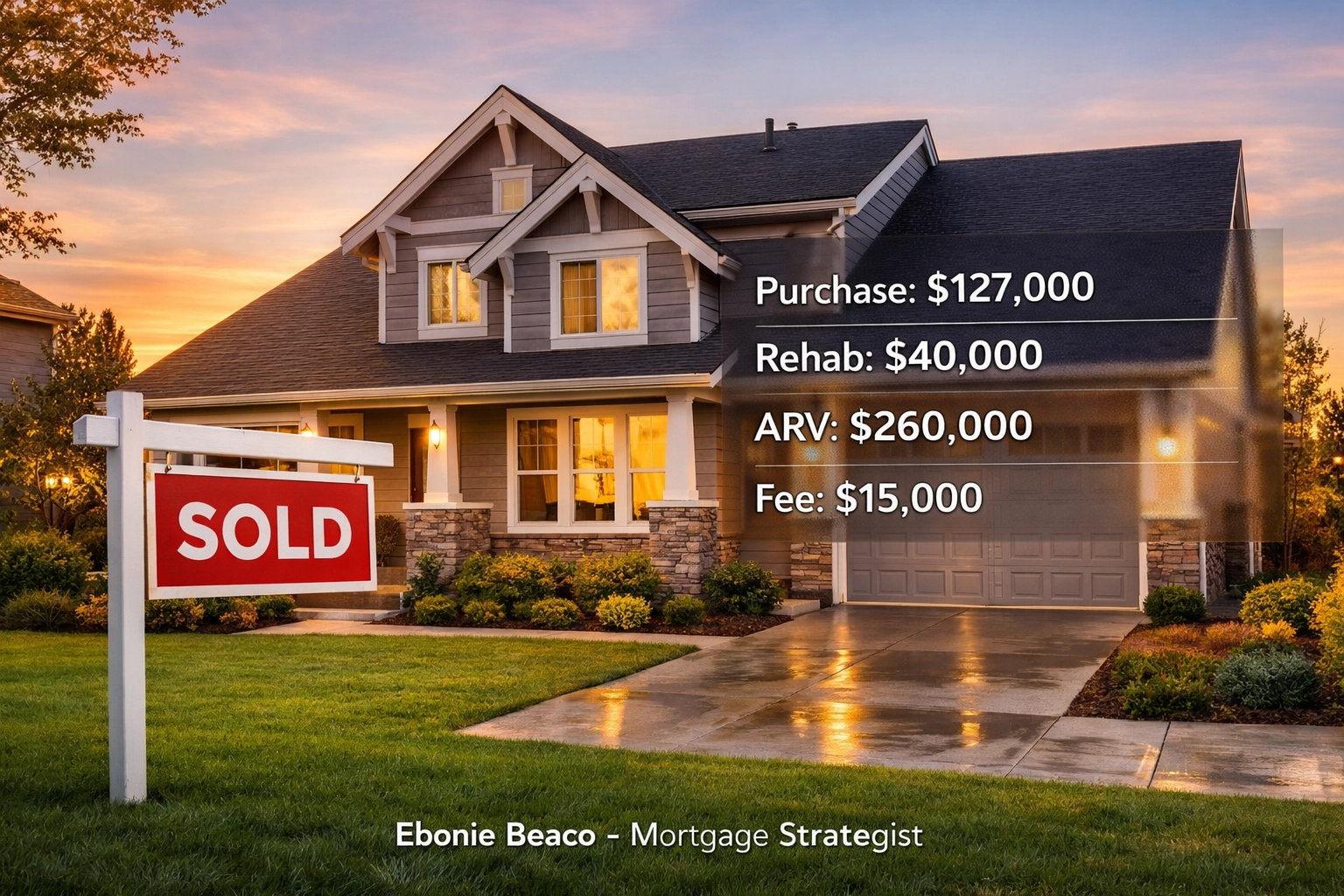
Visualizing a typical deal breakdown: Purchase Price $127,000 | Rehab $40,000 | ARV $260,000 | Wholesale Fee $15,000. Ebonie Beaco - Mortgage Strategist
Let’s look at a realistic deal breakdown to understand how the numbers translate into your actual profit as a wholesaler. Imagine you find a distressed property with an After Repair Value (ARV) of $260,000, and you estimate that it needs approximately $40,000 in renovations to reach that top-tier market price. Following a standard investment formula, a cash buyer might want to buy this property at roughly 70% of the ARV minus the repair costs to ensure they have enough equity and profit margin. This means the buyer's maximum purchase price would be about $142,000, so you negotiate with the seller to get the property under contract for $127,000. By assigning that contract to your cash buyer for $142,000, you have just secured a $15,000 wholesale fee for your efforts in sourcing and structuring the deal.
The final stretch is the title and escrow process, which generally takes seven to fourteen days to ensure the title is clear and the paperwork is finalized. The title company or real estate attorney will perform a search to check for liens, judgments, or other encumbrances that could derail the sale. During this time, you should be in constant communication with both the seller and the buyer to make sure everyone is on the same page for the closing date. This is also when the buyer’s financing: often a hard money loan or a bridge loan: is finalized to ensure the funds are ready for distribution. Once the closing is complete and the deed is recorded, the title company will cut your assignment fee check, marking the official success of your first deal.
Several external factors can influence whether your deal closes in three weeks or three months, including the local market heat in areas like Chicago, Illinois, or various cities in Florida and Georgia. If you are operating in a highly competitive market, finding a motivated seller might take longer, but finding a buyer will likely happen almost instantly once you have a good contract. Conversely, in smaller markets or rural areas in Virginia or Alabama, you might find deals easily but struggle to find a large pool of active investors ready to close quickly. Your choice of financing for your buyers also plays a huge role; connecting them with a mortgage strategist who understands DSCR loans or fix-and-flip financing can prevent deals from falling through at the last minute. Being proactive about the "exit strategy" for your buyer is just as important as the initial search for the property.
Ultimately, the time it takes to close your first wholesale deal is less about luck and more about the systems and partnerships you put in place from day one. Many wholesalers eventually transition into becoming long-term investors themselves, using their fees to fund down payments on rental properties or their first fix-and-flip project. This evolution requires a deep understanding of mortgage programs like landlord loans, bank statement loans for the self-employed, and cash-out refinance strategies to scale a portfolio. By working with a dedicated mortgage strategist, you can ensure that your buyers are qualified and that you have a roadmap for your own future investment goals. Explore our mortgage basics today to see how we can help you structure your first deal for maximum success and build a lasting career in real estate finance.
📞 Work With Ebonie Beaco
If you are a wholesaler looking to:
- Close more deals
- Connect your buyers with financing
- Structure deals that actually get approved
- Learn how to grow into a real estate investor
I can help you every step of the way.
Ebonie Beaco
Mortgage Strategist | Senior Loan Officer
Home Loans Network powered by Loan Factory Inc.
NMLS #2389954
📱 Phone: 312-392-0664
📧 Schedule a 1 on 1: https://calendly.com/homeloansnetwork
🌐 Website: HomeLoansNetwork.com/contact-us
👉 Whether you need lending, deal structuring, or mentorship, reach out today.