The Cash Buyer Hunt: Where to Find Real Investors Who Are Actually Buying

A cash buyer is a person or entity that possesses the liquid capital to purchase a property outright without the need for a traditional bank mortgage or a financing contingency. In the competitive landscape of wholesale real estate, these individuals are the essential exit strategy for every contract you secure. Whether you are searching for deals in the suburban neighborhoods of Indianapolis, Indiana, or the bustling urban centers of Chicago, Illinois, your success depends on the strength of your buyer list. Recent data from early 2026 indicates that nearly 27% of all residential property transactions are completed with cash, highlighting a robust market for wholesalers who can source quality inventory. Identifying these active participants requires a tactical shift from general marketing to targeted outreach within specific investment communities. You can learn more about the current market environment by visiting our mortgage basics page to understand how these transactions deviate from traditional home buying.
Local Real Estate Investment (REI) clubs serve as a primary physical location where you can find real investors who are actively looking to deploy capital into new projects. These organizations, which are highly active in states like Georgia, Florida, and Alabama, host monthly meetups where professionals gather to share resources and find off-market deals. When you attend these events, your goal is to identify the "fix-and-flip" specialists and the "buy-and-hold" landlords who have a track record of closing. A fix-and-flip investor is a professional who acquires distressed properties to renovate and resell for profit within a short timeframe. Conversely, a buy-and-hold landlord is an investor who purchases property to retain long-term for consistent rental income and equity growth over many years. Connecting with these individuals in person allows you to build the trust necessary to move high-value contracts quickly and efficiently. We invite you to explore about us to see how we help facilitate professional networking within the investment community.
The use of public record data is a highly sophisticated method for finding cash buyers who have already proven their ability to close without financing. By searching county records in Michigan, Virginia, or California, you can filter for residential property transfers that do not have a corresponding deed of trust or mortgage lien recorded. This specific search criteria reveals the names of LLCs and individual investors who have recently purchased homes with 100% liquid funds. Once you have identified these buyers, you can use skip tracing technology to find their contact information and initiate a professional conversation about their "buy box" requirements. This proactive data mining ensures that you are spending your time on high-probability leads rather than tire-kickers who lack the actual means to close a deal. Many of these sophisticated investors utilize our mortgage calculators to analyze their potential returns before they ever commit to an acquisition.
Digital platforms and online forums remain a goldmine for anyone involved in wholesaling houses if you know how to navigate them with a professional lens. Websites like Craigslist and specialized LinkedIn groups for real estate professionals in places like Arkansas or Missouri are often filled with "we buy houses" advertisements. Instead of viewing these advertisers as competitors, you should see them as your primary target audience for assigning contracts. Reach out to these companies to ask about their specific criteria, such as preferred zip codes, minimum bedroom counts, and acceptable renovation budgets. Establishing these relationships before you even have a property under contract allows you to move with incredible speed once a deal is secured. You might find it helpful to review our FAQ to see common questions that investors ask when they are preparing to purchase a new asset.
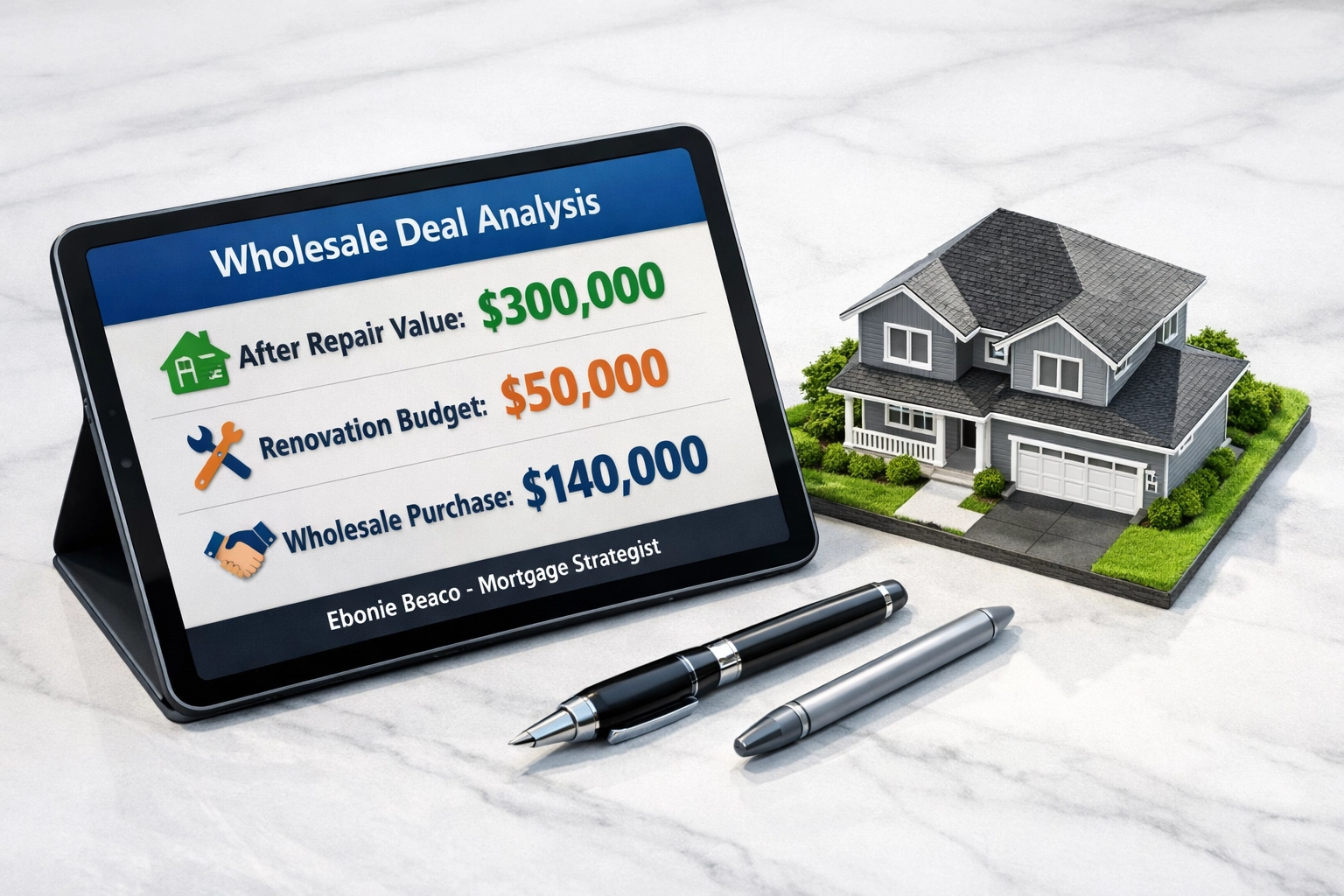
Calculating the potential profit for a cash buyer is a vital skill that helps you present your deals in a way that professional investors find irresistible. Let’s consider a practical example: imagine you find a distressed property in a quiet suburb of Virginia with an After Repair Value (ARV) of $300,000. Using the standard 70% investment rule, a cash buyer would typically want their total all-in cost: including purchase and repairs: to be around $210,000. If the property requires $50,000 in renovations, the maximum an investor would pay is $160,000. If you have the property under contract for $140,000, you can offer it to your buyer for $155,000, leaving you with a $15,000 assignment fee and the buyer with a $5,000 cushion under their max price. To better understand how purchase prices relate to overall market value, you can visit our home purchase section for more detailed insights.
Vetting your potential buyers for legitimacy is the final and most critical step in protecting your reputation as a professional wholesaler. You should always request a Proof of Funds (POF) letter, which is a document from a financial institution verifying that the buyer has sufficient liquid assets to complete the transaction. In addition to a POF, a serious cash buyer will be willing to put down a non-refundable earnest money deposit (EMD) to secure the deal. This deposit acts as a security measure, ensuring that the buyer is committed to the closing timeline and has skin in the game. Transparency is a core value in real estate investing, and any buyer who refuses to provide basic financial verification should be viewed with significant skepticism. You can read our testimonials to see how our commitment to transparent processes has helped other professionals navigate complex real estate transactions.
While literal cash is preferred, many successful investors scale their portfolios by using "cash-like" financing such as DSCR investor loans or fix and flip financing. A DSCR (Debt Service Coverage Ratio) loan is a mortgage product for investment properties that qualifies the borrower based on the property’s rental income rather than personal income. These loans are popular in high-growth markets like Florida and California because they allow for rapid acquisition and closing times that rival all-cash offers. By understanding these loan programs, you can expand your buyer list to include investors who are using leverage to grow their rental portfolios. This knowledge allows you to tailor your pitch to the specific needs of different investor types, making your off-market deals more attractive to a wider audience. If you have a buyer who needs a specialized product, they can select a loan officer to discuss their specific scenario.
Building a reliable cash buyer list is a marathon, not a sprint, and it requires consistent effort in networking and data analysis. Whether you are focusing on the Midwest markets of Indiana and Michigan or the coastal opportunities in Virginia and California, the principles of finding real investors remain the same. Always focus on providing value to your buyers by bringing them well-analyzed deals that meet their specific financial goals and risk tolerances. As you grow your network, you will find that a few high-quality, repeat buyers are worth more than a thousand casual contacts who never close. Stay diligent in your research, maintain a high level of transparency in your dealings, and you will establish yourself as a premier source for investment inventory in your region. For personalized guidance on structuring your next investment deal or exploring financing options, we encourage you to connect with us directly.
Scedule a 1 on 1 at https://calendly.com/homeloansnetwork
Ebonie Beaco
Mortgage Strategist | Senior Loan Officer
Home Loans Network powered by Loan Factory Inc.
NMLS #2389954
HomeLoansNetwork.com
312-392-0664