March 25, 2026
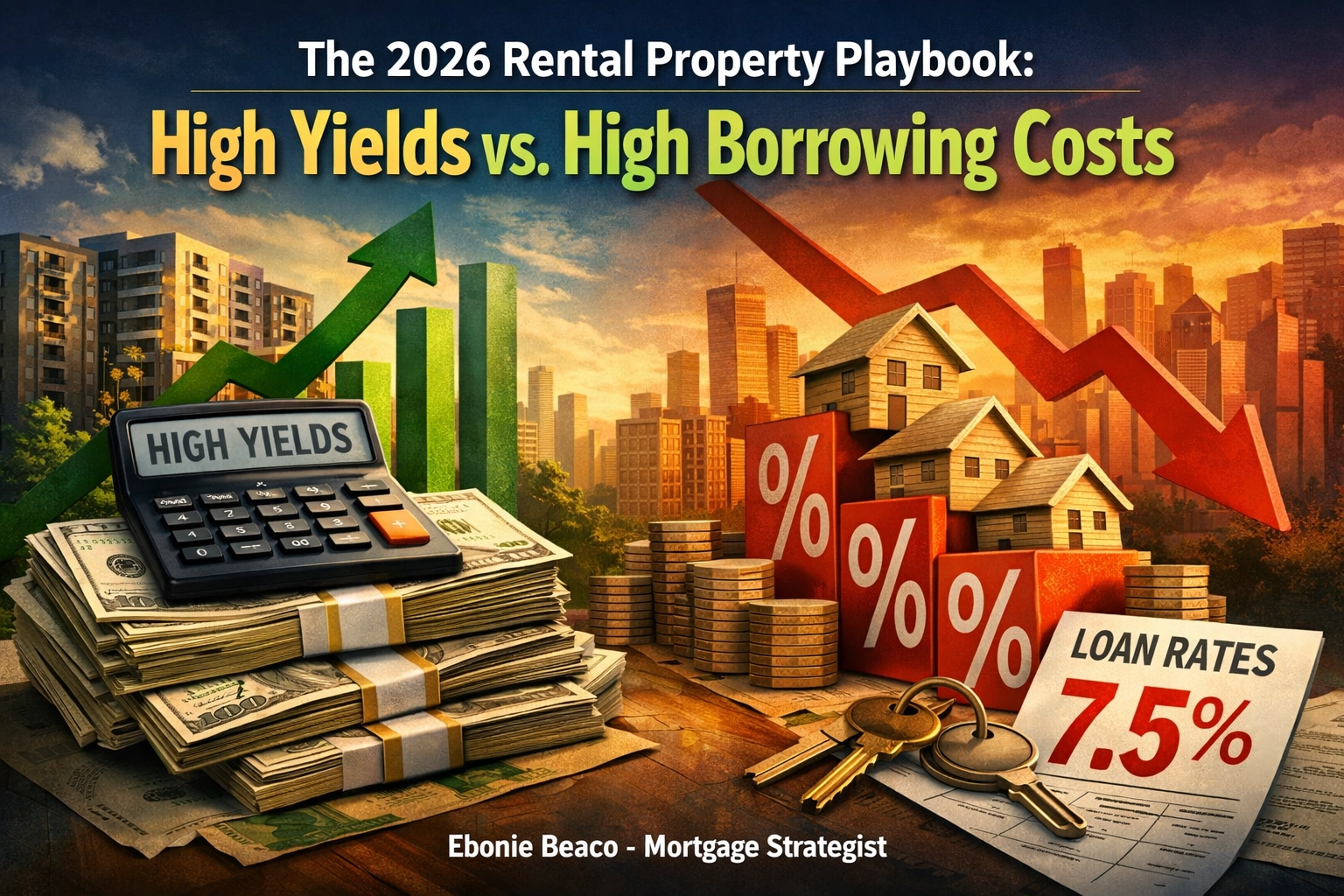
The real estate landscape in the spring of 2026 presents a unique paradox for the serious investor. On one hand, we are witnessing some of the strongest rental demand in a decade. On the other, mortgage rates have hit a 2026 high this month, settling around 6.4% as the peak homebuying season kicks off. You can read the full report on recent rate movements at Real Estate News.
For the casual observer, 6.4% might seem like a deterrent. For the sophisticated mortgage strategist, it is simply a variable in a larger equation. The 2026 playbook is no longer about finding the cheapest money; it is about finding the highest yield and structuring debt to protect your cash flow.
In markets like Illinois, Missouri, and Michigan, the opportunity for yield remains robust, provided you understand how to navigate yield compression with advanced financing tools.
Understanding Yield Compression in 2026
Yield compression occurs when property prices rise or borrowing costs increase, effectively shrinking the "spread" between your mortgage payment and your rental income. In the current environment, your cost of capital is higher than it was three years ago, but rental rates in cities like Chicago, St. Louis, and Atlanta have kept pace.
To survive and thrive, you must shift your focus. Stop looking strictly at the interest rate and start looking at the Debt Service Coverage Ratio (DSCR).
DSCR (Debt Service Coverage Ratio): A financial metric used by lenders to measure a property's ability to cover its own debt payments.
Practical Application: If a property generates $5,000 in monthly rent and the total mortgage payment (including taxes and insurance) is $4,000, the DSCR is 1.25. Many DSCR rental property loans allow you to qualify based on this ratio rather than your personal income.

A realistic, high-end modern multi-family apartment complex in a suburban Illinois setting, featuring clean architectural lines and professional landscaping. Text at bottom: Ebonie Beaco - Mortgage Strategist
Why Multi-Family in Illinois and Missouri?
While many investors are focused on the "sunshine states," the Midwest: specifically Illinois and Missouri: is offering some of the most consistent cap rates for multi-family assets.
In Chicago and its surrounding suburbs, the density of the workforce ensures high occupancy. In Missouri, particularly in the Kansas City and St. Louis corridors, the entry price for a four-unit building allows for a much healthier DSCR even at a 6.4% interest rate.
When you structure a deal in these states, you are often looking at "workforce housing." These are tenants who are gainfully employed but priced out of the current 2026 buying market. This creates a floor for your rental income.
The Debt Coverage Strategy
In 2026, the most successful investors I work with are using Non-QM Mortgage Loans and DSCR Investor Loans to scale. Why? Because these programs prioritize the asset's performance.
If you are a Real Estate Investor in Florida, Virginia, or Georgia, you know that property insurance premiums have impacted your bottom line. To offset this, you need a financing structure that doesn't penalize your personal debt-to-income ratio.
Explore the benefits of asset-based lending:
- No Tax Returns Required: Qualification is based on the subject property's cash flow.
- Unlimited Properties: You aren't capped at 10 financed properties like traditional conventional loans.
- Flexibility for Wholesalers: If you are a Wholesaler or Real Estate Wholesaler looking to exit a deal by selling to a buy-and-hold investor, knowing the DSCR requirements helps you vet your buyers more effectively.
Real-World Deal Breakdown: The 4-Unit Play
Let’s look at a practical example of how a 2026 investor manages a multi-family acquisition in St. Louis, Missouri.
The Scenario:
- Property Type: 4-Unit Apartment Building
- Purchase Price: $650,000
- Down Payment (25%): $162,500
- Loan Amount: $487,500
- Interest Rate: 6.4%
- Monthly Principal & Interest: $3,048
- Taxes & Insurance: $950
- Total Monthly Debt (PITIA): $3,998
The Income:
- Unit 1-4 Rents: $1,400 each
- Total Gross Monthly Rent: $5,600
The Analysis:
To calculate the DSCR: $5,600 / $3,998 = 1.40 DSCR
A DSCR of 1.40 is considered excellent. Even with borrowing costs at a three-year high, this property generates $1,602 in monthly "buffer" or cash flow. This is how you win in 2026. You don't wait for rates to drop; you find the deals where the math works regardless of the market cycle.
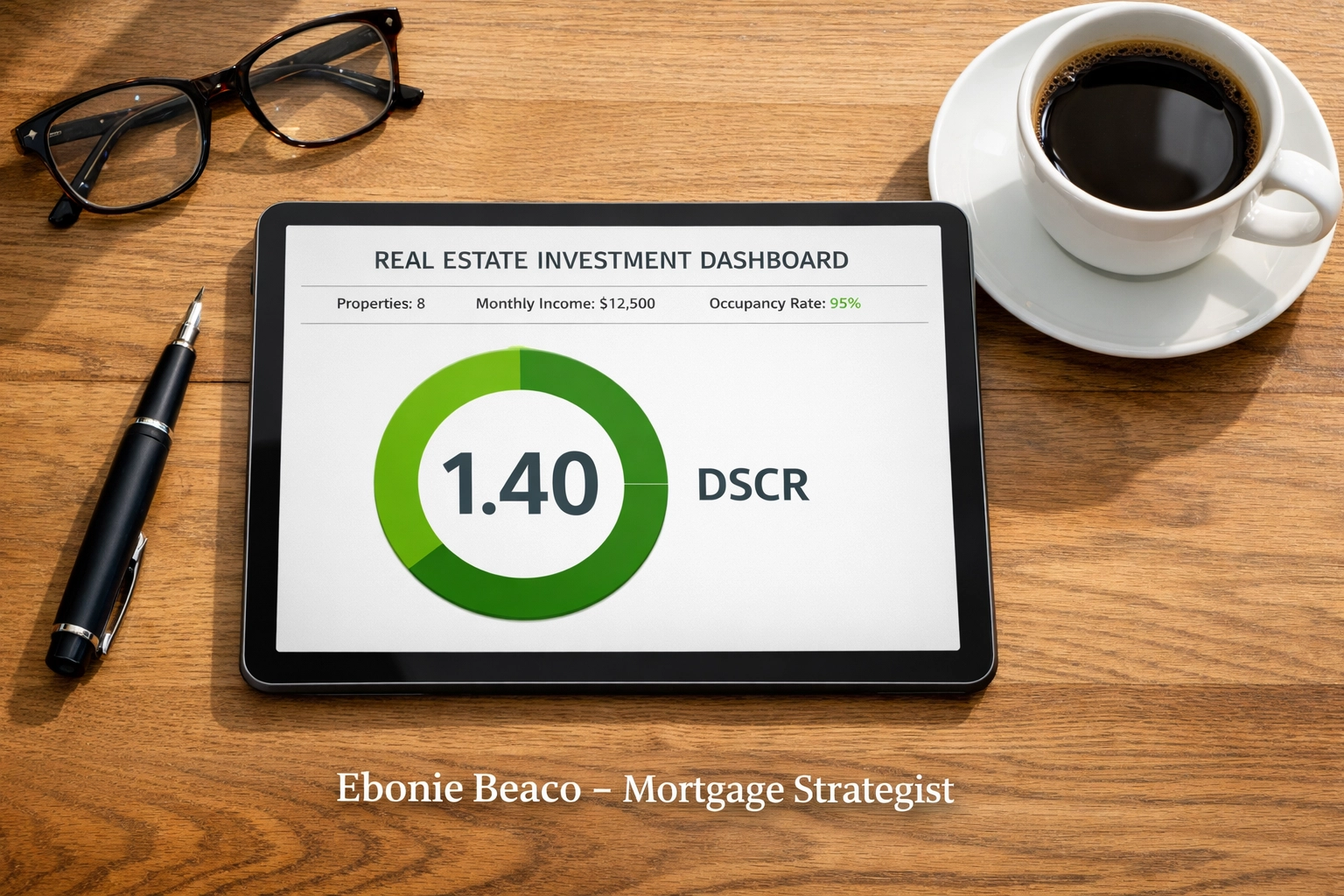
A professional financial infographic showing a deal breakdown: Purchase Price $650k, 25% Down, 6.4% Rate, $5,600 Gross Rent, and a highlighted 1.40 DSCR calculation. Text at bottom: Ebonie Beaco - Mortgage Strategist
Scaling with Equity: Cash-Out Refinance and HELOCs
For current Homeowners in Indiana, Michigan, and Kentucky, you may be sitting on a significant amount of "dead equity." With home values remaining stable despite the rate hikes, your primary residence or existing rental portfolio could be the key to your next acquisition.
Jump in to these equity strategies:
- Cash-Out Refinance: Extracting cash from a property by replacing the existing mortgage with a larger loan. This is often used by BRRRR investors to pull their initial capital out after a renovation.
- HELOC (Home Equity Line of Credit): A revolving line of credit that allows you to use your home’s equity as a "down payment fund" for your next investment property.
If you have a primary residence in Virginia or Alabama that has appreciated 30% over the last few years, a HELOC can provide the liquidity needed to secure a multi-family property in Missouri without selling your current assets.
Short-Term Rental (STR) Considerations
We cannot discuss the 2026 playbook without mentioning Airbnb and Short-Term Rental Financing. In vacation-heavy markets like Florida and parts of Georgia, STRs can often produce double the gross income of a long-term rental.
However, the "High Borrowing Cost" environment means your management must be flawless. Real Estate Investors are now utilizing Bank Statement Loans to qualify for STRs, using the last 12-24 months of business deposits rather than traditional W-2s. This is a game-changer for self-employed investors or those with complex tax returns.
The Role of Bridge Loans and Hard Money
For the Fix and Flip community in Illinois and Michigan, the strategy has shifted toward speed. When a distressed property hits the market, you cannot wait 30 days for a conventional appraisal.
Bridge Loans: Short-term financing used to "bridge" the gap between the purchase of a property and its ultimate long-term financing or sale.
Hard Money Loans: Asset-based loans typically used for renovation projects where the condition of the home prevents traditional financing.
By using a bridge loan to acquire and a DSCR loan to exit into a long-term hold, you protect your capital and maintain the ability to move quickly on new opportunities.
Regional Outlook: Where to Deploy Capital
- Alabama & Arkansas: Focus on single-family portfolios. The entry price remains low enough to achieve the "1% rule" (rent equals 1% of purchase price) even in a 6% rate environment.
- Florida: Focus on high-demand coastal STRs or inland multi-family where the population growth remains a primary driver.
- Indiana & Kentucky: Excellent markets for steady, long-term rental growth.
- Virginia: Professional-class rentals near government and tech hubs provide immense stability for risk-averse investors.
Final Thoughts for the 2026 Investor
The 2026 market belongs to the strategist, not the spectator. High borrowing costs are a filter: they remove the "amateur" competition from the market, leaving more opportunities for those who understand how to structure debt.
Whether you are a seasoned Landlord, a Real Estate Investor looking to scale, or a Homeowner ready to leverage your equity, the path forward requires a clear-eyed look at the numbers.
Access the tools and guidance you need to navigate these markets confidently. From Jumbo Loans in affluent Chicago suburbs to DSCR loans in rural Missouri, the strategy remains the same: analyze the coverage, secure the asset, and manage the yield.

A realistic image of a high-end condominium balcony overlooking a vibrant city skyline at dusk, representing urban investment potential. Text at bottom: Ebonie Beaco - Mortgage Strategist
Scedule a 1 on 1 at https://calendly.com/homeloansnetwork
Ebonie Beaco
Mortgage Strategist | Senior Loan Officer
Home Loans Network powered by Loan Factory Inc.
NMLS #2389954
HomeLoansNetwork.com
312-392-0664