Stuck with a Deal: What Happens if You Can't Find a Buyer for Your Wholesale Contract?

Entering the world of wholesale real estate often feels like a high-speed race where the finish line is a signed assignment agreement and a healthy check. You scout for off-market deals in competitive regions like Chicago or Atlanta, secure a property under market value, and then begin the frantic search for cash buyers. However, even the most seasoned investors occasionally face the silent phone and an empty inbox as the closing date looms closer on the calendar. This scenario creates a significant amount of pressure, especially when you have promised a distressed seller a quick and seamless exit from their property. Understanding your options during this critical window prevents panic and ensures you maintain your professional reputation within the local investment community.
The most effective safety net you can incorporate into your initial purchase agreement is a clearly defined inspection contingency. An Inspection Contingency is a contractual clause that allows a buyer to cancel the agreement without penalty if they are unsatisfied with the property’s condition during a specific window of time. By using this period strategically, you gain approximately ten to fourteen days to market the property to your network while evaluating the physical risks of the asset. If the interest from your real estate investing peers is non-existent, you can exercise this right to terminate the contract and protect your earnest money deposit. This professional exit strategy allows you to step away from an unmarketable deal without legal repercussions, provided you act within the timeframe specified in the document.
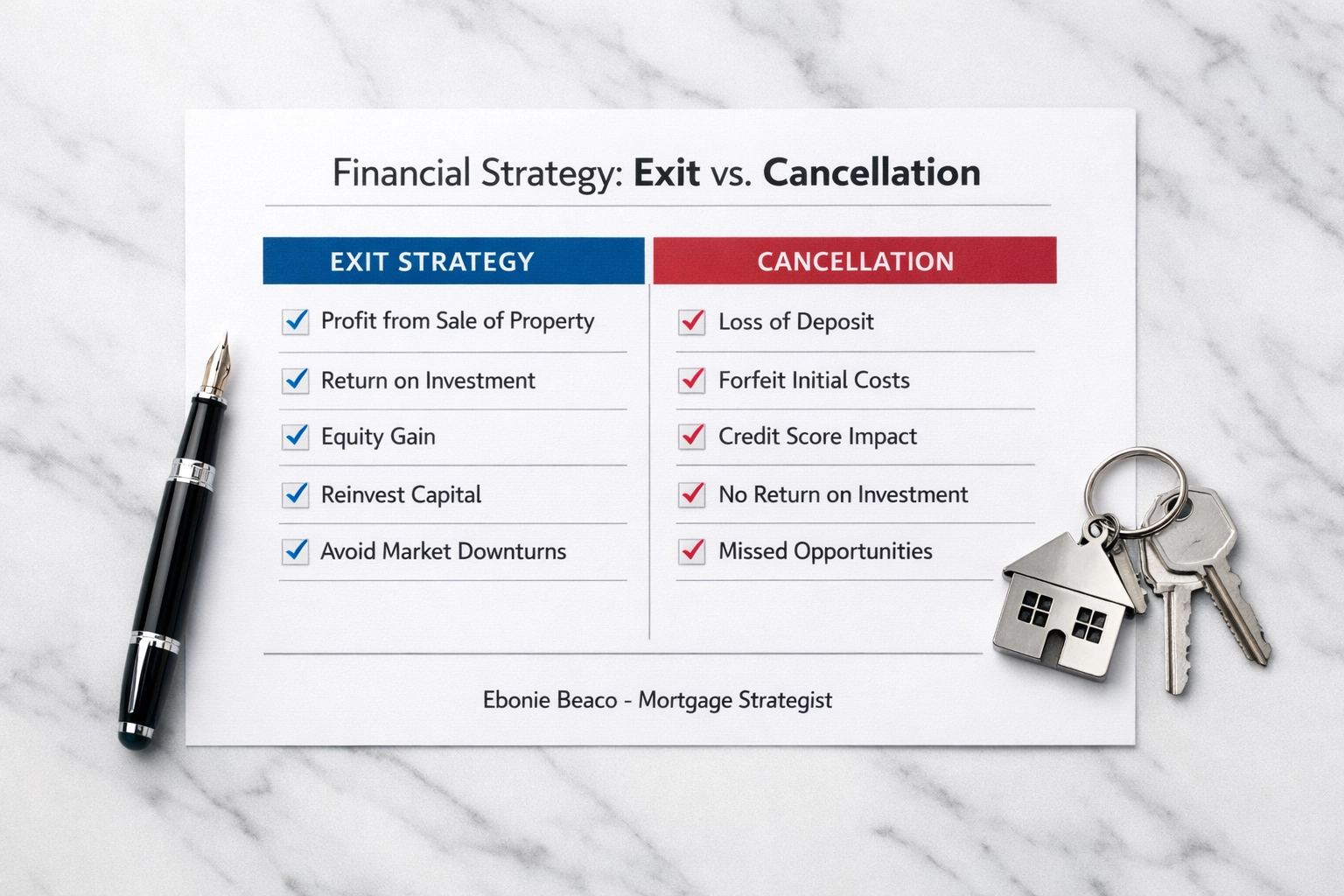
Financial Strategy: Comparison of Wholesale Exit vs. Contract Cancellation. Ebonie Beaco - Mortgage Strategist
When the initial numbers do not attract interest, you must be prepared to revisit the negotiation table with the property owner. Often, a lack of buyer interest indicates that your projected After Repair Value (ARV) was too optimistic or the estimated renovation costs were too low for the current market in cities like Detroit or Indianapolis. Suppose you originally contracted a home for $150,000, expecting to flip the contract for $165,000, but every investor tells you the price is too high. In this situation, you might present the seller with new data regarding necessary structural repairs to justify a price reduction to $130,000. Reducing the contract price allows you to lower the entry point for your buyers while still securing a wholesale fee, effectively reviving a deal that seemed destined to fail.
If you find a fantastic property but simply cannot locate a buyer in time, you might consider transitioning from a wholesaler to a principal owner by utilizing creative financing. Many investors utilize bridge loans to temporarily fund the acquisition while they either find a long-term tenant or complete minor cosmetic updates. A Bridge Loan is a short-term financing tool used to bridge the gap between the purchase of a property and its ultimate sale or long-term refinancing. By closing on the deal yourself, you eliminate the risk of breaching the contract and potentially increase your long-term profit margins. You can use our mortgage calculators to determine if the monthly carry costs of a bridge loan align with your investment goals for that specific asset.

Bridge Loan Calculation: Purchase Price $200k, Loan Amount $160k, Monthly Interest $1,200. Ebonie Beaco - Mortgage Strategist
Another powerful tactic involves co-wholesaling, which is the process of partnering with another wholesaler who already has a robust and active list of cash buyers. While this approach requires you to split your assignment fee, a fifty-percent profit is significantly better than a canceled contract and a frustrated seller. You bring the lead and the contract to the table, and your partner brings the liquid capital and the ready-to-move investors. This collaborative strategy is particularly useful when you are expanding into new markets, such as the diverse neighborhoods throughout Virginia or the high-demand coastal regions of Florida. It turns a potential failure into a networking opportunity that strengthens your ties with other professionals in the real estate investing space.
Maintaining transparency with the seller is essential if it becomes clear that the deal will not close as originally planned. If you have exhausted all avenues, including price reductions and partner searches, you should notify the seller as early as possible to allow them to explore other options. While delivering bad news is uncomfortable, being honest about the market's response to the property preserves your integrity and leaves the door open for future transactions. You can even offer to help the seller list the property on the MLS or connect them with a retail agent who specializes in distressed sales. This level of professionalism distinguishes high-level investors from those who simply vanish when a transaction becomes difficult or unprofitable.
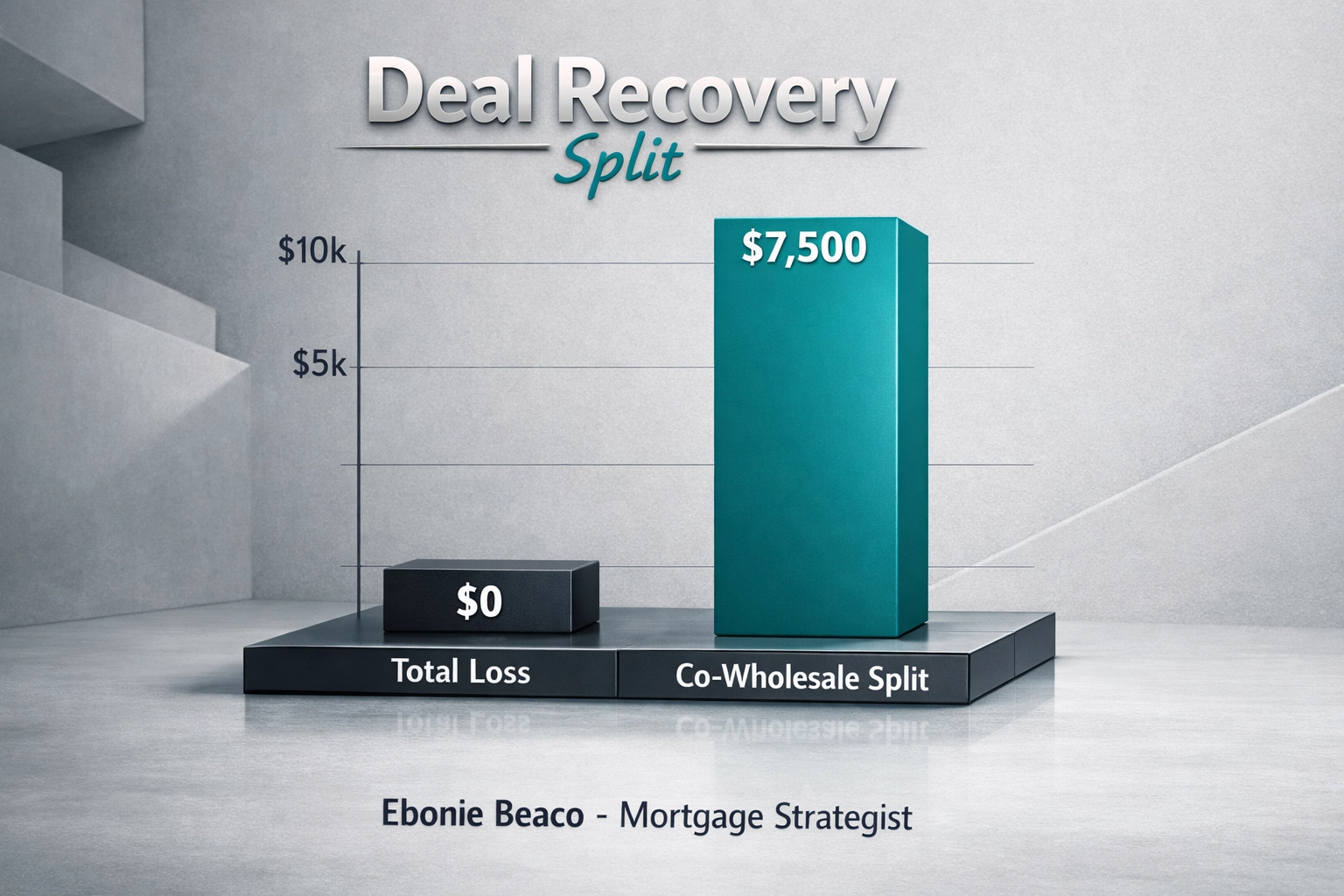
Deal Recovery Math: Original Target $15k Fee, Partner Split $7.5k Fee, Total Loss Avoided. Ebonie Beaco - Mortgage Strategist
For those who decide to pivot and hold the property as a rental, exploring DSCR investor loans can be a game-changing move. A DSCR Loan (Debt Service Coverage Ratio) is a mortgage program for investment properties that qualifies the borrower based on the rental income generated by the property rather than personal tax returns or employment history. If the house you intended to wholesale has strong rental potential in a market like Birmingham or St. Louis, keeping it as a long-term asset might be the most lucrative path. This strategy allows you to build equity and generate monthly cash flow, transforming a "stuck" contract into a cornerstone of your growing rental portfolio. Our team can help you book an appointment to discuss how these programs work for non-owner occupied properties.
Ultimately, the best way to handle the fear of a buyer-less contract is to focus on building your network before you ever sign a purchase agreement. A deep list of reliable buyers in Michigan, Indiana, or California ensures that you already know what investors are looking for and what price points they will accept. Successful wholesaling houses requires a balance of finding great off-market deals and cultivating strong relationships with people who have the capital to close. By preparing for the worst-case scenario with solid contingencies and alternative financing options, you can navigate the complexities of the real estate market with confidence. Take the time to study our mortgage basics to ensure you are always ready to pivot when a wholesale deal needs a new direction.
Scedule a 1 on 1 at https://calendly.com/homeloansnetwork
Ebonie Beaco
Mortgage Strategist | Senior Loan Officer
Home Loans Network powered by Loan Factory Inc.
NMLS #2389954
HomeLoansNetwork.com
312-392-0664