Stay Out of Jail: How to Stay Compliant and Avoid Legal Issues in Wholesaling
Wholesale real estate involves a delicate balance of contract law and marketing strategies that require strict adherence to state specific regulations. You are essentially trading the right to purchase a property rather than the physical structure itself, which distinguishes your role from that of a licensed real estate agent. In states like Illinois or Florida, regulators watch these transactions closely to ensure that unlicensed individuals are not performing activities that require a professional license. To avoid legal complications, you must clearly state that you are an equitable interest holder and not the property owner when communicating with cash buyers. This transparency builds trust with your network and protects your business from allegations of fraud or misrepresentation during off-market deals. Jump in and study your local statutes because ignorance of the law provides no protection against heavy fines or potential legal trouble.
Licensing remains one of the most debated topics within the wholesaling houses community, yet it is often the primary reason for legal intervention. Many jurisdictions now require a real estate license if you plan to engage in more than one or two wholesale transactions per year to prevent "shadow brokering." For instance, the Illinois Department of Financial and Professional Regulation has clear guidelines that classify certain wholesaling activities as brokering, which mandates professional licensure. Even in states with more relaxed rules, obtaining a license can offer an extra layer of protection and open doors to traditional real estate investing opportunities. You should also verify if your specific city requires a general business permit or a reseller’s certificate, especially if you operate in diverse markets like Chicago or Los Angeles. Taking the time to secure these credentials demonstrates a professional commitment to the industry and ensures your longevity as a wholesaler.

Effective documentation acts as your primary shield against disputes and is a fundamental component of real estate finance. You need to maintain comprehensive records of every interaction, including the original purchase agreement, the assignment contract, and all communications with the seller. These files should be stored securely and include tax identification numbers for all entities involved, which simplifies the process when you eventually seek a home refinance or other funding. Proper record keeping also facilitates smoother transitions when working with title companies that specialize in investor transactions. If you are ever audited or questioned by a state board, having an organized trail of quality inspection reports and supplier verification documents will prove your intent to stay compliant. Accessing mortgage basics can help you understand how these documents play into the larger financial picture of property acquisition.
Marketing your off-market deals requires a specific vocabulary to stay within the boundaries of consumer protection laws and FTC standards. You must avoid advertising the property itself and focus entirely on the assignment of contract or the interest in the property. Using phrases like "contract for sale" rather than "house for sale" clarifies your position as an investor rather than a broker. This distinction is vital in markets like Georgia and Virginia, where the line between wholesaling and licensed activity is strictly enforced. Furthermore, all claims about the property’s value or potential profit must be backed by data and include clear disclosures regarding the used condition of the asset. Misleading advertisements can lead to investigations into your business practices and may even result in the suspension of your ability to perform future transactions. Transparency is the bedrock of a successful wholesaling business and ensures you stay on the right side of the law.
Tax compliance is another critical area where wholesalers often face hurdles, particularly regarding sales tax permits and reseller certificates. Depending on your location, such as California, Michigan, or Indiana, you may be required to register for a seller’s permit even if you are only dealing with equitable interests. Maintaining an accurate log of all taxable transactions and reporting them transparently to the IRS ensures that your business remains a viable candidate for future DSCR investor loans. Failure to document your income properly can lead to tax audits that might jeopardize your personal assets and your reputation among cash buyers. It is often wise to consult with a tax professional who understands the nuances of real estate investing to ensure you are maximizing deductions while staying fully compliant. Explore the FAQ section of our site to see how different business structures can impact your ability to secure financing later on.
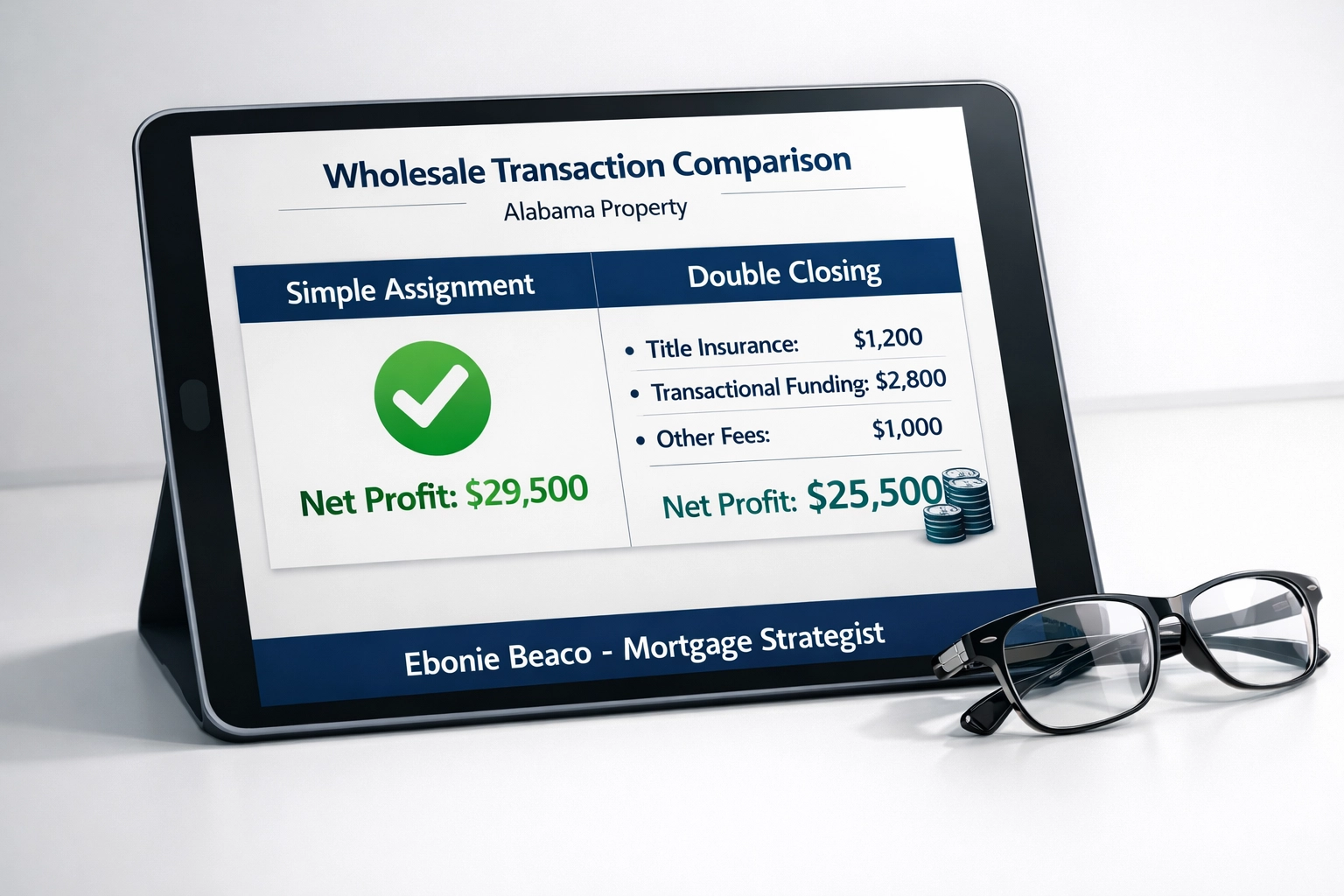
Understanding the financial implications of different closing strategies can help you determine the safest path for your specific transaction. A double closing involves two separate transactions where you briefly take title to the property, which often eliminates the need for a license since you are technically the owner for a short period. This method requires a bridge loan or transactional funding, but it provides maximum privacy and legal protection compared to a simple assignment. While an assignment of contract is cheaper because it involves fewer closing costs, it is the method most scrutinized by state regulators. For a typical deal in Florida with a $200,000 purchase price, a double closing might cost an extra $2,500 in fees but provides a much cleaner legal paper trail. You should compare these costs against the potential risk of legal action to decide which approach fits your risk tolerance and business model.
Let’s look at a practical financial example involving a wholesale deal in Alabama to see how compliance related costs affect your bottom line. Imagine you find a distressed property for $150,000 and have a buyer ready to pay $180,000, creating a gross profit of $30,000. If you choose an assignment, your only costs might be the marketing and a small legal review fee, perhaps totaling $500. However, if you opt for a double closing to ensure absolute compliance in a strict jurisdiction, you must account for title insurance, transactional funding fees, and double escrow costs. In this scenario, your transactional funding might cost $1,800, and your additional closing costs could be $2,200, bringing your net profit to $25,500. While $4,500 seems like a significant amount to spend, it is a small price to pay to avoid a $10,000 fine for unlicensed activity. Review the following chart to see how these numbers stack up when you are planning your next off-market deal.
Building a long term career in wholesaling houses requires more than just finding deals; it demands a commitment to ethical and legal excellence. By surrounding yourself with a team of experts, including a knowledgeable mortgage strategist and a real estate attorney, you can navigate the complexities of local regulations with ease. Whether you are scaling a portfolio through the home purchase process or focusing on quick flips, your reputation for compliance will attract more reliable cash buyers and better financing options. Stay informed about changes in the law across states like Kentucky, Missouri, and Arkansas, as the regulatory landscape for real estate investing is constantly evolving. Taking these proactive steps ensures that your business remains profitable and protected for years to come. Reach out today to discuss how we can help you structure your financing to support a compliant and thriving investment strategy.
Scedule a 1 on 1 at https://calendly.com/homeloansnetwork
Ebonie Beaco
Mortgage Strategist | Senior Loan Officer
Home Loans Network powered by Loan Factory Inc.
NMLS #2389954
HomeLoansNetwork.com
312-392-0664