Skin in the Game: How Much Earnest Money Do Wholesalers Really Need?

Meta Title: Earnest Money for Wholesale Real Estate: What You Need to Know Meta Description: Learn how much earnest money is required for wholesaling houses. Explore strategies for deposits, building credibility, and protecting your wholesale real estate deals.
Understanding the Role of Earnest Money in Wholesale Real Estate
When you enter the world of wholesale real estate, one of the first hurdles you face is the earnest money deposit, often referred to as EMD. This deposit functions as a "good faith" payment to the seller, showing that you are a serious buyer with the intention of fulfilling the contract. While traditional home buyers often put down 1% to 3% of the purchase price, the rules for wholesaling houses are often more flexible and negotiable. In many off-market transactions, you can secure a property with a much smaller amount than you would at a traditional retail closing. Many new investors worry that they need thousands of dollars to get started, but the reality is that your negotiation skills often dictate the deposit amount. You are effectively buying the right to purchase the property, and the EMD is the collateral that holds that right in place while you find a cash buyer.
The Spectrum of Deposits: From Ten Dollars to One Thousand
The amount of earnest money you put down can range significantly depending on the specific situation and the seller's expectations. In some circles, you might hear about wholesalers locking up deals with as little as $10 or $100, which is entirely possible when dealing with motivated, tired landlords or distressed sellers. However, as you move into more competitive markets like Chicago, Illinois, or high-demand areas in Florida and California, sellers may demand more "skin in the game." A deposit of $500 to $1,000 is often considered a professional standard that balances your risk with the seller's need for security. If you are working with a real estate agent on a pocket listing, they will almost certainly push for a higher EMD to ensure their client's time isn't being wasted. You must evaluate each deal individually to determine what amount provides enough security to the seller without over-leveraging your available operating capital.
Why Credibility is More Valuable Than a Low Deposit
While it is tempting to try to wholesale with the absolute minimum amount of cash, you must consider the message a tiny deposit sends to the seller and their representation. A $10 earnest money deposit tells a savvy seller or a listing agent that you have very little to lose if you walk away from the deal. This can lead to your offers being rejected in favor of other real estate investing professionals who present more substantial deposits. By offering a respectable EMD, such as $500 or $1,000, you immediately separate yourself from the "tire kickers" and hobbyists who are just testing the waters. Professionalism in this industry is built on trust, and a reasonable deposit is a tangible way to demonstrate that you have done your due diligence. If you want to scale your business into larger markets like Atlanta, Georgia, or Richmond, Virginia, showing that you are a well-funded professional is a strategic move.
A Practical Wholesale Deal Breakdown
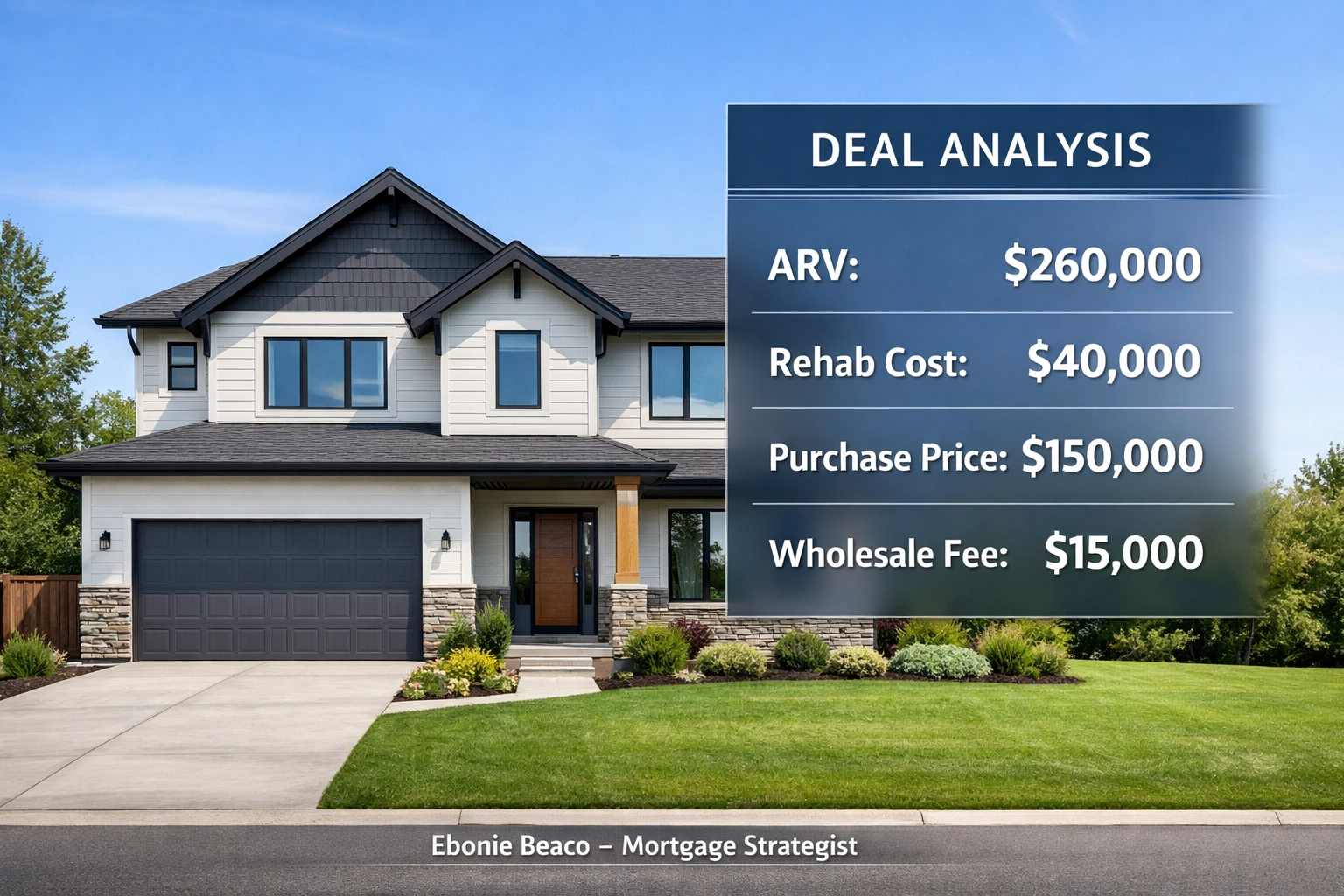
To understand how these numbers function in a real-world scenario, let's look at a typical deal analysis. Imagine you find a distressed property in a growing neighborhood in Indianapolis, Indiana, that needs significant work. You determine the After Repair Value (ARV) and calculate your maximum allowable offer based on the repair needs and your desired assignment fee.
- ARV (After Repair Value): $260,000
- Estimated Rehab Costs: $40,000
- Target Purchase Price: $150,000
- Wholesale Fee: $15,000
- Contract Price to Cash Buyer: $165,000
- Earnest Money Deposit (EMD): $1,000
In this example, your $1,000 EMD represents only about 0.6% of the purchase price, which is much lower than a retail buyer’s 3% deposit. However, that $1,000 provides enough commitment to keep the seller from looking at other offers while you market the deal to your cash buyers. If your buyer is a seasoned fix-and-flip investor, they will see the $95,000 spread between the purchase price plus rehab ($205,000) and the ARV ($260,000) as a highly attractive opportunity.
Protecting Your Deposit with Strategic Contingencies
One of the biggest fears for new wholesalers is the thought of losing their earnest money if they cannot find a buyer. This is where your contract and its contingencies become your most powerful tools for risk management. You should always include an inspection period, typically 7 to 14 days, which allows you to exit the contract and receive a full refund of your EMD if the property doesn't meet your criteria. During this window, you are essentially "test-driving" the deal with your buyers list to see if the numbers hold up under their scrutiny. If you realize the rehab is more extensive than planned or the market interest is low, you can cancel the contract within the legal timeframe. Transparency with the seller is key; you are not trying to tie up their property indefinitely, but rather ensuring the transaction is viable for all parties involved.
Financing Strategies for Your Cash Buyers
As a wholesaler, your job isn't just to find the house; it's to ensure the deal actually gets to the closing table. Many of your cash buyers may actually be using specialized financing like hard money loans or fix and flip financing rather than literal cash in a bank account. Understanding these loan products allows you to vet your buyers more effectively and provide them with resources to close the deal. For example, if your buyer is planning to hold the property as a rental, they might be looking for DSCR investor loans (Debt Service Coverage Ratio loans) that qualify the property based on its rental income rather than the buyer's personal income. By connecting your buyers with a knowledgeable mortgage strategist, you increase the likelihood of a smooth closing and a guaranteed assignment fee. You can explore more about these programs at Home Loans Network Mortgage Basics.
Scaling from Wholesaling to Long-Term Investing
Wholesaling is often the entry point into the real estate world, but most successful investors eventually want to hold assets for long-term wealth. Once you have closed several wholesale deals and built up your capital reserves, you can start looking at strategies like the BRRRR method (Buy, Rehab, Rent, Refinance, Repeat). This transition requires a deeper understanding of traditional and non-QM mortgage loans to pull your equity back out of the property after the renovation is complete. Instead of just passing a deal to someone else for a $15,000 fee, you could potentially build $50,000 in equity and generate monthly cash flow. When you are ready to make that jump, having a financing partner who understands investor logic is essential for navigating the complex world of property finance. You can learn more about the transition to becoming a landlord by visiting our Home Purchase section.
Final Thoughts on Earnest Money and Market Success
Navigating earnest money is less about the specific dollar amount and more about the strategy behind the offer. Whether you are working in the bustling suburbs of Chicago or the rural markets of Arkansas, your goal is to create a win-win scenario for the seller and your end buyer. By providing a fair EMD and using professional contracts with clear contingencies, you protect your capital while building a reputation as a reliable closer. Remember that the mortgage landscape is constantly evolving, and staying informed about how your buyers are funding their purchases will give you a competitive edge. If you ever have questions about how a specific deal's financing might impact your wholesale exit strategy, reaching out for expert guidance is always a smart move. Success in wholesale real estate is built on the foundation of solid numbers, clear communication, and a strong network of professional partners.
📞 Work With Ebonie Beaco
If you are a wholesaler looking to:
- Close more deals
- Connect your buyers with financing
- Structure deals that actually get approved
- Learn how to grow into a real estate investor
I can help you every step of the way.
Scedule a 1 on 1 at https://calendly.com/homeloansnetwork
Ebonie Beaco Mortgage Strategist | Senior Loan Officer Home Loans Network powered by Loan Factory Inc. NMLS #2389954
📱 Phone: 312-392-0664 🌐 Website: HomeLoansNetwork.com/contact-us
👉 Whether you need lending, deal structuring, or mentorship, reach out today.