Real or Faux? How to Verify a Serious Cash Buyer in Wholesale Real Estate

Wholesaling houses is an art of moving fast, but speed becomes a liability if you are tethered to a "faux" buyer who lacks the capital to cross the finish line. In high-velocity markets like Chicago, Illinois or Atlanta, Georgia, your reputation as a wholesaler is built entirely on your ability to deliver clean, off-market deals to people who actually perform. A serious cash buyer is an investor with liquid assets or pre-arranged private financing ready to deploy without the hurdles of a traditional appraisal or lengthy mortgage contingency. You might encounter "daisy-chainers" who claim to have the cash but are actually just trying to re-wholesale your contract to someone else, which adds unnecessary layers of risk to the transaction. To protect your time and your seller’s trust, you must implement a rigorous screening process that separates the professional real estate investing crowd from the window shoppers. Navigating this successfully ensures that your assignment fee is secured and your seller isn't left hanging at the closing table. Establishing a solid pipeline of verified buyers is the only way to scale a sustainable operation in the competitive world of wholesale real estate.
Proof of funds is the cornerstone of buyer verification and serves as documented evidence that the individual or entity has the financial capacity to complete the purchase. You should request a recent bank statement or a highly specific letter from a reputable financial institution that clearly shows the buyer's name and a balance exceeding the purchase price. Avoid accepting generic, undated "Proof of Funds" letters downloaded from the internet, as these are often used by unseasoned investors to mask a lack of actual liquidity. If a buyer becomes defensive or evasive when you ask for this documentation, consider it a significant red flag and move on to the next lead in your database. Legitimate cash buyers understand that transparency is the standard in professional real estate finance and will typically have these documents ready to share within minutes. You can learn more about how different assets are viewed by lenders on our mortgage basics page to better understand what constitutes valid liquidity. By insisting on high-quality documentation, you filter out the posers who are simply "testing the waters" with your off-market deals. This step remains a non-negotiable requirement for anyone serious about maintaining a high closing ratio.
Previous closing history is another powerful indicator of a buyer's reliability and their familiarity with the local market nuances in states like Virginia or Michigan. Professional real estate investing entities will usually have a portfolio or a list of recently closed transactions that you can verify through public records or title companies. Ask for the address of a property they closed on in the last ninety days to confirm they are active participants in the current market cycle. You can even call the title company they used to confirm that the transaction was smooth and that the buyer was easy to work with throughout the process. A buyer who cannot point to a single successful closing is likely a beginner who might get "cold feet" when it comes time to sign the final documents. This level of due diligence prevents you from wasting weeks on a deal that was never going to close because the buyer lacked the experience to handle property challenges. In competitive regions like Florida, having a list of proven closers allows you to skip the vetting process for every new deal you source. Verifying a track record is about more than just finding money; it is about finding a partner who knows how to execute.
Alignment with a buyer's specific "buy box" is a subtle but effective way to gauge their level of intent and professionalism. Serious investors have defined criteria for the types of properties they purchase, including specific neighborhoods, property conditions, and price points. If you bring a distressed duplex in a rural part of Indiana to a buyer who only does luxury flips in Indianapolis, a serious investor will tell you immediately that it does not fit their profile. When you communicate with potential buyers, ask them to define their target zip codes and their preferred renovation scope so you can tailor your deal flow to their needs. Buyers who claim they will "buy anything, anywhere" are often less experienced and may struggle to secure funding or manage the project once the contract is assigned. You can access more information about how different investment strategies are structured on our about us page to see how we support various investor profiles. Staying focused on buyers who have a clear strategy ensures that you aren't trying to force a deal on someone who doesn't understand the underlying value. Efficiency in this business comes from matching the right property with the right specialized investor.
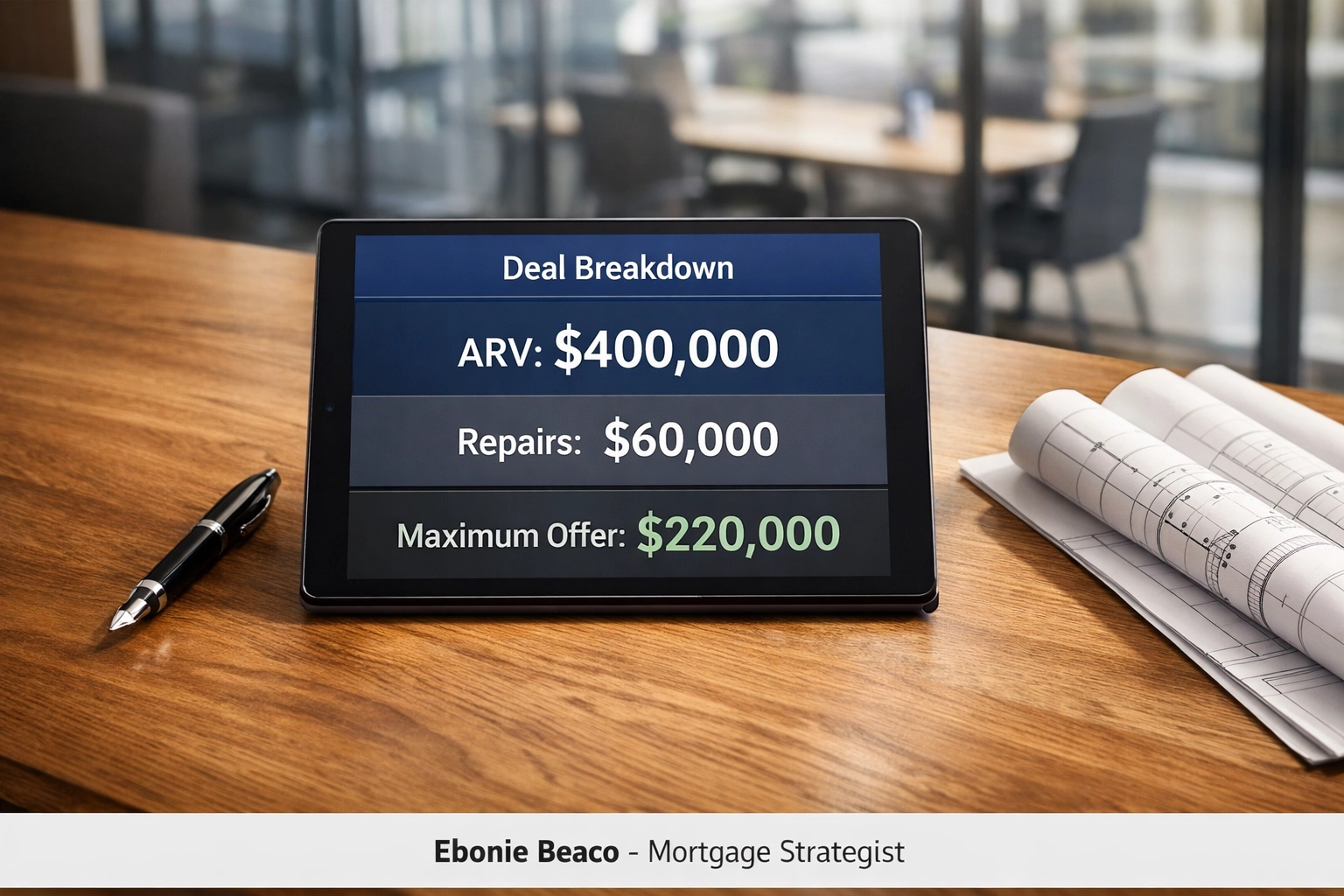
To visualize how a serious buyer analyzes a deal, let’s look at a typical scenario for a wholesale transaction in a market like Birmingham, Alabama. Imagine you are wholesaling a single-family home with an After Repair Value (ARV) of $400,000 and an estimated repair cost of $60,000. The property has significant potential for a fix-and-flip investor who understands the local demand for renovated housing. Using the 70% rule, which is a common benchmark for real estate investing, a buyer would calculate their maximum purchase price to ensure a healthy profit margin. That calculation looks like this: ($400,000 ARV x 0.70) minus $60,000 in repairs, which equals a Maximum Allowable Offer (MAO) of $220,000. If your contract with the seller is for $200,000, your wholesale assignment fee would be $20,000, making the total price to your buyer exactly $220,000. Seeing the numbers laid out clearly helps you identify if a buyer is being realistic or if they are trying to lowball your assignment fee based on a lack of market knowledge. Accurate projections are the language of serious cash buyers, and providing this data upfront builds immediate credibility.
While they are called "cash buyers," many elite investors actually use specialized financing like bridge loans or DSCR loans to leverage their capital and acquire more properties. These programs allow them to keep their liquid cash available for renovations while using the property's potential income to secure the debt. A buyer using an interest-only mortgage or a fix-and-flip loan is often just as reliable as one using straight cash, provided they have a pre-approval from a reputable lender. Understanding these options allows you to vet buyers who might be using leverage to scale their portfolios across multiple states like California or Missouri. We often see experienced landlords use these strategies to transition from wholesaling into long-term wealth building through rental acquisitions. Leveraging these specialized loan products is a sign that the investor is sophisticated and has established relationships with professional lending institutions. Being aware of how your buyers fund their deals gives you a clearer picture of their long-term capacity to perform on larger, more complex transactions.
Be vigilant about common red flags, such as buyers who consistently try to renegotiate the price a few days before the closing date without a valid reason. While a price adjustment might be necessary if a major structural issue is discovered during an inspection, a pattern of "re-trading" is a sign of an untrustworthy participant. If a buyer asks to extend the closing date multiple times, they are likely struggling to find the funds or are trying to find another buyer to take their place. You should also watch out for individuals who refuse to put down a significant non-refundable earnest money deposit, as this deposit is the ultimate proof of their commitment. Transparent communication is the hallmark of a professional, and anyone who hides their true intentions will eventually cause friction in your business. Reviewing our FAQ can help you understand common industry hurdles and how to navigate them with confidence. Protecting your contract and your seller requires you to be firm with your requirements and willing to walk away from a bad actor. Your time is your most valuable asset, and it should not be spent chasing people who aren't ready to perform.
Finally, ensure the closing process is handled through a reputable title company or real estate attorney who is familiar with wholesale assignments. Closing through a neutral third party provides a layer of security for both you and the buyer, ensuring that the title is clear and the funds are distributed correctly. Professional buyers will usually have a preferred title company, but as the wholesaler, you should strive to control the choice of the closing agent to ensure the transaction remains on track. You can find more details on how to get started with professional deal structures by visiting our contact us page for personalized guidance. Building a list of five to ten "A-list" buyers is far more effective than having a massive list of unverified contacts who never pull the trigger. As you scale your wholesaling houses business, your ability to quickly verify and communicate with these top-tier investors will define your success. Every successful closing reinforces your position as a trusted source for off-market deals in the community. Take the time to vet every new lead thoroughly, and your wholesale real estate journey will be much more profitable and far less stressful.
Scedule a 1 on 1 at https://calendly.com/homeloansnetwork
Ebonie Beaco
Mortgage Strategist | Senior Loan Officer
Home Loans Network powered by Loan Factory Inc.
NMLS #2389954
HomeLoansNetwork.com
312-392-0664