Real Estate Mentoring: Why a Mentor is Your Biggest Shortcut

Entering the real estate market often feels like stepping into a high-stakes game where the rules are written in a language you haven't fully mastered yet. Whether you are looking at properties in the busy streets of Chicago or exploring the vacation rental potential in Florida, the learning curve is steep. You have two main choices: you can spend years trying to figure it out on your own, or you can find someone who has already crossed the finish line to show you the way.
Real estate mentoring is not just a trend; it is a strategic move to protect your capital and accelerate your growth. When you go solo, every mistake comes out of your own pocket. When you have a mentor, you leverage their history of wins and losses to make better decisions for your own portfolio.
The Solitary Path: The Cost of Going Solo
Many new investors start by consuming endless hours of free content. While online resources are helpful, they lack context. A video might explain how to buy a house in Alabama, but it won't tell you why a specific block in Birmingham is a better investment than the one two streets over.
Going solo often leads to "analysis paralysis." You look at hundreds of deals on Home Loans Network but never pull the trigger because you are afraid of making a catastrophic mistake. If you do jump in without guidance, you might struggle with basic concepts like how to properly calculate a Debt Service Coverage Ratio (DSCR) or how to structure a fix-and-flip loan.
The biggest risk of going solo isn't just losing money; it is the time you lose. Every month spent "researching" without taking action is a month of lost rental income and missed appreciation.
Mentoring vs. Going Solo: A Timeline Comparison
To understand the impact of mentorship, we have to look at the timeline of a typical first deal.
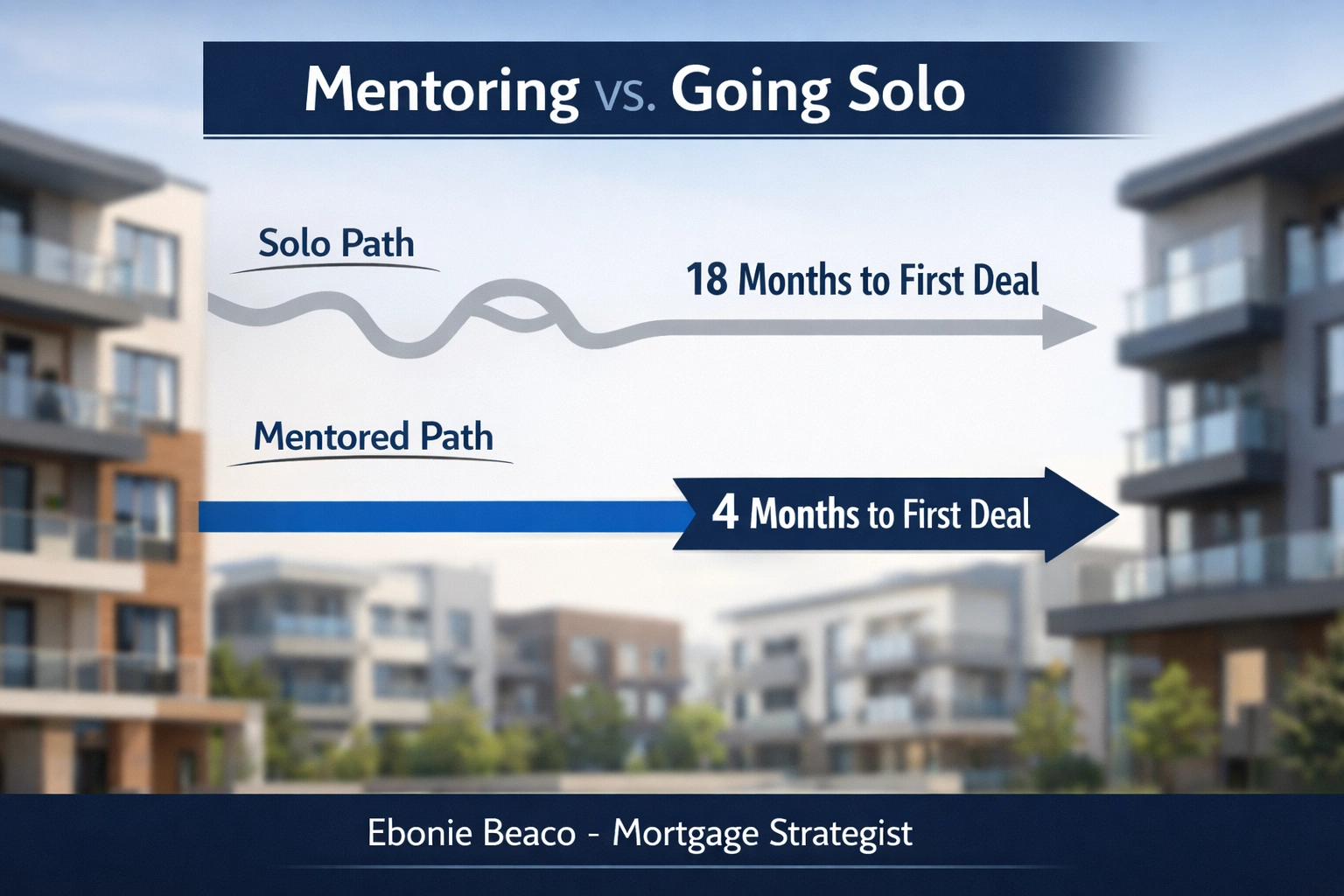 Image Description: Title "Mentoring vs. Going Solo" at the top. A visual comparison showing two timelines. Timeline A (Solo): 18 months to first deal, including 12 months of research and 6 months of rejected offers. Timeline B (Mentored): 4 months to first deal, including 1 month of strategy and 3 months of guided searching. At the bottom: Ebonie Beaco - Mortgage Loan Officer. No money or cash icons.
Accelerated Learning and Skill Development
A mentor provides a shortcut by sharing proven techniques they use every single day. Instead of guessing how to talk to a seller in Virginia or a broker in Michigan, you learn the exact scripts and negotiation strategies that work.
Skill Acquisition: The Mentor’s Edge
- Negotiation: Learning how to structure a deal so it is a win-win for everyone involved.
- Market Interpretation: Understanding whether a price drop in a California suburb is a red flag or a buying opportunity.
- Process Efficiency: Knowing exactly what documents are needed for the loan process to avoid closing delays.
According to industry research, mentored individuals often see their skills develop at triple the rate of those who are self-taught. This speed is a major factor in why professional investors continue to seek guidance even after they have closed several deals.
Risk Mitigation and Financial Safety Nets
A seasoned mentor acts as your early warning system. They have likely already made the mistakes you are about to make. In real estate, a mistake doesn't just mean a bad day at the office; it can mean a $20,000 foundation repair you didn't see coming or a loan rejection because you chose the wrong program.
By reviewing your deals before you sign, a mentor helps you identify pitfalls. They might point out that the property you found in Georgia doesn't actually meet the requirements for a DSCR investor loan because the projected rent is too low compared to the mortgage payment.
Understanding the Financing Strategy
One of the most valuable things a mentor provides is a bridge to the right financing strategies. Many new investors think they only have two options: a 20% down conventional loan or cash. A mentor who understands the mortgage landscape can introduce you to a variety of tools.
DSCR (Debt Service Coverage Ratio): A mortgage for investment properties that qualifies you based on the property’s rental income rather than your personal income. [Practical Application: This allows you to scale your portfolio without being limited by your personal Debt-to-Income ratio.]
BRRRR (Buy, Rehab, Rent, Refinance, Repeat): A strategy where you buy a distressed property, fix it up, and then use a cash-out refinance to pull your initial capital back out. [Practical Application: This is the primary method used by investors in markets like Indiana and Arkansas to grow a large portfolio with a small amount of starting capital.]
Visualizing the Deal: The Power of DSCR
When you have a mentor, they help you run the numbers to ensure the deal actually makes sense. Let’s look at a typical rental property calculation that a mentor might walk you through.
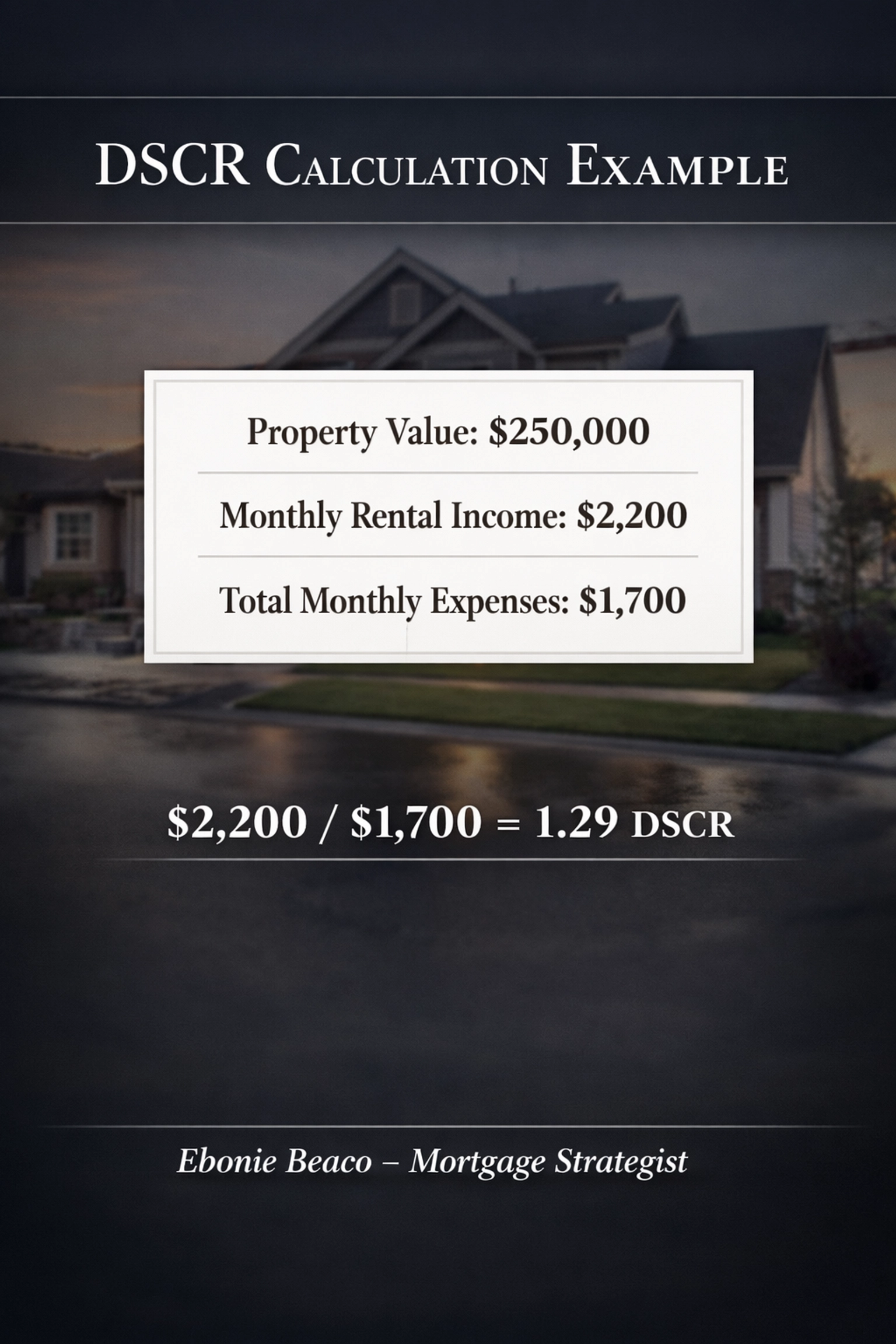 Image Description: Title "DSCR Calculation Example" at the top. A deal breakdown: Property Value: $250,000. Monthly Rental Income: $2,200. Total Monthly Expenses (PITI): $1,700. Calculation: $2,200 / $1,700 = 1.29 DSCR. Note: DSCR > 1.20 meets most lender requirements. At the bottom: Ebonie Beaco - Mortgage Loan Officer. No money or cash icons.
Expanding Your Professional Network
Your network is often your net worth in this industry. When you work with a mentor, you aren't just getting their knowledge; you are getting access to their Rolodex. This includes:
- Reliable contractors in Michigan.
- Property managers in Florida.
- Specialized real estate attorneys in Virginia.
- Mortgage strategists who understand non-QM mortgage loans.
Trying to build this network from scratch in states like Illinois or Kentucky can take years of trial and error. A mentor hands you the keys to a pre-vetted team on day one.
Local Market Insights
Real estate is hyper-local. A strategy that works for a high-rise in Chicago won't work for a single-family home in rural Arkansas. A mentor helps you navigate these regional differences.
- Florida: Focus on Airbnb and short-term rental financing.
- California: Focus on equity plays and Accessory Dwelling Units (ADUs).
- Georgia & Virginia: Focus on suburban growth and long-term rental stability.
By having a guide who understands these nuances, you avoid applying a "one-size-fits-all" approach to a market that requires a custom strategy. Check out our about us page to see how we support investors across these regions.
Accountability and Confidence Building
The mental side of real estate investing is often the hardest part. It is easy to get discouraged when a seller rejects your offer or an appraisal comes in low. A mentor provides the accountability to keep you moving forward.
They help you set realistic goals and hold you to them. If you said you would analyze five deals a week, they will check in to see if you did it. This structured environment builds the confidence you need to take calculated risks and seize opportunities when they arise.
How Mentoring Complements Your Mortgage Strategy
Finding the right property is only half the battle; the other half is finding the right money. A mentor often works closely with a mortgage strategist to ensure the financing matches the long-term goals of the investor.
Whether you are looking at home purchase options for your first property or a HELOC to access equity for your next investment, having a coordinated plan is essential.
Bridge Loans: Short-term financing used to "bridge" the gap between purchasing a property and securing long-term financing. [Practical Application: Often used for quick closings on distressed properties in competitive markets like California.]
Fix and Flip Loans: Short-term loans used to purchase and renovate a property with the intent to sell for a profit. [Practical Application: These loans focus on the After Repair Value (ARV) rather than the current condition of the home.]
Common Questions for New Investors
Do I need a mentor if I have a real estate license? Yes. Having a license means you understand the legalities of a transaction, but it doesn't mean you understand investment strategy or complex financing like DSCR and bridge loans.
How do I find a mentor? Look for active investors who are currently doing the types of deals you want to do. You can also select a loan officer who specializes in investment properties, as they are often connected to the best mentors in the industry.
Is mentoring expensive? The cost of a mentor is usually much lower than the cost of one major mistake on a property purchase. Consider it an investment in your education that pays dividends for the rest of your career.
Taking the Next Step
Real estate is a team sport. If you try to play every position yourself, you will likely get exhausted before you see any real results. By bringing a mentor and a knowledgeable mortgage strategist onto your team, you give yourself the best possible chance at success.
If you are ready to stop guessing and start growing, it is time to look at your financing and mentoring options. Whether you are in Alabama, Michigan, or anywhere in between, the right guidance is available.
Want to learn faster? Contact Ebonie Beaco for real estate mentoring and mortgage financing.
Schedule a 1 on 1 at https://calendly.com/homeloansnetwork
Ebonie Beaco Mortgage Strategist | Senior Loan Officer Home Loans Network powered by Loan Factory Inc. NMLS #2389954 HomeLoansNetwork.com 312-392-0664