Qualifying for an Investment Loan as a Veteran

Military service comes with several unique benefits, and one of the most powerful tools in your financial arsenal is the VA loan. While many veterans use this benefit to purchase a single-family home, there is a strategic way to use VA financing to build a real estate portfolio.
When people ask how veterans qualify for investment loans, the answer is often found in "house hacking." This strategy allows you to use a zero-down VA loan to acquire a multi-unit property, live in one unit, and rent out the others. It is one of the most effective ways to enter the world of real estate investing without the heavy capital requirements usually associated with commercial or conventional investment property loans.
Explore the specific requirements, strategies, and technical qualifications needed to transform your VA eligibility into a long-term wealth-building engine.
The Primary Residence Rule
The first thing to understand is that the VA loan program is strictly intended for primary residences. The Department of Veterans Affairs does not provide financing for "pure" investment properties: meaning you cannot use a VA loan to buy a house in Florida while you live in Illinois with the intention of renting it out immediately.
Occupancy Requirement: A mandatory rule stating the borrower must intend to occupy the property as their main home within 60 days of closing. Practical Application: You must physically move into the property to satisfy the legal requirements of the VA loan program.
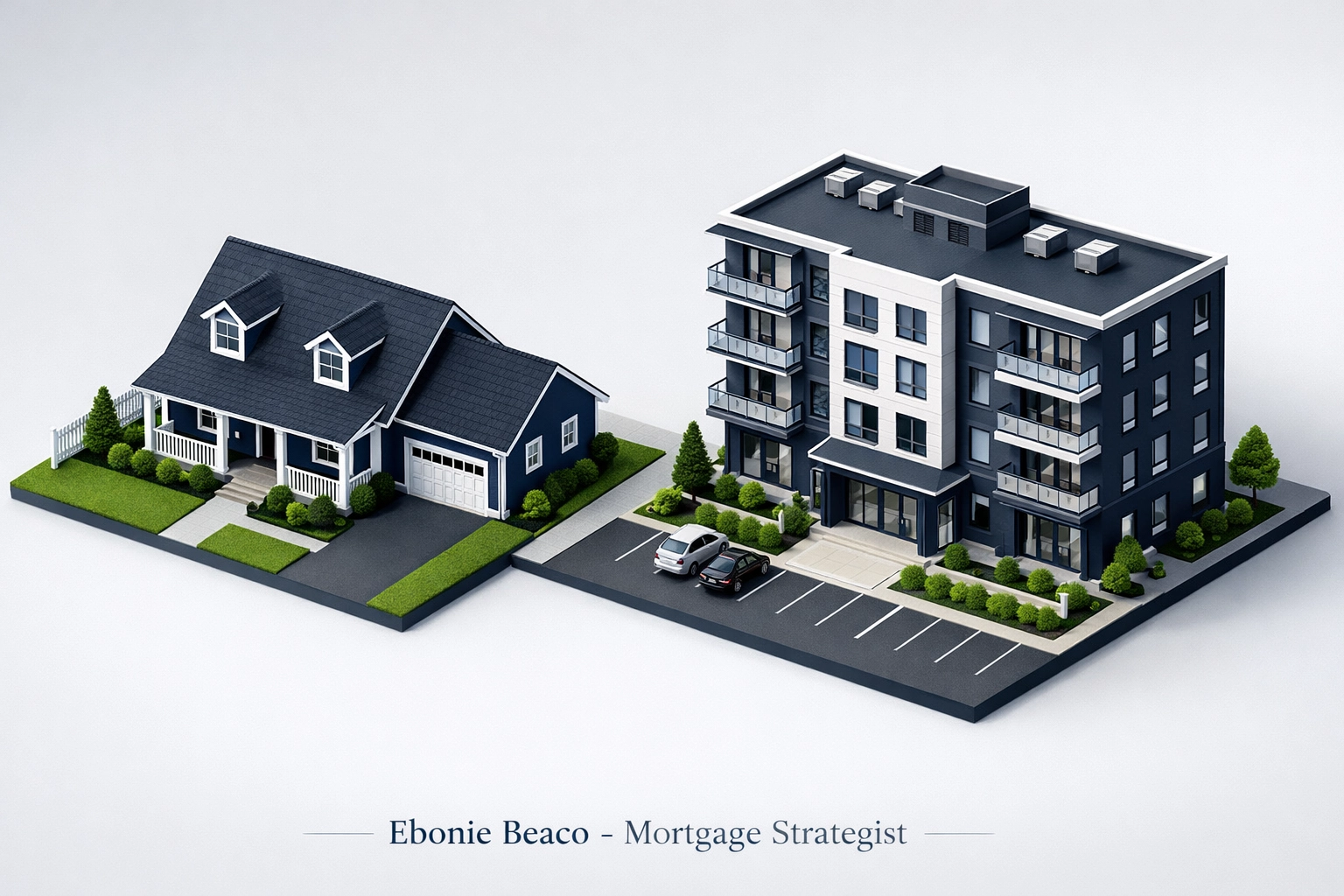
However, the definition of a primary residence includes multi-unit properties. If you purchase a duplex, triplex, or fourplex, and you occupy one of those units, the entire building qualifies for VA financing. This loophole is the key to qualifying for an investment loan as a veteran.
Multi-Unit Properties: 2 to 4 Units
You can use a VA loan to purchase a property with up to four residential units. This allows you to become a landlord the day you close. Because you are living in one of the units, the VA views the entire transaction as a home purchase rather than a business investment.
Compare this to a conventional investment loan. Most traditional lenders require 20% to 25% down for a multi-unit property. On a $600,000 fourplex, a civilian might need $150,000 in cash just for the down payment. As a veteran, you can often secure that same building with $0 down, provided you have your full entitlement.
The 12-Month Commitment
While the VA requires you to move in, you are not required to live there forever. Generally, a one-year occupancy is considered the standard for satisfying the "intent to occupy" requirement. After 12 months, you can legally move out, turn your unit into a rental, and keep the VA loan in place with its low interest rate and no monthly mortgage insurance.
Jump in and research local markets like Chicago, Atlanta, or various cities in California where multi-unit properties are common. Understanding the inventory in these regions is the first step toward a successful house hack.
 Title: Investment Loans for Veterans. Chart showing a 4-unit property: Purchase Price $600,000, Down Payment $0, VA Funding Fee $12,900 (if applicable), Total Loan $612,900. Monthly Income from 3 rented units: $4,500. Monthly Mortgage Payment: $4,100. Net Profit while living for free: $400. Ebonie Beaco - Mortgage Loan Officer.
Technical Qualifications for Veterans
Qualifying for a multi-unit VA loan involves several layers of approval. Beyond your service history, lenders look at your financial health to ensure the project is viable.
1. The Certificate of Eligibility (COE)
Before you can apply, you need your COE. This document proves to the lender that you meet the minimum service requirements.
Certificate of Eligibility (COE): An official document issued by the VA that verifies a veteran's or service member's eligibility for a VA-guaranteed loan. Practical Application: Access your COE through the VA's eBenefits portal or have your lender pull it for you to confirm your available entitlement.
2. Debt-to-Income (DTI) Ratio
While the VA is more flexible than conventional lenders, your DTI still plays a role. Most lenders prefer to see a DTI of 45% or lower, though some will go higher if you have "compensating factors" like high residual income or significant savings.
3. Credit Score Requirements
The VA itself does not set a minimum credit score, but individual lenders do. Most lenders looking at multi-unit VA loans want to see a FICO score of at least 580 to 620. If your score is lower, you might still qualify, but the terms may be more stringent.
Access more information on mortgage basics to see how credit and income impact your overall borrowing power.
Using Rental Income to Qualify
One of the best parts of buying a multi-unit property as an investment is that you can often use the projected rental income from the other units to help you qualify for the loan.
If the appraiser determines that the other three units in a fourplex will rent for $1,500 each, the lender can often count a percentage of that $4,500 toward your monthly income. This can significantly boost your purchasing power, allowing you to afford a much larger property than you could if you were relying solely on your military or civilian salary.
To understand the steps involved, review our guide on the loan process.
Beyond the VA Loan: DSCR and Non-QM Options
Sometimes, a veteran wants to buy a property that is strictly an investment, or perhaps they have already used their VA entitlement and want to keep their current home as a rental while buying another. In these cases, you might look at DSCR Investor Loans.
DSCR (Debt Service Coverage Ratio): A loan qualification method that focuses on the income generated by the property rather than the personal income of the borrower. Practical Application: If the rent covers the mortgage payment (a ratio of 1.0 or higher), you can qualify for the loan without showing tax returns or pay stubs.
These loans are popular in high-growth states like Georgia, Virginia, and Florida. They are perfect for veterans who want to scale their portfolios quickly without the occupancy restrictions of a VA loan.
 Title: Investment Loans for Veterans. Diagram comparing VA Loan (0% Down, Occupancy Required) vs. DSCR Loan (20% Down, No Occupancy Required, No Income Verification). Ebonie Beaco - Mortgage Loan Officer.
Real-World Scenario: The Chicago Fourplex
Let’s look at a practical example of how a veteran might structure a deal in a city like Chicago.
- Property Type: 4-Unit Building (Quadplex)
- Purchase Price: $800,000
- Down Payment: $0 (VA Loan)
- Monthly Mortgage (PITI): $5,800
- Rental Income (Units 2, 3, and 4): $2,100 per unit ($6,300 total)
- Your Monthly Cost: $0 (The tenants pay the entire mortgage + $500 surplus)
In this scenario, the veteran lives in Unit 1 for free. The rental income from the other units covers the entire mortgage payment. After one year, the veteran can move out of Unit 1, rent it for another $2,100, and generate a total of $2,600 in monthly cash flow above the mortgage.
This strategy is how portfolios are built. You can find more details on how to run these numbers using mortgage calculators.
Important Considerations for Veteran Landlords
Becoming a landlord is a business. Even though you are using a VA loan, you need to be prepared for the responsibilities of property management.
- The VA Appraisal: The VA appraisal is known for being strict about safety and habitability. The property must be in good condition. If you are looking at a "fixer-upper" for a fix-and-flip strategy, a standard VA loan might not work. In that case, you might explore hard money loans for the renovation phase.
- Maintenance Reserves: You should always have a cash reserve for repairs. Even if your tenants are paying the mortgage, an unexpected roof leak or furnace failure is your responsibility.
- Property Management: If you are still on active duty or prone to relocation, consider hiring a property management company. They usually charge 8% to 10% of the monthly rent but handle all tenant interactions and repairs.
Next Steps for Your Investment Journey
Qualifying for an investment loan as a veteran is about leveraging the benefits you earned through service. Whether you choose to house hack a triplex in Virginia or use a DSCR loan to buy a short-term rental in Florida, the opportunities are vast.
If you are unsure where to start or how much entitlement you have left, connecting with a strategist who understands the nuances of veteran lending is vital. You don't have to navigate the complexities of multi-unit appraisals and occupancy rules alone.
Scedule a 1 on 1 at https://calendly.com/homeloansnetwork
Ebonie Beaco Mortgage Strategist | Senior Loan Officer Home Loans Network powered by Loan Factory Inc. NMLS #2389954 HomeLoansNetwork.com 312-392-0664
For more information on the different types of loans available, feel free to visit our FAQ page or reach out via our contact page. Building wealth through real estate is a marathon, and we are here to provide the guidance you need for every mile.