Protecting Your Deposit: Essential Contingencies for Wholesale Real Estate Contracts
Wholesale real estate is a high-speed game where the ability to lock up off-market deals quickly often determines your success. However, moving fast should never come at the expense of protecting your capital, specifically your Earnest Money Deposit (EMD). In competitive markets like Chicago, Illinois, or the fast-moving suburbs of Atlanta, Georgia, wholesalers often feel pressured to submit "clean" offers to appease motivated sellers. While a clean offer is attractive, an unprotected offer is a massive liability that could result in you losing thousands of dollars if a deal falls through. Understanding how to structure your purchase agreement with the right contingencies ensures that you stay in control of the transaction from start to finish.
A contingency is a specific condition in a real estate contract that must be met for the transaction to proceed toward closing. Think of these clauses as your professional safety net that allows you to walk away from a deal without legal or financial penalty. When you are sourcing off-market deals in Virginia or Florida, you are often dealing with properties that have significant physical or legal hurdles. Without clear language protecting your interests, you might find yourself legally obligated to buy a property that your cash buyers won't touch. Experienced investors prioritize these protections because they know that one bad deal can wipe out the profits from five good ones.
The Inspection Contingency: Your Primary Escape Hatch
The inspection contingency is arguably the most important tool in a wholesaler's arsenal for protecting their deposit. This clause provides a specific window of time, usually seven to ten days, to conduct due diligence and ensure the property matches your initial repair estimates. During this period, you have the right to bring in contractors, roofers, or your end buyers to verify the condition of the home. If you discover a foundation issue in a Birmingham, Alabama property that wasn't apparent at first glance, this contingency allows you to renegotiate the price or cancel the contract. You must ensure the language is broad enough to allow a withdrawal for any reason related to your findings during the due diligence phase.
Many new wholesalers make the mistake of using a standard retail inspection clause, which can be too restrictive. In real estate investing, you want "sole and absolute discretion" language that grants you the power to determine if the property meets your investment criteria. If the inspection reveals costs that exceed your original budget, you can present these findings to the seller to justify a price reduction. This transparency helps maintain a professional relationship while ensuring the numbers still work for a potential cash buyer. Without this clause, your EMD is essentially at risk the moment the seller signs the contract, leaving you with no leverage if the deal turns sour.
Partner Approval Clauses for Strategic Flexibility
A partner approval contingency is a subtle but effective way to add an extra layer of protection to your wholesale real estate contracts. This clause states that the contract is subject to the final approval of your "business partner" or an associate within a set timeframe. In the world of real estate investing, your "partner" could be a financial backer, a mentor, or even your primary cash buyer who needs to sign off on the numbers. This is particularly useful when you are negotiating off-market deals in California or Indiana where market values can shift rapidly. It gives you an "out" if your primary exit strategy fails to materialize within the first few days of the agreement.
Using this contingency requires a balance of transparency and professionalism so the seller feels confident in your intent to close. You can explain to the seller that while you are the primary point of contact, your organization requires a final review of the deal structure before moving to escrow. This approach is common in commercial real estate and larger residential transactions throughout markets like Richmond, Virginia, or Indianapolis. It allows you to vet the deal thoroughly without the immediate pressure of a non-refundable deposit looming over your head. When used correctly, it positions you as a sophisticated investor who follows a disciplined acquisition process.
Ensuring a Marketable and Clear Title
No wholesale deal can successfully close without a clear and marketable title, making a title contingency an absolute necessity. This protection ensures that the seller actually has the legal right to sell the property and that no hidden liens or encumbrances exist. In many distressed off-market deals found in cities like St. Louis, Missouri, or Little Rock, Arkansas, properties may have unpaid property taxes, utility liens, or heirship issues. A title contingency stipulates that if the title company cannot provide "clear and insurable title," you have the right to cancel the contract and receive a full refund of your EMD. You should never waive this requirement, even if the seller claims the title is perfect.
Clear title is the foundation of any successful exit strategy, whether you are doing an assignment of contract or a double closing. If your cash buyer discovers a cloud on the title during their own due diligence, they will immediately back out of the deal. If you don't have a title contingency in place, you could be stuck in a legal limbo where you can't sell the property but the seller refuses to return your deposit. We always recommend working with a investor-friendly title company that understands the nuances of wholesaling and can identify potential red flags early. Protecting yourself against title defects is a non-negotiable part of being a professional mortgage strategist and investor.
Case Study: Breaking Down the Wholesale Numbers
To understand why these contingencies are so vital, let’s look at a real-world deal breakdown for a property in a suburb of Chicago. Let's say you find a distressed ranch-style home and estimate the following figures.
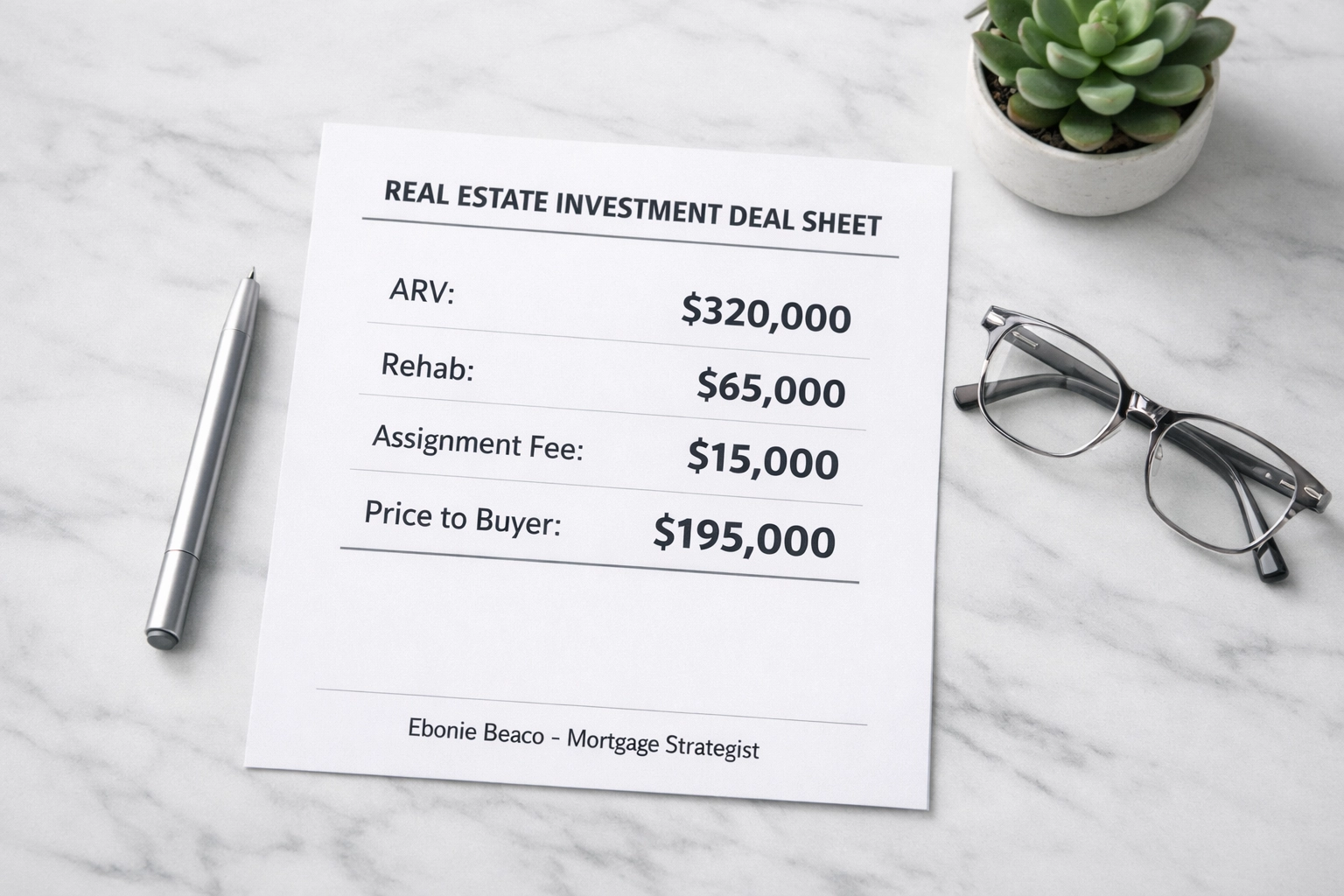
Wholesale Deal Breakdown Example:
- After Repair Value (ARV): $320,000
- Estimated Rehab Costs: $65,000
- Target Profit for Buyer: $45,000
- Your Contract Price with Seller: $180,000
- Wholesale Assignment Fee: $15,000
- Price to Cash Buyer: $195,000
In this scenario, you put down a $2,500 Earnest Money Deposit to secure the contract at $180,000. During your inspection period, your contractor discovers that the HVAC system and the roof both need total replacement, adding $20,000 to your rehab estimate. Suddenly, the rehab is $85,000 instead of $65,000, and your cash buyer will only pay $175,000 for the deal. Because you included a strong inspection contingency, you can go back to the seller, show them the $20,000 in additional repairs, and renegotiate your purchase price to $160,000. If the seller refuses, you can exercise your contingency, cancel the contract, and get your $2,500 deposit back in full.
The Role of Escrow in Protecting Your Capital
Where you place your deposit is just as important as the contingencies you write into the contract. You should never, under any circumstances, give your Earnest Money Deposit directly to the seller of an off-market deal. Instead, the funds must be held by a neutral third party, such as a title company or an escrow attorney, depending on the laws in states like Florida or Kentucky. These entities are bound by strict fiduciary duties to hold the funds until all conditions of the contract are met. If a dispute arises, the escrow agent follows the written instructions in the contract rather than the whims of a frustrated seller.
Using a professional escrow service also adds a level of legitimacy to your offer that sellers in markets like Virginia or Michigan appreciate. It signals that you are a serious investor who follows standard real estate procedures and has the liquidity to move forward. When you use the Home Loans Network loan process, you see the value of having a structured path toward closing. If a seller insists on holding the deposit themselves, it is a major red flag that should make you reconsider the entire transaction. Protecting your capital starts with keeping it out of the hands of the person you are negotiating against.
Scaling from Wholesaling to Long-Term Investing
While wholesaling is an incredible way to generate active income and learn the markets in places like Southern California or Northern Virginia, many wholesalers eventually want to scale into rentals or fix-and-flips. Transitioning from assigning contracts to actually closing on properties requires a deeper understanding of financing and deal structure. This is where working with a mortgage strategist becomes invaluable. You can learn to use strategies like DSCR (Debt Service Coverage Ratio) loans or fix-and-flip financing to build long-term wealth. Understanding contingencies now will make you a much stronger borrower and investor when you decide to hold your own assets.
If you are looking to grow your business, you need a partner who understands the transition from finding deals to funding them. Many wholesalers find that once they have a reliable financing partner, they can take down deals themselves that they would have previously assigned for a small fee. This allows you to capture the full spread of a renovation or the long-term appreciation of a rental property. Whether you are navigating the mortgage basics or looking for advanced investor loan programs, having the right guidance is the key to longevity in this industry. Protect your deposits today so you have the capital to invest in your future tomorrow.
📞 Work With Ebonie Beaco
If you are a wholesaler looking to:
- Close more deals
- Connect your buyers with financing
- Structure deals that actually get approved
- Learn how to grow into a real estate investor
I can help you every step of the way.
Ebonie Beaco Mortgage Strategist | Senior Loan Officer Home Loans Network powered by Loan Factory Inc. NMLS #2389954
📱 Phone: 312-392-0664 📧 Schedule a 1 on 1: https://calendly.com/homeloansnetwork 🌐 Website: HomeLoansNetwork.com/contact-us
👉 Whether you need lending, deal structuring, or mentorship, reach out today.