Off-Market Deal Secrets Revealed: What Experts Don't Want You to Know About Florida Real Estate Investing

Finding a great real estate deal in Florida usually feels like trying to win a lottery where everyone already has the winning numbers.
If you are only looking at the Multiple Listing Service (MLS), you are competing with every retail buyer, hedge fund, and seasoned investor in the country.
The real profit in Florida real estate investing happens before a property ever hits a public website.
This is the world of off-market deals and real estate wholesaling.
The Truth About Off-Market Real Estate
Real estate wholesaling is the practice of finding distressed properties, securing them under contract at a deep discount, and assigning that contract to an end buyer for a fee.
Finding off-market properties refers to the process of identifying homeowners who are willing to sell but haven't listed their homes with a realtor yet.
Many people believe these deals are "secrets" kept by a small elite.
In reality, about 40% of recent investor purchases were off-market transactions.
The secret isn't a special club; it is the specific lead generation strategies and the persistence required to find these opportunities.
Why Florida is the Epicenter for Wholesaling
Florida remains one of the most active markets for real estate wholesaling because of its high volume of distressed inventory and out-of-state owners.
Whether you are looking in Miami, Tampa, Orlando, or Jacksonville, the high turnover in housing creates constant opportunities for those who know where to look.
Florida real estate investing offers unique advantages like tax deed sales and a high concentration of pre-foreclosure opportunities.
You can explore more about the foreclosure process to understand how these timelines work for investors.
Jump in and learn the specific methods used by the pros in Florida, California, and Atlanta.
Strategy 1: Driving for Dollars
Driving for dollars is the act of physically driving through neighborhoods to identify properties that show signs of neglect.
Look for tall grass, boarded-up windows, overflowing mailboxes, or peeling paint.
These visual cues often suggest a homeowner who is overwhelmed or a property that has been abandoned.
In markets like Atlanta or the Central Valley of California, this is often the most cost-effective way to find high-equity leads that no one else has contacted.
Once you find a property, you use skip tracing tools to find the owner's phone number or mailing address.
Strategy 2: Niche Data Lists
Prospective wholesalers don't just wait for deals; they hunt for specific data sets that indicate a high motivation to sell.
Probate Lists: These include properties where the owner has passed away and the heirs may want to liquidate the asset quickly.
Code Violations: Homeowners who are being fined by the city for property upkeep issues are often ready to walk away from the headache.
Tax Delinquencies: If someone hasn't paid their property taxes in two years, they are likely facing financial strain and may welcome a cash offer.
Water Shut-offs: This is a strong indicator that a property is vacant and potentially distressed.
Strategy 3: The Direct Mail Engine
Direct mail involves sending postcards or handwritten letters to the owners identified in your niche lists.
While many think mail is dead, it remains a staple for Florida real estate investing because it reaches older demographics who may not be active on social media.
Consistency is the most important factor here; you often need to mail the same owner five to seven times before they decide to call you.
Your message should be simple: "I want to buy your house for cash, as-is, with no repairs needed."
Strategy 4: Networking with "Gatekeepers"
Not every lead comes from a list.
Some of the best off-market deals come from people who interact with homeowners in distress daily.
Build relationships with divorce attorneys, probate lawyers, and even local mail carriers.
In high-competition areas like Los Angeles or San Diego, having a "bird dog" who tips you off to a vacant house can be the difference between a $50,000 assignment fee and a missed opportunity.
Understanding the Wholesale Deal Structure
When you find a deal, you need to understand the math to ensure it is actually a deal for your end buyer.
Most wholesalers use the 70% rule as a baseline.
70% Rule: Take the After Repair Value (ARV), multiply it by 0.70, and subtract the estimated repair costs to find your Maximum Allowable Offer (MAO).
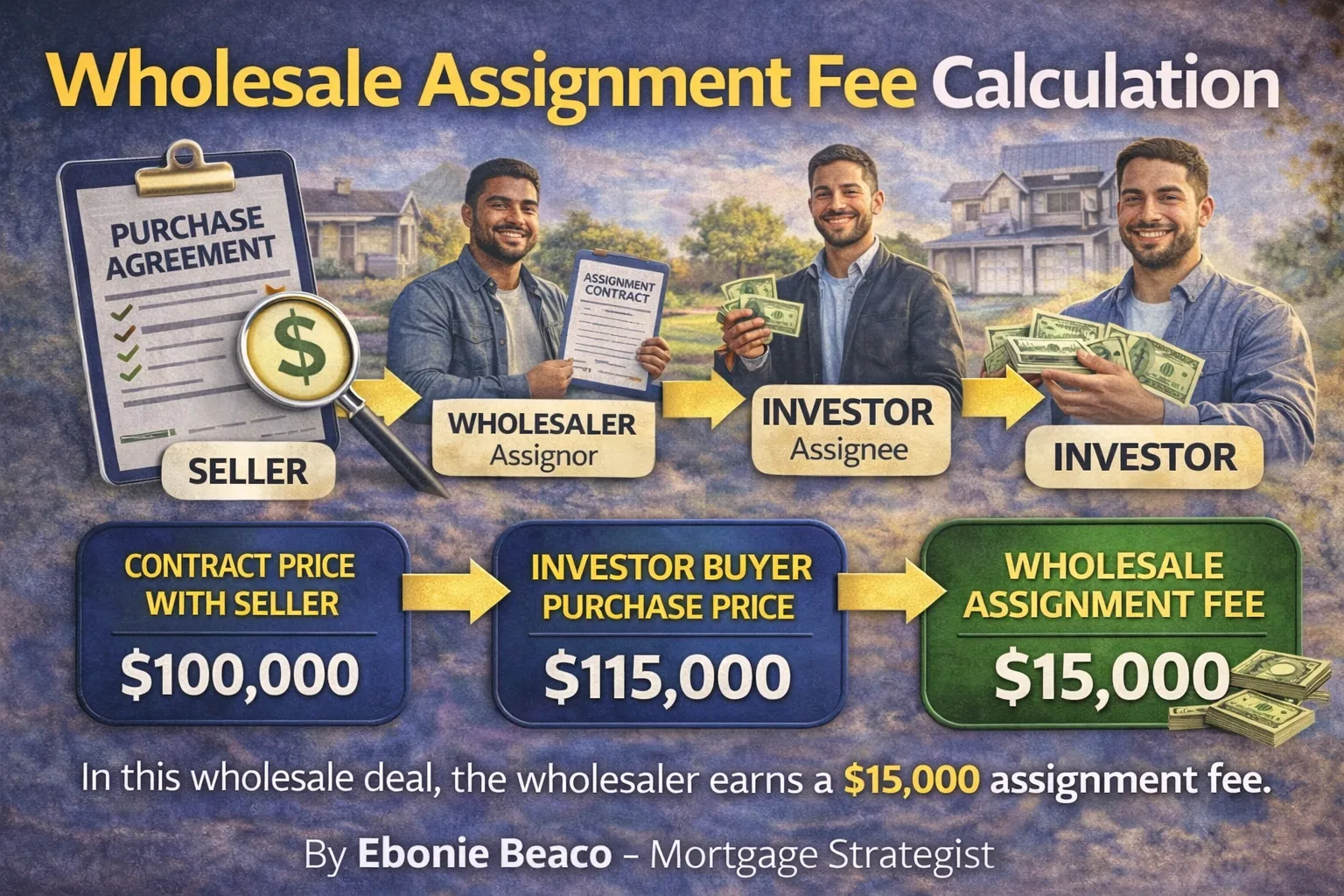
If a house in a nice Atlanta suburb is worth $300,000 fully renovated, but needs $50,000 in work, your MAO would be $160,000 ($300,000 x 0.70 = $210,000; $210,000 - $50,000 = $160,000).
If you get it under contract for $140,000, you can assign it to an investor for $155,000 and keep a $15,000 assignment fee.
Real Estate Wholesaling in California vs. Georgia
While the fundamentals are similar, the price points and legal nuances vary by state.
In California, the high barrier to entry and massive property values mean assignment fees can be much larger, sometimes exceeding $100,000 on a single deal.
However, the competition is fierce, and you must be incredibly accurate with your appraisal knowledge.
In Atlanta, the market moves fast, and investors are often looking for high-yield rental properties.
Wholesalers in Atlanta often focus on the BRRRR (Buy, Rehab, Rent, Refinance, Repeat) strategy to help their buyers build portfolios.

Description: A comparison graphic showing typical property price points and investment yields for wholesalers in Florida, California, and Georgia.
Financing the Exit: Why the Buyer’s Loan Choice Concerns You
As a wholesaler, you aren't usually the one getting the loan, but you need to know if your buyer can close.
If your end buyer is using a traditional mortgage, they may run into issues with the property condition or the assignment fee disclosure.
Most successful off-market deals are closed with cash, hard money, or specialized investor loans.
DSCR Loans: Debt Service Coverage Ratio loans allow investors to qualify based on the property’s rental income rather than their personal income.
Fix and Flip Loans: These are short-term bridge loans specifically designed for investors who plan to renovate and sell.
If your buyer needs to explore these options, they can check out online forms to start the qualification process.
Analyzing the Returns: Cap Rates and Cash-on-Cash
When you present a deal to a Florida real estate investor, they want to see the numbers.
You should be able to explain the Cap Rate and the projected Cash-on-Cash return.
Cap Rate: The Net Operating Income (NOI) divided by the purchase price.
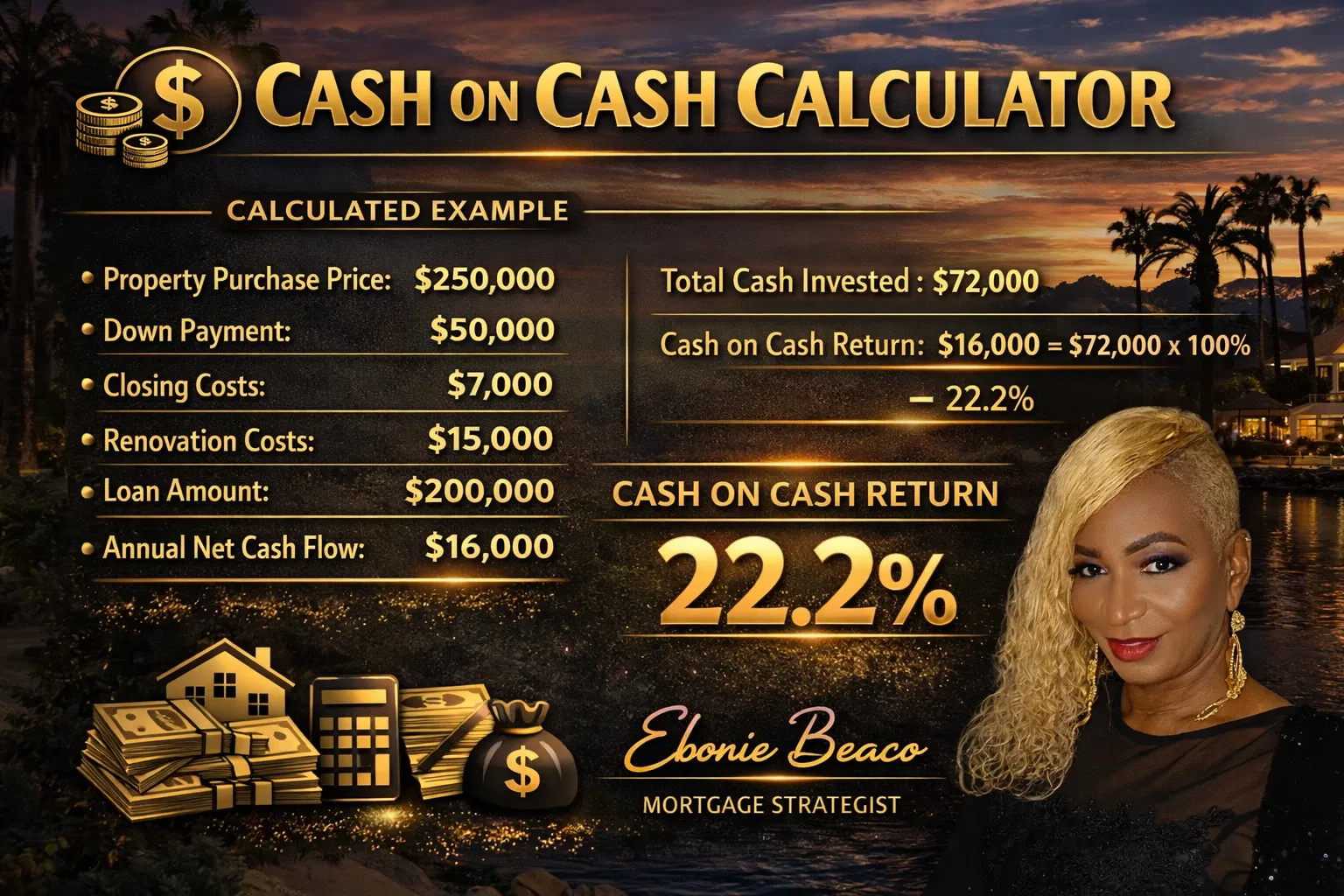
Cash-on-Cash Return: The annual pre-tax cash flow divided by the total cash invested.

For example, if an investor buys a Florida duplex for $400,000 and it generates $32,000 in annual profit after expenses, the Cap Rate is 8%.
If they used a home purchase loan with a 20% down payment, their Cash-on-Cash return would likely be much higher due to the power of leverage.
Common Pitfalls in Florida Off-Market Investing
The biggest mistake new wholesalers make is overestimating the ARV or underestimating repairs.
Florida homes often face specific issues like sinkhole activity, old roofs that won't pass insurance inspections, and outdated electrical panels.
If you tell an investor a house needs $20,000 in repairs and it actually needs $50,000, you will lose your credibility instantly.
Always conduct a thorough title search.
Off-market properties often have "clouds" on the title, such as utility liens or old mortgages that weren't properly discharged.
You can learn more about these technical terms in our glossary.
How to Scale Your Lead Generation
If you want to move from finding one deal a year to one deal a month, you must automate your systems.
Professional wholesalers use Customer Relationship Management (CRM) software to track every lead and automated follow-up sequences.
Access data providers that offer "likely to sell" scores based on predictive analytics.
Compare your marketing spend against your closed deals to see which lists provide the best Return on Investment (ROI).
Moving from Wholesaler to Investor
Many people start in real estate wholesaling to build the capital needed for their own rentals or flips.
Once you have a few assignment fees under your belt, you might consider a cash-out refinance on a primary residence to fund your first solo purchase.
Using your own equity is a powerful way to transition from the "hustle" of wholesaling to the "wealth building" of property ownership.
Final Thoughts on Off-Market Deals
The experts aren't hiding secrets; they are simply outworking the competition.
Finding off-market properties in Florida, California, and Atlanta requires a blend of data analysis, marketing, and relationship building.
Whether you are looking for your first wholesale deal or you are an experienced investor looking for your next DSCR rental, understanding the off-market landscape is essential.
If you have questions about how to finance these types of properties or want to run a scenario by an expert, we are here to help.
Schedule a 1 on 1 at https://calendly.com/homeloansnetwork
Ebonie Beaco
Mortgage Strategist | Senior Loan Officer
Home Loans Network powered by Loan Factory Inc.
NMLS #2389954
HomeLoansNetwork.com
312-392-0664