Mortgage Rates Today: How Current Inventory Trends Impact Illinois and Florida Homebuyers

Mortgage rates continue to hold a steady course as we cross the midpoint of May 2026. As of today, Wednesday, May 20, 2026, the national average for a 30-year fixed-rate mortgage sits at approximately 6.72%, while 15-year fixed-rate options are hovering near 6.08%. These figures represent a slight uptick from the dips we witnessed in February, yet they remain considerably more favorable than the peaks seen in previous years. For homebuyers in active markets like Illinois and Florida, the primary focus is no longer just the interest rate itself, but how these rates interact with the current supply of available homes. Understanding the shift in housing inventory is essential for anyone looking to secure a property in today’s environment.
Defining the Market: Key Real Estate Inventory Terms
To navigate the current housing landscape effectively, you must understand the technical metrics that lenders and real estate professionals use to evaluate market health. These terms provide a snapshot of the competition you will face and the negotiating power you might hold during a transaction.
- Housing Inventory: The total number of active residential listings available for sale in a specific market at a given time. This figure serves as the baseline for determining whether a region is experiencing a surplus or a shortage of homes.
- Months of Supply: A calculation that estimates how long it would take for all current listings to sell if no new homes were added to the market. A supply of four to six months typically indicates a balanced market between buyers and sellers.
- Days on Market (DOM): The average number of days a property remains active before going under contract. Lower DOM figures indicate high demand and a fast-moving market, often requiring buyers to act quickly with pre-approved financing.
- Absorption Rate: The percentage of available homes that are sold during a specific time period. A high absorption rate suggests a seller's market, where demand significantly outpaces the available housing stock.
The Illinois Landscape: Chicago Supply vs. Suburban Demand
The Illinois real estate market continues to demonstrate a unique dichotomy between urban centers and suburban environments. In the Chicago metropolitan area, we are seeing a notable increase in the inventory of condominiums and townhomes, providing more options for those looking to live within the city limits. This increased supply has led to more frequent price adjustments, giving buyers additional leverage during the inspection and closing phases. Conversely, the demand for single-family homes in desirable suburbs remains exceptionally high, keeping months of supply at historically low levels.

For investors focusing on the Illinois market, multi-unit properties continue to be a primary target. Areas such as Logan Square, Avondale, and the surrounding Chicago neighborhoods are seeing steady activity for two-to-four-unit buildings. These properties allow investors to utilize residential financing while benefiting from multiple streams of rental income. Because inventory in the multi-family sector is still relatively tight, many investors are turning to specialized products like DSCR investor loans to bypass the lengthy documentation requirements of traditional bank loans. This allows for faster closings and a more competitive edge in a market where the best deals often receive multiple offers within the first weekend of listing.
The Florida Outlook: Rising Supply in Coastal Hubs
Florida’s housing market is currently experiencing a significant transition as inventory levels rise across several major metropolitan areas. Cities like Tampa, Orlando, and Jacksonville have seen a marked increase in active listings compared to the same period last year. This trend is partially driven by a surge in new construction as builders work to meet the needs of the state's growing population. However, the rise in supply is also influenced by increasing costs of property insurance and flood insurance, which has prompted some homeowners to list their properties and search for inland alternatives.

For homebuyers and investors in the Sunshine State, this shift in inventory creates a "patchwork" market where opportunities vary significantly by ZIP code. In coastal regions where supply is more plentiful, buyers are finding more room for negotiation and seller concessions, such as temporary interest rate buydowns. Meanwhile, in affordable inland hubs, competition remains steady but far less frenetic than the "bidding war" era of 2021. If you are exploring the Florida market, it is vital to compare your financing options, including Non-QM mortgage loans and bank statement loans, which can be particularly beneficial for self-employed individuals and entrepreneurs moving to the state.
The Correlation Between Mortgage Rates and Housing Supply
There is a direct and powerful link between today’s mortgage rates and the volume of homes available for sale. This phenomenon is often referred to as the "rate lock-in effect." Many current homeowners are sitting on existing mortgage rates between 2% and 4%, which makes them hesitant to sell their homes and trade up to a new property at a 6.72% rate. This hesitation keeps existing inventory low, even as demand remains resilient among first-time buyers and relocating professionals.
Explore how even a small shift in interest rates can trigger a wave of new listings. When rates dip toward the 6% mark, we often see a surge in "move-up" buyers who finally feel comfortable making a transition. For those currently in the market, waiting for rates to drop significantly can be a risky strategy, as a decrease in rates often leads to a spike in competition, which can drive home prices higher and wipe out the savings gained from a lower interest rate. Jump in now to evaluate your current equity and determine if a cash-out refinance could provide the capital needed to acquire your next property while inventory is still manageable.
Strategic Financing: Navigating Low Inventory with DSCR and HELOCs
In a market where traditional inventory may be limited, savvy investors and homeowners are using creative financing strategies to build wealth. Two of the most effective tools in the current environment are Debt Service Coverage Ratio (DSCR) loans and Home Equity Lines of Credit (HELOCs). These programs allow you to leverage the income potential of a property or the existing equity in your home to expand your real estate portfolio without the constraints of a traditional W-2 income verification.
DSCR Loans for Portfolio Growth
DSCR loans are designed specifically for real estate investors. Instead of looking at your personal income, the lender evaluates the rental income of the property itself. If the property generates enough rent to cover the mortgage payment, taxes, and insurance, you can qualify for the loan. This is an excellent solution for investors in Illinois and Florida who want to scale their portfolios quickly.
HELOCs for Renovations and Acquisitions
A HELOC functions as a revolving line of credit tied to your home's equity. Many homeowners in high-appreciation states like California, Florida, and Virginia are using HELOCs to fund down payments on investment properties or to pay for renovations on "fix-and-flip" projects. This strategy allows you to keep your low-rate first mortgage intact while still accessing the cash needed to capitalize on new opportunities in the market.
Financial Breakdown: Analyzing a Chicago Multi-Unit Deal
To understand how these strategies work in a real-world scenario, let's examine a recent investment deal for a four-unit building in Chicago. In this example, the investor used a DSCR loan to acquire the property based on its projected rental income.
- Property Value: $600,000
- Loan Amount (75% LTV): $450,000
- Monthly Rental Income: $6,000 ($1,500 per unit)
- Monthly PITIA (Principal, Interest, Taxes, Insurance, Association): $4,500
- DSCR Calculation: $6,000 / $4,500 = 1.33
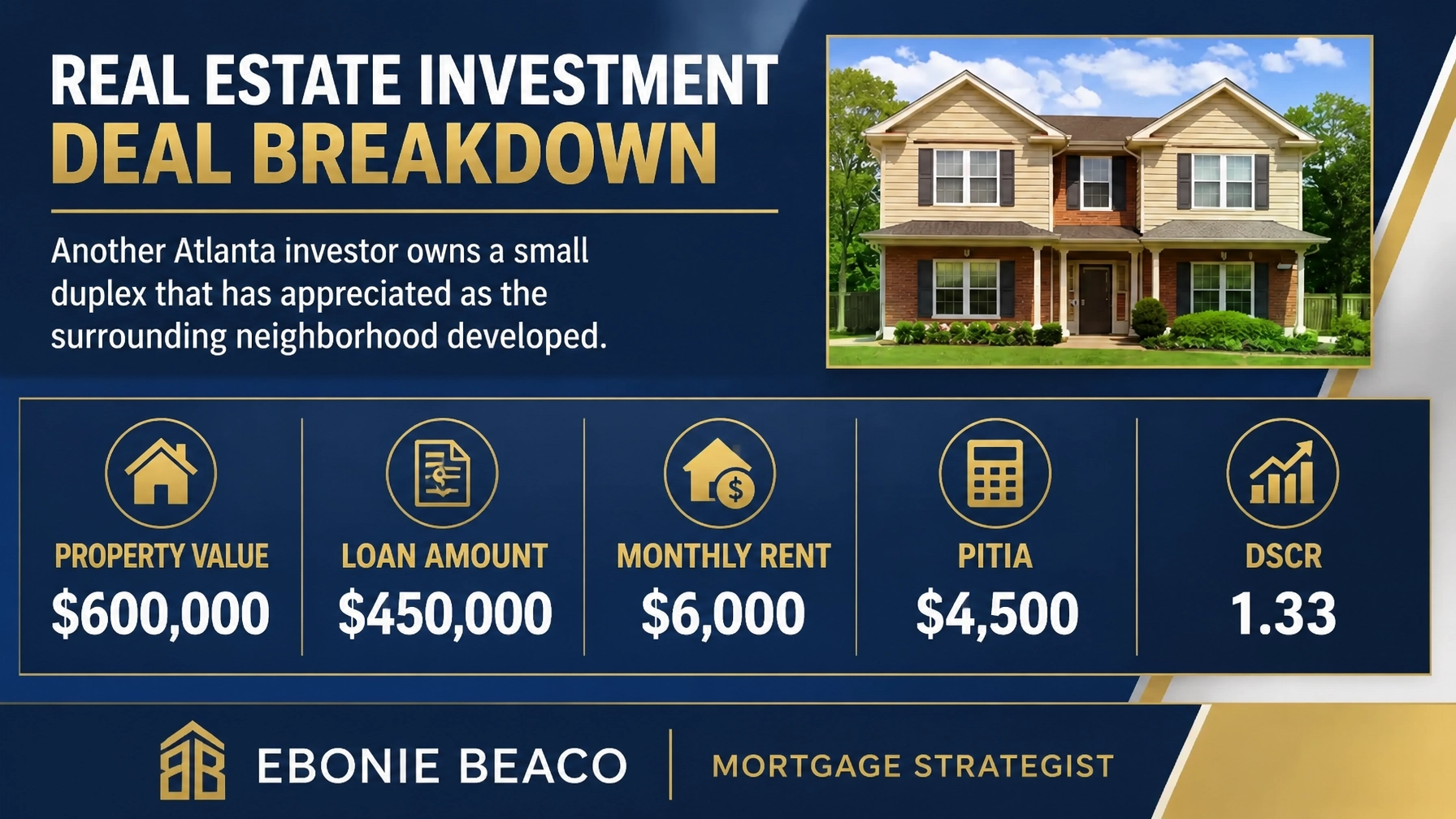
With a DSCR of 1.33, this property easily qualifies for investor financing. The positive cash flow of $1,500 per month provides a buffer for maintenance and vacancies while allowing the investor to build equity over time. This type of analysis is crucial for anyone looking to enter the rental market in 2026. By focusing on the numbers rather than just the purchase price, you can identify properties that provide long-term financial stability regardless of minor fluctuations in the national mortgage rate.
Future Projections for 2026 Borrowers
As we look toward the second half of 2026, the housing market appears to be settling into a "new normal." While we may not return to the ultra-low rates of the early 2020s, the current mid-6% range is manageable for those who utilize the right mortgage strategies. Access the latest mortgage calculators to run your own numbers and see how current rates align with your budget.

Whether you are a first-time homebuyer in Virginia, a seasoned landlord in Michigan, or an Airbnb operator in Florida, the key to success is staying informed about local inventory trends. Inventory levels will likely continue to rise slowly throughout the year, providing more opportunities for those who are prepared with pre-approvals and a clear understanding of their financing options. Compare different loan programs and stay focused on your long-term goals rather than short-term market noise.
The current environment rewards those who take a proactive approach to their real estate financing. By understanding the influence of inventory on pricing and competition, you can position yourself to make a confident and informed decision. If you have questions about how these trends affect your specific situation, I am here to guide you through the process with transparency and expertise.
Schedule a 1 on 1 at https://calendly.com/homeloansnetwork
Ebonie Beaco Mortgage Strategist | Senior Loan Officer Home Loans Network powered by Loan Factory Inc. NMLS #2389954 HomeLoansNetwork.com 312-392-0664