Mortgage News Today: Why Everyone Is Talking About Rate Shifts in California and Florida (And You Should Too)

As we move through late May 2026, the mortgage landscape is showing a fascinating split between the East and West coasts, leaving many homeowners and investors wondering where to place their capital next. In California, the market is finally taking a breath after years of relentless price appreciation, while Florida continues to serve as a magnet for rental property investors seeking high cash flow. Mortgage rates have settled into a consistent groove, hovering in the low to mid 6% range, which has brought a sense of predictability that was missing during the volatile swings of previous years. For those of you navigating these markets, understanding these micro-trends is essential for making informed decisions about buying or refinancing.
The California Climate: Slower Appreciation and Higher Leverage
In the Golden State, the headline news for May 2026 is the noticeable cooling of price growth. While California remains one of the most expensive regions in the country with a median home price near $855,300, the pace of sales has slowed, and homes are staying on the market for an average of 50 days. This shift provides you with more leverage during negotiations than you might have had even a year ago, as more sellers are open to price cuts or closing cost credits. Current 30-year fixed rates in California are averaging around 6.69%, slightly higher than the national average but trending downward compared to this time last year.
Explore our home purchase options to see how these current California rates fit into your budget. This environment is particularly interesting for those looking at primary residences where the "wait and see" approach is being replaced by strategic entry. With inventory levels showing signs of improvement, you now have the luxury of time to inspect properties and structure deals that protect your long-term interests. The days of waived inspections and blind bidding wars are largely in the rearview mirror for most California zip codes.
Florida Dynamics: The Rental Market Resilience
Across the country, Florida remains a powerhouse for real estate investment, particularly for those focusing on short-term rentals and the growing demand for long-term multi-unit housing. The inventory in the Sunshine State is becoming more favorable for buyers, and national mortgage rates are tracking near 6.35%, making financing more accessible for many investors. Florida’s unique position as a top destination for domestic migration provides a stable floor for rental demand, even as interest rates fluctuate. This stability is why so many landlords are moving away from traditional bank financing and toward more flexible lending solutions.

Investors in Florida are increasingly utilizing the DSCR loan to scale their portfolios without the hurdles of personal income verification. Whether you are looking at a condo in Miami or a duplex in Orlando, the focus has shifted from your personal tax returns to the property's ability to generate cash. Many of our clients are successfully using DSCR investor loans to acquire properties that would otherwise be difficult to finance through conventional channels. This trend is particularly visible in high-velocity markets like Tampa and Jacksonville, where the BRRRR method (Buy, Rehab, Rent, Refinance, Repeat) remains a popular strategy for wealth building.
Defining the Key Terms for Today’s Market
To navigate the current news cycle, it is helpful to have a clear understanding of the financial tools being discussed by industry experts.
- DSCR (Debt Service Coverage Ratio): A metric that measures a property's ability to cover its own mortgage payment through rental income. You use this to qualify for a loan based on the property’s cash flow rather than your personal salary or debt-to-income ratio.
- Non-QM (Non-Qualified Mortgage): A category of home loans designed for borrowers who do not meet the strict criteria of government-backed loans. These are ideal for self-employed entrepreneurs or investors who have significant assets but complex tax returns.
- Cash-Out Refinance: A mortgage strategy where you replace your existing loan with a new one for a larger amount, taking the difference in cash. This allows you to access the equity in your home to fund renovations, pay off high-interest debt, or purchase additional investment properties.
- Basis Point: A unit of measure used in finance to describe the percentage change in the value of financial instruments. One basis point is equal to 0.01%, so a 50-basis point drop in mortgage rates represents a 0.50% decrease.
The Strategy Corner: Calculating Your Investment Potential
Understanding the math behind your financing is the first step toward a successful transaction. In today's market, lenders are looking closely at how much cushion a property provides between its rental income and its monthly obligations. A common benchmark for a strong investment is a DSCR of 1.25 or higher, which indicates the property generates 25% more income than the cost of the debt.
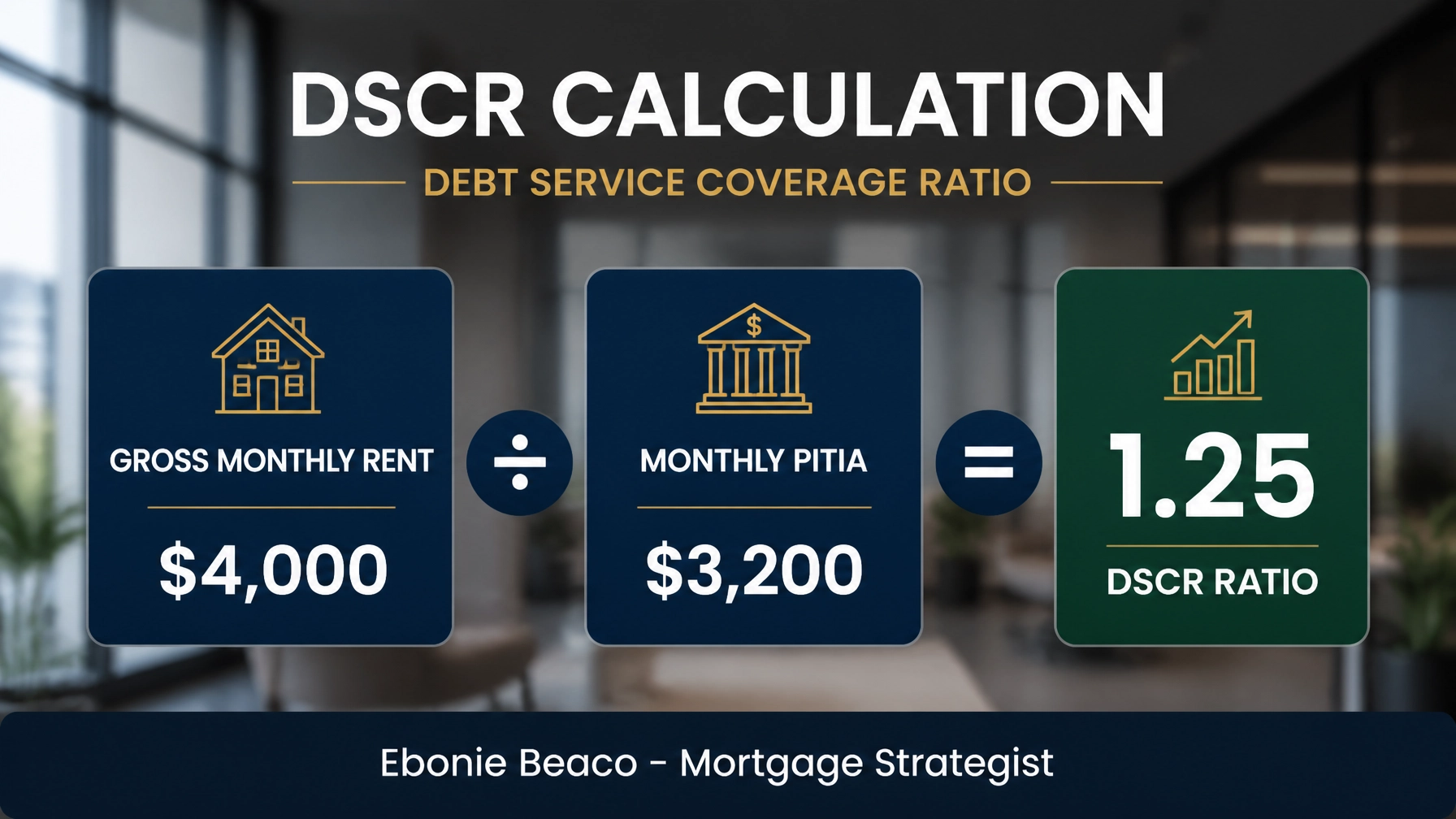
Consider this real-world example: If you are eyeing a rental property that brings in a Gross Monthly Rent of $4,000, and your total monthly debt (including principal, interest, taxes, insurance, and HOA fees) is $3,200, your calculation would look like this:
$4,000 / $3,200 = 1.25 DSCR.
In this scenario, the property qualifies for a DSCR loan because it safely covers its own expenses. This type of financing is a game-changer for investors who want to keep their personal debt-to-income ratios low while expanding their real estate holdings. You can jump in and compare different scenarios using our mortgage calculators to see how your target property measures up.
Shifting Trends in the Midwest and Beyond
While California and Florida often dominate the headlines, significant activity is occurring in the Midwest and Southern states like Illinois, Indiana, and Georgia. In markets like Chicago, we are seeing a steady demand for multi-unit properties as renters look for more affordable housing options outside the city center. Mortgage rates in these regions are generally consistent with national averages, and the lower barrier to entry makes them attractive for first-time investors.

In Alabama and Arkansas, the focus remains on affordability and the availability of down payment assistance programs for first-time buyers. These states offer a different kind of opportunity compared to the high-cost coastal markets, often providing higher yields for landlords who are willing to manage workforce housing. Meanwhile, in Virginia and Michigan, the housing market is benefiting from a diversifying economy, leading to a steady stream of W-2 earners looking for conventional financing. You can find more details about our 240+ lender partnerships which allow us to find the right fit for these diverse regional needs.
Visualizing the Rate Movement
Recent data from the Mortgage Bankers Association indicates that while we are no longer in the era of 3% rates, the current environment of 6% is creating a more balanced and sustainable market. The extreme bidding wars that defined the early 2020s have been replaced by a more methodical approach to buying. As the graph below suggests, the gap between mortgage rates and general housing affordability is beginning to narrow, providing a "sweet spot" for those who have been waiting on the sidelines.
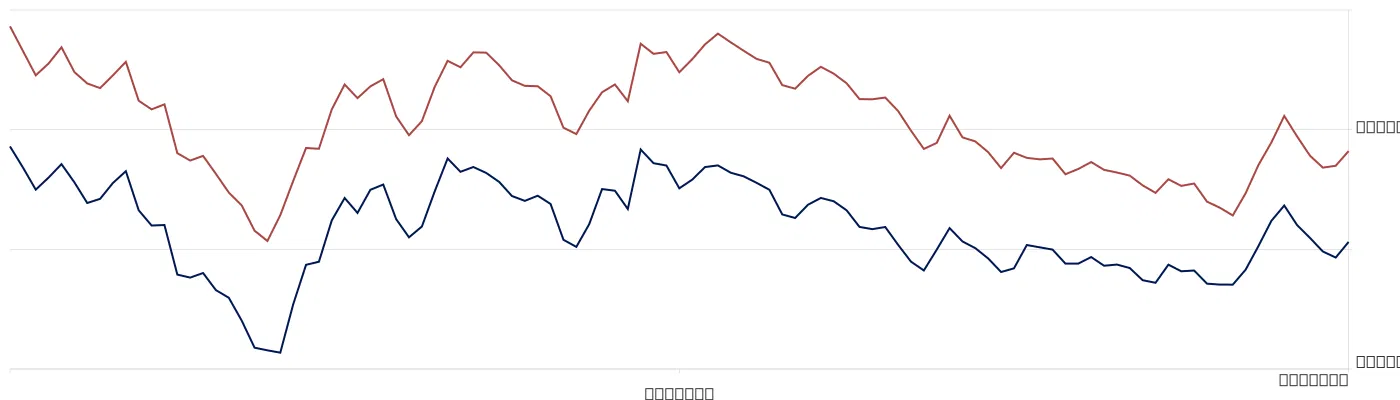
This stabilization is a positive signal for both buyers and sellers. It allows you to plan your financial future with more certainty, knowing that the wild fluctuations of the past few years have largely subsided. If you are a homeowner in a high-equity state like California or Virginia, now might be the time to consider a home refinance to consolidate debt or prepare for your next big move.
Actionable Insights for Your Next Move
Whether you are a realtor helping a client navigate a complex deal or an investor looking to tap into the equity of your existing portfolio, staying updated on these daily shifts is your best defense against market uncertainty. The real estate markets in California and Florida are leading the way in showing how the industry is adapting to a "new normal" of moderate rates and healthy inventory growth.
Access our about us page to learn more about our commitment to transparency and education in the mortgage process. We are here to guide you clearly and confidently through every step of your homeownership or investment journey.
Schedule a 1 on 1 at https://calendly.com/homeloansnetwork
Ebonie Beaco
Mortgage Strategist | Senior Loan Officer
Home Loans Network powered by Loan Factory Inc.
NMLS #2389954
HomeLoansNetwork.com
312-392-0664